Minnesota House DFL releases affordability plan – Twin Cities


The House DFL released its affordability plan on Wednesday highlighting upward of 20 bills aimed at curbing the cost of health care, child care, housing, groceries and energy for Minnesotans.

“Minnesotan families deserve to be able to afford their lives and live a good life on an average salary, but for too many families, they are struggling to make ends meet,” said House DFL Floor Leader Jamie Long, of Minneapolis. “The Minnesota economy is working just great if you are a corporation, or if you are wealthy, but for the average Minnesotan, they are feeling the pinch in their budget every single day.”

Senate Republicans released a tax relief plan earlier this week, featuring proposals such as property tax caps, no tax on tips and overtime, and lowering license tab fees. The no tax on tips and overtime proposal alone would cost the state $391 million in its first fiscal year, according to Speaker of the House Lisa Demuth, R-Cold Spring.

“I think we’re going to have to have a big conversation about federal tax conformity and those specific proposals, and a big part of that question is, how do you pay for it?” House DFL Leader Zack Stephenson, of Coon Rapids, said Wednesday.

A portrait of Rep. Zack Stephenson.
Rep. Zack Stephenson, DFL-Coon Rapids. (Courtesy of the Minnesota House of Representatives)

Stephenson said that most of the House DFL proposals don’t carry a cost, but that he plans to take a comprehensive look at the budget for potential spending cuts — and also look for new revenue for the state.

But his pitch for new revenue contradicts the Republican position. Asked Monday if any tax increases are on the table, Senate Minority Leader Mark Johnson, R-East Grand Forks, said: “Absolutely not.”

Lawmakers and Gov. Tim Walz are not legally required to pass a budget this year, but have said they intend to push a supplemental budget.

Several other proposals and a bonding bill could carry a price tag this session.

Democrats have asked for up to $50 million to support those affected by Operation Metro Surge. And, Republicans have asked for school safety measures and some bipartisan anti-fraud proposals, such as establishing an Office of Inspector General or updating outdated technology systems.

But the state is working with a $3.7 billion surplus in 2026-27 and a $377 million surplus in 2028-29 — one that budget officials warned could easily disappear or even turn back into a deficit.

One proposal from the House DFL is a bill aimed at stopping price gouging and surveillance pricing in grocery stores. The effort is headed by Rep. Emma Greenman, DFL-Minneapolis, and Rep. Carlie Kotyza Witthuhn, DFL-Eden Prairie.

Kotyza Witthuhn said the bill would ensure that corporations are not taking personal data from apps, purchase history, geographic locations, and not using AI to predict how much people make, what their household income is and the urgency of any one purchase.

“I’ve had really great conversations with grocers, with retailers, who ensure me that in most places in Minnesota, these actions are not yet happening, but we know that they’re happening at the corporate level,” Kotyza Witthuhn said.

“We know that they are investing millions and millions and millions and millions of dollars into this technology. Just for fun? No. We know that they’re investing this money to capitalize on the private data of Minnesotans and folks all across the country,” she said.




Source link

Leave a Reply

Subscribe to Our Newsletter

Get our latest articles delivered straight to your inbox. No spam, we promise.

Recent Reviews


Lost a crucial document because your system crashed before you could save it? Worry no more! Microsoft Word has introduced an automatic save option that regularly backs up your work, so you’ll never lose your progress again.

Users will now be able to manage their Word documents without thinking about saving them manually. The new Microsoft Word update allows users to automatically save their documents to the cloud as soon as they start documenting any content piece.

Raul Munoz, the Senior Product Manager at Microsoft, has stated about the new feature, “We are modernizing the way files are created and stored in Word for Windows! Now you don’t have to worry about saving your documents: Anything new you create will be saved automatically to OneDrive or your preferred cloud destination.

Microsoft additionally hints at introducing similar features for Windows Excel and PowerPoint, which are now live.

How Does the Auto-save Feature Work?

The auto-save option can be accessed and used effectively with the compatible Word for Windows version. Let’s understand how the process works-

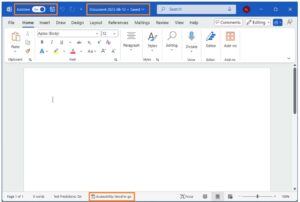
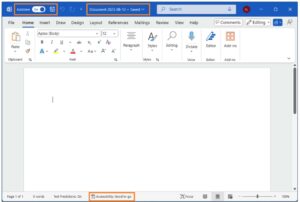
Primarily, users need to create a fresh document in Word and switch the AutoSave option on. Unlike the previous default document name- DocumentN, the autosave feature saves the files with the date.

Microsoft Word Update - Step 1

Source: Microsoft Tech Community

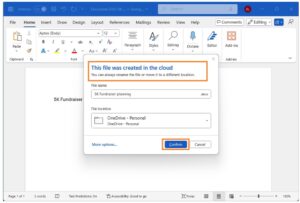
To change the name of the file and its location, users need to select Save or press Ctrl+S. After selecting the file name and location, press Confirm to save the changes.

Microsoft Word Update - Step 2

Source: Microsoft Tech Community

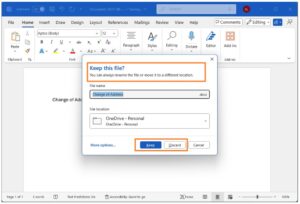
In case users try to close the file before it gets saved, a dialog displays on the screen asking whether they intend to Discard or Keep the file. If users try to close empty files, Word discards them without asking for confirmation.

Microsoft Word Update - Step 3

Source: Microsoft Tech Community

Availability of the Auto-Save Feature of Microsoft Word Update-

The AutoSave feature of Microsoft Word update is available to users with Version 2509 (Build 19221.20000) or newer. This advancement is set to enhance accessibility and address the challenge of lost files. Similar features have been introduced on Windows Excel and PowerPoint as well.

Advantages of the Latest Microsoft Word Update

Microsoft Word’s new auto-save feature will unlock several benefits for users. Alongside increased security, it offers flexible file management capabilities. Let us discuss other significant advantages-

Flexibility in File Storage and Control: Users can store and manage their files more flexibly than ever. As users are in charge of the documents, they can adjust file names and locations to save, organizing the files according to convenience.

Never Lose Your Files: The auto-save feature in Microsoft Word addresses the challenge of losing files due to not saving them manually. As soon as you start making progress in a file, it automatically gets saved.

Enhanced Security and Compliance: Files saved in your organization’s cloud servers already adhere to the set security guidelines and practices. Hence, users do not need to think about protecting the files separately.

Increased Accessibility: The auto-save feature enables enhanced accessibility of Word files. It can be accessed from diverse types of devices and platforms once shared, including Android, iOS, and web browsers. Changes made to the file will get synced on all devices and platforms.

Better Collaboration: The AutoSave feature has made collaboration within and across teams easier. Users can easily share the cloud file and initiate collaboration by making changes, adding comments, and resolving comments in real time.

Agentic AI Support: The Word files are now equipped with Copilot agentic AI support. Users can unlock AI-powered capabilities whenever they need to improve or update their documents. Nevertheless, to use Copilot in Word, a Microsoft 365 Copilot license is needed.

Additional Tips: 

  • Users will be able to easily change the location for new documents. Right-click on any cloud folder in the File section of Word, then select Set as Default Location to choose the location.
  • Users can manage how their files are created, whether in the traditional manner or automatically in the cloud, in the Save tab of Word Options, and opt in or opt out for Create new files in the cloud automatically.

Key Elements to Keep in Mind-

  • When a new Word session is started while another is running, the new file does not autosave. Hence, users need to close the previous file to enable the auto-save option for new files.
  • Users may sometimes encounter a delay in refreshing the recent files list while changing the name of a document.
  • If users disable the option for Show the Start screen when this application starts, remember that the first file they create will not autosave automatically.

Concluding Remarks!

Microsoft has been making significant advancements in its 365 Office platforms for better collaboration and enhanced productivity of diverse teams within an organization. With the integration of Copilot and flexible features, the firm is aiming to boost user experience and accessibility of the tools, including Word for Windows.

Learn about the major technological shifts and practices with KnowledgeNile!


FAQs:

1. What is the AutoSave feature in Microsoft Word?

Answer: The AutoSave feature in Microsoft Word lets users save their files automatically.

2. What is the purpose of AutoSave?

Answer: The AutoSave feature aims to reduce the challenges of data loss in unwanted circumstances, such as power shortages and device failures.

3. Where are AutoSave Word documents stored?

Answer: Automatically saved Word files are stored in cloud storage, like OneDrive.


Recommended For You:

Oracle identity cloud vs Microsoft Active Directory: Which to opt for and why?


Source link