MN schools fall short on Native language classes


Schools that are required to provide American Indian language and culture classes are falling short, according to a recent statewide report.

The law requires districts where at least 5 percent of students are American Indian — or where 100 or more Native students are enrolled — to offer language and culture classes.

The Midwest Indigenous Immersion Network’s American Indian Language Instruction Report found districts across the state would need to hire more than 150 American Indian language teachers just to reach compliance — and that still wouldn’t meet the needs of Native students enrolled in public schools statewide.

"We find there is a 1:257 teacher-to-student ratio among the school districts in Minnesota that are required to provide language and culture classes,” the report said.

Research consistently links Native language instruction to stronger cultural identity, better academic outcomes, and a deeper sense of belonging — outcomes that matter especially for the approximately 31,000 American Indian students enrolled in Minnesota’s public schools, who have historically faced the highest dropout rates in the state.

“Our students make up about 3.5 percent of the Minnesota state student population, and our American Indian language educators are numbered at 98 out of 200,000 licensed educators in the state,” said Gimiwan Dustin Burnette, President and Executive Director of Midwest Indigenous Immersion Network. “They see Ojibwe and Dakota languages being valued as part-time considerations. That, to me, is the real cost and we don’t talk about it enough.”

A comprehensive picture

The nonprofit surveyed 197 public school districts — those serving 20 or more American Indian students — and all four Bureau of Indian Education schools in Minnesota during spring of 2025. Of those, 194 districts completed the survey, a response rate of 99 percent.

Midwest Indigenous Immersion Network used contact information provided by district administrators to reach out to 87 American Indian language teachers directly. Fifty-five of those teachers completed the survey, with a response rate of more than 60 percent.
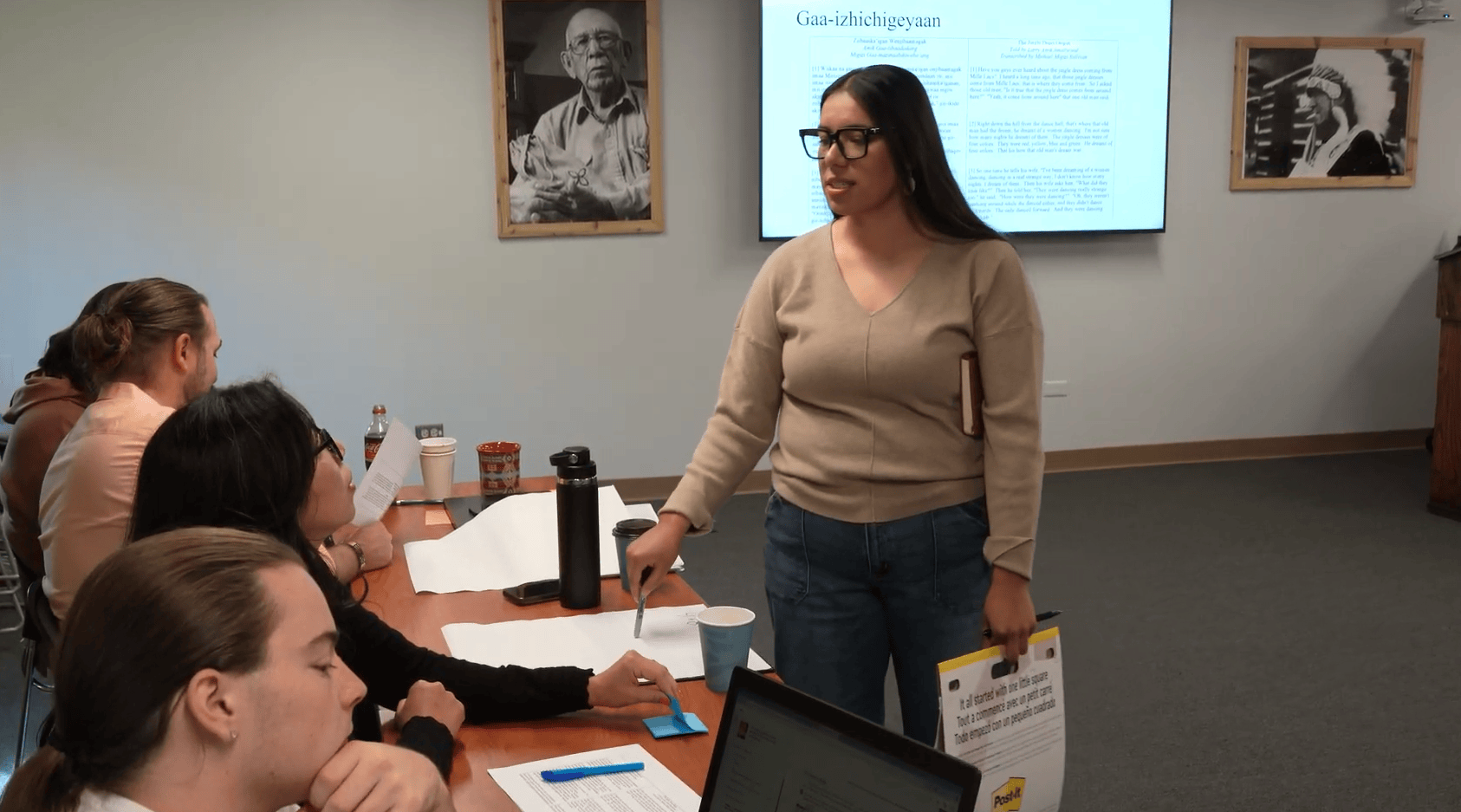
woman teaching a course
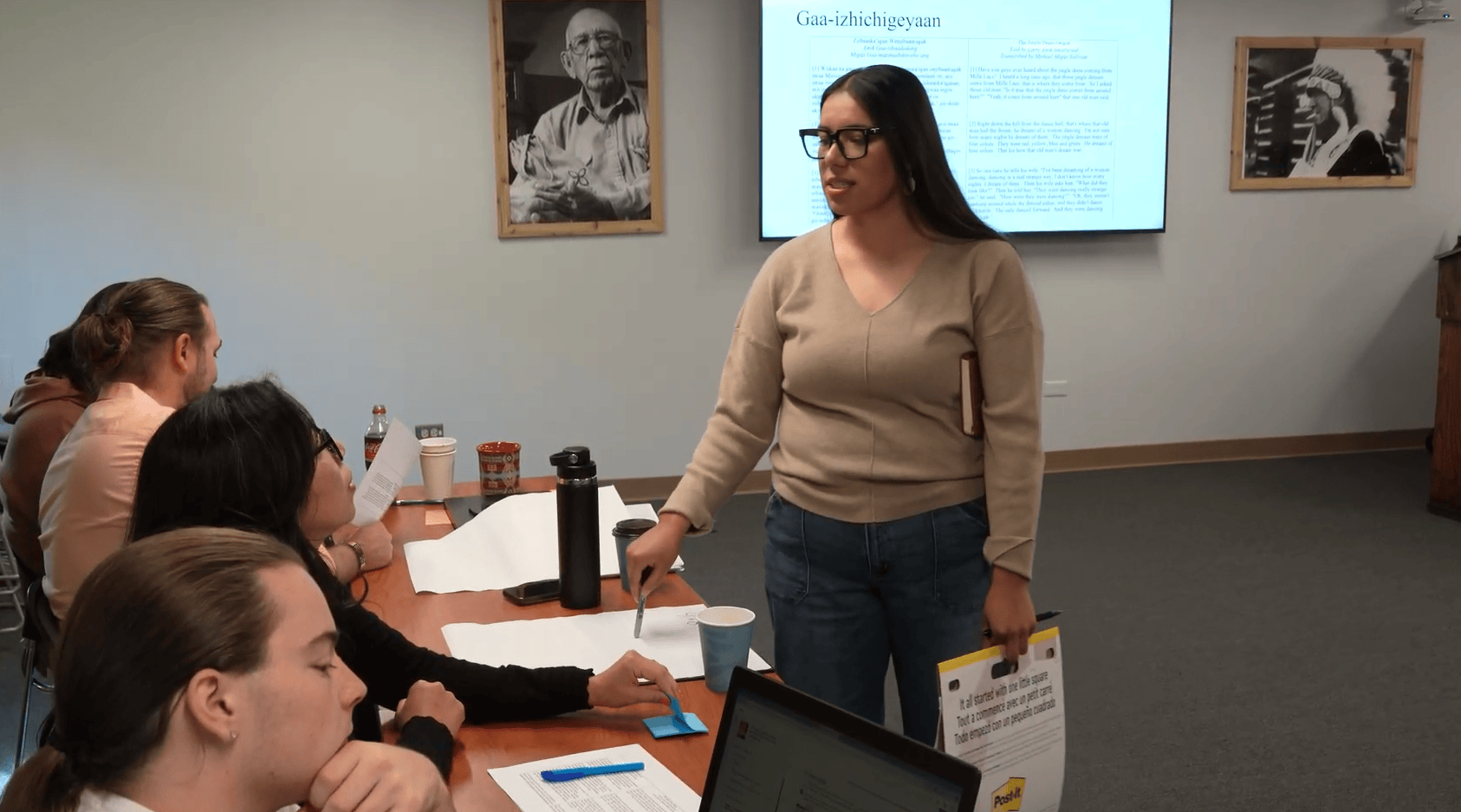
Hannah Orie taught a course for the Ojibwe immersion teaching program at Lac Courte Oreilles Ojibwe University, October 2025.
Photo courtesy of Midwest Indigenous Immersion Network

The data reflects some growth in the number of language programs offered by school districts, according to Burnette. When Midwest Indigenous Immersion Network conducted its first survey in the 2022-23 school year, only 35 districts reported offering American Indian language instruction. That number has since grown to 51 — a roughly 40 percent increase in two years.

Burnette credits a 2024 update to state law that strengthened the legal requirement for districts to offer language classes as a significant factor.

“The new legislation was a big contributor to that increase,” said Burnette. “But it’s been a well-known fact in Indian country for decades that we need more.”

Of the 98 American Indian language teachers working in Minnesota public schools, only 11 are teaching full-time. Half of those surveyed spend 20 hours a week or less on language instruction — juggling other job duties on top of their language classes. Many teachers travel between multiple school buildings, teaching students across multiple grades, according to the report.

“Ideally, we’d have multiple full-time American Indian language instructors at each school where student population demands the need,” Burnette said.

The report goes on to say that teachers who do perform the work largely do so without adequate support. Seventy-eight percent reported being responsible for developing all or most of their own curriculum. Just one teacher in the entire survey said their district provided sufficient materials. No comprehensive Ojibwe language curriculum exists at any grade level — early childhood through high school, according to the data.

‘The solution will take time’

Nearly two-thirds of school administrators said teacher recruitment is a challenge, and more than half pointed to funding, according to the report. The two problems feed into each other — without enough money, districts can’t offer positions worth taking, and without good positions, qualified teachers look for jobs elsewhere.
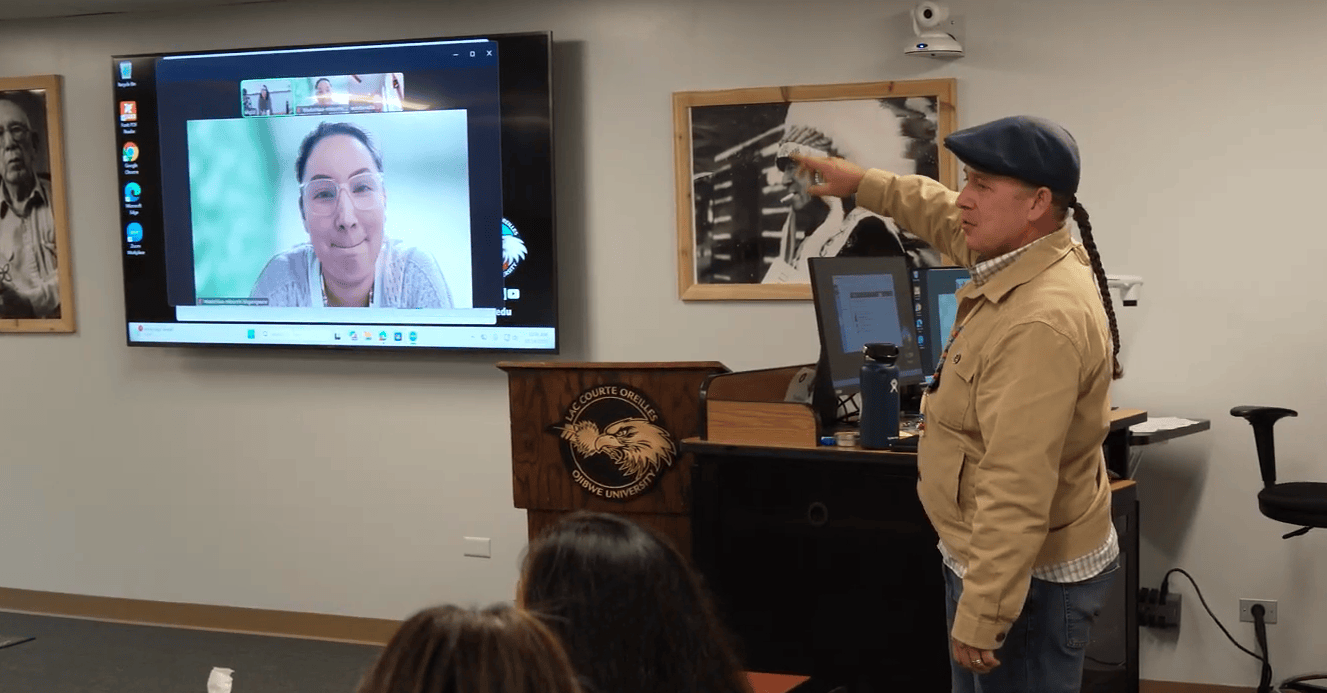
man in tan shirt teaching course
Michael Migizi Sullivan teaching a course for the Ojibwe immersion teaching program at Lac Courte Oreilles Ojibwe University, October 2025.
Photo courtesy of the Midwest Indigenous Immersion Network

The report recommends an increase to the state’s American Indian Education Aid formula grant and investment in training programs for language teachers. The report also seeks the state’s help in establishing standards and curriculum that exists for every other subject taught in Minnesota schools.

Burnette hopes state lawmakers and school administrators will dig into the data and look for ways they can invest.

“The problem is much bigger than we can actually show you in a report,” Burnette said. “The solution will take time, investment and work. You can’t throw five million dollars at this problem and be done with it. This is going to take time, consideration, collaboration and hard work and it’s going to be worth it.”




Source link

Leave a Reply

Subscribe to Our Newsletter

Get our latest articles delivered straight to your inbox. No spam, we promise.

Recent Reviews


What is Salesforce approval process ?

Approval Process in Salesforce is an automated process that automates the approval of Salesforce records in your org. In Salesforce, an approval process is a series of steps that allow a record to be approved or rejected by a user, queue, or public groups. An approval process also specifies the actions to be taken when a record is approved, rejected, recalled, or submitted for approval for the first time.

For instance, when an employee requests time off, Salesforce should automatically send an approval request to the employee’s manager. 

Wish to make a career in the world of salesforce? Start with HKR’S  salesforce online training !

Why the salesforce approval process?

Salespeople are frequently required to confirm their transactions with internal departments (for example: legal, accounting).

Typically, it entails sending numerous emails to various people, after which you must ensure that it is confirmed.It’s no secret that this process could take a long time.As a result, Salesforce created a built-in approval process that you can use to automate approval requests.Once configured, you can request approval with the click of a button.

Salesforce Training

  • Master Your Craft
  • Lifetime LMS & Faculty Access
  • 24/7 online expert support
  • Real-world & Project Based Learning

Steps for approval process in salesforce:

Here are the important steps in the salesforce approval process. They are:

  • Setup -> Create -> Workflow and Approval -> Approval Process
  • Select object for approval process to be written
  • Click on Create New Approval Process
  • Select Standard Setup Wizard from drop down
  • Enter the Process name, Unique Name and description for your process
  • Specify Entry criteria 

Salesforce approval process example:

The following are the sections that must be configured in the salesforce approval process:

  • Process Definition Detail – Approval Process Header level information such as name, email template, and so on.
  • Initial Submission Actions – It would be executed whenever the customers click on the object record’s ‘Submit for Approval’ button.
  • Approval Steps – Specifics on the Steps criteria and approvers
  • Final Approval Actions – It will be carried out once all of the approval process steps have been approved.
  • Final Rejection Actions – This action will be taken if one of the approval process steps is rejected.
  • Recall Actions – This will be carried out if one of the approval process steps is recalled.

Create an Approval Process:

Let’s create an approval process in which the sales manager approves possibilities with a total opportunity value greater than $500,000. The opportunity’s approval status should be reflected: Approved or Rejected.

Planning:

Carefully plan ahead of time before you begin configuring the Approval process in Salesforce, as this will allow you to design the approval process in the most efficient manner. Preparation entails the following steps:

  • creation of mandatory fields
  • Determine the object for the Approval procedure.
  • Final Approval of the Email Template Actions such as unlocking the record or changing the record’s status

Wish to make a career in the world of salesforce? Start with HKR’S  salesforce training in London !

HKR Trainings Logo

Subscribe to our YouTube channel to get new updates..!

Creating approval process:
  • Log in to Salesforce; however, if you are already logged in, you can skip this step.
  • To Manage Approval Processes, go to Setup and search for ‘Approval Process’ in Quick Find, or go to ‘Create’->Workflow & Approvals -> Approval Process. For, choose Opportunity.

Create an Approval Process

  • Select Create New Approval Process | Use Jump Start Wizard from the drop-down menu.
  • By making some decisions for you, the Jump Start Wizard assists you in creating a simple approval process.
  • Set up the approval procedure.

Set up the approval procedure

  • Keep the approval process in mind.
  • View the Approval Process Detail Page by clicking the View Approval Process Detail Page button.
  • Click Add New | Field Update under Final Approval Actions and fill in the blanks with these values.

Field Update under Final Approval

  • Then click on the save option.
  • Under Final Rejection Actions, tap Add New | Field Update and fill in the blanks with the following principles.
  • Click on save.so that your approval process has been successfully configured.

Click here to get frequently asked Salesforce interview questions & answers

Approval Actions:

In the preceding example, we only used ‘Field Update.’ I’d like to go over Approval Actions in more detail, such as Final Approval Actions and Final Rejection Actions, which include:

Task – If a job is selected, the user will input a task for a record, such as Opportunity, once the application process has indeed been approved/rejected.

If an Email Alert is selected, the message will be displayed via email once the approval process has been approved or rejected.

Field Update – You already saw an example within the preceding section, but once the approval process has indeed been approved/rejected, the framework would then update the field towards the specified value.

Outbound Message – This will assist in notifying third-party systems. Consider a scenario in which you would like to inform the derived or provisioning system of the approval results; for instance, once orders are approved, begin generating bills; this will assist you in meeting the requirement.

Approval Actions

Wish to make a career in the world of salesforce? Start with HKR’S  Salesforce Training in Atlanta !

Salesforce Training

Weekday / Weekend Batches


Email to approve request:

We can configure the approval process via email; to allow email approval response, follow the directions below.

Setup -> Process Automation Settings -> Enable Email Approval Response checkbox, and then click Save.

Some words could be used in the first line of a response to an approval request with periods or exclamation marks. Approved, Approved, and Yes are used for approval, while Reject, Rejected, and No are used for rejection.

Conclusion:

In the above blog post we had discussed the salesforce approval process steps in depth. Had any doubts drop your queries in the comments section to get them clarified.

Related Articles:


Source link