Minnesota rural hospitals: Medicare funds set to resume


A Medicare payment processing snafu that has effectively withheld millions of dollars from Minnesota rural hospitals for months and pushed some to the brink of closure appears to be easing.

Problems tied to an updated software system led the federal Centers for Medicare & Medicaid Services to reject legitimate claims for Medicare reimbursement to critical access hospitals — health care centers vital to the health of rural America.

That forced some hospitals to burn through their cash reserves as they struggled to get answers from the Medicare bureaucracy. MPR News last week reported that Mille Lacs Health System in Onamia was weeks away from having to shut down.

National and local hospital leaders this week said the MPR News story helped get the attention of Medicare administrators who have fixed the problem and are now processing the backup claims.

“We’re seeing some movement when we look at our claims from Medicare,” said Andrew Knutson, the CEO of Mille Lacs Health System. “No cash has come in yet, but we're pretty hopeful that within the next couple weeks, some of those Medicare payments will start rolling in.”

Claims should be paid within the next two weeks, said Brock Slabach, chief operations officer at the National Rural Health Association. He said his group had been working on this “systemic problem” for months and that the payment holdups had created desperate financial conditions for rural hospitals across the country.

At least one Minnesota hospital has already begun receiving payments for claims from December and January previously withheld by the Centers for Medicare & Medicaid Services, he added.

‘Very positive step’

Medicare, the federal health insurance program available to people age 65 and older and younger adults with long-term disabilities, is vital to the health care infrastructure of rural Minnesota.

Medicare reimbursements generate the majority of income at many of those small hospitals which run already on razor thin margins. A problem with Medicare funding can imperil the hospital and the communities it serves.

Mille Lacs Health System draws about 60 percent of its income from Medicare. Roughly $2.5 million in payments have been in limbo since early January. Leaders of the hospital system, which employs some 420 people, worried they would have to close within eight weeks if the money did not start flowing.

In Aitkin about an hour's drive from Onamia, Casey Johnson, chief financial officer of Riverwood Healthcare Center, said the hospital is also awaiting $2.5 million in payments owed from Medicare. Riverwood’s three primary care clinics and critical access hospital serve nearly 33,000 people across Aitkin, Garrison, and McGregor.

Johnson said Riverwood has been forced to cover all its expenses with 75 percent of its income over the past three months.

Riverwood has also seen about 70 percent of its Medicare claims processed without errors, but about $1 million is still affected by a system error.

Johnson and Knutson said problems with two billing codes in the updated software system caused the payment snafu and that the system is now processing claims initially rejected. Knutson said this situation accounted for roughly 85 percent of the problem.

Johnson said officials with the Centers for Medicare & Medicaid Services are increasing communication and responsiveness, although not all issues have been resolved.

“We're still waiting to see all the cash come in from the claims that have gone through,” Johnson said. “But it's a very positive step that those claims are now going through without error.”




Source link

Leave a Reply

Subscribe to Our Newsletter

Get our latest articles delivered straight to your inbox. No spam, we promise.

Recent Reviews


Lost a crucial document because your system crashed before you could save it? Worry no more! Microsoft Word has introduced an automatic save option that regularly backs up your work, so you’ll never lose your progress again.

Users will now be able to manage their Word documents without thinking about saving them manually. The new Microsoft Word update allows users to automatically save their documents to the cloud as soon as they start documenting any content piece.

Raul Munoz, the Senior Product Manager at Microsoft, has stated about the new feature, “We are modernizing the way files are created and stored in Word for Windows! Now you don’t have to worry about saving your documents: Anything new you create will be saved automatically to OneDrive or your preferred cloud destination.

Microsoft additionally hints at introducing similar features for Windows Excel and PowerPoint, which are now live.

How Does the Auto-save Feature Work?

The auto-save option can be accessed and used effectively with the compatible Word for Windows version. Let’s understand how the process works-

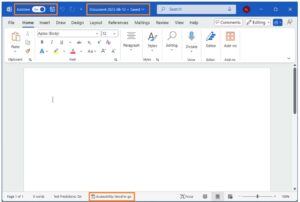
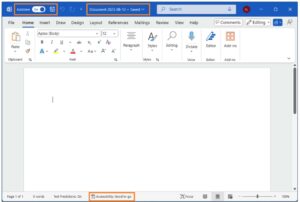
Primarily, users need to create a fresh document in Word and switch the AutoSave option on. Unlike the previous default document name- DocumentN, the autosave feature saves the files with the date.

Microsoft Word Update - Step 1

Source: Microsoft Tech Community

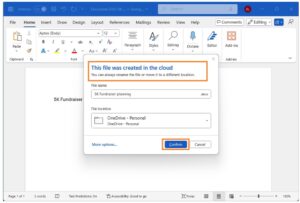
To change the name of the file and its location, users need to select Save or press Ctrl+S. After selecting the file name and location, press Confirm to save the changes.

Microsoft Word Update - Step 2

Source: Microsoft Tech Community

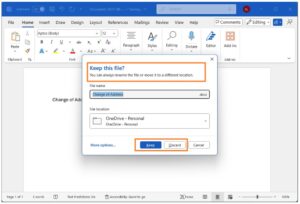
In case users try to close the file before it gets saved, a dialog displays on the screen asking whether they intend to Discard or Keep the file. If users try to close empty files, Word discards them without asking for confirmation.

Microsoft Word Update - Step 3

Source: Microsoft Tech Community

Availability of the Auto-Save Feature of Microsoft Word Update-

The AutoSave feature of Microsoft Word update is available to users with Version 2509 (Build 19221.20000) or newer. This advancement is set to enhance accessibility and address the challenge of lost files. Similar features have been introduced on Windows Excel and PowerPoint as well.

Advantages of the Latest Microsoft Word Update

Microsoft Word’s new auto-save feature will unlock several benefits for users. Alongside increased security, it offers flexible file management capabilities. Let us discuss other significant advantages-

Flexibility in File Storage and Control: Users can store and manage their files more flexibly than ever. As users are in charge of the documents, they can adjust file names and locations to save, organizing the files according to convenience.

Never Lose Your Files: The auto-save feature in Microsoft Word addresses the challenge of losing files due to not saving them manually. As soon as you start making progress in a file, it automatically gets saved.

Enhanced Security and Compliance: Files saved in your organization’s cloud servers already adhere to the set security guidelines and practices. Hence, users do not need to think about protecting the files separately.

Increased Accessibility: The auto-save feature enables enhanced accessibility of Word files. It can be accessed from diverse types of devices and platforms once shared, including Android, iOS, and web browsers. Changes made to the file will get synced on all devices and platforms.

Better Collaboration: The AutoSave feature has made collaboration within and across teams easier. Users can easily share the cloud file and initiate collaboration by making changes, adding comments, and resolving comments in real time.

Agentic AI Support: The Word files are now equipped with Copilot agentic AI support. Users can unlock AI-powered capabilities whenever they need to improve or update their documents. Nevertheless, to use Copilot in Word, a Microsoft 365 Copilot license is needed.

Additional Tips: 

  • Users will be able to easily change the location for new documents. Right-click on any cloud folder in the File section of Word, then select Set as Default Location to choose the location.
  • Users can manage how their files are created, whether in the traditional manner or automatically in the cloud, in the Save tab of Word Options, and opt in or opt out for Create new files in the cloud automatically.

Key Elements to Keep in Mind-

  • When a new Word session is started while another is running, the new file does not autosave. Hence, users need to close the previous file to enable the auto-save option for new files.
  • Users may sometimes encounter a delay in refreshing the recent files list while changing the name of a document.
  • If users disable the option for Show the Start screen when this application starts, remember that the first file they create will not autosave automatically.

Concluding Remarks!

Microsoft has been making significant advancements in its 365 Office platforms for better collaboration and enhanced productivity of diverse teams within an organization. With the integration of Copilot and flexible features, the firm is aiming to boost user experience and accessibility of the tools, including Word for Windows.

Learn about the major technological shifts and practices with KnowledgeNile!


FAQs:

1. What is the AutoSave feature in Microsoft Word?

Answer: The AutoSave feature in Microsoft Word lets users save their files automatically.

2. What is the purpose of AutoSave?

Answer: The AutoSave feature aims to reduce the challenges of data loss in unwanted circumstances, such as power shortages and device failures.

3. Where are AutoSave Word documents stored?

Answer: Automatically saved Word files are stored in cloud storage, like OneDrive.


Recommended For You:

Oracle identity cloud vs Microsoft Active Directory: Which to opt for and why?


Source link