
Atmos Rewards Ascent card vs. Atmos Rewards Summit card


Atmos Rewards is the joint loyalty program for Alaska Airlines and Hawaiian Airlines flyers.

While Atmos Rewards primarily targets frequent flyers of these airlines, the program offers more than meets the eye. Atmos Rewards points are amongst the most valuable airline miles and can be used to book flights on Oneworld partners such as American Airlines.

The program offers two personal cobranded credit cards issued by Bank of America. The Atmos™ Rewards Ascent Visa Signature® credit card is a solid entry-level rewards card with a $95 annual fee.

Meanwhile, the Atmos™ Rewards Summit Visa Infinite® credit card is a premium card for Alaska and Hawaiian loyalists, loaded with perks for a higher $395 annual fee.

Which card is right for you? Let’s dive in and see which Atmos Rewards card you should add to your wallet.

Atmos Ascent vs. Atmos Summit comparison

Card Atmos Ascent Atmos Summit

$95

$395

  • 3 points per dollar spent on eligible Alaska Airlines and Hawaiian Airlines purchases
  • 2 points per dollar spent at electric vehicle charging and gas stations; on local transit; and with cable, ride-hailing and select streaming services
  • 1 point per dollar spent on all other eligible purchases

  • 3 points per dollar spent on eligible Alaska Airlines and Hawaiian Airlines purchases, eligible dining purchases, and foreign transactions
  • 1 point per dollar spent on all other purchases

Earn 80,000 bonus points and a $99 Companion Fare (plus taxes and fees from $23) after spending $4,000 on purchases in the first 120 days from account opening. Plus, receive a 50% flight discount code for a qualifying future flight after opening your new account.

Earn 100,000 bonus points and a 25,000-point Global Companion Award after spending $6,500 on purchases in the first 90 days from account opening. Plus, receive a 50% flight discount code for a qualifying future flight after opening your new account.

Benefits when flying Alaska or Hawaiian

  • Annual $99 Companion Fare (plus taxes and fees from $23) each account anniversary after spending at least $6,000 on the card in the prior anniversary year
  • One free checked bag (for the cardholder and up to six other passengers on the same reservation)
  • Preferred boarding on Alaska Airlines and Hawaiian Airlines
  • 1 status point for every $3 spent on purchases with no spending cap
  • 20% back on all inflight purchases

  • Annual 25,000-point Global Companion Award each account anniversary, plus the chance to earn a 100,000-point Global Companion Award if you spent $60,000 or more on the card in the prior anniversary year
  • No change fees when you need to make a same-day change to an Alaska flight
  • One free checked bag (for the cardholder and up to six other passengers on the same reservation)
  • Preferred boarding on Alaska Airlines and Hawaiian Airlines
  • 10,000 status points every year on your account anniversary
  • 1 status point for every $2 spent on purchases with no spending cap
  • 20% back on all inflight purchases
  • $50 voucher for Alaska Airlines flight cancellations or departure delays of two or more hours
  • Two inflight Wi-Fi passes each quarter

$100 off an annual Alaska Lounge+ Membership

Two Alaska Lounge passes each quarter

Atmos Ascent vs. Atmos Summit welcome bonus

Both cards provide solid welcome bonuses.

New applicants for the Atmos Ascent can receive a 50% flight discount code for a qualifying future flight after opening their account. Additionally, they can earn 80,000 bonus points and a $99 Companion Fare (plus taxes and fees from $23) after spending $4,000 or more on purchases within the first 120 days of opening their account.

Per TPG’s April 2026 valuations, the points in this offer are worth $1,120.

Atmos Rewards Summit Vs Atmos Rewards Ascent
THE POINTS GUY

Meanwhile, the Atmos Summit is offering new cardholders a 50% flight discount code for a qualifying future flight after opening their account. Additionally, they can earn 100,000 bonus points and a 25,000-point Global Companion Award after spending $6,500 or more on purchases within the first 90 days of opening an account.

Reward your inbox with the TPG Daily newsletter

Join over 700,000 readers for breaking news, in-depth guides and exclusive deals from TPG’s experts

This offer is worth up to $1,750 when you combine the value of the base points and the Global Companion Award, according to TPG’s valuations.

Winner: Atmos Summit. Even though the spending requirement is higher, you’ll receive more points with this bonus. However, if you’d be more comfortable with a lower spending requirement, the Ascent could be a better option.

Atmos Ascent vs. Atmos Summit benefits

As noted in the table above, the Atmos Ascent and Atmos Summit share some benefits, including:

  • One free checked bag for the cardholder and up to six other passengers on the same reservation
  • Preferred boarding on Alaska Airlines and Hawaiian Airlines
  • 20% back on all inflight purchases
Alaska's SEA-NRT inaugural flight
Main cabin on a Hawaiian Airlines Airbus A330. SEAN CUDAHY/THE POINTS GUY

The Atmos Summit has a higher $395 annual fee and elevated perks compared to the entry-level Atmos Ascent, which costs $95 a year. Some benefits differ slightly, but the distinctions are important to note.

Companion perks

Atmos Summit cardholders receive an annual 25,000-point Global Companion Award each account anniversary and can earn a 100,000-point Global Companion Award after spending at least $60,000 on the card in the prior anniversary year.

Atmos Ascent cardholders receive an annual $99 Companion Fare (plus taxes and fees from $23) each account anniversary after spending at least $6,000 on the card in the prior anniversary year.

Lounge benefits

The Atmos Summit grants two Alaska Lounge passes per quarter. To use the pass, you must be flying on a same-day ticketed Alaska, Hawaiian, Oneworld or partner airline flight.

Alaska lounge for SEA-NRT inaugural flight
The Alaska Lounge in the N Concourse at Seattle-Tacoma International Airport (SEA). SEAN CUDAHY/THE POINTS GUY

Meanwhile, Atmos Ascent cardholders receive $100 off an annual Alaska Lounge+ membership, which costs $795 per year and includes access to all Alaska Lounges and nearly 90 partner lounges.

While the Atmos Ascent’s $100 lounge membership discount is generous for the card’s $95 annual fee, the lounge passes will provide a lot of value for those flying in or out of an airport with an Alaska Lounge at least once each quarter.

Status points

Atmos Summit cardholders earn 1 status point for every $2 spent on the card, with no spending cap. You’ll also earn 10,000 status points each year on your account anniversary.

Atmos Ascent cardholders earn 1 status point for every $3 spent on the card, with no spending cap.

The Atmos Summit’s 10,000 status points on each account anniversary automatically puts cardholders halfway to Atmos Silver status, the lowest tier in the program.

Summit exclusive perks

Finally, some perks are exclusive to the premium Atmos Summit:

  • No change fees when you need to make a same-day change to an Alaska flight
  • $50 voucher for Alaska Airlines flight cancellations or departure delays of two or more hours
  • Up to $120 in statement credits for Global Entry or TSA PreCheck every four years
  • Two inflight Wi-Fi passes on Alaska flights per quarter

Alaska Airlines First Class on the Boeing 737 MAX 9.
SEAN CUDAHY/THE POINTS GUY

These benefits are especially helpful to those who frequently fly on Alaska Airlines.

Winner: Atmos Summit. For a higher annual fee, the Summit provides a faster path to elite status, more built-in perks and better benefits for those who frequently fly with Alaska, Hawaiian or partner airlines.

Earning points with the Atmos Ascent vs. the Atmos Summit

The Atmos Ascent and Atmos Summit both earn Atmos Rewards points. The cards share an earning rate on eligible Alaska Airlines and Hawaiian Airlines purchases, at 3 points per dollar spent.

Plus, both cards earn a 10% rewards bonus on all points earned from card purchases if you have an eligible Bank of America account.

Friends looking at a phone
HINTERHAUS PRODUCTIONS/GETTY IMAGES

The Atmos Summit earns 3 points per dollar spent on eligible dining purchases and all foreign transactions, while the Atmos Ascent earns 2 points per dollar spent at EV charging and gas stations; on local transit (including ride-hailing); and with cable and select streaming services.

The Atmos Summit’s bonus earnings on foreign transactions are unique in the rewards card space, making the product a fantastic option if you make a lot of purchases outside of the U.S.. Meanwhile, the Atmos Ascent offers decent earnings across multiple categories, especially transportation-related expenses and streaming.

Winner: Atmos Summit, thanks to higher-value bonus categories (including foreign transactions) — though the Ascent may be better for some everyday spending categories.

Redeeming points with the Atmos Ascent vs. the Atmos Summit

You can redeem Atmos Rewards points earned on the Atmos Summit or Atmos Ascent in the same ways. Our favorite redemption options are for flights on Alaska, Hawaiian, Oneworld or a partner airline.

The program offers outsize value thanks to its popular award chart, which is filled with redemption sweet spots to maximize.
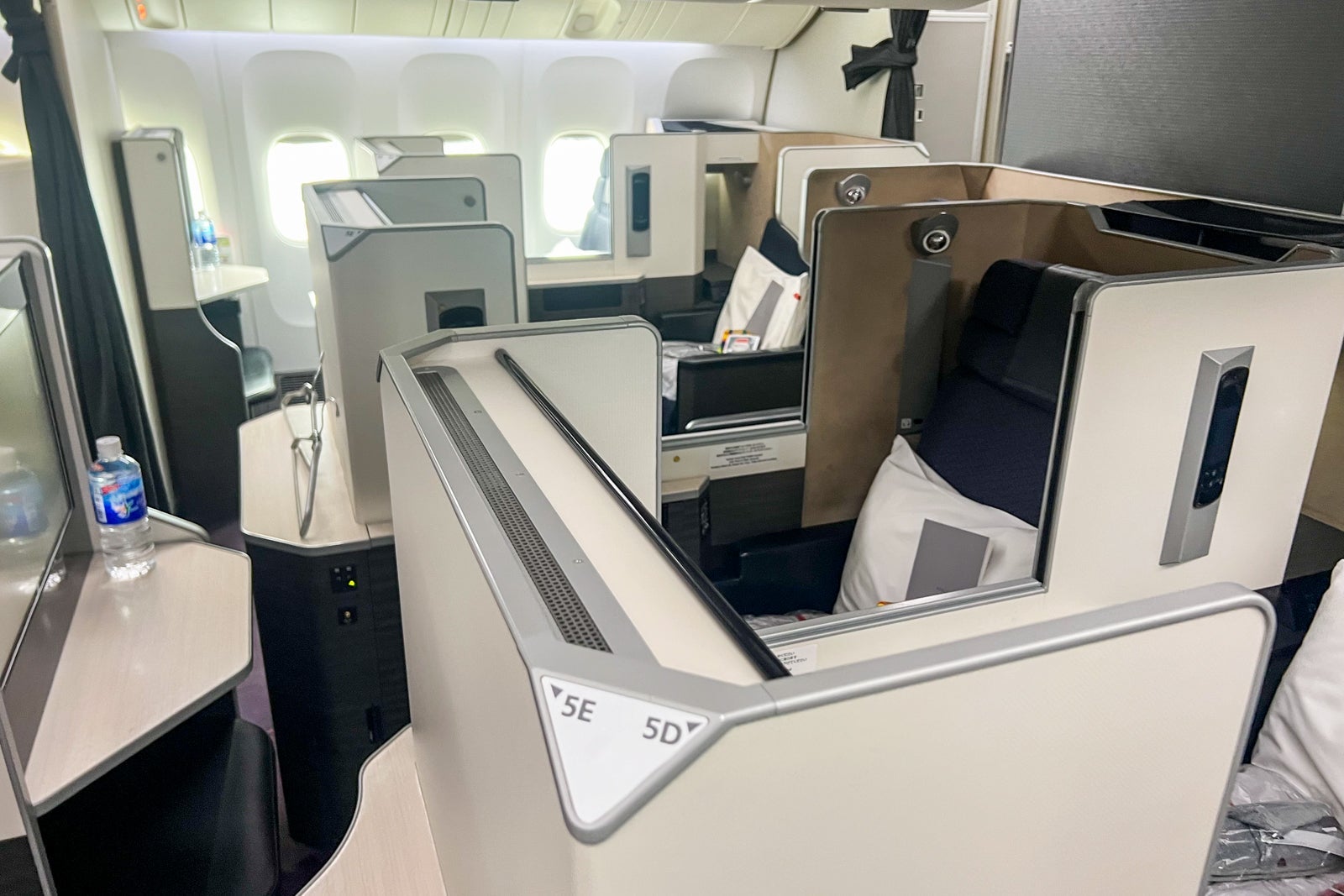
Japan Airlines business March 2024
CLINT HENDERSON/THE POINTS GUY

I love using Atmos Rewards points to book short-haul American Airlines flights for 4,500 to 6,000 points.

However, you can unlock luxurious redemptions with Atmos Rewards too. For instance, you can redeem 75,000 points to fly Japan Airlines business class from the U.S. West Coast to Tokyo.

Other Oneworld partners you can book with Atmos Rewards points include British Airways, Fiji Airways and Qantas.

Winner: Tie. Both cards share the same redemption options.

Transferring points with the Atmos Ascent vs. the Atmos Summit

If you have the Atmos Summit, you can transfer your Atmos Rewards points to hotel partners. The Atmos Ascent does not have this feature.

These are the hotel loyalty programs you can transfer your Atmos Rewards points to, along with their transfer ratios:

JW Marriott Anaheim
SUMMER HULL/THE POINTS GUY

We generally don’t recommend transferring your Atmos Rewards points to hotel partners, since you won’t get as high a value as you would using them to book flights. However, if you have a specific redemption in mind and need just a few more points to reach it, it could be a good option.

Winner: Atmos Summit. Although we don’t recommend using your points this way, you have to have the Atmos Summit to access this option; you can’t transfer Atmos Rewards points if you have the Atmos Ascent.

Should I get the Atmos Ascent or the Atmos Summit?

If you’re looking for more benefits and higher earning rates, I recommend the Atmos Summit. The card provides solid perks for Alaska and Hawaiian loyalists for a $395 annual fee.

However, if you don’t need the bonus perks and want a simple card to earn more Atmos Rewards points and receive basic perks when you fly Alaska or Hawaiian, I suggest the Atmos Ascent, since it’s a strong option in its own right.

Related: Are premium credit cards worth the annual fee?

How to upgrade from the Atmos Ascent to the Atmos Summit

If you’re hoping to upgrade from the Atmos Ascent to the more premium Atmos Summit, you can reach out to Bank of America and request a product change.

However, if you opt for an upgrade instead of applying, you may miss out on the Atmos Summit’s welcome bonus. So, consider your options before you make a decision.

If you hold the Atmos Summit and want to downgrade to the Atmos Ascent, you can also contact Bank of America to make that product change.

Related: 4 major considerations before upgrading your credit card

Bottom line

If you’re into premium perks and are loyal to Alaska, Hawaiian or their partners, the Atmos Summit provides fantastic value at a $395 annual fee.

However, the Atmos Ascent is a steady option for a lower annual fee. At $95, this card will provide a lot of value for many types of travelers.

Ultimately, the right card comes down to how often you fly these airlines and whether you’ll fully use the Summit’s premium benefits. Frequent flyers will likely justify the higher fee, while more occasional travelers may get better value from the Ascent.

To learn more, read our full reviews of the Atmos Ascent and the Atmos Summit.


Apply here: Atmos Ascent

Apply here: Atmos Summit


Source link

Leave a Reply

Subscribe to Our Newsletter

Get our latest articles delivered straight to your inbox. No spam, we promise.

Recent Reviews


Last updated on
Jan 19, 2024

Cyber Security VS Software Engineering – Table of Content

What is Cyber Security?

The cyber security industry is a fascinating field in the IT sector and apt for those who are ready to accept the challenges. The term cyber security can be defined as it is a type of IT application that designs and implements secure network solutions specially designed to act as a shield against hackers, persistence attacks, and any cyber-attacks.

Cyber security engineers are those who involve in designing and implementing security solutions to defend against various threats, cyber-attacks, and malware attacks. They are also involved in testing and monitoring the system devices to make us assure that all the system devices are up-to-date and ready to defend against any type of attack.

Wish to make a career in the world of Cyber Security? Start with Cyber Security Training!

What is Software Engineering?

Software engineering is also known as a Software architect or programming engineer, which involves analyzing the specific needs and creating the tools that are required to build software-related applications as per your or your client’s requirement.  The software engineer should have knowledge of software design, computer programming skills, such as python, Java, JS, Ruby, and other operating system knowledge like UNIX, and LINUX.  

Software developers are those who create software applications from already existing software applications whereas Software engineers are those who create the frameworks on the new software product which you are going to build.

Cyber Security Training

  • Master Your Craft
  • Lifetime LMS & Faculty Access
  • 24/7 online expert support
  • Real-world & Project Based Learning

Cyber security VS Software Engineering:

In this section, we explain the major differences between cyber security and software engineer as per a few categories. Let’s start;

1. Cyber security VS software engineering: Roles and responsibilities

 First, start with knowing the roles and responsibilities of aby cyber security engineer:

  •   Cyber security engineers or we can call them cyber security analysts they involve in implementing and creating plans, security portals to protect the computer network integrity, mobile devices from any kind of malware attacks or ransom attacks.
  • They are responsible for creating software and updating the computer hardware devices to implement security-related plans.
  • The information security analyst must involve in the constant monitoring of the networking devices to have a security breach.
  • They must involve in creating security incident responses to help minimize the damage caused by any type of malware attack.
  • Experienced cyber security professionals involved in communicating the plans or protocols to work enough to detect the intruders.
Software engineering roles and responsibilities:
  • Software engineers are responsible for building, maintaining, evaluating, and testing the new software.
  • They should have a deep understanding of information systems,  information technology, and programming. 
  • Sometimes they involve in developing the applications and should have a piece of knowledge in mathematics, and algorithms.

2. Cyber security and software engineering skills and qualifications:

Cyber Security Skills and qualifications:

  • Candidates must hold a bachelor’s degree in computer science, and IT system engineering.
  • They should possess a minimum of two years of work experience in cybersecurity-related roles such as incident detection, responses, and forensics. 
  • Should have experience with the functionalities, operations, and maintenance of firewalls and various forms of endpoint system device security.
  • Must have proficiency in languages and tools such as C++, Java, Node, Python, Go, Power shells, and Go.
  • They should have the ability to work in fast-paced work environments, often under some work pressure.
  • Posses the right eye for details and must have outstanding problem-solving skills.
  • Must have a piece of up-to-date knowledge of cyber security industries, trends, and hacker tactics.
Software engineers skills and qualifications:
  • Strong knowledge in engineering, computer science, and mathematics.
  • Should have strong experience in software development.
  • Should have proven programming experience (various programming language skills).
  • Experience in using different kinds of tools and techniques the software development.
  • Creative and adaptive at problem-solving.
  • Deep knowledge of concepts and algorithms.
  • Strong coding knowledge is a plus.

3. Cyber security and software engineers salary:

Cyber security engineer salary:

According to ziprecruiters.com, an average salary for any cyber security engineer earns $49, 750 and a software security architect earns $135,800.

Software engineer salary:

According to indeed.com, an average salary for any software engineer earns $50, 000 and an experienced software architect earns $111, 430.

If you have any doubts on Cyber Security, then get them clarified from Industry experts on our Cyber Security Tutorial !

HKR Trainings Logo

Subscribe to our YouTube channel to get new updates..!

4. Cyber security and software engineers: career path

Cyber Security Career path

In the cyber security field, you will get to see various kinds of specializations. Let us know them;

  • Cyber security analyst: should have a piece of strong knowledge of analytical and thinking. They must be creative problem solvers.
  • Cyber security engineers: they should have experience in different operating systems and strong experience in various database platforms.
  • Cyber security managers or administrators: should have a strong experience with firewalls, and a basic understanding of proxy servers, packet shapers, and load balancers.\
  • Cyber security consultants: must have an in-depth knowledge of IT security measures and protocols, and methods to detect intruders. Must have experience in finding and repairing the damages. 
  • Information security Analyst: Experience in providing IT support, and have an organized or in-depth knowledge of intrusion detection systems. Effective problem solver, organized, and detail-oriented.
Software engineer career path:

Below are the few niches where you can get specialized;

  • System engineers: should have a basic understanding of principles and techniques. They must be able to use databases and MYSQL.
  • Full-stack engineer: must have a strong coding knowledge, able to manage both front-end and back-end development tasks. Understanding of system protocols and techniques. 
  • Software engineers: a deep understanding of the developments, coding, building, and deploying applications. Should be proficient with various and multiple coding knowledge. Must have hands-on experience in software-oriented architecture. Able to work independently and must involve in team building. 
  • IT security specialists: must have an in-depth knowledge of IT security tools, anti-virus software management, content filtering, and firewalls. Should have experience with coding, and be able to identify any malicious attacks.
  • Cloud engineers: able to create roadmaps that take you into the storage capacity, and should be a problem solver. Should be able to communicate with all the levels of employees.
  • Take your career to next level in Cyber Security. Enroll now to get Cyber Security Training In London!

5. Cyber security and software engineers: Certification lists

Cyber security engineer certification lists:

Below is the list of major cyber security engineer certifications:

  • COBIT 5 control objectives for information and related technologies.
  • COBIT 5 Professional certification.
  • CompTIA security+certification -SYO-601.
  • CISA certification and training
  • CND – certified network defender
  • CHFI – Computer hacking forensic investigator certification
    CISSP certification
Software engineer certification lists:

Below is the list of major software engineer certification lists:

  • Certified secure software lifecycle professionals.
  • Certified software development professionals
  • Certified software engineer
  • CIW web development professionals
  • C programmer certification
  • C++ certified associate
  • MYSQL Oracle certification
  • Microsoft fundamental certifications 
  • aws associate certification
  • Salesforce fundamental certifications

Which career is best for you?

Here we are going to list out a few reasons to choose the best career;

You should consider cyber security if;

  • You intend to get a 4-years of degree
  • You can handle anxiety or work pressure
  • You can communicate verbally and orally.
  • You enjoy solving puzzles
  • You can multi-task 

You should consider software engineer if;

  • You like to learn things hands-on (real-time).
  • You have a genuine interest in programs or coding
  • You are a self-learner 
  • You are a good team handler 
  • You are unique, creative, and innovative.

frequently asked Cyber security Interview questions and Answers !!

Cyber Security Training

Weekday / Weekend Batches

Final words:

It is very difficult to say which one is the best without determining the parameters for that. If you are someone who has a desire to get a college degree, then we must say the cyber security profession is the easy choice for you. Suppose if you are more interested in self-learning, then cyber security would be a difficult field for you. If you are someone who has a desire to learn to code, then you can choose the software engineering field. But both careers require mathematical knowledge, and how the algorithm works. So our advice is to choose the right profession based on your priority, and educational background. We must say it’s a wise decision to take! In this Cybersecurity VS software engineer post, we have mentioned important differentiations based on a few parameters. Hope you found this information helpful.

Related Articles:

  1. 1.Cyber Security VS Data Science
  2. 2.Cyber security Technologies
  3. Quickbooks Interview Questions


Source link