What to know about United Airlines’ new basic business fares


Ready or not, United Airlines passengers booking flights in the airline’s fanciest seats are about to have a lot more choices. And by choices, we mean more fare types — and restrictions — to navigate.

As TPG first reported earlier this month, the Chicago-based airline is bringing the “basic” idea behind basic economy to its business-class and premium economy cabins.

And those tickets have started to go on sale for later this year.

Going forward, you’ll have to choose: Buy a regular Polaris ticket, or save some cash for a “Polaris Base” ticket? Regular Premium Plus or “Premium Plus Base?”

Read more: United’s new Polaris Studios are finally here: First look at the airline’s swankiest plane yet
SEAN CUDAHY/THE POINTS GUY

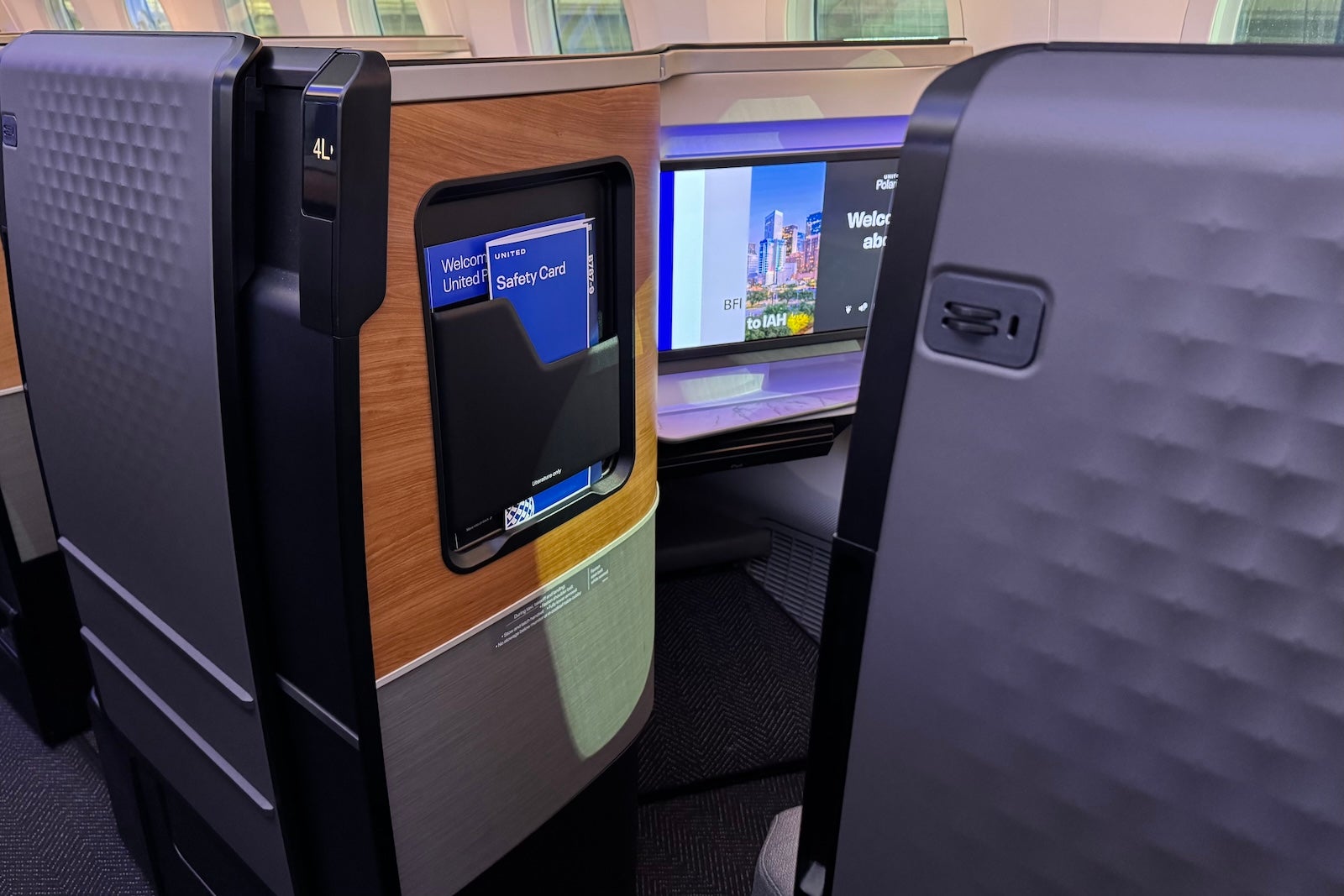
With these new skinny fare options, you could conceivably spend $2,000 for a lie-flat seat without being allowed to actually select your seat and without earning any miles for your trip.

Here’s what we’ve learned about these new “base” fares and what you should know before you buy one.

Mileage, Premier qualification restrictions

For starters, all of United’s basic fares — from the business-class cabin to coach — will have tough mileage-earning restrictions.

Earlier this month, United rolled out a strict new basic economy policy: no miles earned, unless you have Premier elite status or carry one of its cobranded credit cards.

Reward your inbox with the TPG Daily newsletter

Join over 700,000 readers for breaking news, in-depth guides and exclusive deals from TPG’s experts

We’ve learned that policy will also apply to the carrier’s new Polaris Base and Premium Plus Base tickets, too.

Premier members and cardholders will earn miles, but at a reduced rate compared to full-fare tickets.

United mileage earning rate for Polaris Base, Premium Plus Base and Basic Economy tickets

Elite status tier Earning rate Earning rate for eligible cardholders

None

3 miles per dollar

2 miles per dollar

5 miles per dollar

3 miles per dollar

6 miles per dollar

4 miles per dollar

7 miles per dollar

6 miles per dollar

9 miles per dollar

Like with basic economy tickets, MileagePlus members who book a base fare in the carrier’s premium cabins will also not earn Premier qualifying flights toward status.

They will, however, continue to earn Premier qualifying points.

TPG deep dive: Basic economy and the ‘evolution’ that’s sweeping over airlines’ cheapest fares

Polaris Base fare restrictions

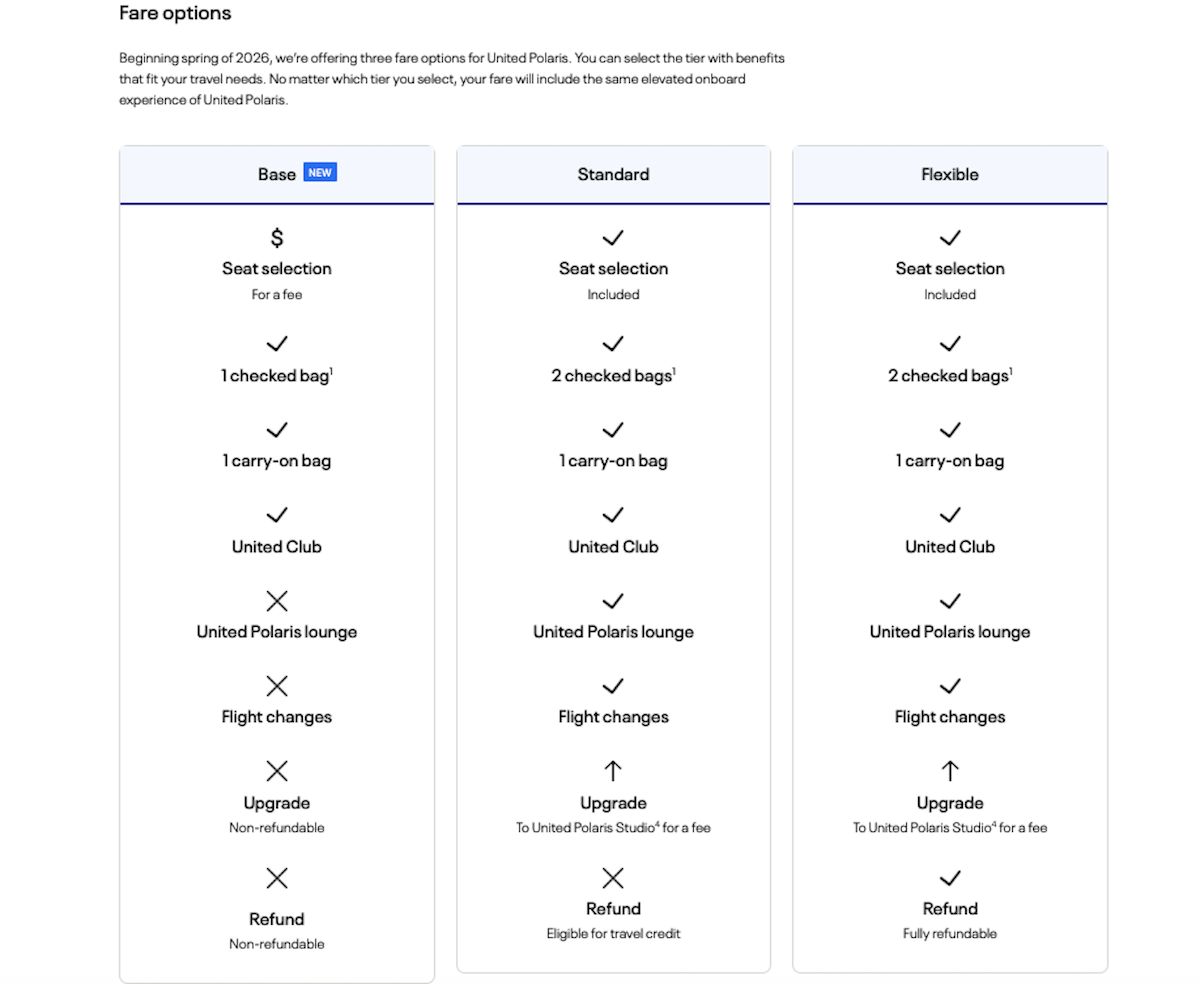
If you book a base Polaris ticket, there are additional restrictions you’ll face compared to a regular ticket.

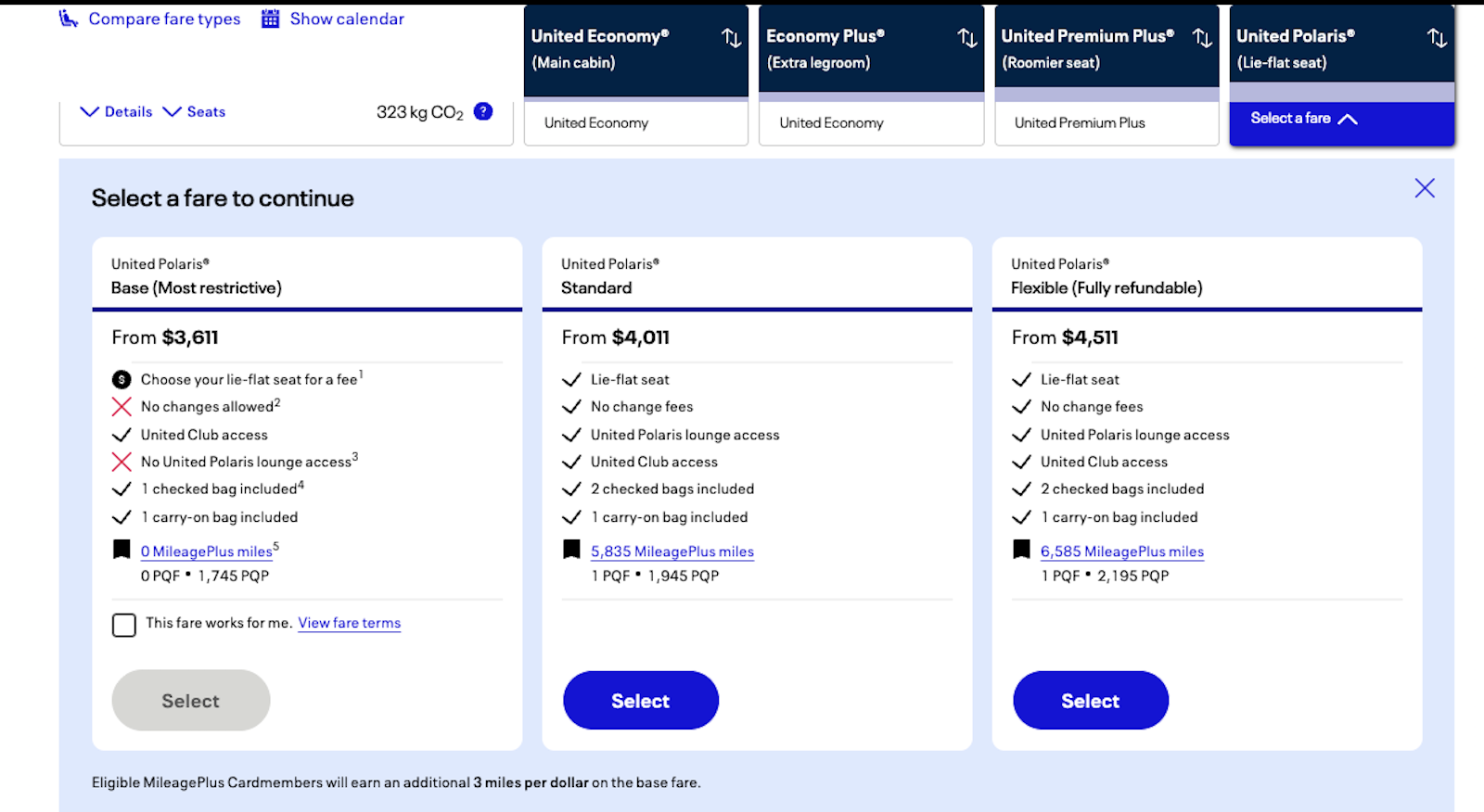
  • You’ll have to pay a fee if you want to select which lie-flat Polaris seat you want.
  • You’ll get one free checked bag instead of two.
  • No ticket changes are allowed.
  • You won’t get Polaris Lounge access, but you will be able to enter the less exclusive United Club.
  • You can’t upgrade to the carrier’s extra-large Polaris Studio suites (that is, if you’re on one of the new planes that have these ultraluxe seats).

Don’t like the sound of those rules? The cost-savings may sway you.

On this sample flight from United’s Houston hub to Lima, Peru, you could save $400 by opting for the slimmed-down ticket instead of the standard one.
UNITED AIRLINES

Here’s a full chart United has published to help you decide which Polaris fare is right for you. The carrier now offers “base,” “standard” and “flexible” fares, which are beginning to roll out across its international network.
UNITED AIRLINES

Premium Plus Base fare restrictions

The other cabin gaining a new basic option is United’s long-haul premium economy product, Premium Plus.
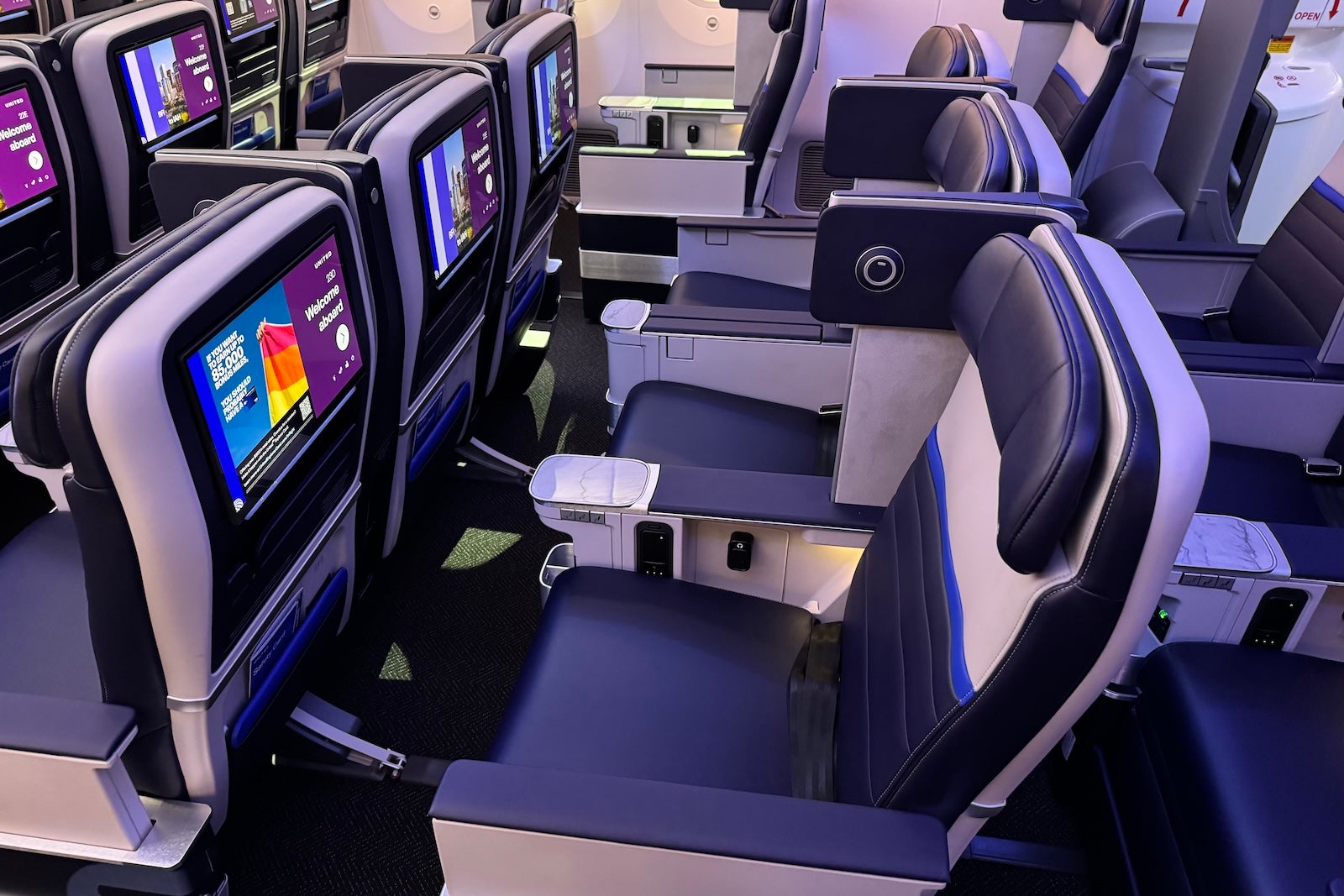
Premium Plus on United Airlines’ newest Boeing 787-9 “Elevated” Dreamliner. SEAN CUDAHY/THE POINTS GUY

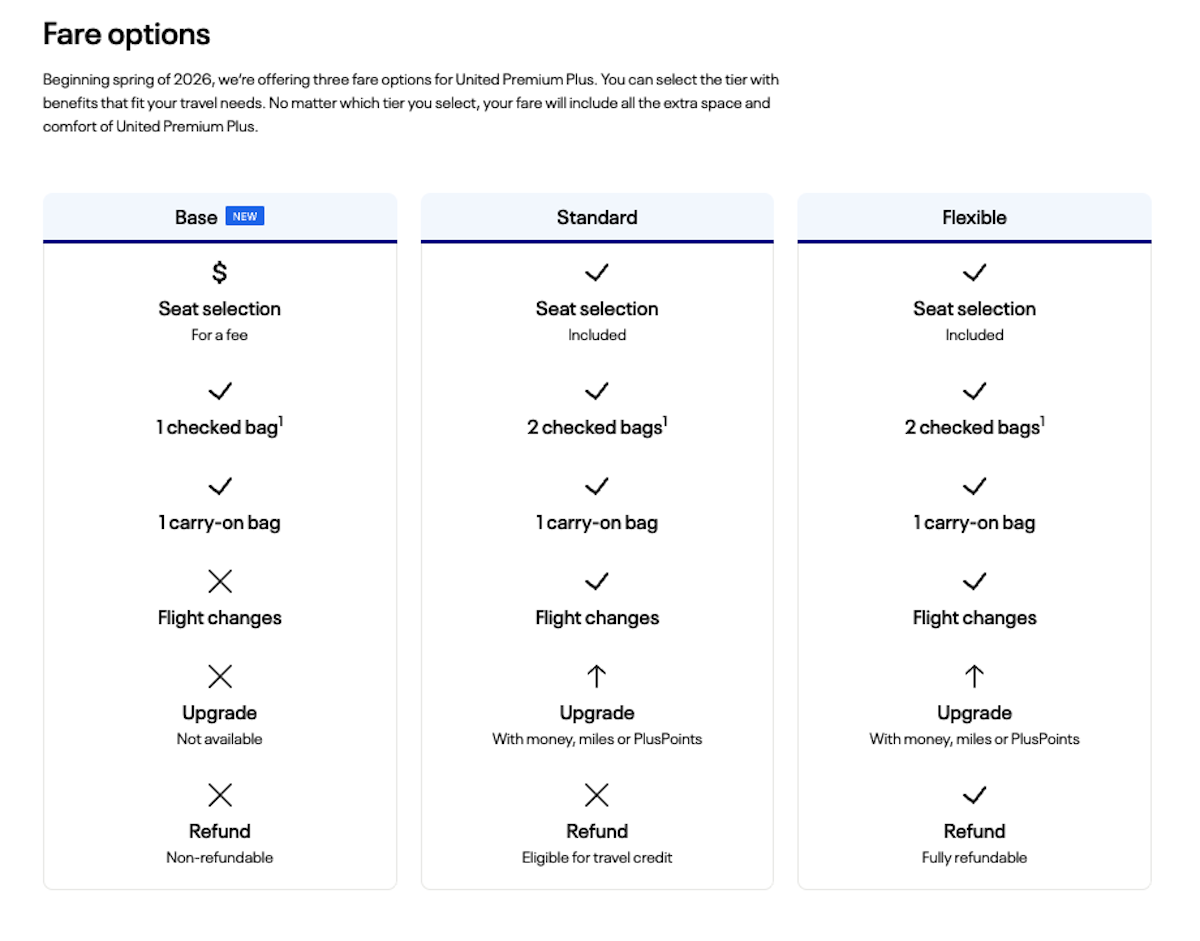
Like with Polaris, you’ll have three options (base, standard or flexible) to choose from.

Here are the key restrictions to know about Premium Plus Base fares:

  • You’ll have to pay if you want to select your seat.
  • You’ll recieve one free checked bag instead of two.
  • Ticket changes are not permitted.
  • No upgrades with money, miles or PlusPoints are allowed.
UNITED AIRLINES

Looking ahead

You may not see this full menu of options on all long-haul international United bookings. The carrier has just started rolling out these base fares across more flights, so you can expect to see them more and more over the coming months.

SEAN CUDAHY/THE POINTS GUY

The carrier has not announced a basic fare offering for its domestic-style, first-class cabin, which is also a fixture on many shorter-haul international destinations.

United isn’t alone. Delta Air Lines already offers a basic fare in its extra-legroom Comfort cabin, and it has made clear that a similar fare class will be introduced across all its cabins in the near future, including its Delta One suites.

Related reading:


Source link

Leave a Reply

Subscribe to Our Newsletter

Get our latest articles delivered straight to your inbox. No spam, we promise.

Recent Reviews


Introduction to SCCM

Microsoft system center configuration manager (SCCM) is a Microsoft product developed to manage and update software products. SCCM configuration manager provides a highly flexible, automated solution to the full deployment and configuration of personal desktops, laptops from any initial state, including bare-metal deployments. This enables IT, administrators, to provide an end-to-end solution for the installation and configuration of windows, by delivering the applications, updated patches, and security fixes in a single distribution. This also allows a large number of computers can run on many operating systems. The operating system may be Windows, Linux, UNIX, and IOS.

 Get ahead in your career by learning SCCM through hkrtrainings SCCM Training

SCCM Tools

As we know that SCCM tools can be differentiated into client-based and server-based tools. First, we will discuss client-based SCCM tools.

Client-based SCCM tools:

1. CM trace tool

This is one of the important System center configuration management tools. It is mainly used to view and monitor user log files. In general, these log files are usually stored in Configuration manager and client component manager (CCM) format. Log file uses the plain ASCII and Unicode text files like Windows log installer.

Important CM traces tool options:

The below are important options available:

1. General tab:

This option offers the following methods;

a. Update interval: This option controls the CM trace tool checks for any modification and loads the new file lines.

b. Highlight: this option is used to set the colors to the log lines, by default, the basic color is yellow.

c. Columns: this option configures the logline columns that are available in the log view files and displays the text formats, components, and thread.

2. Printing tab:

The printing tab helps to print the log files and displays them in a proper format.

3. Advanced tab:

The advanced tab helps to update the log view files in any interval and also loads a large number of lines.

 If you want to Explore more about sccm? then read our article SCCM Tutorial !

SCCM Training

  • Master Your Craft
  • Lifetime LMS & Faculty Access
  • 24/7 online expert support
  • Real-world & Project Based Learning

Client spy is also a configuration management tool. This tool is mainly used to perform various activities like troubleshooting software, inventory, software meeting, and software distribution configuration.

Features of Client spy:

Below are the key features of the Client spy tool:

  a. helps to display all current software deployment and hardware inventory.

  b. Maintain the software distribution history and file collections.

  c. Offers client memory cache configuration and latest inventory report date.

  d. IDMIF collections and discovery data records.

  e. Software inventory major and minor version management.

3. Deployment monitoring tool:

This is one of the popular configuration tools and available as a graphical user interface designed to assist application troubleshooting, update the latest software, and baseline configuration deployment.

Features of Deployment monitoring tool:

1. This tool can be run as an administrator and used to troubleshoot deployments.

2. Helps to perform troubleshoot deployment on the remote side, launch software tools, and connect them to a remote machine.

3. Export the XML format log files and share them with other tools and uses the common platform for communication purposes.

4. Import the export data to a different machine and use them to run offline mode.

5. This tool is read-only and it does not change any state on the client side.

 Check out here for frequently asked SCCM Interview Questions & Answers

4. Policy spy:

Policy spy is one of the important configuration management tools and this is mainly used to view and helps to troubleshoot the policy system on configuration manager files.

Features of Policy spy:

a. User needs to run the Run Policyspy.exe file to open your user interface files.

b. By using command line syntax, you can save more information on command line usage.

c. This tool offers limited options to support automation and batch file processing.

d. Helps to connect to the configuration management client policy on a remote computer.

5. Power viewer tool:

This is also a type of system center configuration management tool and used to view the power status on a configuration manager client.

Features of Power Viewer tool:

a. Helps to display the power capabilities and power setting of any local computer.

b. View all the power events and summarize them at 12.00 A.M every day.

c. Display all the daily activities and client activity charts. Sleep mode is considered as a power-off status.

6. Send schedule tool:

This tool is used to trigger the evaluation on the client-side and schedule the trigger on the client-side.

Features of send schedule tool:

1. Use this tool to trigger an inventory schedule and compliance evaluations.

2. Run this tool to initiate the necessary schedule on the client.

others, top-most-sccm-tools-description-0, others, top-most-sccm-tools-description-1

Subscribe to our YouTube channel to get new updates..!

Server-Side SCCM Tools:

1. DP job queue manager tool:

This is one of the SCCM server-side tools and used to manage the troubleshoot content distribution job.

Features of DP job queue manager tool:

a. This tool helps to display the jobs that act as a transfer manager stored in the queue.

b. This also shows the job status and helps to perform tasks like execution, running, and retrying the job schedule.

c. Collects the information from the site server and later distributed them on system windows.

d. This tool is connected through the site provider and triggers them to reflect any changes from a remote distribution point.

2. Collection evaluation viewer:

This is one of the server site SCCM tools and used to gather information from various sources.

Features of Collection evaluation viewer:

1. With the help of this tool, you can collect both historic and live data values.

2. Helps to display the evaluation queue status.

3. The time required to collect the data evaluation.

4. Helps to evaluate the current data value.

5. Enable you to find the start and complete the collect evaluation.

 Explore SCCM Sample Resumes ! Download & Edit, Get Noticed by Top Employers!

3. Content library explorer:

This is also a Site server tool and mainly used to maintain the contents which are used to manage the configurations.

Features of Content library explorer:

a. Helps you to explore the configuration contents which are available on the distribution point.

b. Find out the trouble shoot issues with content library explorer.

c. perform activities like copy packages, contents, and file management for the content library.

d. helps to validate the packages on a remote distribution point.

4. Content ownership tool:

This is a very important server site SCCM tool. It helps to change the ownership of the orphaned packages in the configuration manager.

Features of Content ownership tool:

a. Helps to display all the orphaned packages in the windows configuration manager.

b. view the status of the site connection.

c. Helps you to filter packages by name, code, and package type.

d. Change the content assignment for one or more configuration packages with actions.

e. helps to view the progress of content ownership transfer activity.

SCCM Training

Weekday / Weekend Batches

Benefits of SCCM:

The following are the key benefits of using a system center configuration manager, let me make a list of few benefits:

1. User can enroll the devices which configure the device for management with Windows Intune. The user can then use the company portal for any access to corporate applications.

2. Data from Windows Intune is sync with the configuration manager which provides unified management across both on-premises and in the cloud.

3. As part of the registration process, a new device object is created in the Active directory. Establishing a link between the user and the Microsoft device.

4. User can register BYD devices for single-sign on and access to corporate data with workplace join as a part of this; a certificate is installed on the device.

5. IT can publish access to corporate resources with the web application proxy based on device awareness and the user identity. Multi-factor authentication can be used through Windows Azure active authentication.

Conclusion:

In this SCCM tools blog, we have explained the major tools which are used to perform various activities in the configuration manager. The SCCM tools can be differentiated on the basis of Server site and client site approach. If you are a Windows system configuration expert, then learning these SCCM tools is considered to be an essential part of your IT career. To know more about SCCM, there are a lot of SCCM communities available worldwide, you can also get expert advice.

Related articles:


Source link