Socket programming in Java | A Guide to Java Sockets


What are Socket Programming in Java

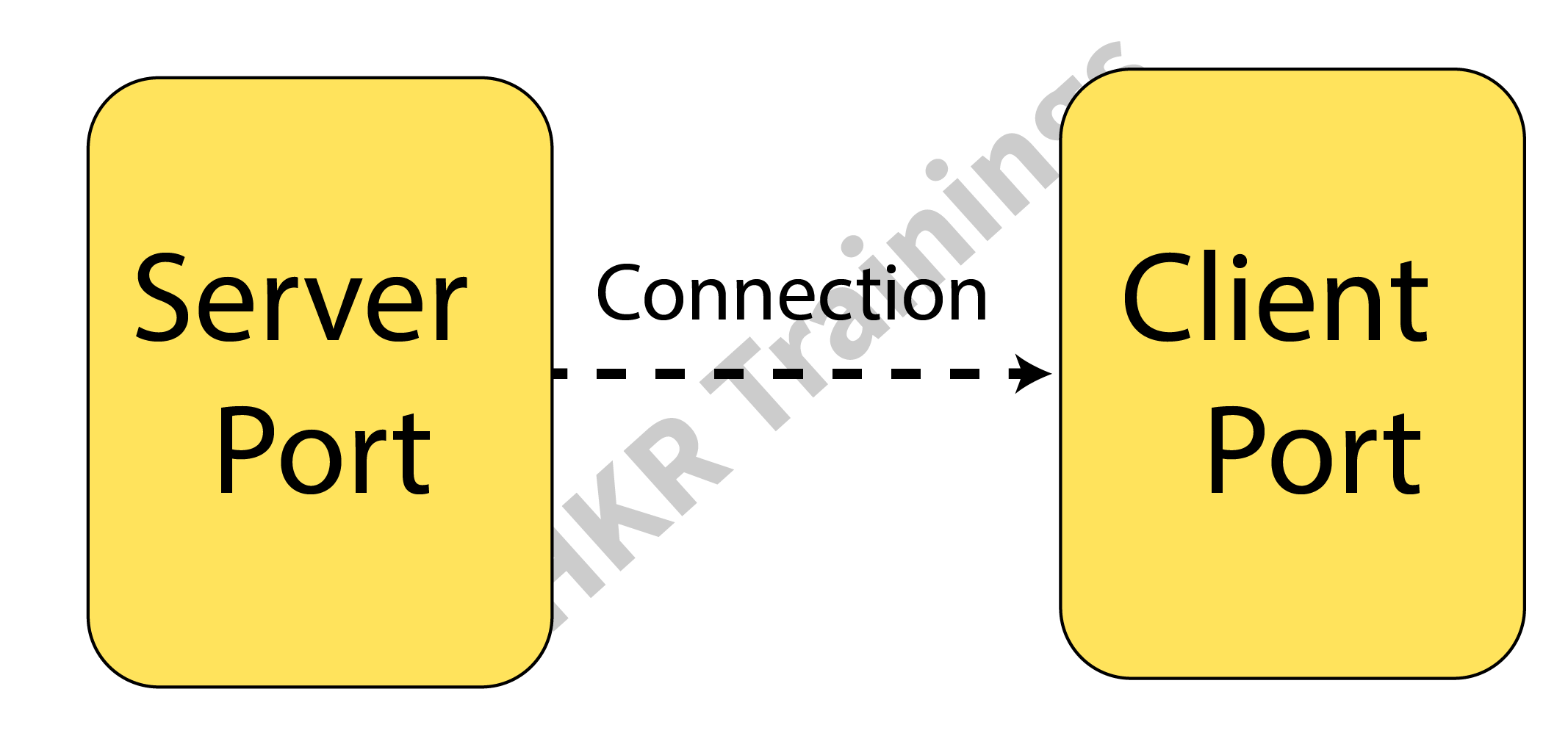
Socket programming is a method where two nodes on a network can connect and communicate with one another. While another socket reaches out to the first socket to establish a connection, one socket (or node) listens on a specific port at an IP address.
While the customer reaches out for the server, the server creates the listener socket. For connection-oriented socket programming, the classes Socket and Server Socket are utilized.

Programming using Java Sockets can be either connection-oriented or connection-less. For connection-oriented socket programming, While the customer reaches out for the server, the server creates the listener socket. For connection-oriented socket programming, the classes Socket and Server Socket are utilized. and DatagramSocket classes are used, while Socket and ServerSocket are used for connection-less socket programming.

What Is Java Socket

A Java socket is one terminal of a 2-way networked communication relationship between two programs. For the TCP layer to recognize the program that data is intended to be transferred to, a socket is tied to a port number.
Java Socket

A port number and an IP address make up an endpoint. An implementation of one side of a 2-way connection between the Java program and another program on the network is made possible by the class Socket, which is part of the Java platform’s package. The class resides on top of the platform-specific implementation, shielding your Java program from the specifics of every given system. Your Java programs can interact over the web in a platform-independent manner by utilizing the class rather than depending on native code.

Client-Side Programming

When using the client side, in the programming, the client initially watches for the server to launch. The requests will be sent to the server once it is operational. The client will then watch for the server’s answer. So, this is how server and client communication functions overall. Let’s now go deeper into client-side and server-side programming.

For starting with the requests from the client-side, the user needs to process the following steps:

Establish a connection :

Creating a socket connection is the initial action. The socket connection signifies that the 2 machines are aware of each other’s IP address and TCP port on the network.

The following statement will let you construct a socket:

Socket s = new s(“127.0.0.1”, 5000)

The first input in this case denotes the server’s IP address.

The TCP Port is represented by the second parameter. (A number that indicates which server-side program should be running.)

Communication :

Streams are utilized for both data input and output when communicating via a socket connection. You must shut down the connection after opening it and sending the requests.

Closing the connection :
Once the message has been transmitted to the server, the socket connection will explicitly close.

Wish to make a career in the world of Java? Start with HKR’S Java Training !

Java Certification Training

  • Master Your Craft
  • Lifetime LMS & Faculty Access
  • 24/7 online expert support
  • Real-world & Project Based Learning

Server-Side Programming

In essence, the server will create its object and await a request from the client. The server will reply with the response once the client will send the request.
Two sockets are required in order to program the server-side application, and they are as follows:

When a client calls newSocket(), a ServerSocket that is waiting for the requests from the client is created. There is a straightforward socket for client communication.
Following that, you must inform the client of the outcome.

Communication

The output is sent across the socket using the getOutputStream() function.

Closing the connection

Once everything is finished, it’s crucial to shut off the connection by shutting the socket and any active input/output streams.

  • You can run the server-side program first after configuring the client and server ends. After that, you must transmit the request and start client-side software. The server will reply as the client sends the request. The image below shows the same.

Closing the connection

  • The client will establish a connection and enter the request as a string.

Closing the connection 2

  • The server will reply to the request sent by the client.

Closing the connection 3

You must run a Java socket program in the given manner. These programs can also be run via a command window or terminal. However, as Eclipse is very feature-rich, you can easily run both apps on a console.

Top 30 frequently asked JAVA Interview Questions !

HKR Trainings Logo

Subscribe to our YouTube channel to get new updates..!

Testing The Applications

The testing of applications is done using the IntelliJ application or any other IDE. 

  • Put the two programs together.
  • Start the client application after starting the server software.
  • Write a message in the client window, and the server window will simultaneously receive and display them.
  • Type BYE to leave.

This can be done using a command prompt also:

  • Create a new folder called project (this is the name of your package).
  • Place the project folder’s Server.java and Client.java files.
  • Go to the root path on the command prompt after opening it.
  • Run java project.Server first, then javac projectServer.java.
  • Use the same process to run the client and server programs.
  • Messages can then be typed in the window of the client.

The application can fail when a port has already been in use. Modify port no to a special number to resolve this problem.

Acquire Jenkins certification by enrolling in the HKR Jenkins Training program in Hyderabad!

Java Certification Training

Weekday / Weekend Batches

Conclusion

In this article, we have talked about socket and socket programming. Socket programming is a method where two nodes on a network can connect and communicate with one another. While another socket reaches out to the first socket to establish a connection, one socket (or node) listens on a specific port at an IP address. We have also discussed client-side and server-side along with testing the applications.

Related Article:

Drools Interview Questions


Source link

Leave a Reply

Subscribe to Our Newsletter

Get our latest articles delivered straight to your inbox. No spam, we promise.

Recent Reviews


What is ServiceNow?

ServiceNow is a platform that aids in the automation of numerous typical business activities and supports ITSM. PaaS services are necessary for this platform. Four scholars, Fred Luddy, David Loo, Doon GoodLiffe, and Bow Ruggery, founded this in the year 2003. One data model and one user interface are present. Additionally, it aids in the development of a useful application that allows business users to route work across the firm. It safeguards the data’s integrity and confidentiality. It is additionally recognised as a potent reporting tool. Employees at the company, IT support workers, implementers, developers, etc., can all use it.

  Become a Servicenow Certified professional by learning this HKR ServiceNow Security Incident Response Training !

A few products of ServiceNow are mentioned below:

  • Applications for IT Service Automation: It enables IT to devote more time to providing cutting-edge business solutions.
  • Applications for project management include demand, portfolio, resource management, etc.
  • Custom Application Development: Using ServiceNow, the developers may quickly transform concepts into functional apps.
  • Work management: It aids organisations in overseeing any form of task.
  • Performance Analytics is a very user-friendly cloud-based tool for reporting and providing effective performance.

What is ZenDesk?

 ZenDesk is a cloud-based service based company that offers its customers designs for improving the customer relationship. It also lets its users to build the service portal for customers and online communities for knowledge. The main benefit of using ZenDesk is that the user is able to solve his issues without troubling the agents. This is very time and effort saving for the users. It is an open as well as flexible platform.

The headquarters for ZenDesk is situated in San Francisco. The products of  Zendesk’s are very easy to set-up and the user can start working on them instantly.

ZenDesk offers several tools for CRM that is Customer Relationship Management that user can use in the enterprise-leading cloud environment. Hence, it is a perfect choice for the industries growing at a fast pace. In case the industry is suffering from any type of support demand, then ZenDesk is the correct choice for them to opt for. 

The additional benefits that ZenDesk has are macros, agent collaboration, custom views.

ServiceNow Training

  • Master Your Craft
  • Lifetime LMS & Faculty Access
  • 24/7 online expert support
  • Real-world & Project Based Learning

ZenDesk vs ServiceNow

Learning Curve:

The dashboard of ServiceNow is difficult to understand as compared to ZenDesk as the dashboard of ServiceNow has a jam-packed menu which turns out to be less useful. The learning curve for ZenDesk is a lot better than ServiceNow as servicenow only runs on the cloud whereas ZenDesk can easily run on the android as well as IOS applications as well. ZenDesk also offers its users the ability to solve the tickets on the go. 

Pricing:

There is no pricing as such provided by the ServiceNow as it majorly depends on the type of industry, the requirement and the size of the company. Whereas ZenDesk offers its users a $19 subscription monthly and further having 3 pricing packages. It is better to opt for ZenDesk when the pricing range is to be compared. 

Communication Channels:

ServiceNow does not provide its customers the ability of social media integration. Hence, it cannot offer support while working on Twitter or Facebook. On the other hand,  Zendesk has the ability to offer social media along with email integration directly related to  the account. Hence, the user can have all the customers at a single place only.

Supporting Tickets:

Zendesk provides its customers the benefit of the support agents. This is possible because of the macros as the team is able to  create a defined set of solutions to the common problems and hence can share those with all the colleagues as well. Its guided mode ensures fair play as compared to the ServiceNow ticketing system.

Features of ServiceNow:

  • ServiceNow’s applications can be automated because the validation tests let users put their programmes into production without having to worry about errors or unfavourable situations. Once the automated testing framework in ServiceNow has been used, users do not need to test their applications separately.
  • With the aid of an advisory board workbench, users may effortlessly arrange and plan their work. A single user interface allows for flexible tracking of guests. Thus, there is no need to schedule any tasks or plans in calendars or other such devices.
  • Each customer gets access to a personal site where they may manage all of their assets, cases, contacts, contracts, and other items. The user merely needs to turn on the customer service portal plugin.
  • Customers of ServiceNow Express may purchase services like third-party integrations. With ServiceNow, the release and production services have become incredibly simple and speedy.
  • With ServiceNow, it is now simple to manage an application portfolio because it completely removes the danger of application duplication and perfectly aligns all of the apps. The user can receive real-time notifications for his work by combining this feature with the dynamic dashboard.

Features of ZenDesk

User Friendly:

ZenDesk has a user-friendly environment. It is very easy to use and even more easy in managing the tasks. The users can get used to the interface as Zendesk provides an amazing service to its customers.

Multi-channel:

ZenDesk offers ticket services from any source such as from mobile phones, emails, social media like Twitter or facebook, chat system, etc. Therefore, customers can reach out through their comfortable channel.

Workflow:

ZenDesk has a proper workflow to the ticket system such as for creating a ticket, following up with that ticket, tracking the ticket, etc. It provides the customer a facility to have on-demand interaction whenever they want. 

Multilingual:

The system of ZenDesk is comprised of 40 different languages. Hence, language can never be a barrier for a customer in order to interact or raise an issue.  

Want to know more about Servicenow,visit here Servicenow Tutorial !

, Service Nows, servicenow-vs-zendesk-description-0, , Service Nows, servicenow-vs-zendesk-description-1

Subscribe to our YouTube channel to get new updates..!

Pros and Cons of ServiceNow

Pros
  • Using its tools and technology, ServiceNow is able to handle all IT requests from users located across several departments. It can be used by the user to manage change requests, schedule them, and deal with particular specific situations.
  • ServiceNow’s software is completely adaptable. The user may easily input, sort, scale, and apply new incidents connected to his project. Additionally, templates are provided to the user in case he decides to launch a new service for his business.
Cons
  • When a new client wants to start utilising the ServiceNow platform, it can be a little confusing. Even the customising component can be challenging to handle.
  • Tasks in ServiceNow may have subtasks nested inside of them. When the client finally comprehends it, there are already many things that seem to be missing. As a result, ServiceNow needs to manage the nesting system properly.
  • Less theme colours are available for customisation in the software.
  • Setting up the ServiceNow mobile app is a very difficult process for the user.
  • Since this is covered by the ServiceNow service agreement, there are less ServiceNow technicians accessible. Due to the fact that ServiceNow is web-based, there may be certain compatibility concerns that need to be addressed.

Pros and Cons of ZenDesk:

Pros
  • The fields present in ZenDesk enable the agents whenever they wish to gather the information about their customers regarding their tickets. It gets very easy for the agent to decide what his customer is actually looking for.
  • The approach towards the dynamic request system form helps the agent moving in the right direction whenever he wants to offer any kind of customizable support.
  • ZenDesk also works on the mobile phone, hence the customer can have the mobility in managing a home-based support network. 
Cons
  • The custom views in ZenDesk cannot be exported to another system. Hence the user needs to create a new account rather than sharing the same one.
  • Data hostage problem
  • There is a lack of flexibility in the structural changes of ZenDesk.

 Top 30 frequently asked Servicenow Interview Questions !

ServiceNow Training

Weekday / Weekend Batches

 Conclusion

In this article, we have discussed ServiceNow and ZenDesk along with their features and the reasons what we should opt: ZenDesk or ServiceNow. ServiceNow is a platform that supports ITSM and helps in the automation of various common business processes. ZenDesk is a cloud-based service based company that offers its customers designs for improving the customer relationship. It also lets its users to build the service portal for customers and online communities for knowledge. We have also listed the pros and cons for both hence the user can make an appropriate choice before choosing out of these two.

Related blogs:


Source link