Cash App, the banking and payments app run by Block, has added support for parent-managed kids accounts. The new accounts include key benefits from the service’s normal account, with an eye towards teaching financial literacy to younger users ages 6 to 12. Cash App first allowed teenage users on its platform in 2021.
As part of the “expanded Cash App Families experience,” eligible legal guardians and parents can create managed accounts that offer “a dedicated place on the platform to send allowances, set aside savings, and track spending for their child, kickstarting their path to financial independence,” Cash App says. Adults managing these accounts will be able to set up recurring transfers, see how their child is spending and do things like lock their child’s account to prevent transactions. Kids will get a custom debit card and the ability to receive payments from up to five trusted accounts, though notably they won’t be able to access Cash App itself.
Cash App says managed accounts are designed for kids 6 through 12. Once those kids turn 13, Cash App says parents will be able to choose to convert their account to a “sponsored account” to unlock more features, like the ability to send and receive payments, invest in stocks or trade crypto. Those sponsored accounts are technically still monitored and controlled by a parent or legal guardian, but they do give 13-year-olds more control over how they use their money.
A parent-managed account for kids is not a new idea in the fintech space, though Cash App is trying to reach a younger audience than some of its competitors. Venmo rolled out access to its payment platform to teens between the ages of 13 to 17 in 2023. Separately, both Apple and Google also offer their own kids accounts in Google Wallet and Apple Cash Family.
After 19 years, I finally went back to Ko Lipe, the Thai island I spent close to a month on in 2006. Back then, it was one of those super off-the-beaten-path destinations that few but the most intrepid travelers visited, where electricity only ran a few hours a day, basic bungalows right on the beach cost something like $2 USD, and there really was a last boat for the season.
There was much to do here but that was the point. You hung out on the beach, read a book, went snorkeling, went back to the beach, drank beers at the one beach bar on the island, rotated meals between the five restaurants there, and went to bed early.
It was paradise – and a place a lot of people got stuck. Days easily turned into weeks here.
If you asked me what the highlight of all my travels was, I would be the time I spent on Ko Lipe. I made incredible friends, lounged around, got to know the locals, learned a bit of Thai, and, overall, lived that idyllic backpacker life we all dream about.
Over the years, I’ve avoided going back to Ko Lipe because the memory of my time there is so strong that I didn’t want to ruin it. Any re-visit would simply be trying to recreated a magic that couldn’t be recreated because the people that it special wouldn’t be there. I’d be chasing travel ghosts. And, since I know my sleepy paradise has been developed greatly over the years, I was also too afraid seeing that would make me sad.
Tourism in Thailand tends toward the unsustainable. No island really develops in a good way. It’s all build, build, build.
And I didn’t want to see my Ko Lipe like that.
But as I was planning my recent trip through Southeast Asia, returning to Ko Lipe made sense. I was heading down the Indian Ocean side of Thailand on my way into Malaysia and I’d pass by it.
And, since I was looking for a lively place for New Year’s Eve, it seemed liked the best choice. I knew there would be travelers there and there were no other nearby islands that would work, especially since Ko Lipe has a boat to Langkawi, which was my next stop.
So, I sucked it up and went.
And I’m sad to report that Ko Lipe took the Ko Phi Phi model of tourism and is now extremely overdeveloped.
Unsustainably so.
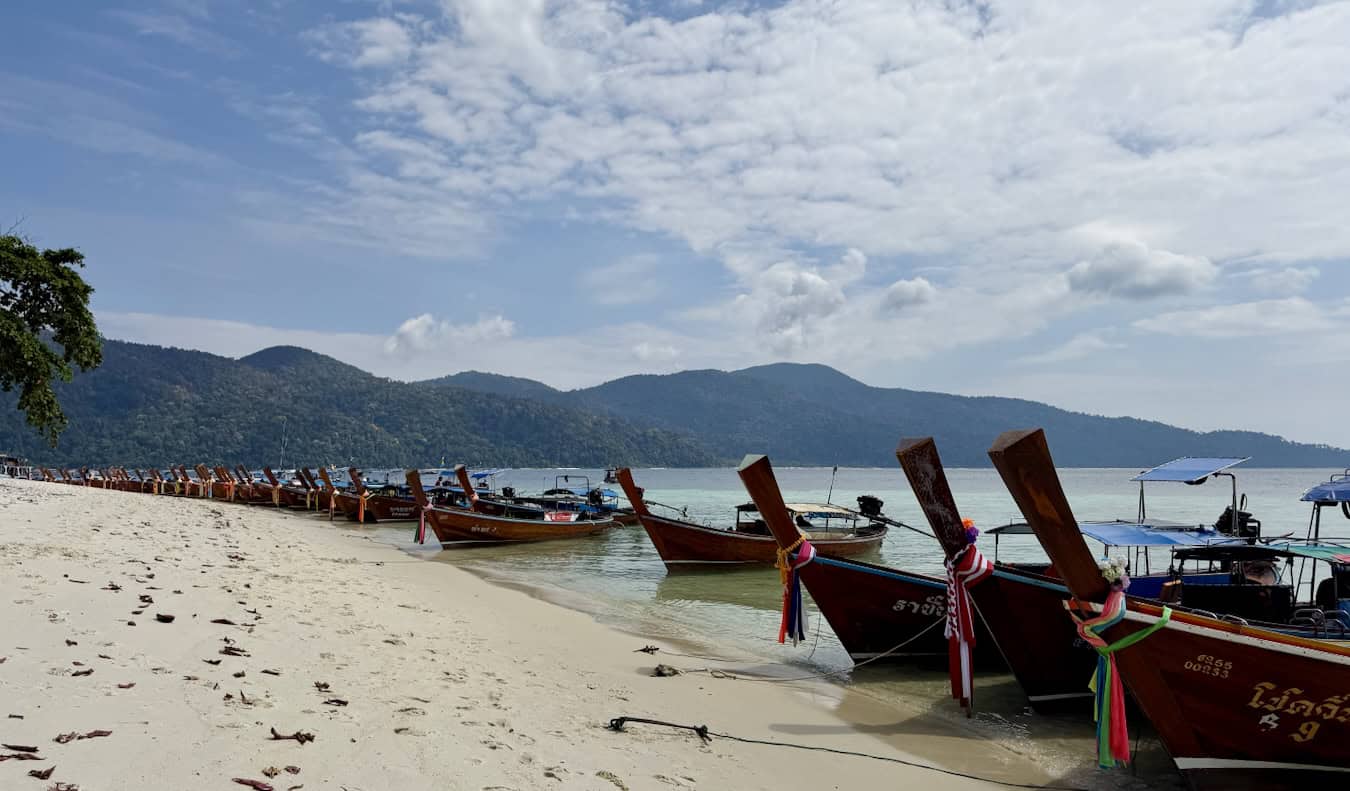
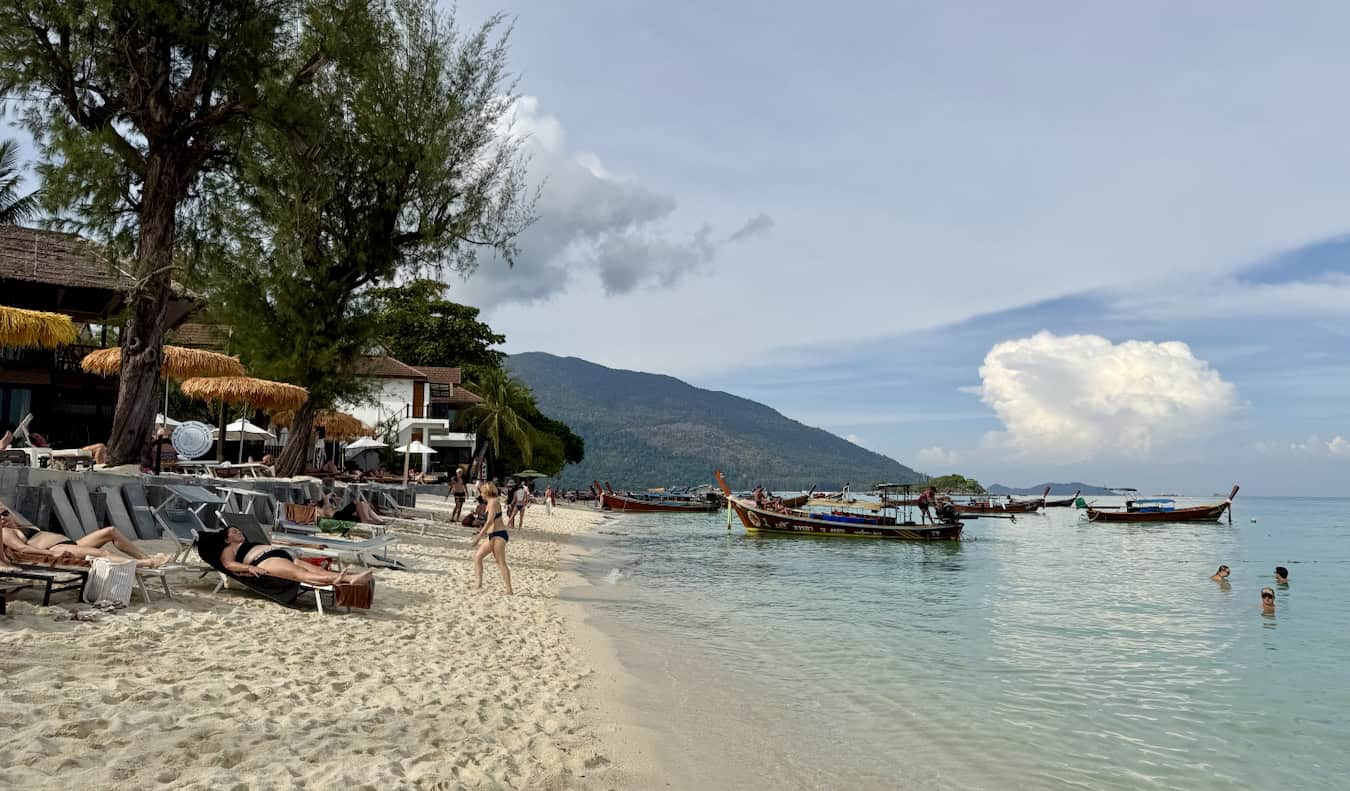
Most of the island is now paved over, the old dirt footpaths having become concrete for the cars and construction trucks. Swaths of palm trees are now the sites of high-end resorts with pools (on an island with no natural water supply). Construction of more resorts continues at a fast pace. The coral around the island is dying, a victim of all the boats, anchors, pollution, and overfishing. Beaches are now lined with boats, their exhaust spilling into the ocean, leaving a shiny film you can see as you swim. And the restaurants cater to tourists looking for bad Western food, not great Thai cuisine.
The island’s boom has displaced many locals, who were forced to sell to mainland developers, and much of the island’s workforce is now from the mainland. They see little of the benefits this tourism boom.
So lies Ko Lipe, another victim of Thailand’s all too common overdevelopment and exploitation of limited resources.
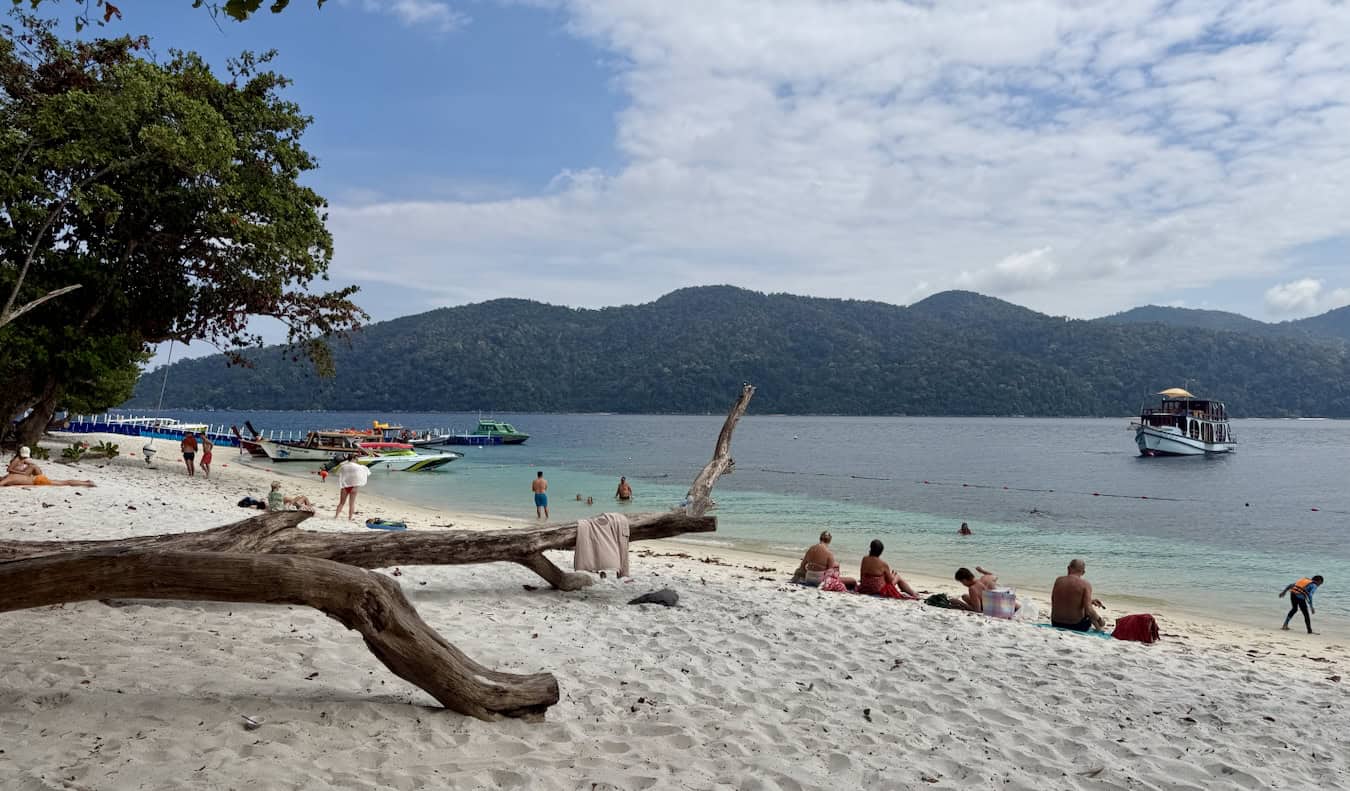
I met lots of people there who loved the island. If it’s your first time, I can see why you would love it. After all, the area is postcard perfect, the water is perfectly an azure blue, the sand is a beautiful white, and since you’re surrounded by a national park, a lot of tours take you to some secluded islands.
And, in comparison to Ko Phi Phi, Krabi, or Phuket, it is less developed so I can’t fault someone stepping here for the first time going “wow!”
But, as I reflect on the island and its overdevelopment, I have come to the same conclusion I have about Ko Phi Phi: people shouldn’t visit.
I’m not against growth, but I’m against this kind of growth. It’s not sustainably managed and going there will only tax the island’s limited resources even further. You can’t put the genie back in the bottle and no local is going to say “sure, I’ll stay broke so you can an idealized vision of the world.”
But this is not the way.
And, with so many other islands to visit that are well managed (Ko Lanta, Ko Jum, and Ko Mook, to name three nearby), I think you should skip Ko Lipe.
A visit there will only make things worse.
It pains me to say that, because it was such a beautiful place, and my original visit had a huge impact on my life. But if we’re going to be good stewards and travelers, sometimes you just have to say enough is enough.
And Ko Lipe is a place where enough is enough.
Go somewhere else that is better managed.
Because your choices do have an impact.
Riding elephants in Thailand went away when consumers became more conscious of it. Eco lodges got big because of consumers. Overtourism is talked about by consumers as much as it is by locals.
Maybe if enough people start to do something, Ko Lipe will change.
I doubt it but one can hope.
But, at the very least, by not going you are at least no contributing to the problem.
Get the In-Depth Budget Guide to Thailand!
My detailed 350+ page guidebook is made for budget travelers like you! It cuts out the fluff found in other guidebooks and gets straight to the practical information you need to travel around Thailand. You’ll find suggested itineraries, budgets, ways to save money, on and off-the-beaten-path things to see and do, non-touristy restaurants, markets, bars, safety tips, and much more! Click here to learn more and get your copy today.
Planning a Trip to Southeast asia
Get all my best Southeast Asia travel tips & free planning guides sent straight to your inbox
Book Your Trip to Thailand: Logistical Tips and Tricks
Book Your Flight Use Skyscanner to find a cheap flight. They are my favorite search engine because they search websites and airlines around the globe so you always know no stone is left unturned!
Book Your Accommodation You can book your hostel with Hostelworld as they have the biggest inventory and best deals. If you want to stay somewhere other than a hostel, use Booking.com as they consistently return the cheapest rates for guesthouses and cheap hotels.
Don’t Forget Travel Insurance Travel insurance will protect you against illness, injury, theft, and cancellations. It’s comprehensive protection in case anything goes wrong. I never go on a trip without it as I’ve had to use it many times in the past. My favorite companies that offer the best service and value are:
Looking for the Best Companies to Save Money With? Check out my resource page for the best companies to use when you travel. I list all the ones I use to save money when I’m on the road. They will save you money when you travel too.
To provide the best experiences, we use technologies like cookies to store and/or access device information. Consenting to these technologies will allow us to process data such as browsing behavior or unique IDs on this site. Not consenting or withdrawing consent, may adversely affect certain features and functions.
Functional
Always active
The technical storage or access is strictly necessary for the legitimate purpose of enabling the use of a specific service explicitly requested by the subscriber or user, or for the sole purpose of carrying out the transmission of a communication over an electronic communications network.
Preferences
The technical storage or access is necessary for the legitimate purpose of storing preferences that are not requested by the subscriber or user.
Statistics
The technical storage or access that is used exclusively for statistical purposes.The technical storage or access that is used exclusively for anonymous statistical purposes. Without a subpoena, voluntary compliance on the part of your Internet Service Provider, or additional records from a third party, information stored or retrieved for this purpose alone cannot usually be used to identify you.
Marketing
The technical storage or access is required to create user profiles to send advertising, or to track the user on a website or across several websites for similar marketing purposes.