A state Democratic lawmaker running for Congress apologized for placing a wager on himself that he'd win his party primary.
State Sen. Matt Klein of Mendota Heights said he wagered $50 in an online prediction market last October. The platform Kalshi flagged it as a political insider trading, penalized Klein $540 and banned him from the platform for five years.
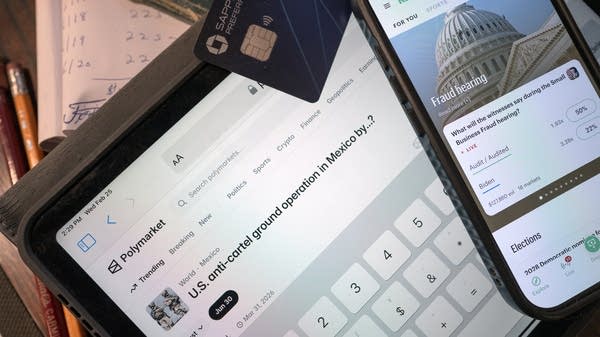
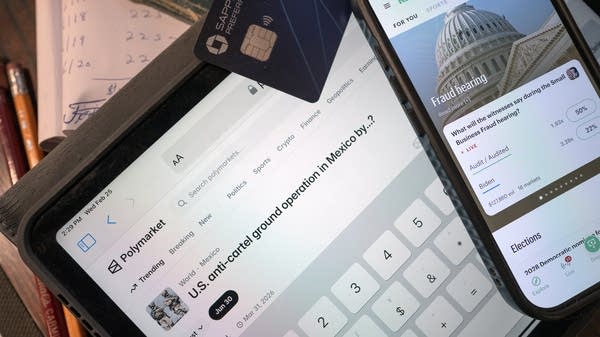
This situation is one of the many ethical conversations around prediction markets. At the State Capitol there's a bill looking to ban them. Minnesota Alcohol and Gambling Enforcement director Jon Anglin's job is to regulate this market.
He spoke to Minnesota Now host Nina Moini to talk about the challenges around regulating prediction markets.
The following was edited for length and clarity. Use the audio player above to listen to the full conversation.
What is a prediction market?
A prediction market is basically the stock market for real world events, anything from sports to weather. I could choose how many times I'm going to say ‘um’ through this interview. So if I say ‘um,’ 12 or more times, I could put that on a prediction market. Let's say 70 percent of the population said yes, I'm going to say ‘um’ over 12 times, you're going to pay 70 cents on the dollar. And if I do under 12, they're going to pay 30 cents on the dollar.
Traditional sports wagering is only on sports, where the house picks the odds.
Prediction markets went from $9 billion in 2024 to over $60 billion global volume in 2025, which is just explosive. It's easy to use.
What makes it hard to regulate?
A lot of these prediction markets have registered with the Commodities Futures Trade Commission. They're the ones that say, “OK, prediction markets are securities, and so therefore they cannot be regulated by state gambling laws.”
Because of that, that's where the big fight is coming in between the federal government and the states like Nevada, Massachusetts and Tennessee. And they've all been already in court trying to say the states have been saying we need to regulate the gambling.
What would a responsible prediction market look like?
It's really hard, because no one has regulated it as of yet, and we're still finding things out as we go through this. And I think it would be easier to answer that question once we have all the facts on what it is, and how it all works, and what it can do to the public. Because how do you handle insider trade information?
And I think that that's going to take some work, and that's not something easily we can figure out how we would handle if it was regulated. A ban on it is easier than regulating.