
New online hunting, fishing licensing system launching


DNR employees Kris Nissen, right, and Greg Berg haul in a net.

The Minnesota Department of Natural Resources says it’s expecting to launch a new electronic licensing system to purchase hunting and fishing licenses in the early summer.

The system won’t be online for the fishing opener Saturday, May 9 to avoid being overloaded during the busiest time of the year. But when the system does launch in its first phase this summer, it will be accessible to hunters, anglers and other outdoor enthusiasts.

Minnesotans will be able to go online, use a new mobile app or visit a license agent in person to purchase fishing and hunting licenses.

“I, for one, have been keeping my paper license on the back of my phone underneath the phone cover for years,” DNR commissioner Sarah Strommen said Thursday. “With this new system, I won't have to do that anymore, because my license will be in the app and available anytime I need it, no matter where I am.”

The new system will also allow Minnesotans to store their licenses on paper as a PDF, through email or within the mobile app. New features include linking licenses between family members and spouses to make purchases easier for groups.

“Because of Minnesotans’ passion for the outdoors and their commitment to conservation, we have some of the nation's most sought-after outdoor experiences and we are excited that this new system will make it easier for everyone to enjoy our outdoors,” Strommen said.
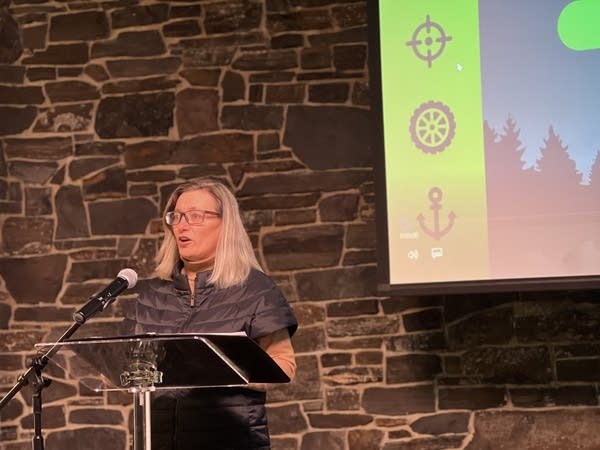
woman stands at podium
Minnesota Department of Natural Resources Commissioner Sarah Strommen says she's excited for the launch of an upgraded, mobile-friendly licensing system for the state's fishers, anglers, hunters and outdoor enthusiasts at a press conference at the DNR's office in St. Paul on April 30.
Nicole Ki | MPR News

The summer launch comes after it was initially planned to debut over a year ago. After the first phase of the system launch, recreational vehicle and watercraft registration will be added at a later date.

Earlier this month, a state audit raised “significant concerns” about the rollout of the licensing system that it warned would result in delays and issues throughout the development process. Some of the concerns included the large amount of data the new system would have to handle.

According to a 2024 budget report, the Minnesota DNR manages 2.4 million license sales transactions for hunting, fishing and other activities a year, in addition to 1.4 million registrations for recreational boats and vehicles.

Minnesota IT Services Commissioner Jon Eichten said on Thursday multiple agencies have worked to remedy the issues that were highlighted in the Office of the Legislative Auditor’s report.

“We concurred with the findings of that report and they aligned to the risk mitigations and quality assurance strategies that we had already put in place ahead of that approach to launch,” he said.

Testing of the system has gone well and now Eichten says he’s confident the system is ready to go live soon.

“At this stage, our focus really goes to the final phases of training, making sure our internal staff and our external partners who support us in this work are ready to engage with the new system and some of the new processes that go along with it,” he said.




Source link

Leave a Reply

Subscribe to Our Newsletter

Get our latest articles delivered straight to your inbox. No spam, we promise.

Recent Reviews


Meta has agreed to “substantially reduce” its use of the PG-13 ratings system in relation to its Teen Accounts on Instagram starting April 15.

Last year, the Motion Picture Association objected to Meta directly referencing its movie content rating, which cautions parents against letting their pre-teens engage with certain media. In a cease-and-desist letter seen by  at the time, the MPA said that Meta claiming its were comparable to PG-13 ratings was “literally false and highly misleading.”

The MPA argued that its guidelines for the established movie-ratings system and Meta’s own explanation of the revamped accounts for minors did not align, and that drawing a link could have a detrimental effect on the MPA’s public image by association. It also said that Meta’s system seemingly relies heavily on AI to determine what younger users see on the social media platform.

When introducing the changes in 2025, Meta said that the risk of seeing “suggestive content” or hearing certain language in a movie rated 13+ was a good way of framing something similar happening on an Instagram teen account. It added that it was doing all it could to keep such instances to a minimum.

Meta has now updated that initial blog about the changes after coming to an agreement with the MPA, adding a lengthy disclaimer that reads, in part, “there are lots of differences between social media and movies. We didn’t work with the MPA when updating our content settings, they’re not rating any content on Instagram, and they’re not endorsing or approving our content settings in any way.”

Meta goes on to explain that it drew “inspiration” from the MPA guidance given its familiarity with parents, as well as feedback it had received from parents, and will continue to do so. The difference is that it won’t make the connection so explicitly in its communications going forward.

“Today’s agreement clearly distinguishes the MPA’s film ratings from Instagram’s Teen Account content moderation tools,” said Charles Rivkin, Chairman and CEO of the MPA. “While we welcome efforts to protect kids from content that may not be appropriate for them, this agreement helps ensure that parents do not conflate the two systems – which operate in very different contexts. The MPA is proud of the trust we have built with parents for nearly sixty years with our film rating system, and we will continue to do everything we can to protect that trust.”


Source link