

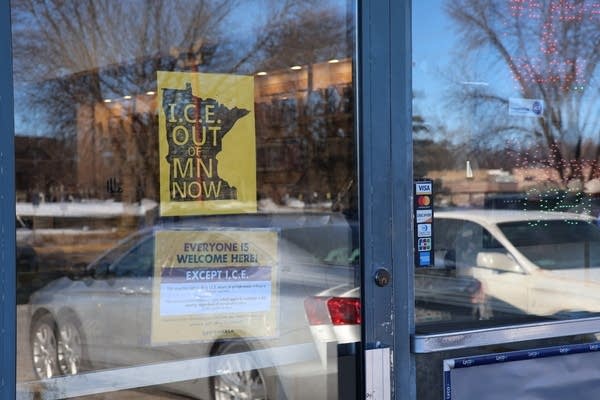
The surge of U.S. Immigration and Customs Enforcement agents in St. Cloud earlier this year created a climate of intense fear and anxiety in the Somali American community that lasted for months, and left some still feeling the effects on their mental health.
The news of ICE’s presence in St. Cloud rattled a Somali American man, A.H., who has lived in the city for 12 years. MPR News agreed to use A.H.’s initials instead of his real name to protect his identity.
A.H. came to the U.S. legally and has a green card. Still, reports of federal agents forcibly detaining immigrants shocked and worried him. He stopped leaving his house to avoid encountering ICE.
“I used to go to the shops. I used to go see people out in public,” he said. “When ICE came, it ended up with me locking myself in my home, and I wouldn’t go out anywhere.”
But being stuck at home left him feeling depressed, A.H. said.
“It feels like you’re someone who’s in jail when you’re just sitting at home,” he said. “Even if someone said to you, ‘We’ll bring you food,’ but then they say, ‘Just sit in your house, don’t go out that door,’ it’s like you’re someone in jail.”
A.H. said it brought back recollections of his early years in Somalia. His father was killed in that country's civil war. As a child, he suffered an injury that left him disabled.
“It feels like the troubles in Somalia when I was young, when I’m being told that my father had died, other people in my family were hurt or injured,” he said. “When you see the police, you remember those memories.”
‘Reliving that trauma’
A.H. said he has found some release from his fear and stress by talking to a licensed mental health therapist, Ali Aden.
Aden opened the Bridge Healing Center in St. Cloud about four years ago. It provides culturally specific mental health services mainly for the East African community.
Aden said many of his clients are experiencing mental health symptoms as a result of the ICE surge, including anxiety, depression and chronic stress.
"They tend to go through a lot of trauma before they get here,” he said. “So this is not a new wave of trauma. They are just reliving that trauma."
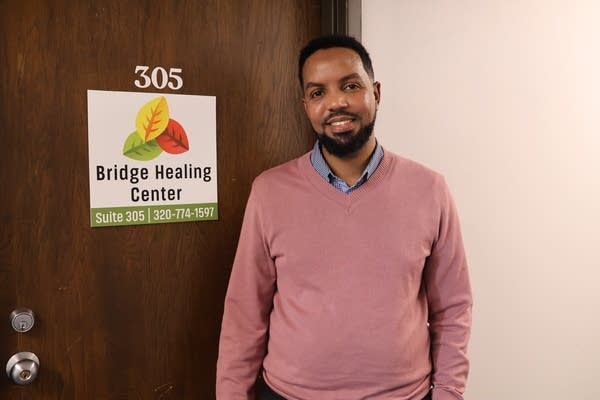
Many of Aden’s clients are first-generation immigrants from East Africa, where there's a deeply rooted stigma against talking about mental health. But he and other providers have been working to overcome that taboo, and they encourage people to seek help.
The Center for Victims of Torture, an international nonprofit headquartered in St. Paul, opened an office in St. Cloud in 2015. It provides psychotherapy for people who've experienced significant physical and mental trauma. Some are new immigrants and asylum seekers. Others have lived in St. Cloud for years.
Amal Hassan is the center’s community development and education coordinator. She said the recent ICE action caused some people to re-experience past memories of hiding, fleeing or living in constant fear for their safety.
"A lot of people that came here were like, ‘We thought we were safe,’” she said. “And then seeing people in America getting gunned down, that they had to relive that.”
One client described the fear like a lion that shows up in their room every night, Hassan said.
"Even when you're going through therapy, you're seeing providers and you're taking care of it, it takes a long time to heal from that kind of trauma,” she said.
Strategies that help
Hassan said during the ICE action, people were afraid to come to the Center for Victims of Torture’s office for appointments. Telehealth visits don't always work, she said, because some people share a home with others and don't have privacy.
Hassan met some clients in their cars. She even bought a window shield to help them feel safer.
"A lot of the clients that right now are describing feelings of like, 'I feel like I still have to hide, closing all the windows. I am afraid to even let the sunlight come in, because what if they're outside?’” she said.
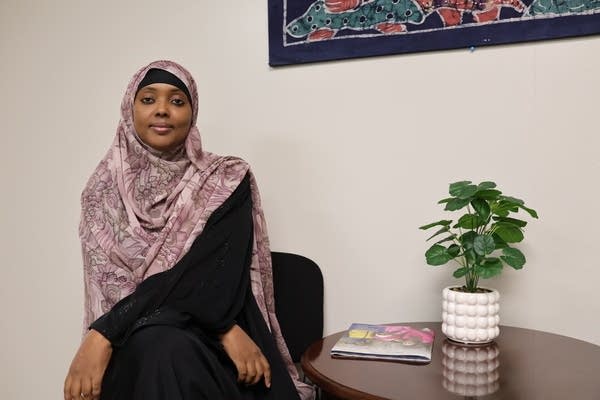
Hassan said she tries to help people develop strategies to manage stress and anxiety. Dialectical behavior therapy – a kind of talk therapy – can help people regulate their emotions and increase their stress tolerance, she said.
"Everything passes,” Hassan said. “So how do you take care of yourself? How do you prioritize your mental health? And then what do you have control over and what don't you have control over?"
Recognizing the signs
CentraCare, the St. Cloud region's largest health care provider, also reports seeing an increase in people with mental health symptoms since the ICE surge.
Hani Jacobson, a community health nurse with CentraCare and a Somali American, said because of her community's stigma surrounding mental health, people often describe the effects in a different way.
"It's a lot of physical symptoms – ‘I have increased headaches and my body hurts and my stomach hurts,’” Jacobson said.
Getting people to recognize the connection between those physical symptoms and the mental stresses they're facing is a key to healing, she said.
One of the phrases trauma-informed providers use is “the body remembers,” said Dr. Kim Tjaden, a family physician with CentraCare and part of its community health improvement team.
“Sometimes saying that to people will make them understand that my physical body remembers the trauma that I went through 20 or 30 years ago,” Tjaden said. “So I have physical pain or physical feelings based on some of this re-traumatization."
But some strategies that Tjaden would typically recommend to people struggling with mental health, such as getting outside and moving their bodies, don't work for those who are afraid to leave their homes.
"If you're living in a militarized community – or that's your perception – you're not going to want to go for a walk,” she said. “You're not going to want to breathe that fresh air and be out in the community."
Lasting impacts
What does help, providers say, is keying in on people's strengths and reminding them of their resilience.
Informing people of their rights as a U.S. resident and what resources are available can be empowering, Hassan said.
The close-knit nature of the Somali community also has been an asset, according to providers. During the surge, people shared information, drove others to appointments and delivered food to those stuck at home.

Still, Tjaden said she’s concerned about the long-term impacts of the immigration enforcement, especially children who watched loved ones being stopped or detained.
“There's a lot of trauma there to unpack,” she said. “And if the parents are in a place where they are being re-traumatized, it's going to be awfully hard for them to help that child build the resilience to not to not have some long-standing mental issues with that.”
Jacobson said the enforcement surge affected the entire Somali American community. Even those who didn't have a direct encounter with ICE watched what was happening on social media, she said.
"So even if you personally did not experience that trauma, you saw it, and it was in your neighborhood,” Jacobson said.
Now that most ICE agents have left St. Cloud, A.H. said he's feeling more hopeful, and is venturing out into the community again.
He encourages people feeling afraid and anxious to reach out to those around them to get the support they need.
“If you face fear, don’t give up, but come back from it by being in community,” he said.
This story is part of Call to Mind, American Public Media and MPR's initiative to foster new conversations about mental health.