
We get it — mastering points and miles is no easy feat. You may have seen our guide to getting started with points and miles, but what happens once you’re ready to cash those points in for a trip?
Maximizing points and miles to travel luxuriously without breaking the bank doesn’t need to be laborious and time-consuming. In fact, there are various tools available that make it easier to find hotel and flight award availability.
With these tools, you can use your points to travel where you want, when you want and how you want in 2026 (and beyond) without spending hours searching for availability.
Here are 13 of the best apps and websites that make award travel redemptions easier and less stressful.
Roame.travel
What it does: Finds flight award availability based on your itinerary
What it costs: The basic plan is free, but you really unlock the best features with a paid membership. Right now, TPG has a special offer. Roame.travel is offering TPG readers 25% off the Friends of Roame Pro membership (with code “THEPOINTSGUY”). This brings the regular price down to $9.74 per month (from $12.99) or $82.49 per year (from $109.99).
Roame special offer link here.
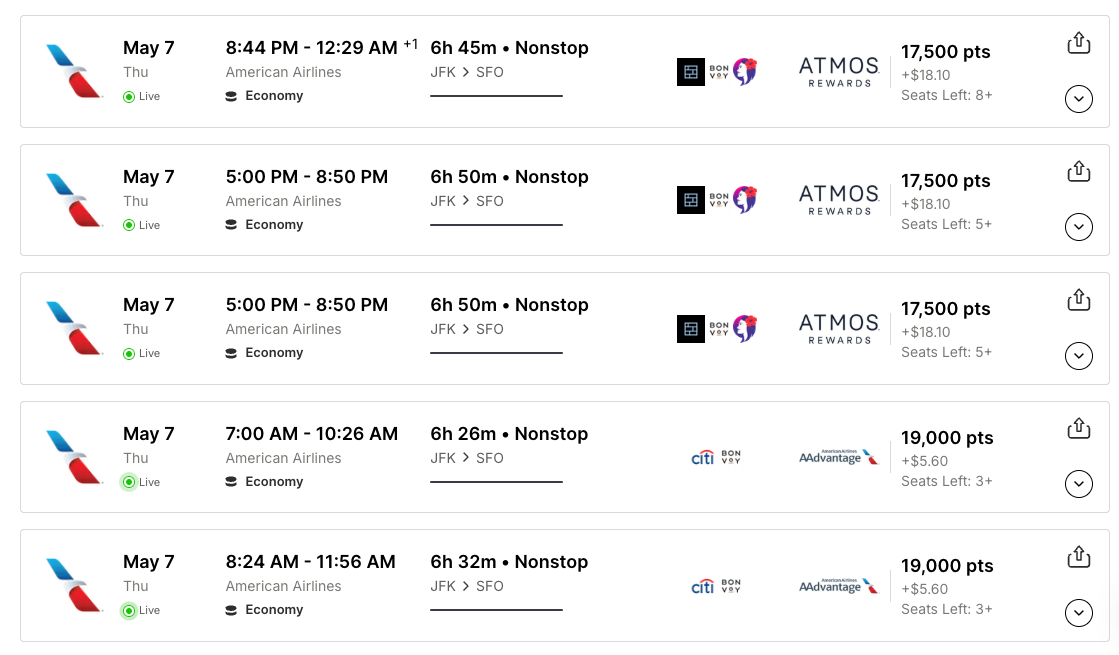
When you sign up for a free account, you can search more than 20 airline programs for instant, real-time award availability.
When you click a flight option, you can see the points required to book, available transfer partners and recommended credit cards to help you earn the points you need. You can even add the credit cards you already have to your virtual wallet for tailored recommendations.

Reward your inbox with the TPG Daily newsletter
Join over 700,000 readers for breaking news, in-depth guides and exclusive deals from TPG’s experts
With a paid membership, you can also track points pricing with route alerts.
As always, we recommend confirming award availability before transferring awards.
Related: The complete guide to searching award space on Roame.travel
Expert Flyer
What it does: Helps travelers find airline award space.
What it costs: There is a free version that alerts you to seat availability on a specific flight, but you can get additional alerts and better search functions with the Basic ($6.99 per month), Premium ($12.99 per month) or Elite ($19.99 per month), with discounts if you choose to pay annually.
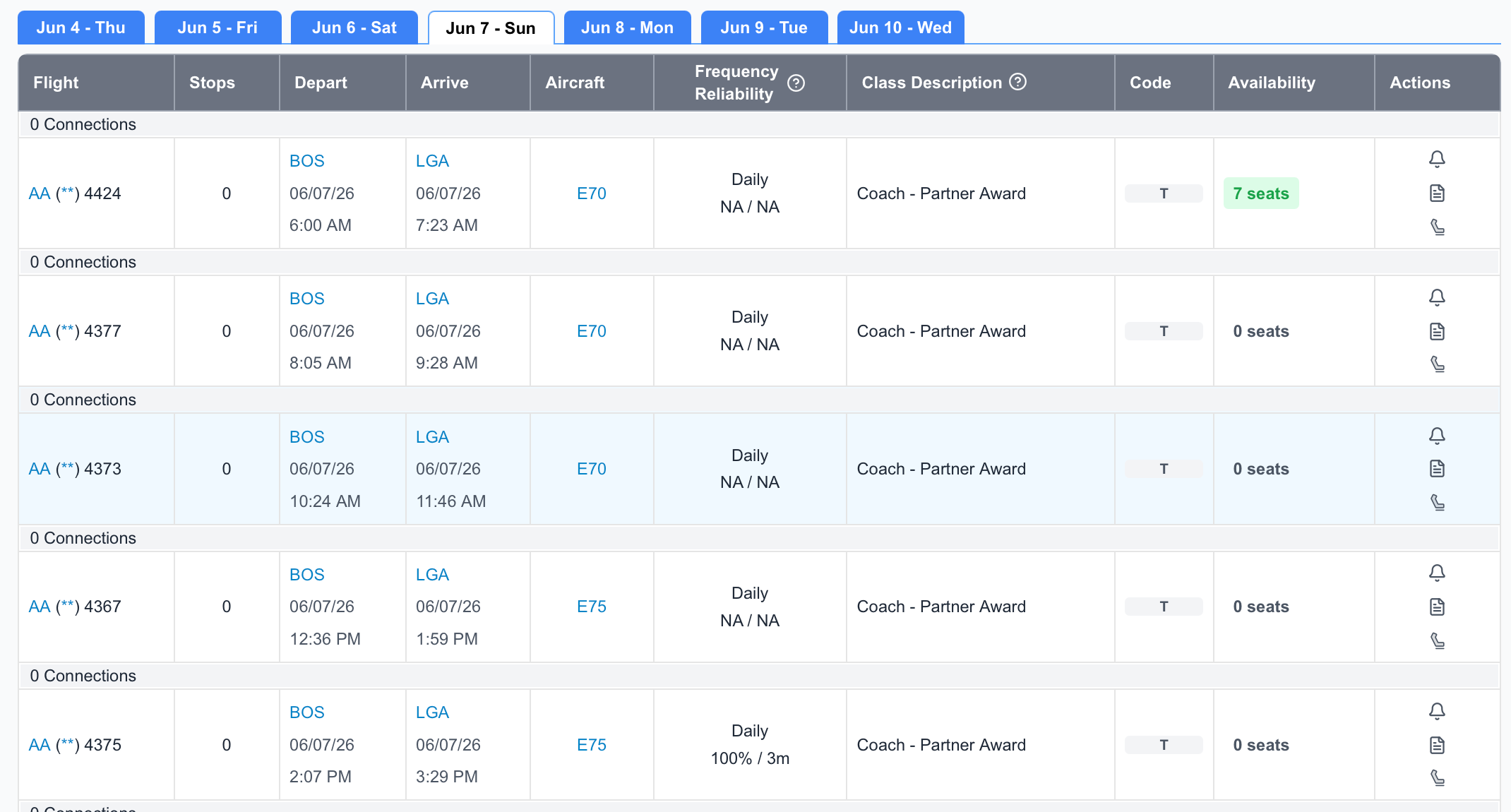
ExpertFlyer (owned by TPG’s parent company, Red Ventures) is a helpful tool for viewing airline schedules, seat maps, flight statuses and award availability across more than 400 airlines. You can even set alerts to help snag your preferred seat on dozens of airlines if it isn’t available when you book your flight.
Related: How to use ExpertFlyer alerts to snag a better seat
You can set one alert for a specific flight with a free account, but you will need a Basic or Premium account to run an award search. Once you are logged in with a Basic or Premium account, you can search using the “Awards & Upgrades” tab. When you enter your travel details and select the airline you’d like to fly, you’ll see the fare classes that ExpertFlyer can search alongside a description.
When you click the search button at the bottom of the screen, ExpertFlyer presents you with a list of the available flights broken down by date. Once you have the date, flight number and fare class, you can book your flight online or by calling the airline directly. If the flight you’re looking to book doesn’t have seats available in your preferred fare class, you can set an alert, and ExpertFlyer will email you if a seat is released, taking the legwork out of award searches.
ExpertFlyer’s newest “Systemwide Upgrades” feature lets American Airlines elite status holders find systemwide upgrade availability up to 330 days out across multiple regions. This feature is only available to Elite members.
MaxMyPoint
What it does: Tracks hotel award availability at Hyatt, Hilton, IHG and Marriott properties
What it costs: Free for basic membership; $3.99 for a Gold membership and $7.99 per month for a Platinum membership (two months free if you pay yearly).
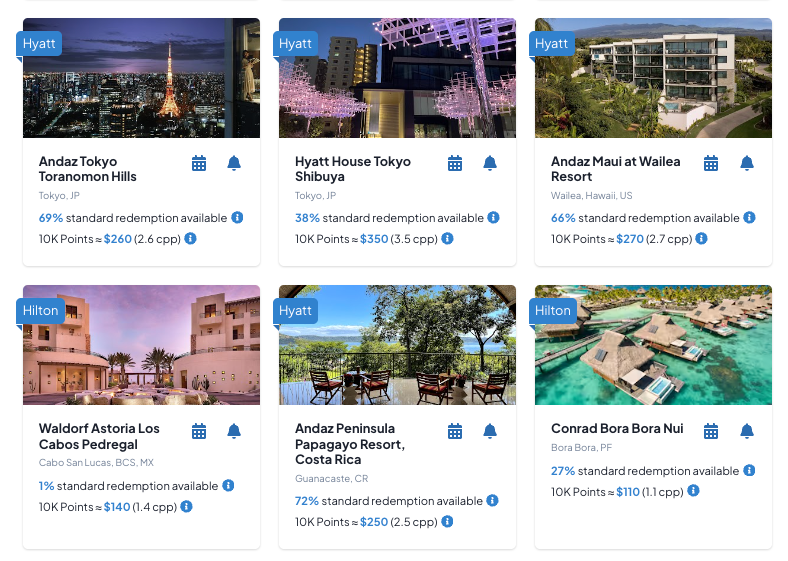
MaxMyPoint is a website that lets you check award availability for Hyatt, Hilton, IHG and Marriott properties worldwide. It takes the guesswork out of award redemption searches by showing real-time award pricing and availability.
The homepage shows popular properties, but you can filter by hotel brand, location, price and more to narrow down your results. You can also search date-based deals or use the map search feature to search multiple hotels in a single destination.
Once you choose a property, you can view a calendar that displays available points pricing and the lowest cash rate. This allows you to plan your trip around the dates with the best points pricing.
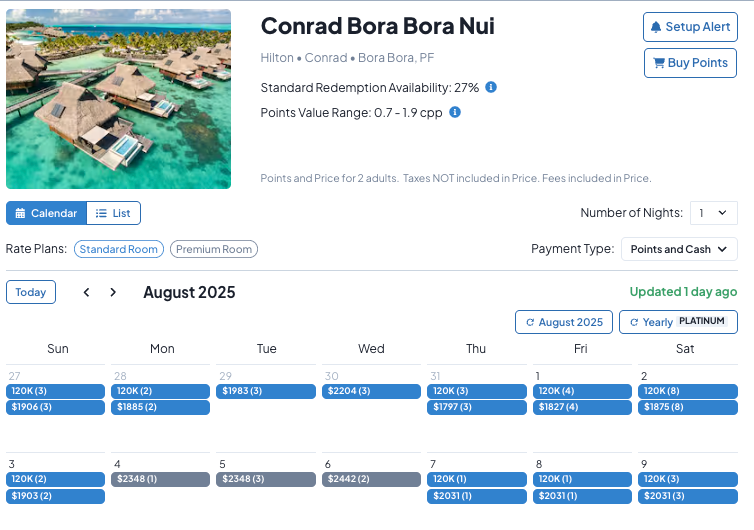
After you select your check-in date, you’ll automatically be redirected to the property’s website to start the booking process. If you can’t find the availability you are looking for, you can register for a free account and set up an alert to receive an email if availability changes.
Paid memberships come with additional features, including additional and more frequent alerts.
Points Path
What it does: Displays award pricing in Google Flights
What it costs: Free for a standard plan, $7.99 per month or $79.99 per year for a Pro plan
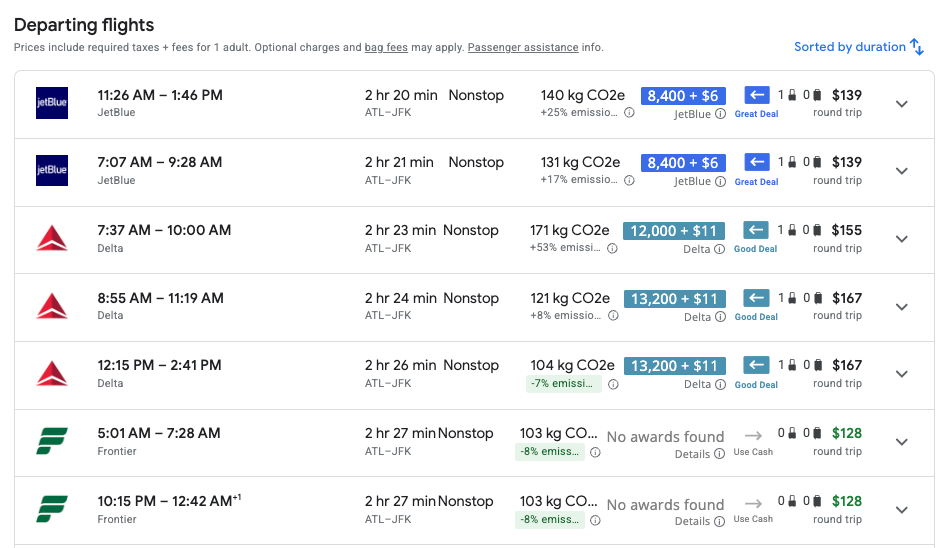
Points Path is a free browser extension that displays award pricing alongside cash prices for select airlines in Google Flights. The free version includes points vs. cash pricing for Alaska Airlines, American Airlines, Delta Air Lines, JetBlue and United Airlines.
It also tells you which transferable points can be used with the airlines it supports, and when to book at a paid rate or with points. Once you select an itinerary, you can book it using points or cash directly with the airline, as you would with Google Flights.
Related: How to use the Points Path extension to compare cash and award rates in Google Flights
Points Path simplifies determining when to use cash or miles to buy airline tickets. Points Path Pro unlocks additional features such as price alerts, access to additional airline programs and customizable points valuations.
The browser extension is compatible with Chrome, Safari, Microsoft Edge, Opera, Brave and Arc.
Point.me
What it does: Finds flight award availability based on your itinerary
What it costs: There is a free version, but for real-time availability, you can purchase a Standard ($10.75 per month) or Premium ($21.67 per month) membership. Discounts are available when you pay annually. Concierge services are available starting at $200 per passenger.
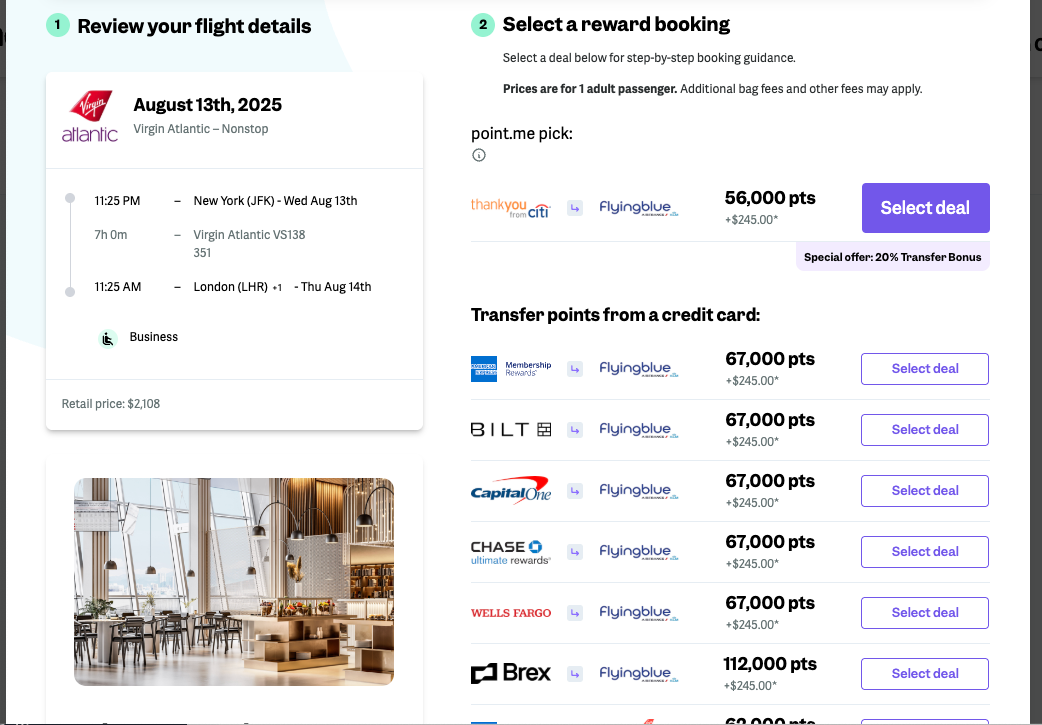
Point.me‘s robust interface searches for award flights across more than 30 loyalty programs and over 150 airlines.
By entering your itinerary details, Point.me will display award availability, including which transfer partner offers the most value for your buck.
In addition to the free and paid versions, you can book one-on-one sessions with one of Point.me’s experts. They can assist you with booking a flight, points strategy consultations, elite status and mileage runs and more.
American Express cardholders can access a limited version of Point.me for free. Similar to the full version, you can search for award flight availability, though you will only see results from Amex transfer partners. This is a good way to try Point.me for free if you have Membership Rewards points that you want to transfer to an airline loyalty program to purchase tickets.
Pointhound
What it does: Helps you maximize your points by finding the best flight redemptions
What it costs: Free for the basic plan, $99 per year for the premium plan.
Pointhound takes the guesswork (and hours of searching) out of turning your points and miles into award flights. The site’s search tool helps you find the best deals by displaying preferred booking options for a designated route and date.
For example, if you search for a flight from John F. Kennedy International Airport (JFK) to Paris-Charles de Gaulle Airport (CDG), Pointhound will display your flight results alongside all available booking options.
If you know you want to fly Air France but don’t have enough FlyingBlue miles, you can see which programs transfer to Air France partners, including those that have current transfer bonuses.
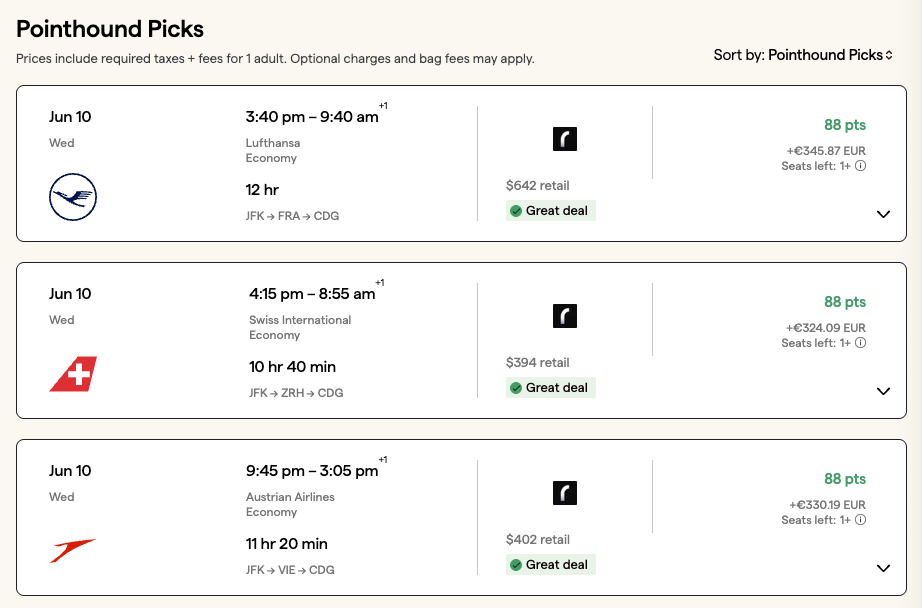
Once you’ve chosen a route and booking option, Pointhound will walk you through the points transfer and booking process. (You still book directly through the airline; Pointhound gives you the instructions on how to do it.)
If you want to stay informed about the latest flight deals, you can sign up to receive flight alerts from specific airports via email.
PointsYeah
What it does: Searches for real-time award flight and hotel availability
What it costs: Free for unlimited basic searches, $1.99 per month or $119.95 per year for Premium.
PointsYeah streamlines hotel and airline award bookings by searching all major credit cards, award programs and booking portals in under 20 seconds. You can view results from more than 20 airline programs and six major hotel programs.
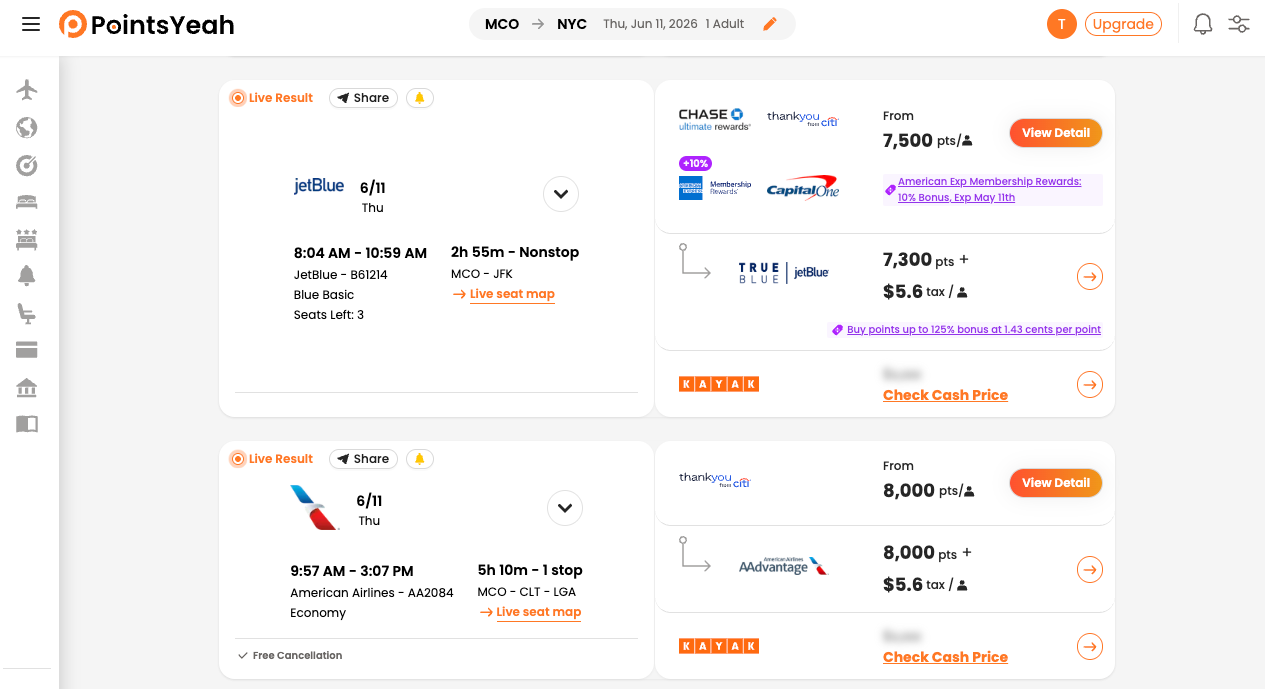
Once you’ve chosen a flight, PointsYeah will display all available booking options. If you already have enough points, you can book directly with the airline, but PointsYeah will show how many points you would need to transfer from various credit card programs, including details on current transfer bonuses.
You can create flight and hotel and airfare alerts. Basic accounts get up to four flight and hotel price alerts, and Premium members get up to 32 flight alerts and 15 hotel alerts.
When you upgrade to Premium, you also get access to United Airlines upgrade alerts, expanded date and destination availability when you search and the ability to set custom values for your points currencies.
AwardTool
What it does: Provides real-time search results across multiple airports and travel dates simultaneously
What it costs: Free for the basic plan, $9.99 per month or $79.99 per year for AwardTool Pro.
If your travel dates and destinations are flexible, AwardTool can display results for multiple flights in a single search. If you’re extra flexible, you can utilize the Panorama feature to view award pricing by region rather than a specific destination or the Deals feature to see the best award rates from your chosen airport to anywhere in the world.
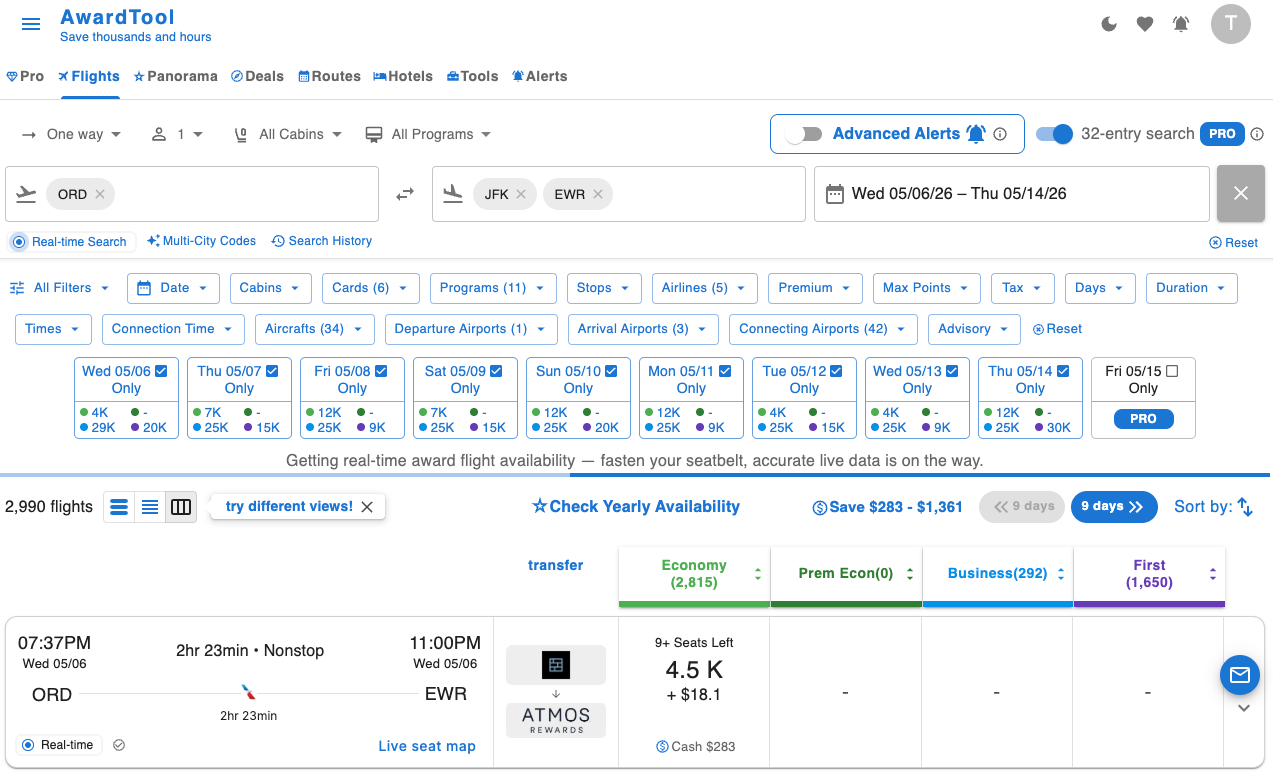
When you upgrade to AwardTool Pro, you unlock access to additional and expanded search capabilities, up to 100 award alerts, unlimited Panorama alerts and live seat map availability.
SeatSpy
What it does: Checks flight award availability based on your itinerary and preferred airline
What it costs: Free for five economy award availability searches per day; $3.39 per month for a Premium subscription or $9.99 per month for a First Class subscription, with discounts for paying annually.
SeatSpy is a simple-to-use website that checks for award availability across 15 different international airlines.
Select your airline, departure and end destination airports, then hit “Search” to see availability across the next 12 months.
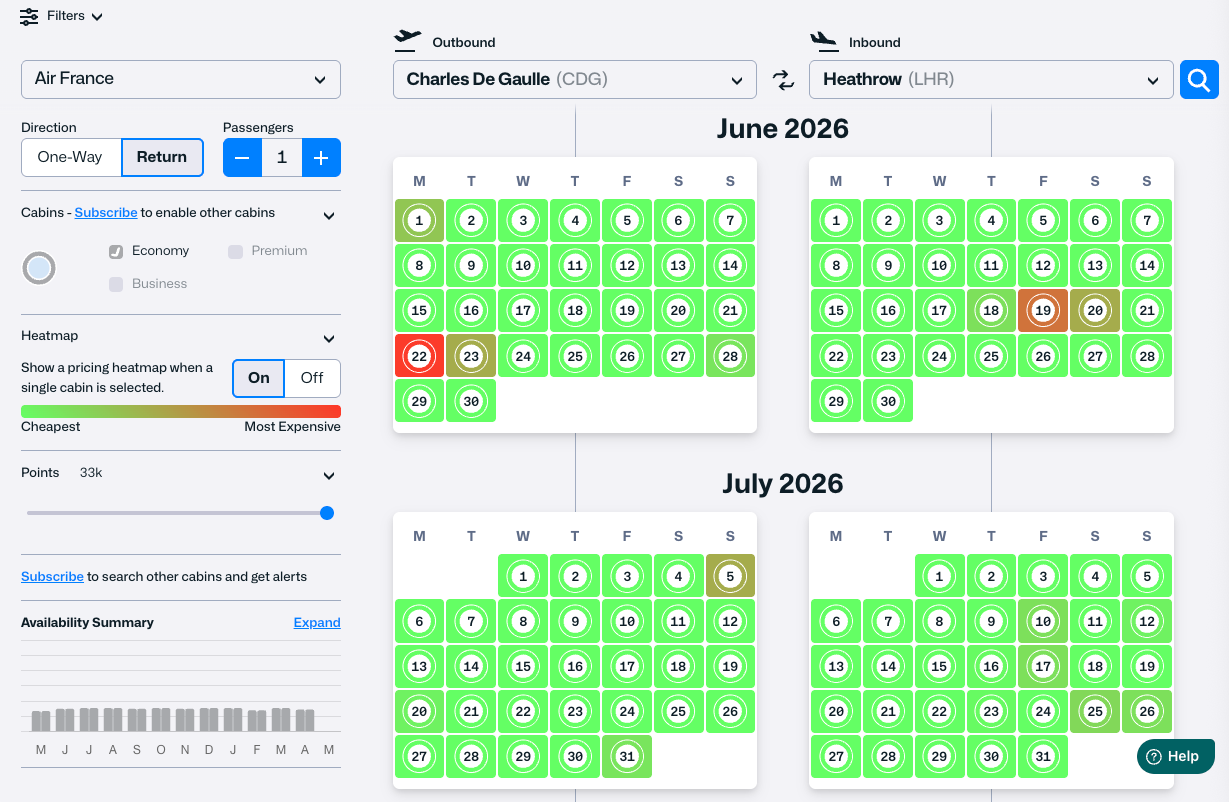
SeatSpy is free to use if you’re only searching for economy availability and stick to a five-search limit. Where the product really shines, however, is in its premium subscriptions.
The entry-level subscription, Premium, allows unlimited searches across all fares and up to four availability alerts across email, WhatsApp and Telegram. It also includes AwardWallet integration, so you can track how many points you have to redeem.
First Class includes everything in the Premium plan, plus unlimited alerts at a more regular frequency. “Experience alerts” for hotel rewards are also included.
Both subscriptions offer a “Where Can I Go” search feature that shows all destinations with award availability from your departure airport on the travel dates you select.
It may have few features when compared to other services on this list, but in terms of simplicity, it’s a great site — especially if you’re looking at Europe-based airlines.
Seats.aero
What it does: Displays award seat availability on domestic and international flights across fare classes
What it costs: Free for the basic version and $9.99 monthly for the Pro version, which includes Rooms.aero access for hotel award searches. You can sign up via our TPG link here.
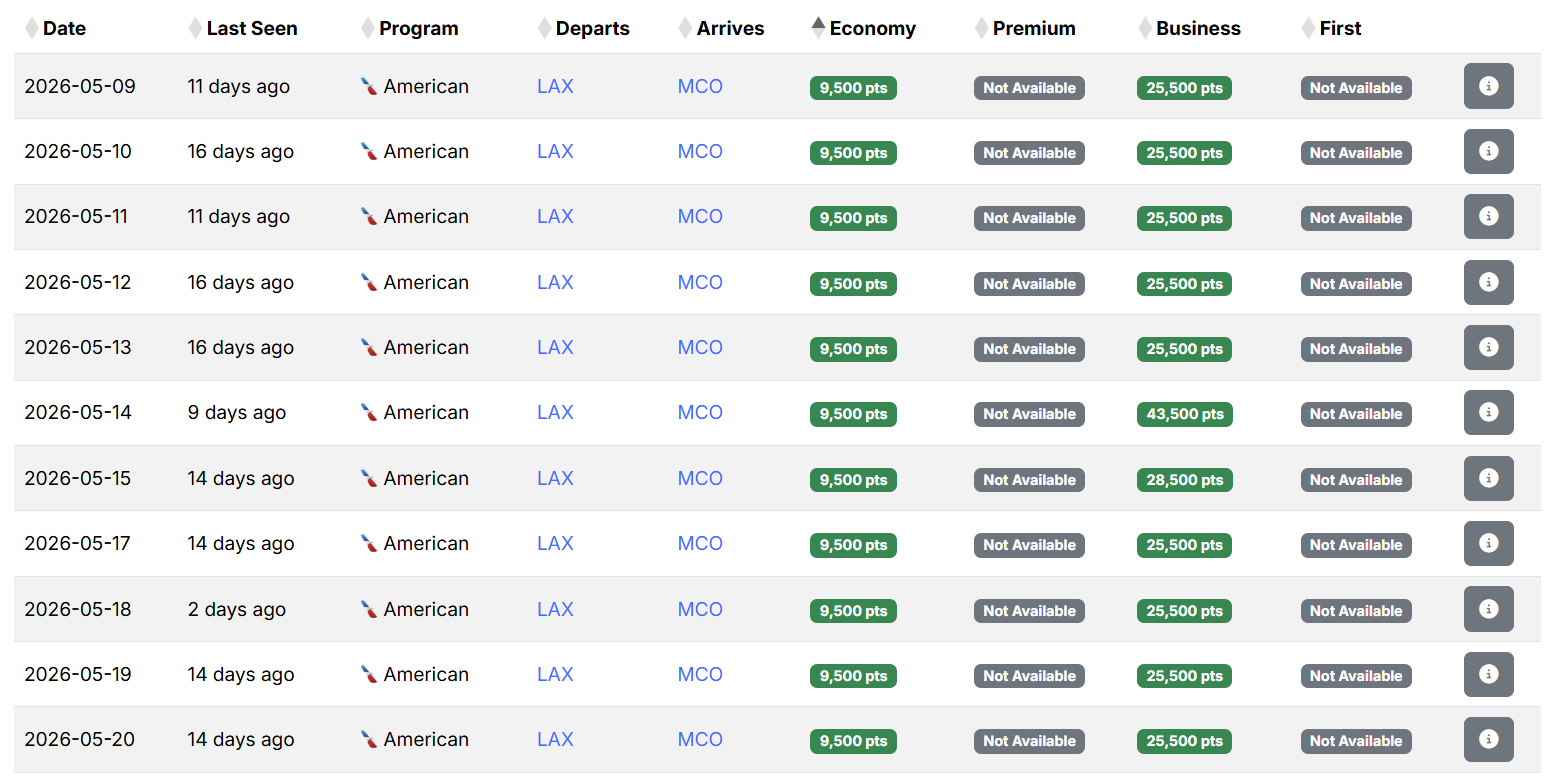
Seats.aero searches for award space every few hours and provides results for the next few months. It’s one of the best ways to search for Lufthansa’s first-class award space, as it’s generally only available to Star Alliance partners shortly before departure.
The Pro version allows you to search up to a year in advance on longer routes, set up unlimited alerts and receive SMS notifications when award availability is located.
Related: How I use Seats.aero every day to find the best airline award availability in seconds
Rooms.aero
What it does: Displays hotel award availability across several major hotel brands
What it costs: Free for the basic version and $9.99 monthly for the Pro version, which includes Seats.aero access for award flight searches.
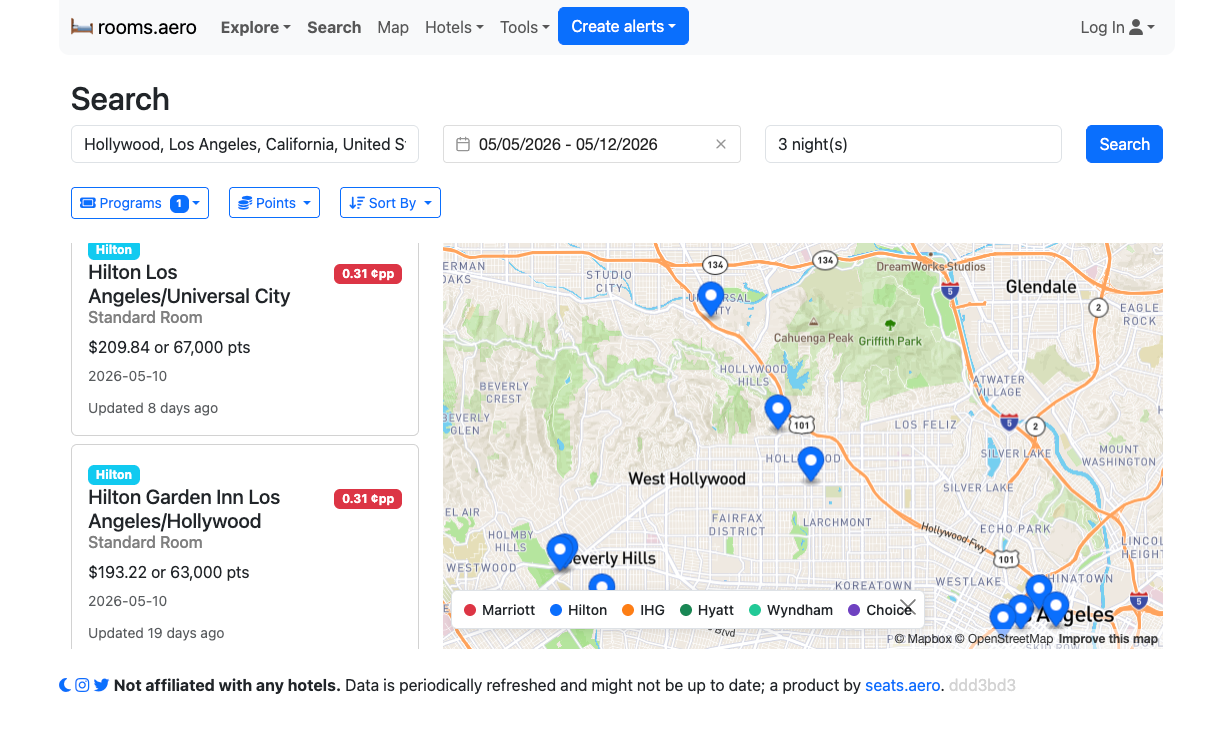
Rooms.aero works similarly to its counterpart, Seats.aero. Users can search five major hotel programs — Choice Privileges, Hilton Honors, World of Hyatt, IHG One Rewards and Marriott Bonvoy — for hotel award availability across certain dates or destinations.
Related: How to use Rooms.aero to find the best hotel award availability
Rooms.aero uses a valuation system to display whether you are getting a good, average or poor value for your points based on a given redemption. You can also filter by points program and the maximum number of points per night. When you choose a hotel, you’ll see a calendar view with points and cash rates.
You can also use Rooms.aero to set pricing alerts to notify you when a specific hotel or destination has points availability. With a Pro account, you get access to advanced search filters, SMS alerts and more.
Awayz
What it does: Displays points, miles and cash pricing for flights and hotels
What it costs: Free for a basic membership; $5.99 for a one-time “Trip Pass” and $14.99 per month or $150 annually for a premium membership.
Awayz helps you make the most of your hard-earned points and miles by showing when to redeem loyalty points and when to pay cash. You can use the Awayz search tool to find specific flight routes or hotels in specific destinations. Awayz will then display live award availability and cash rates so you can make a side-by-side comparison.
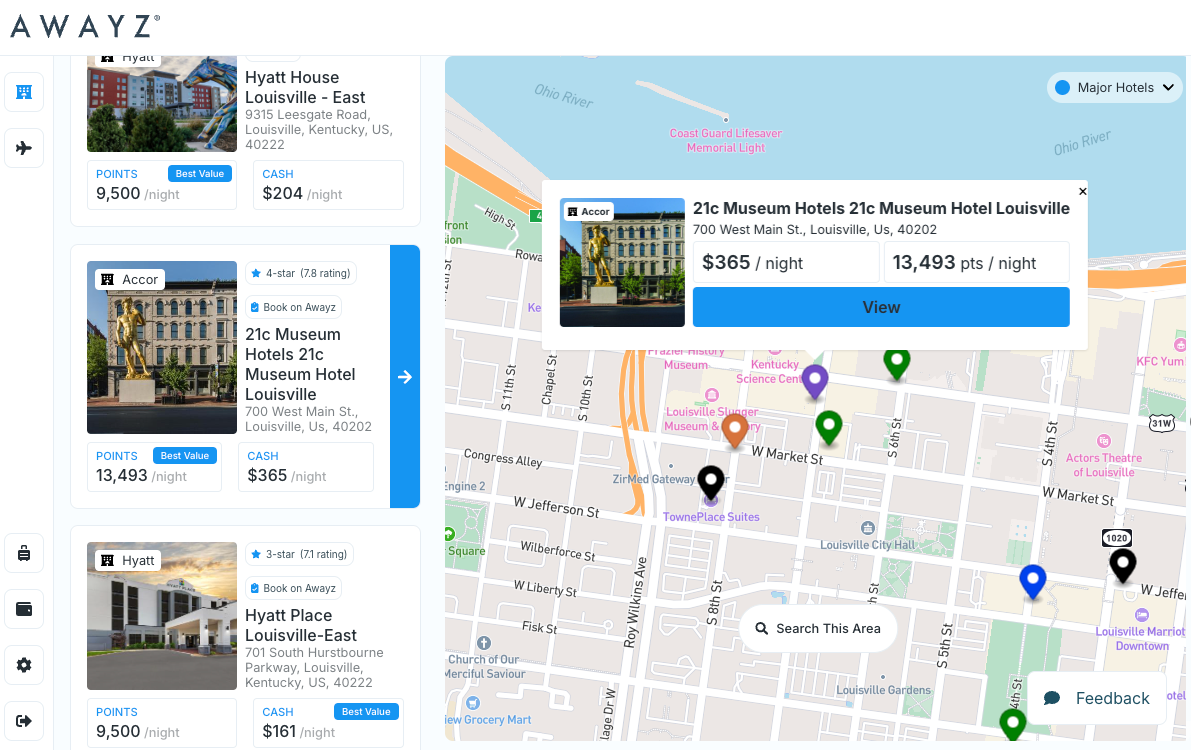
You can use the site’s robust filtering system to display certain hotel chains, transferable award programs and even those that qualify for free night certificates.
For flights, you can filter to see only certain airlines, choose the time of day you’d prefer to travel and even which aircraft you’d prefer. You can also update your “wallet” with the credit cards and reward balances you currently have, so it can further tailor your results.
Related: How to use Awayz to improve your hotel award searches
A free membership includes five hotel and five airline searches per month. An Awayz Trip Pass (great for one-time planning) includes 50 hotel and 15 flight searches per month, as well as award availability alerts and an award availability calendar, for a one-time fee of $5.99. An Awayz Premium membership includes 250 hotel and 50 flight searches, plus 20 award availability alerts, hotel deal alerts and more.
Google Flights
What it does: Finds flight schedules and prices, with several filtering options, for most major airlines
What it costs: Free
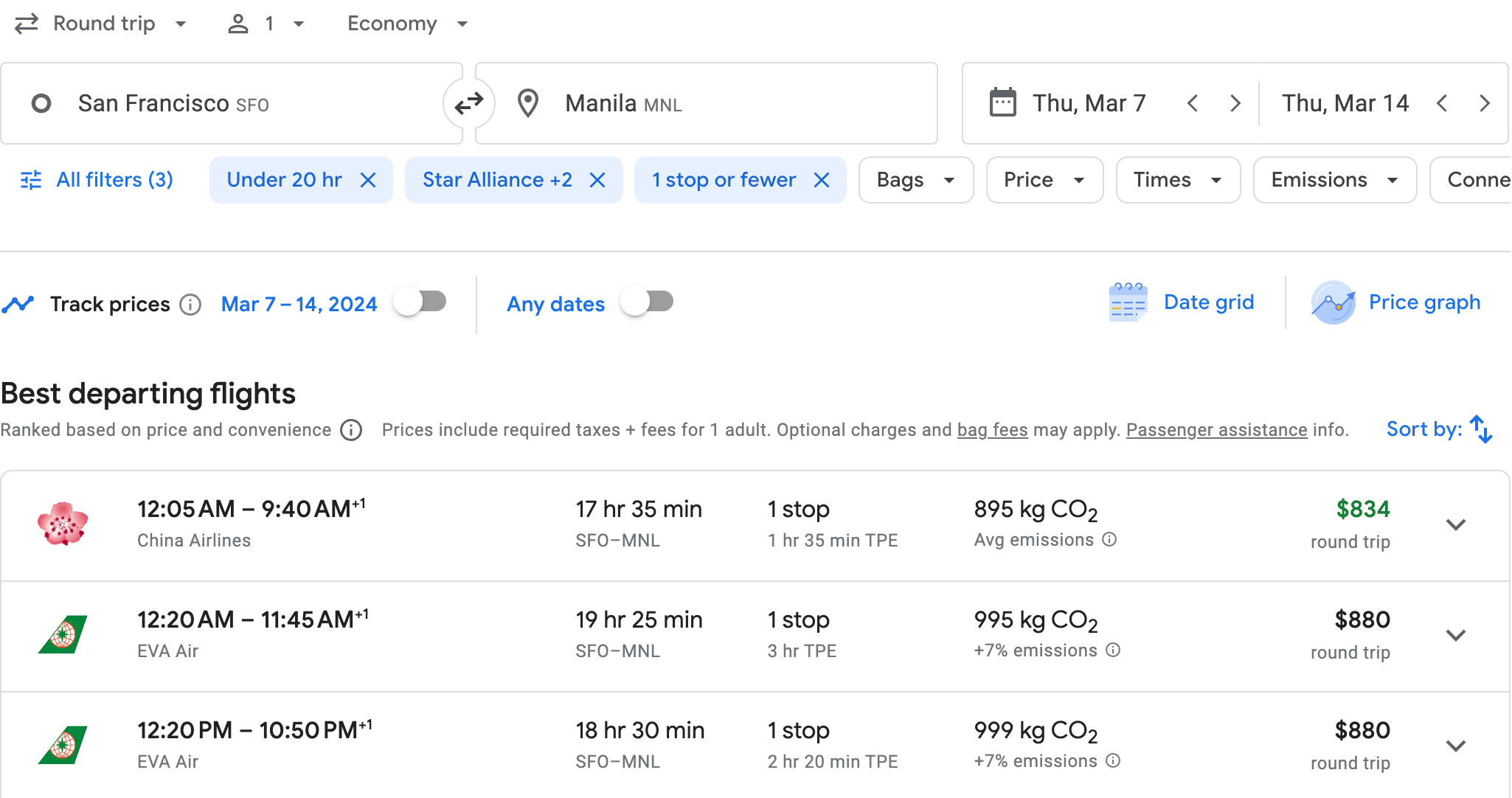
Google Flights is your one-stop shop for finding the best flight for your schedule and budget.
You can search flight schedules and pricing across most major airlines and sort results based on price, duration, number of stops, fare class and airlines, among other options. You can also set flight price alerts.
One of the best tools within Google Flights is Google Flights Explore. Click on that link for a complete guide to using the tool.
Google Flights Explore lets you only enter your departure city before using the interactive map to choose your destination based on current pricing.
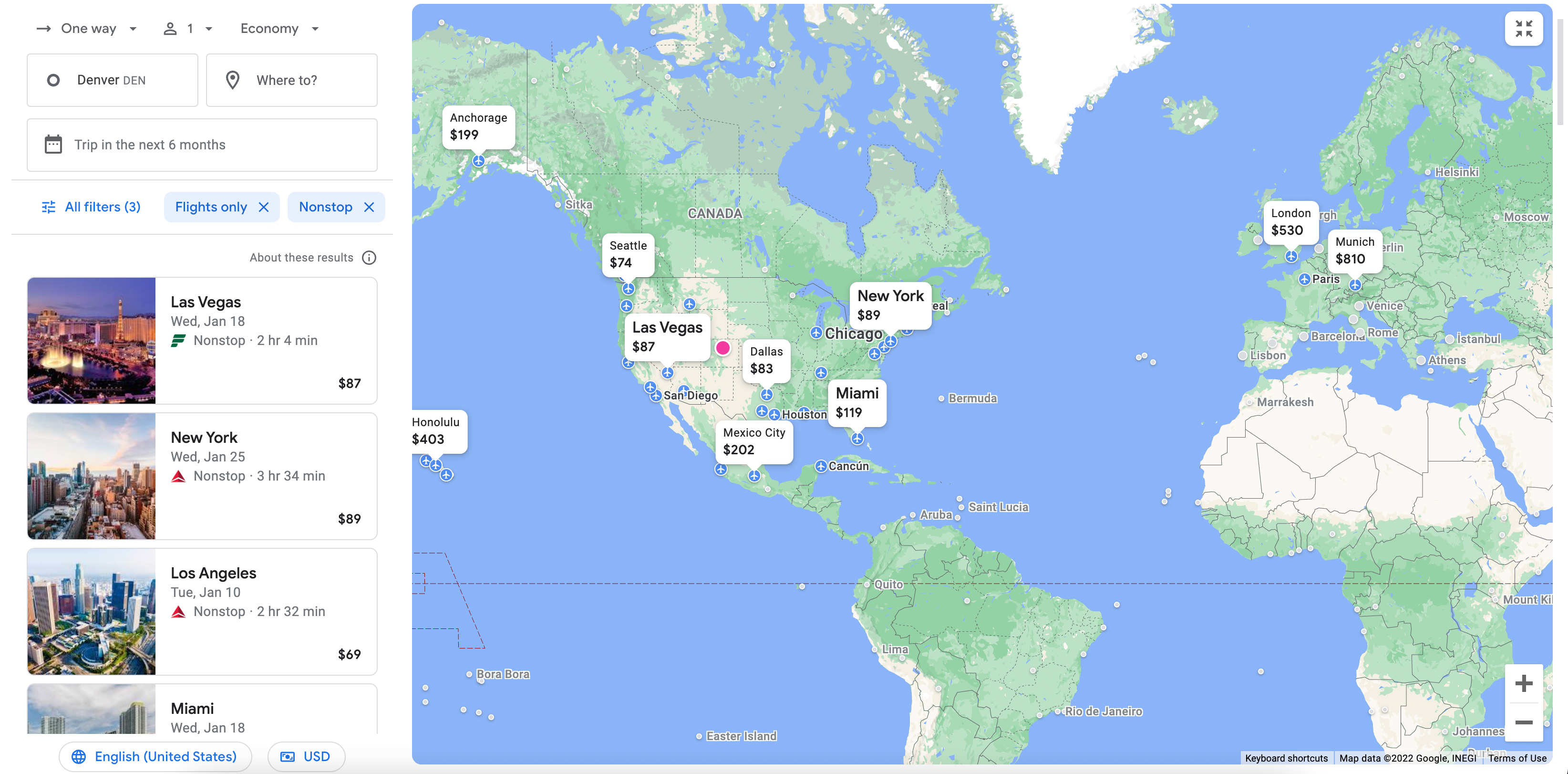
Google Flights does not display points pricing (unless you use the Points Path plugin we mentioned earlier in this article), but that doesn’t mean it can’t help you find award space. You’ll still have to book directly through the airline, but you can save valuable search time by narrowing down your options through Google Flights first.
For example, if you have a bank of points and miles with a Star Alliance, Oneworld or SkyTeam partner airline, you can filter search results by alliance to see routing options. Or, you may find a nearby airport with better pricing that you wouldn’t have searched for otherwise.
Bottom line
The great thing about all these tools is that you can use them together to find award flights and free hotel nights.
No matter which combination of sites and apps you use, you’ll find that they take the guesswork out of award redemptions and put you on the fast track to becoming an expert in redeeming points and miles for your 2026 travels.
Related reading:

Stacie Harris is a local resident and reporter of the Maple Grove area. Stacie reports on medicine and science for the Maple Grove Report.