Minnesota lawmakers are lined up for the final sprint of the legislative session with several priority issues left unresolved.
By next Monday, it’ll all be over.
Legislative leaders have yet to make a big-picture agreement that will usher the session to a tidy close. Some priorities from fraud to infrastructure financing to school safety remain top of mind. Lawmakers are also racing to ink a deal to keep a critical safety-net hospital — HCMC — afloat.
Despite that, some of the details and political dynamics in the narrowly split Legislature have made compromise hard to come by.
Local projects around the state, funds for schools and recourse for people adversely affected by the federal government’s immigration surge in Minnesota are in the balance with just days left.
Here’s a rundown of where key items stand with one week left.
Fraud
A new investigative unit appears likely to be established.
A bipartisan coalition and Gov. Tim Walz are close to creating an Office of Inspector General.
The bill for an independent watchdog office finally won approval from the House with broad support last week. Senate backers plan to offer their stamp of approval, teeing it up for the governor’s signature.
The office would have power to probe public and private entities that receive state and federal funds in Minnesota. If potential fraud or misuse of money is suspected, the office could refer cases to the Bureau of Criminal Apprehension.
GOP Rep. Patti Anderson, of Dellwood, said it's a big step in fighting fraud and responds to public outrage over fraud.
"They're fed up with their tax dollars going out to fraud, to fraudsters and for people not getting services. And this is a huge step towards changing that,” Anderson said.
DFL Sen. Heather Gustafson, of Vadnais Heights, described it as a giant step in closing vulnerabilities.
"This isn't the end-all-be-all solution, but it is the most significant anti-fraud piece of legislation to pass in our generation,” she said.
If signed into law, the process to select an inspector general would start this summer.
Several other proposals related to reining in fraud and misuse are also in the works. They include heightened penalties for defrauding state programs, authority for agencies to withhold payments if they suspect fraud and an expansion of the Attorney General’s Medicaid Fraud Control Unit.
School safety
Following the August shooting at Annunciation Catholic Church and School, lawmakers have been united in a desire to adopt additional school safety measures.
But they’ve split politically on the best path forward.
The Senate voted along party lines to ban the sale and transfer of assault style weapons and high capacity magazines, along with ghost guns. That measure would also fund school safety and mental health grants and prod schools to adopt anonymous threat reporting mechanisms.
The House is more stuck. Republicans are big on mental health and school safety funding measures, but they don't want new firearms restrictions.
“These bipartisan solutions can move forward without gun control when Democrats are conditioning things we should be able to agree on about keeping our kids safe in school, because Republicans won't agree to ban guns,” House Republican Leader Harry Niska, R-Ramsey, said last week.
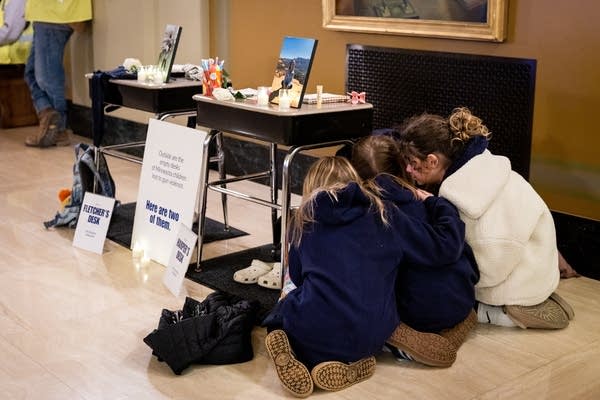
House Democrats insist firearms restrictions would also contribute to ensuring schools are safer.
“This isn't about just addressing the issue in our classrooms. This is about our communities. This is about firearms everywhere,” Rep. Cheryl Youakim, DFL-Hopkins said. “Kids deserve to feel safe everywhere. There is an entire generation that is living in fear of gun violence.”
Democrats say they'll keep pressing for an up-or-down vote.
“We'll continue to push our colleagues in the house to take some action,” DFL Senate Majority Leader Erin Murphy said. “I think for those who choose not to take it up and take a vote, that will send a really clear signal to the people of Minnesota that they're putting their politics ahead of the well being and safety of people across the state, including our children”
It could all get wrapped into an ongoing push to strengthen Capitol and state official security. The House approved a proposal to keep weapons screening in place and allow for police security services for lawmakers who face credible threats to their lives or safety, which have been more frequent in recent months. The Senate has advanced a similar plan.
Bonding bill
Lawmakers are working to assemble a public construction projects bill, although time to wrap it up is drawing short.
Legislative leaders and heads of the capital investment committees in both chambers have emphasized a need for money toward wastewater treatment, roads and bridges and building repairs.
Requests from state agencies and local communities exceeded $7 billion. Lawmakers are likely to stick to a package closer to $1 billion, even though the maximum the state could borrow and still maintain its credit rating is more than that.
The state takes on debt to fund larger projects that can benefit multiple generations of people. The bill requires a higher threshold of support, 60 percent, to pass each chamber. That gives the minority party in the Senate — Republicans — rare leverage.
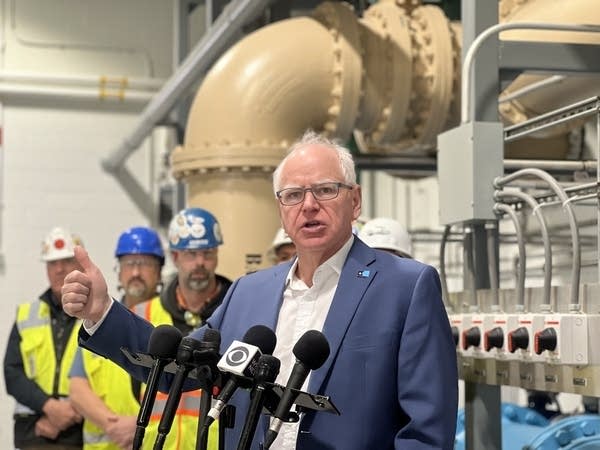
Given the outstanding needs around the state, House Capital Investment Committee Co-Chair Mary Franson has proposed a separate funding mechanism for water treatment around the state.
“Communities come to us with their millions and millions of dollars in requests,” Franson, R-Alexandria said. “We just don't have that capacity anymore to do that. And so these communities are getting little chunks here and there.”
Without more, she warns, “We aren't getting ahead. We're just continually falling behind.”
She is part of a push to get more money toward lead water line replacement efforts.
An estimated 90,000 or more lead water lines remain in the ground. Replacing all of them could cost $1 billion. The Legislature has been trying to pick off a chunk at a time as well as tap into federal dollars.
"The need is too great. It is too urgent, and it is too important to drop the ball and let up now,” Franson said.
Committee leaders are waiting for guidance from legislative leaders about how much they can spend on a broader bill.
"I have to say, I'm a really Nervous Nelly about the whole thing,” said Sen. Sandy Pappas, the DFL chair of the Senate Capital Investment Committee. “It's really important to all of Minnesota that we get this infrastructure bill passed."
Leaders said they were less enthusiastic about bonding to fund upgrades to the Minnesota Wild stadium in St. Paul.
HCMC
The rescue plan for a vital Minnesota hospital remains is still being hashed out.
Lawmakers say they’re confident they can reach a deal.
The hospital has a high level of uncompensated care, which has led to staff cuts and a reduction in open hospital beds. Without help, HCMC officials say they'll have to take drastic actions, including possible closure.
Proposals are at play that would expand on an existing sales tax in Hennepin County, repurpose local transportation funds or tap into general fund dollars to fill the hospital’s budget hole.
There has been bipartisan support for taking steps to keep the hospital system afloat, but there is still no clear agreement on a funding mechanism. Other hospitals are also under strain so this could turn into a broader health system stabilization plan.
Immigration enforcement
The DFL-led Senate and tied House have split on a response to the weekslong federal immigration enforcement surge this winter.
The Senate has voted to repurpose housing funds to help those adversely impacted — namely rental assistance. But a companion bill is stuck in the House.
A broader set of guardrails on federal immigration agents probably won't advance. The Senate could vote this week to permit civil lawsuits by people who argue they were improperly apprehended by federal agents. Odds are also against business loans related to the surge. We'll see if Republicans give ground in negotiations.
But GOP House Speaker Lisa Demuth is running for governor, so immigration proposals could be a red line she and her caucus won't cross.