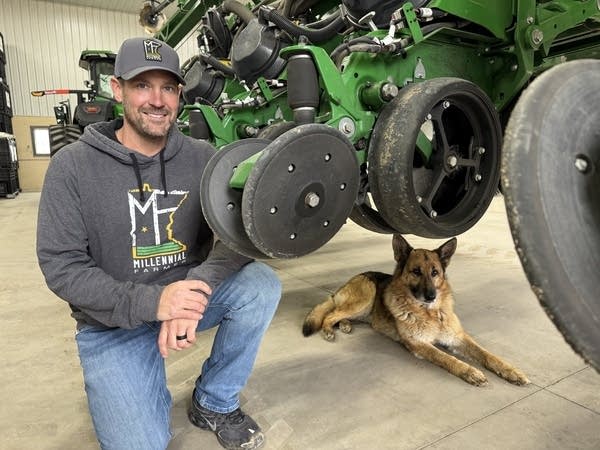
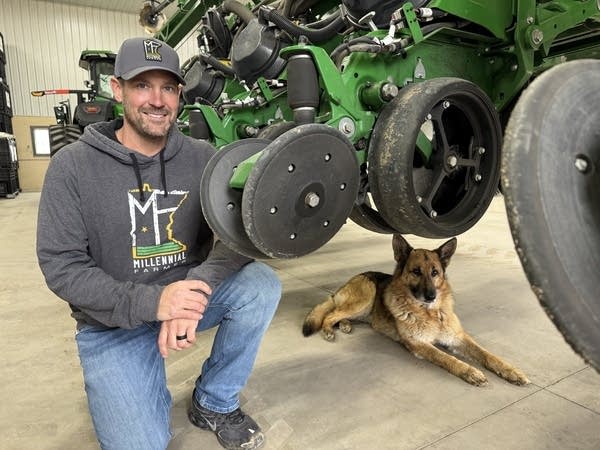
People who don’t farm can often have misconceptions about what agriculture is. That knowledge gap bothered Zach Johnson, a sixth-generation farmer from Lowry.
And 10 years ago, he decided to do something about it.
One day in April 2016, he walked into a tractor shed at his family farm, propped an iPad upright, hit record, and introduced himself to the world for the first time as the Millennial Farmer.
In the video, Johnson puts his hands in his pockets shortly after he starts recording. His eyes sometimes don’t know whether to look straight at the camera; regardless, he confidently shares his concerns about the disconnect between farmers and consumers.
“There's a lot of stuff out there on the internet,” Johnson says in the video. “Most of it isn't true. A lot of it's full of half-truths, and it's really hard for the consumers, I think, to really understand what goes on on the farms, what we do out here and why.”
Johnson said he didn’t know who would even watch. But the video ends with him walking to a semi-truck and telling viewers to stick around and see how the spring planting season unfolds.
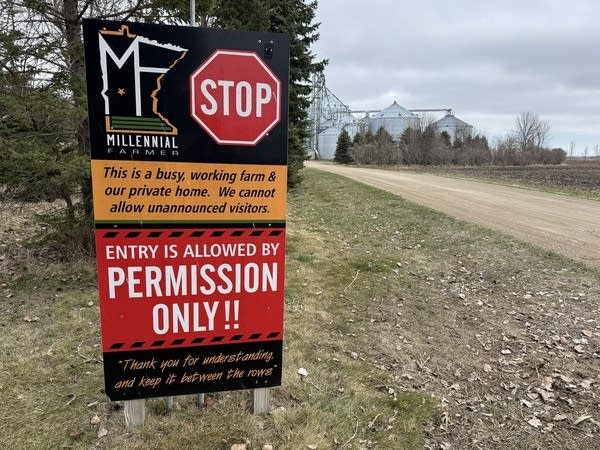
It was just supposed to be a hobby, Johnson said. The videos were a way for him to talk from the heart to the camera about farming’s ups and downs with minimal editing. But then, a couple of videos the following year exploded, he said.
“By the end of that fall, we really were looking at it, my wife and I, saying, ‘You know, I think this is something.’” Johnson said.
That was the start of what would become a farming channel titan on YouTube, with over a million subscribers and counting.
The Millennial Farmer has led to sponsorships, merchandise, speaking opportunities and a revenue source that brings the Johnsons more money than their own farming does.
But while Johnson is the face of the channel, it took a team to make it as popular as it is today.
The Millennial Farmer team
Becky Johnson, Zach’s wife, believes in his mission to educate people about farm life. After all, at one point in her life she, too, had misconceptions about agriculture.
The Johnsons were high school sweethearts. They met at a party after mutual friends connected them. The two, Becky Johnson said, had a similar sense of humor, which brought them closer.
However, Becky Johnson said they had different upbringings, which meant she didn’t know much about how farming worked.
“I was raised by hippies, people who were on the side of the fence of all the negative things about farming,” Becky Johnson said. “The more that Zach and I grew together and talked together, the more I learned, and I'd be able to understand one side's perspective versus the other and what the disconnect was.”
Her understanding of both sides was an asset in growing the Millennial Farmer channel, which she saw the potential of pretty early on.
“Where I connected the dots was that I was an avid Kardashians fan,” Becky Johnson said. “I made the correlation of the opportunity that we had, and I kind of started to encourage him to do it more.”
She started researching how to make videos go viral, what other big YouTube channels were doing, and offered to edit the videos her husband was recording. That’s on top of being a stay-at-home mom of three kids.
“Zach would get home at 9, 10, 11 o'clock at night. He'd leave an SD card on my desk,” Becky Johnson said. “I'd wake up in the morning, edit the videos, do all the mom things, run the kids here and there.”
With this dynamic, the duo would grow the YouTube channel into a fully-fledged business.
Lucrative side hustles
With the YouTube channel steadily racking up views and subscribers in its early years, Zach Johnson decided to test out selling Millennial Farmer merchandise. He had been on the fence about it because it would be yet another thing to manage. A Nebraska-based seller, though, convinced him to do a test run.
“We came up with some designs, and we said, 'This is for sale for six days ahead of Christmas. At the end of the week, we're shutting it down, and we're going to print everything that sells. This is a one-time deal,” Johnson said.
They sold 2,044 pieces of apparel in six days.
“That was when we made the decision that we're going to commit,” Johnson said.
In addition to merchandise, Johnson has business partnerships with Farmers Business Network, John Deere and LMNT, bringing in hefty sums of cash. He also co-hosted American Public Media’s sustainable-ag podcast, Field Work.
Johnson declined to share specific numbers, but he’s said in the past that the channel earns five times as much as his farm generates. However, he says it’s difficult to calculate the difference because farming profitability bobs up and down. However, Johnson said that since 2018, the channel's revenue has definitely exceeded the farm’s.
However, having this second revenue stream doesn’t mean that Johnson feels set. He’s still at the mercy of the farm economy, which has been struggling as of late.
“Farming hasn't been very good the last couple of years, and 2026 isn't looking great either for row crop farming,” he said. “But everything is up and down, and we're lucky that we have two different things to juggle so that we can manage through that.”

An urban-rural chasm
Emily Krekelberg, a farm safety and health educator with the University of Minnesota Extension, said part of what’s made Millennial Farmer so successful with its audience is that the content is always earnest.
“That is part of the power of social media, that it can give you a window into people's real lives, if they allow you into that, right? And that is something that this channel has done from the beginning, really brilliantly,” Krekelberg said. “It shows the good, the bad, the fun, the boring, and that's what farming is.”
Krekelberg, like Johnson, also believes there’s a gap between farmers and consumers. She said the average person living in a city is up to three generations removed from the farm, so it’s understandable that they aren’t as attuned to agriculture as farmers are. She said Johnson’s work is helping close that gap.
Since the Millennial Farmer’s debut, other farmers, likely inspired by the Johnsons’ work, have also launched their own channels, sharing their slice of life with the world.
Becky Johnson recalled that when they started, they only knew of a couple other farming channels.
“And I don't think they called themselves farming social influencers back then; they were just telling their story,” she said. “Now there's hundreds, there's so many, and we've kind of built this little village of storytellers online. And it's really transpired to be something great.”
Beyond just education, the Johnsons have also used the channel to raise funds to buy equipment for fire departments to rescue farmers stuck in grain bins across the U.S. Minnesota is among the leading states in grain-bin deaths.
“I can say with 100 percent certainty that we saved a life,” he said. “[The fire department] saved a life in Indiana using the equipment that they bought from the funds that we raised.”
Leaving a legacy
One of Johnson’s favorite memories of the channel is getting to film and witness his son, Onyx, drive a combine by himself for the first time.
“That is a proud moment when you, as a father, can cut your son or your daughter loose in a machine and say, ‘Here you go’ and trust them with it and watch them do it,” Johnson said. “You come back a few hours later, and they've got all these acres done. It is very cool, a very proud moment.”
While the Johnsons’ children regularly appear on the Millennial Farmer channel, they make sure the kids are comfortable with being on camera. They can opt at any moment not to be in any particular video.
Still, it’s meaningful for Johnson to have his family be part of the channel. After all, it’s his mission to show what a family farm really looks like.
And that mission seems to resonate with his audience. The video of Onyx driving the combine is the most popular video to date, with over five million views.
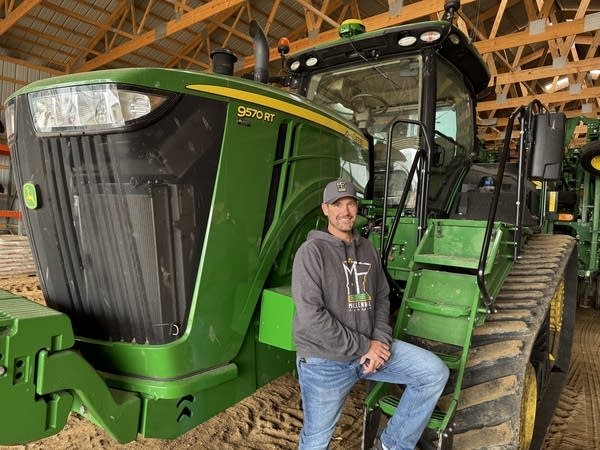
As Zach and Becky Johnson celebrate the channel's 10th anniversary, they’re thinking about the future. YouTube has treated them well, but the pair know all good things have to come to an end eventually.
“I don't think it's necessarily something that Zach wants to do forever; it's taxing, you know?” Becky Johnson said.
Instead, Zach hopes there’s something long-term he can do in ag media- something that can generate revenue more consistently than YouTube.
The couple also said they won’t force their kids to farm when they grow up, adding they’re in charge of their own futures. However, the Johnsons hope that the kids recognize the opportunity that farming and even the channel can be.
Who knows? Maybe the Millennial Farmer channel will eventually give way to become the Gen Z Farmer.