On the heels of The Points Guy’s first-ever “Points Battle,” we’re back with another edition — and this time we’re venturing both north and south of the equator.
Brian Kelly, founder of The Points Guy, challenged two TPG teammates to duke it out and see how they could each maximize travel benefits from their Chase Sapphire Preferred® Card (see rates and fees) to plan the ultimate, Instagram-worthy, awe-inspiring trip.
This challenge was made sweeter with Points Boost, a handy perk that makes your Chase Ultimate Rewards points worth more and stretch further when you book select hotels and flights through the Chase Travel℠ portal.
Add in longtime favorite benefits like earning bonus points on dining and travel, the ability to transfer points to airline and hotel partners, and a $50 annual hotel credit for booking through Chase Travel, and we had an epic competition on our hands.
The Points Guy’s senior hotel reporter, Tanner Saunders, accepted the challenge alongside Lyndsey Matthews, senior travel editor at TPG.
Here’s how it all went down.
Points Battle: Chase Sapphire Preferred edition
Like most competitions, this Points Battle had some rules, including picking themes for the trip by spinning a wheel of travel parameters, finding the perfect Instagram photos and putting together a truly memorable journey while also leveraging points and card benefits efficiently.
Lyndsey takes a spin
While working at TPG’s New York office, I received a cryptic text message from Brian telling me to go to his office — a strange request considering I knew he was off jet-setting. Walking toward his office, I noticed my favorite colleague, Tanner Saunders, heading in the same direction. He’d gotten the text, too.
Inside the office, we found a magic wheel of trip themes and instructions to spin it three times each to determine where we would travel and what we would experience along the way. I landed on visiting somewhere with a rainforest climate, seeing a wonder of the world and eating a food I had never tried before. While Tanner took his turn, I started planning.

Reward your inbox with the TPG Daily newsletter
Join over 700,000 readers for breaking news, in-depth guides and exclusive deals from TPG’s experts
Tanner learns his fate
Tanner here! I was excited for the chance to spin the wheel thrice over to plan my adventure. As it turned out, I would be heading to a desert climate and staying in a bucket-list hotel, a perfect fit for this hotel reporter. It also gave me a chance to put my Chase Sapphire Preferred card’s $50 hotel credit to work.
With adventure calling, Brian informed us we would each have up to 150,000 Chase Ultimate Rewards points to turn our trips into reality, and that the winner would take home another 150,000 points to use for a trip that did not require trouncing a co-worker.
With the rules in place, our points balances loaded and some friendly competition in the air, we set out on our adventures.
Points are a battlefield: Planning 2 epic trips
Before any trip, Points Battle or not, there’s a lot of planning to be done. Our two TPGers got to work seeing how far their points could take them and hammering out every detail along the way.
The battle was just beginning.
Lyndsey: Wilderness and wine in New Zealand
Armed with 150,000 Ultimate Rewards points, I had a decision to make: Find business-class flights somewhere close to home or stretch my points as far as possible to get to the other side of the world.
While I could easily find a dish I haven’t tried before in any country, the other parameters of my trip — a rainforest climate and a wonder of the world — lent themselves to locales a bit farther from my home base in the United States.
Several of the new Seven Wonders of the World are in rainforest climates, but I had already been to Machu Picchu in Peru and the statue of Christ the Redeemer in Brazil. I wanted to see something new, which led me to Milford Sound on New Zealand’s South Island. Considered by some to be the eighth wonder of the world, this epic fjord sits within the Te Wahipounamu UNESCO World Heritage Site, which just so happens to be a temperate rainforest.

Finding flights to New Zealand without burning through my entire budget took some work. But thankfully, after comparing a few routes and airlines, I secured a round-trip Fiji Airways ticket from Los Angeles International Airport (LAX) to Auckland Airport (AKL) with a layover at Nadi International Airport (NAN) in Fiji for 63,083 points via Chase Travel.
Tickets in hand, it was time to head to the airport. I earned 5 points per dollar spent on my Lyft ride by paying with my Chase Sapphire Preferred card.*
After landing in Auckland, I made my way to the Park Hyatt Auckland. I booked one night in a king room at this luxurious Category 8 Hyatt property by transferring 25,000 Chase Ultimate Rewards points to World of Hyatt.

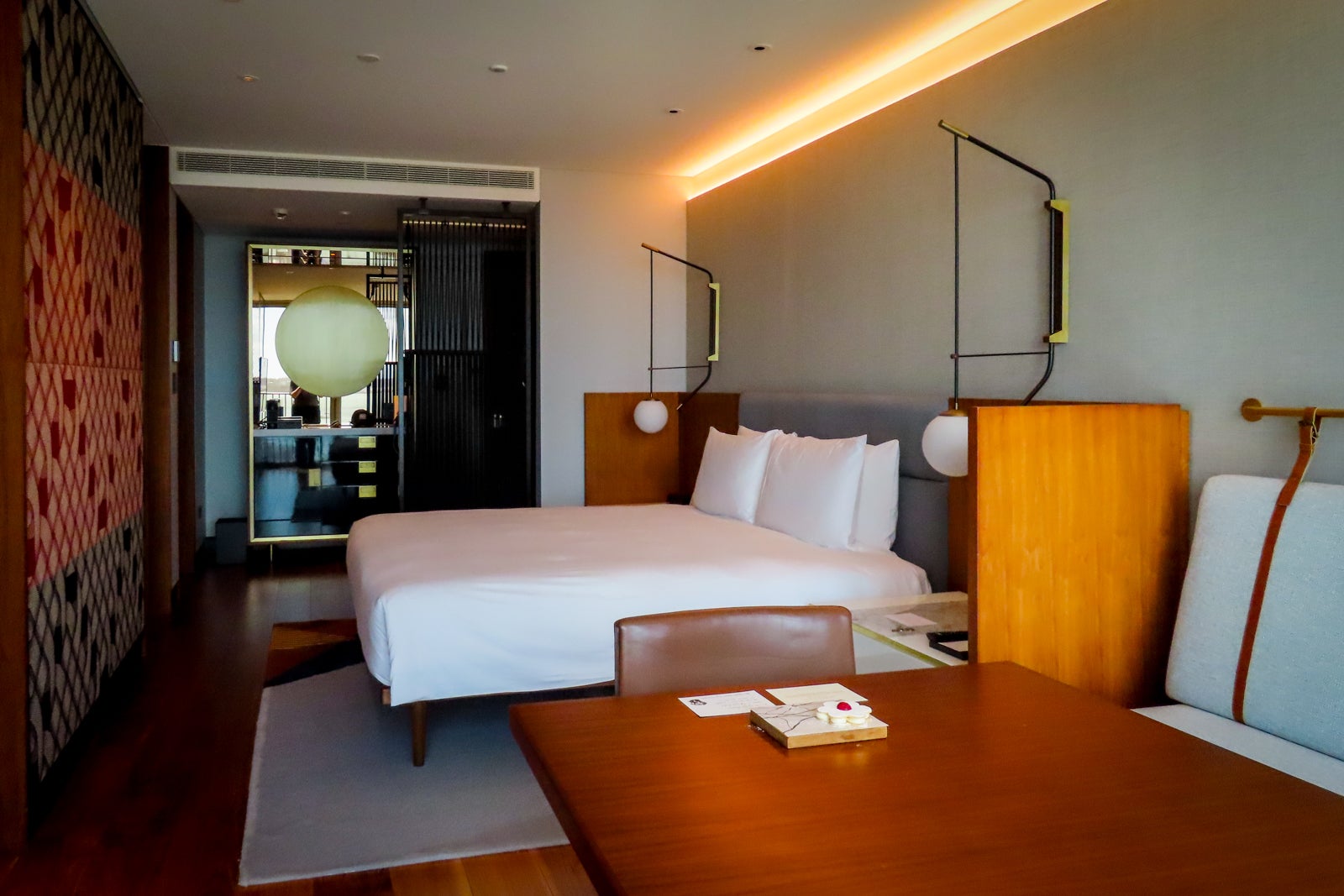
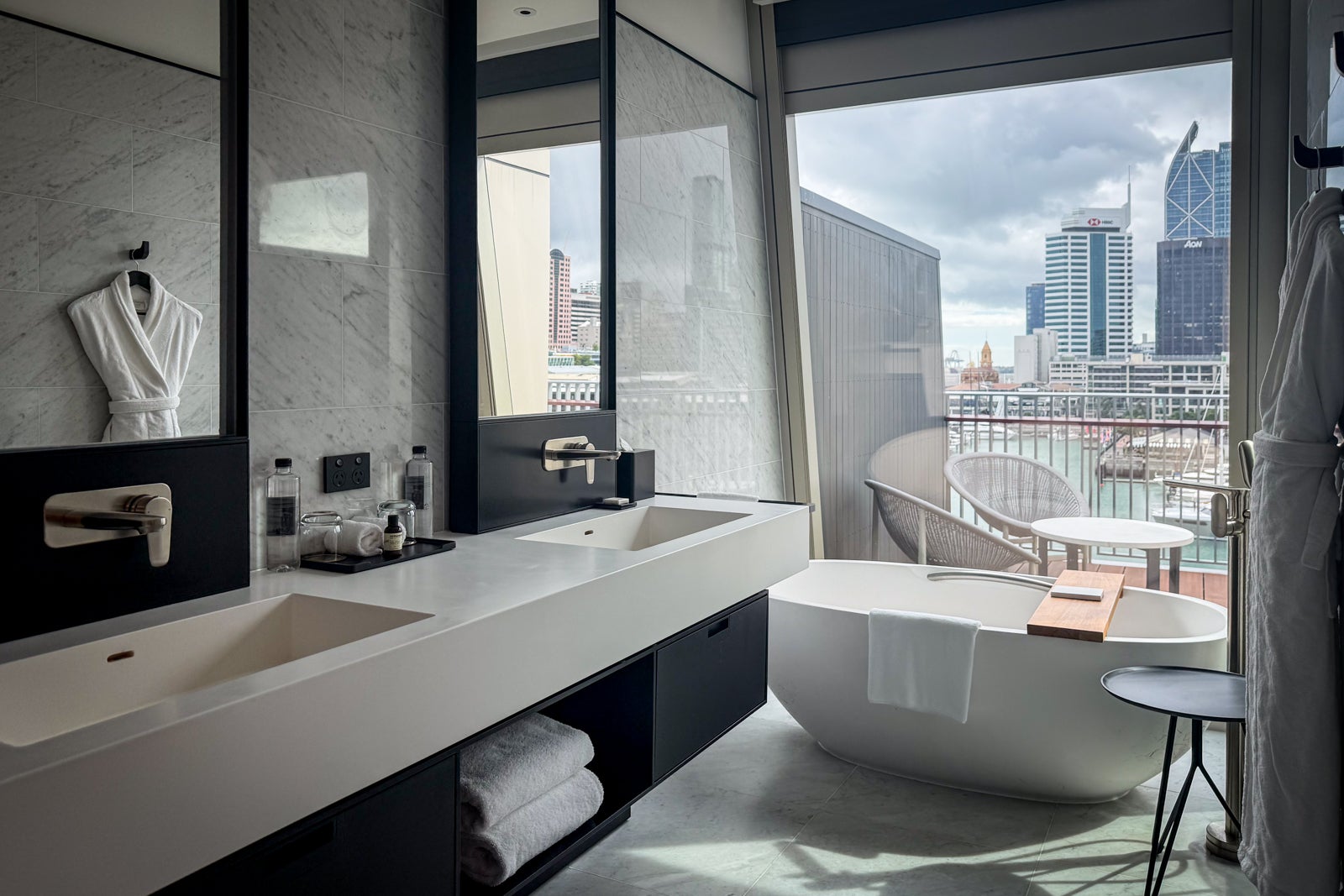
The Park Hyatt Auckland has 195 guest rooms and suites with floor-to-ceiling windows overlooking Waitemata Harbour and the city skyline. My room featured Maori-inspired decor, like the traditional tukutuku wall panels woven from red, black and white New Zealand wool, hung across from the cushy king-size bed.
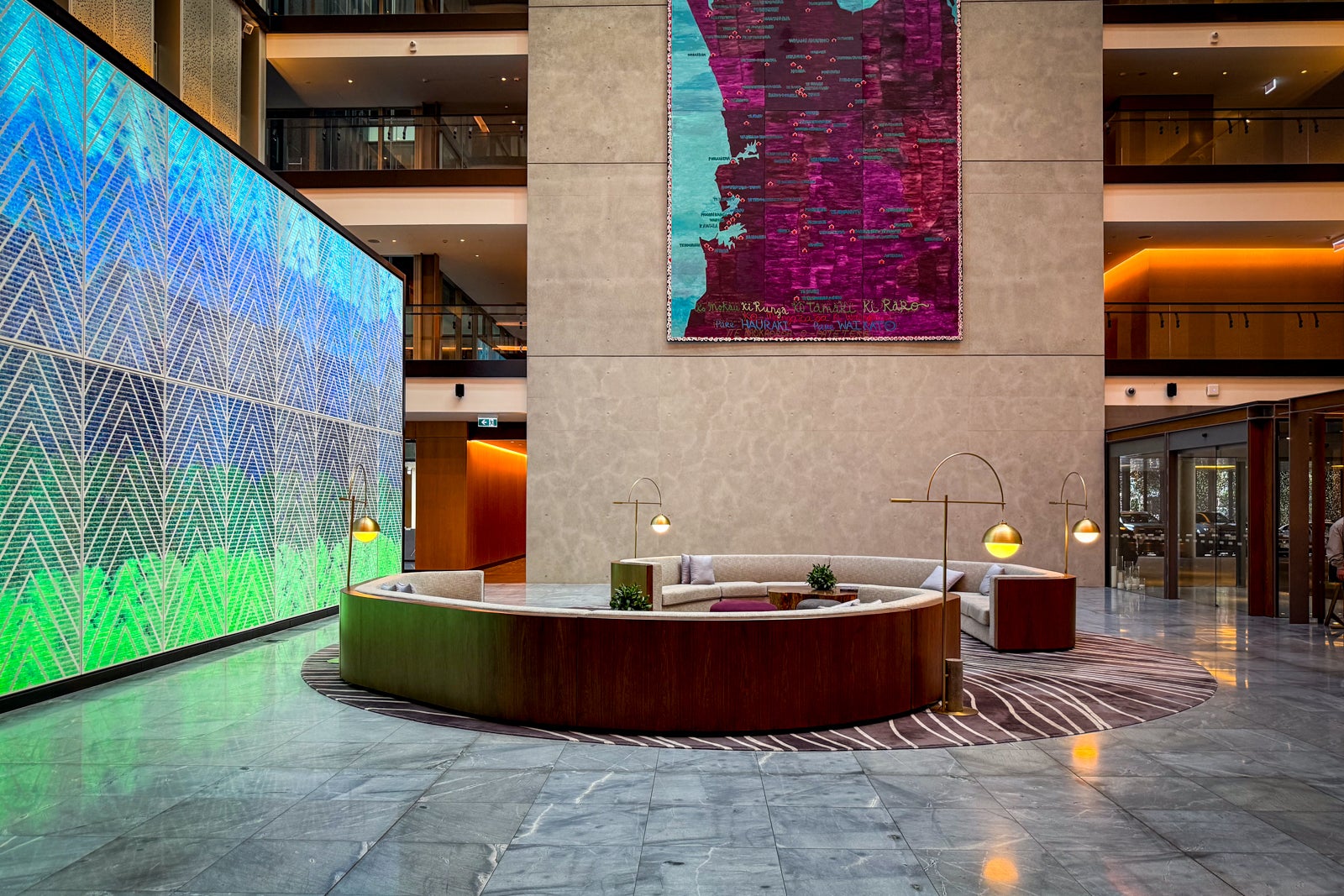
The spacious marble bathroom featured a free-standing tub overlooking the harbor. I think my favorite detail was the walk-in closet that let me unpack without cluttering the space. I was traveling solo, but families can book adjoining rooms, giving themselves even more space to spread out.
1 of 2
LYNDSEY MATTHEWS/THE POINTS GUY
Despite the jet lag, there was no time for rest since Brian surprised me with a bonus points challenge at the Park Hyatt to “live like a local.” Since New Zealand is basically Middle-earth, I decided to partake in a hobbit’s favorite activities: eating and drinking. For that, I boarded a 40-minute ferry from Auckland to Waiheke Island for a food-and-wine tour.
1 of 3
LYNDSEY MATTHEWS/THE POINTS GUY
I tasted a bright and flavorful chardonnay and a peppery syrah at Mudbrick Vineyard, sampled four local olive oil varieties at Allpress Olive Groves, and slurped fresh Te Matuku oysters harvested just down the road from the Ki Maha restaurant right on Onetangi Beach. I earned 3 points per dollar spent on dining with my Chase Sapphire Preferred card and was also able to check off the “food I’ve never tried” part of my challenge here since I’ve never had oysters from New Zealand.

Thoroughly relaxed and revived, it was time for some thrills on the South Island. To get to Queenstown — New Zealand’s adventure capital — I booked round-trip flights from Auckland on Air New Zealand using an additional 19,440 points via Chase Travel.
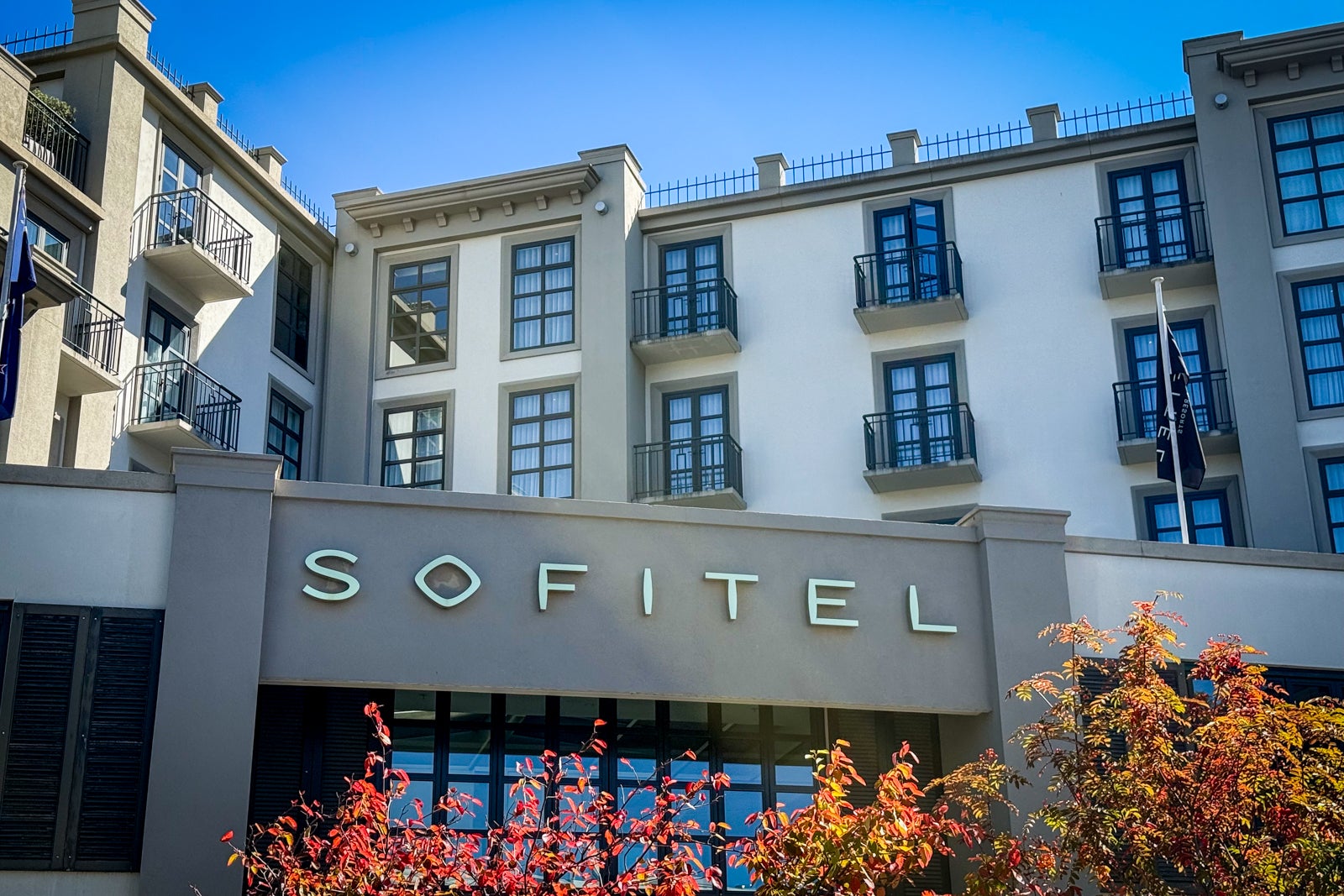
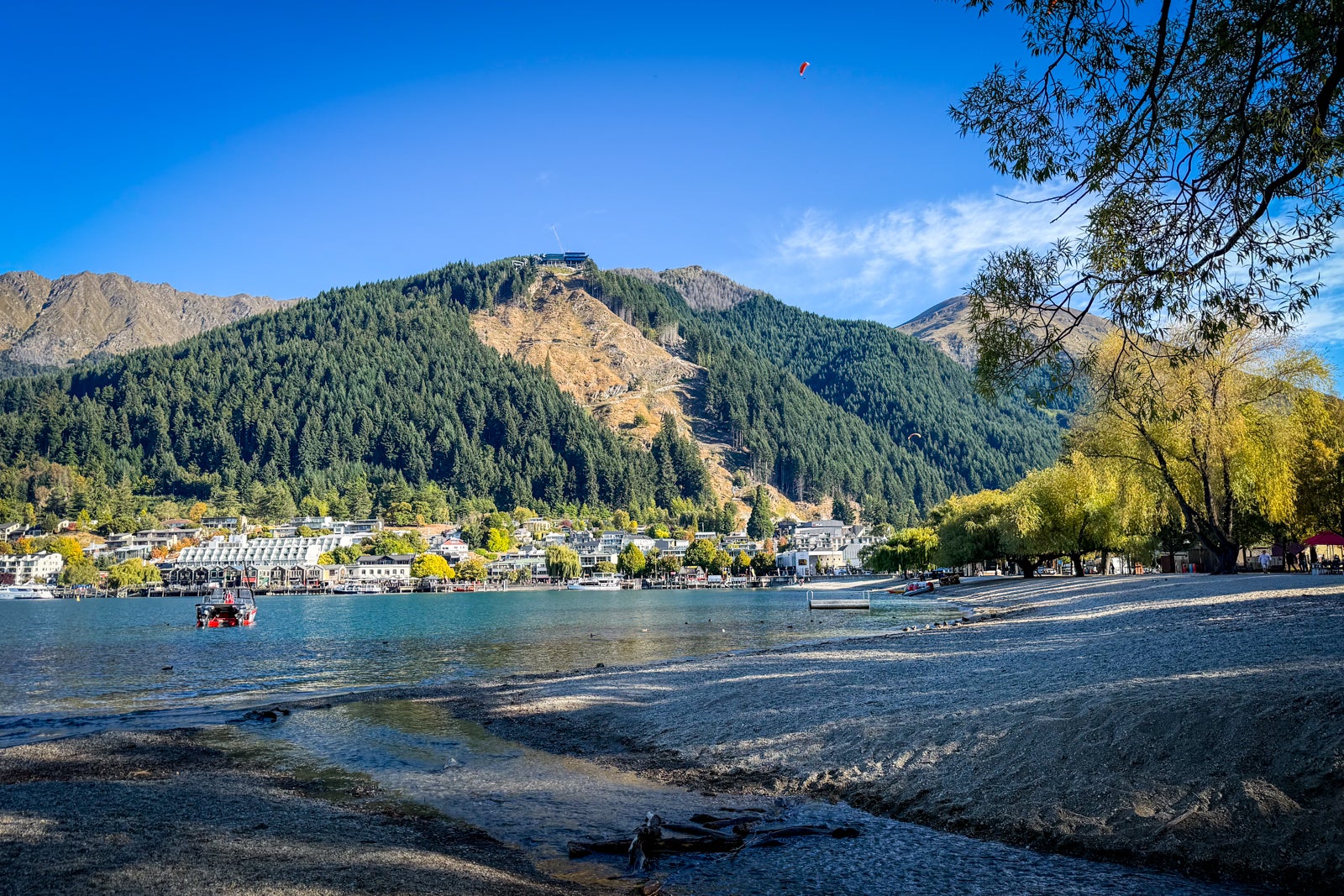
For my home base in Queenstown, I booked two nights at the Sofitel Queenstown Hotel & Spa. Since this French-inspired luxury hotel with a posh spa in the heart of the city is bookable through Chase Travel with Points Boost, I redeemed 37,838 points instead of paying $454, for a value of 1.2 cents per point.
However, since my challenge was to see a wonder of the world in a rainforest, I wasn’t going to spend much time at the hotel spa. To make the most of my time, I booked a scenic flight tour to Milford Sound, bypassing the four-hour drive by soaring over Fiordland National Park’s glacier-covered peaks before descending among the dramatic green slopes of the fjord.
1 of 3
LYNDSEY MATTHEWS/THE POINTS GUY
The expert guides at Rosco’s Milford Kayaks whisked me out onto the water, where we paddled to the 500-foot-tall Stirling Falls and saw a seal pop up in the spray near our kayak. A pod of dolphins also appeared, jumping out of the water to my joyous surprise.
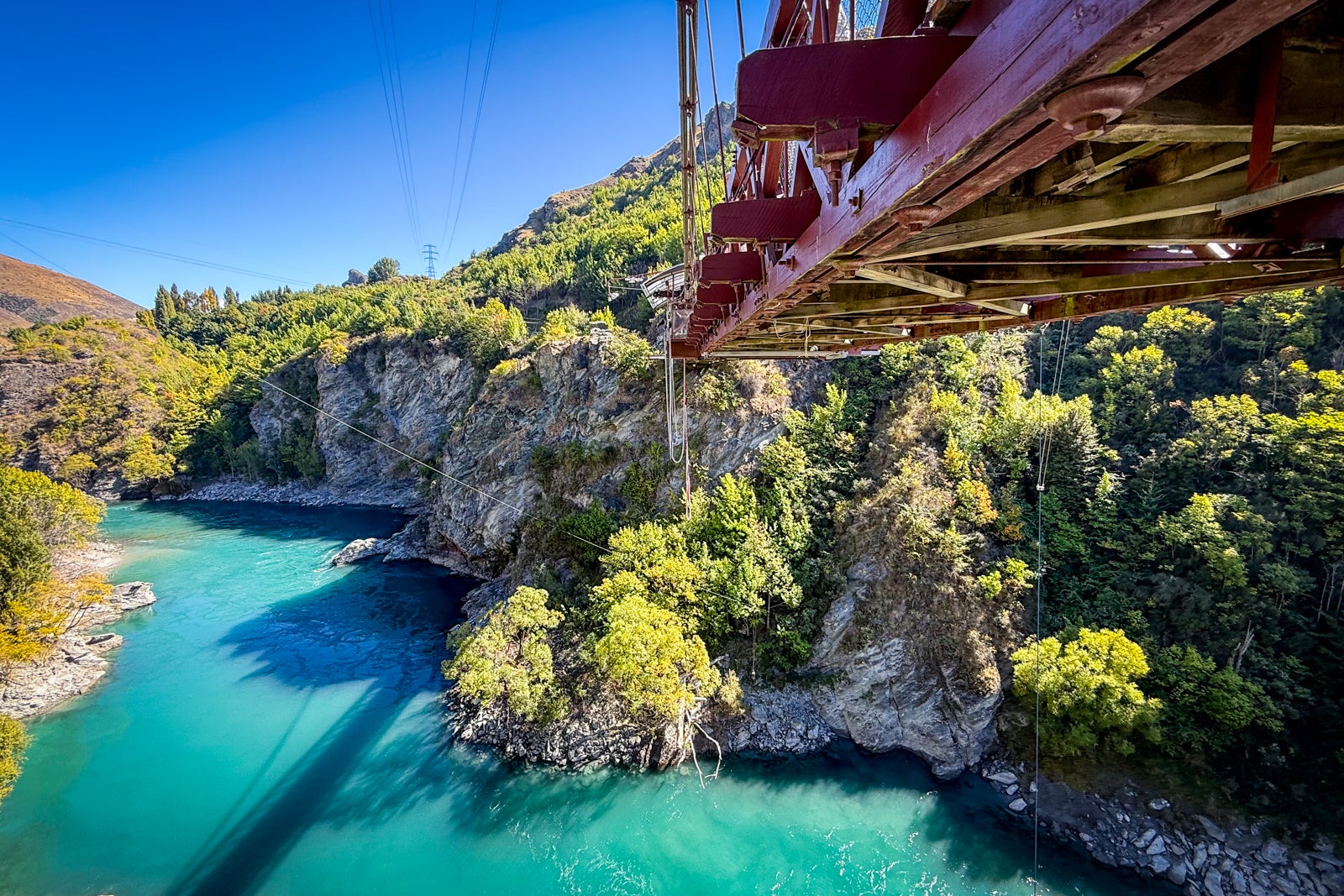
The adventure didn’t end there. I may have passed on bungee jumping at its birthplace just outside Queenstown, but I was up for the technical challenges of canyoning, which involved rappelling down waterfalls, sliding through narrow canyons and wading through clear alpine streams for an adrenaline rush instead.
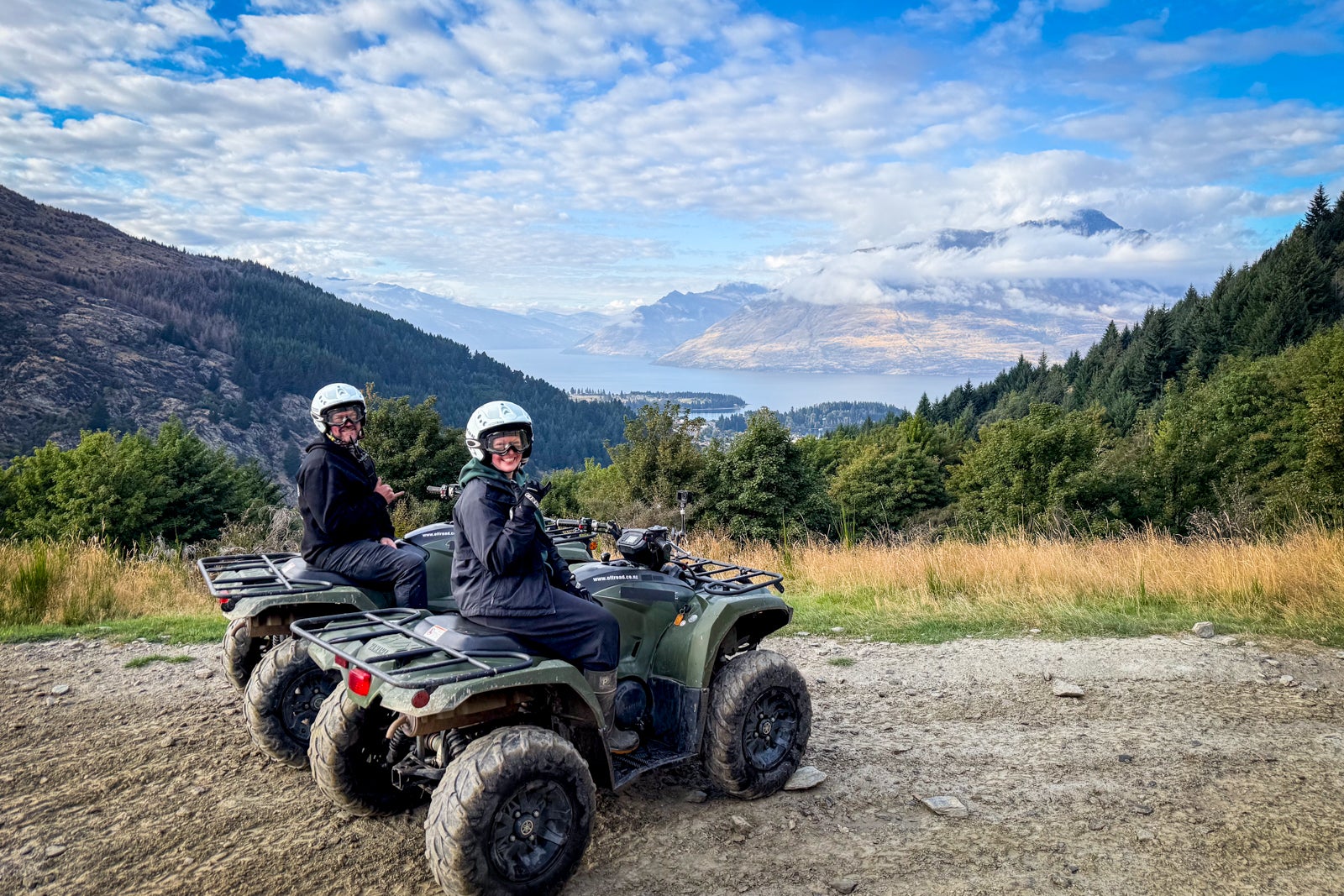
For my final bonus points opportunity, Brian challenged me to “do something that makes you feel completely free.” Challenge accepted: I booked a high-speed all-terrain-vehicle tour, racing through a pine forest and splashing through streams to the top of the hills overlooking Lake Wakatipu, where I slowed down long enough to take in the view and appreciate just how much I had packed in during my time in Aotearoa, or the Land of the Long White Cloud, as the Maori call it.
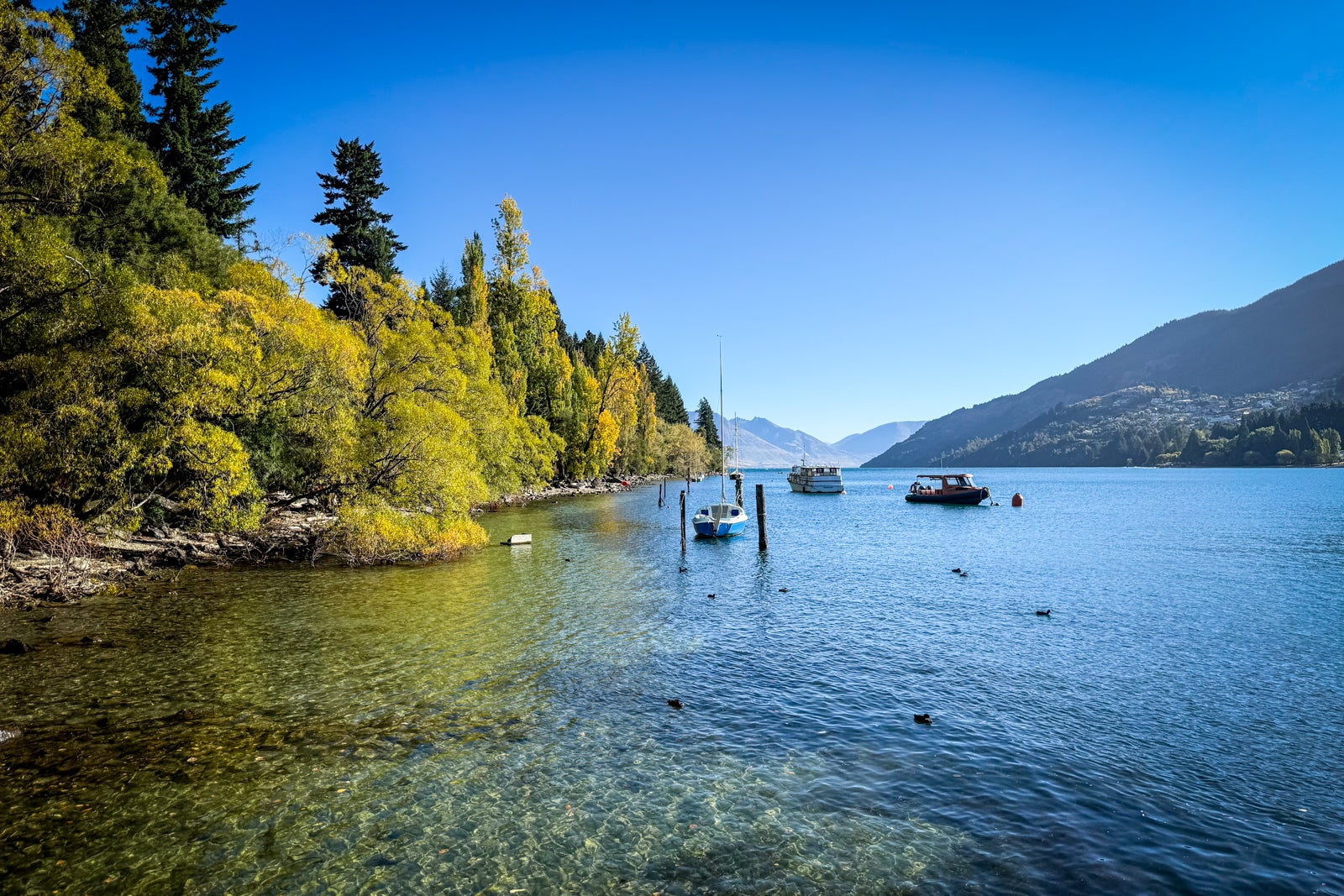
And since I was able to earn 2 points per dollar spent on all these travel activities with my Chase Sapphire Preferred card, I knew I was heading home with plenty of points to spend on my next trip — win or lose.
Tanner: Morocco on my mind
With a whopping 150,000 Chase Ultimate Rewards points in my pocket and the parameter of visiting a desert climate, my mind immediately went to one place: Morocco.
Famous for its sweeping desert landscapes and jewel-box riads, I set my sights on Marrakech and the nearby Agafay Desert. But how to get there?
Searching Chase Travel, I realized there were a lot of affordable flight options for my journey to North Africa, but the best way to stretch my points involved an unexpected overnight stay in Madrid and then a quick jaunt over to Marrakech.
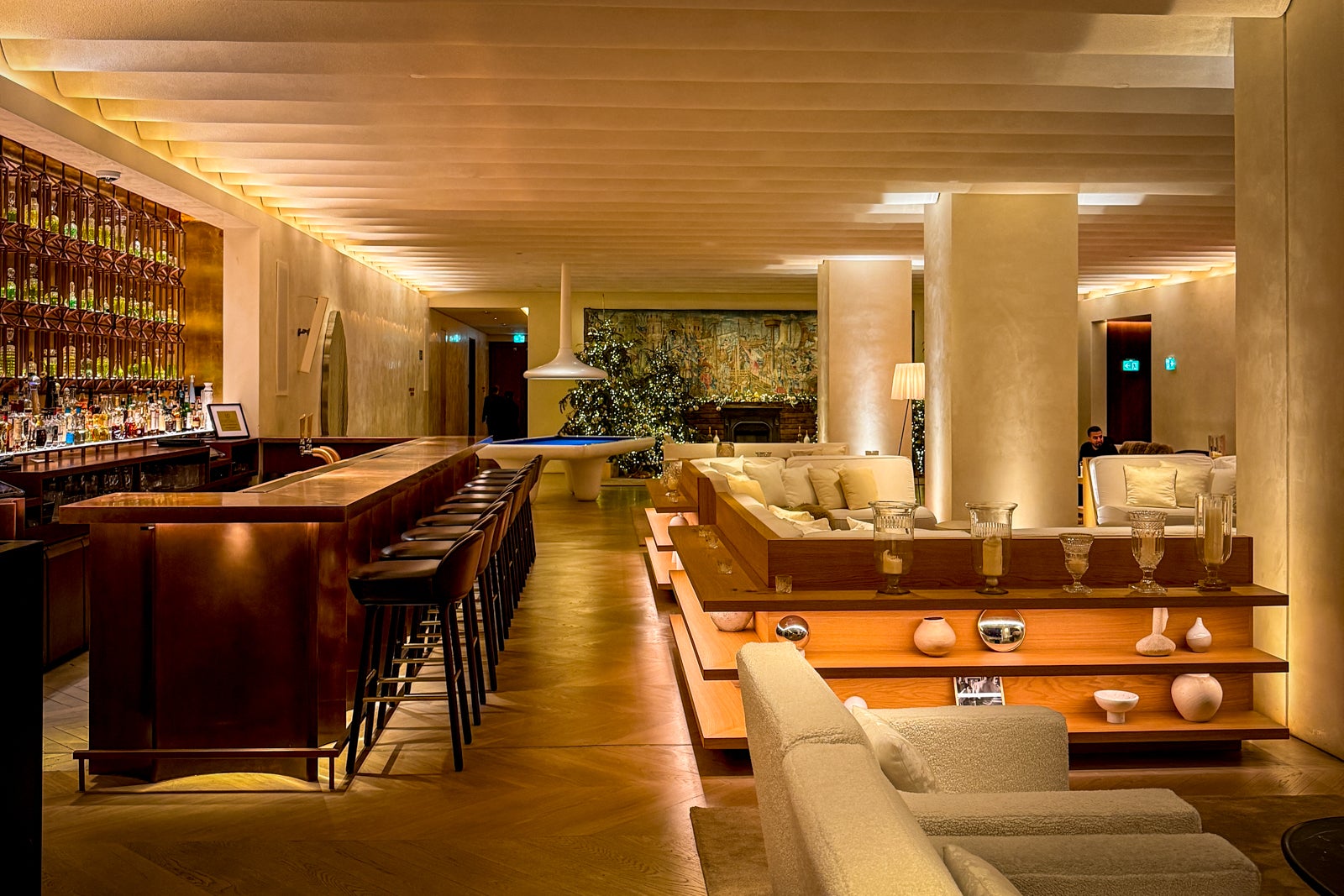
That’s when it hit me: I could use that overnight as a way to spend the night at The Madrid Edition, a hotel I’d dreamed about visiting for years after seeing photos of its moody lobby bar and dramatic white spiral staircase on social media.
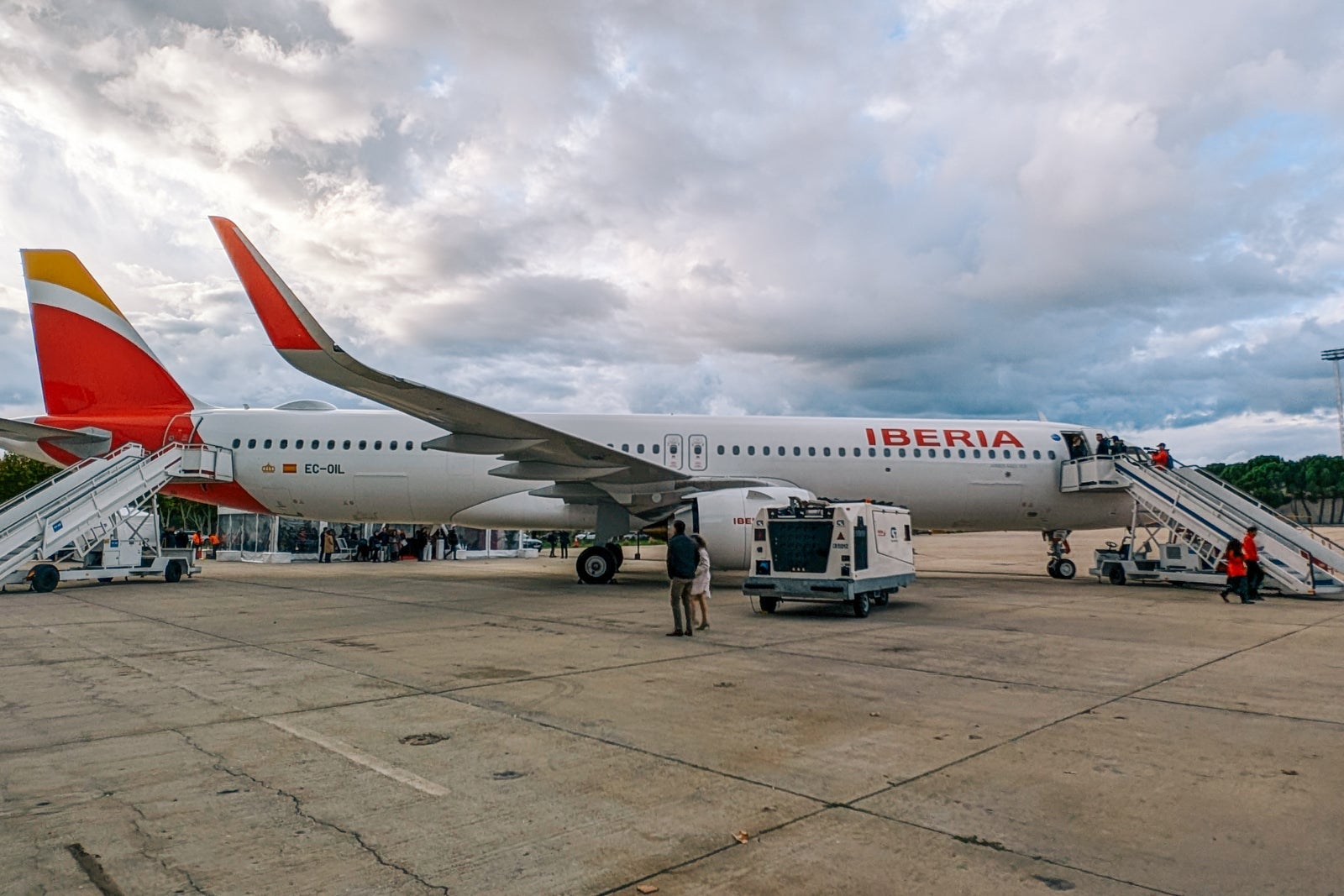
For 37,618 points, I was able to book a round-trip Iberia ticket between New York and Marrakech with a stop in Madrid each way. Some travelers hate a stopover, but I saw the overnight as a chance to experience two destinations in one trip, and even enjoy a night out on the town in Madrid along the way.
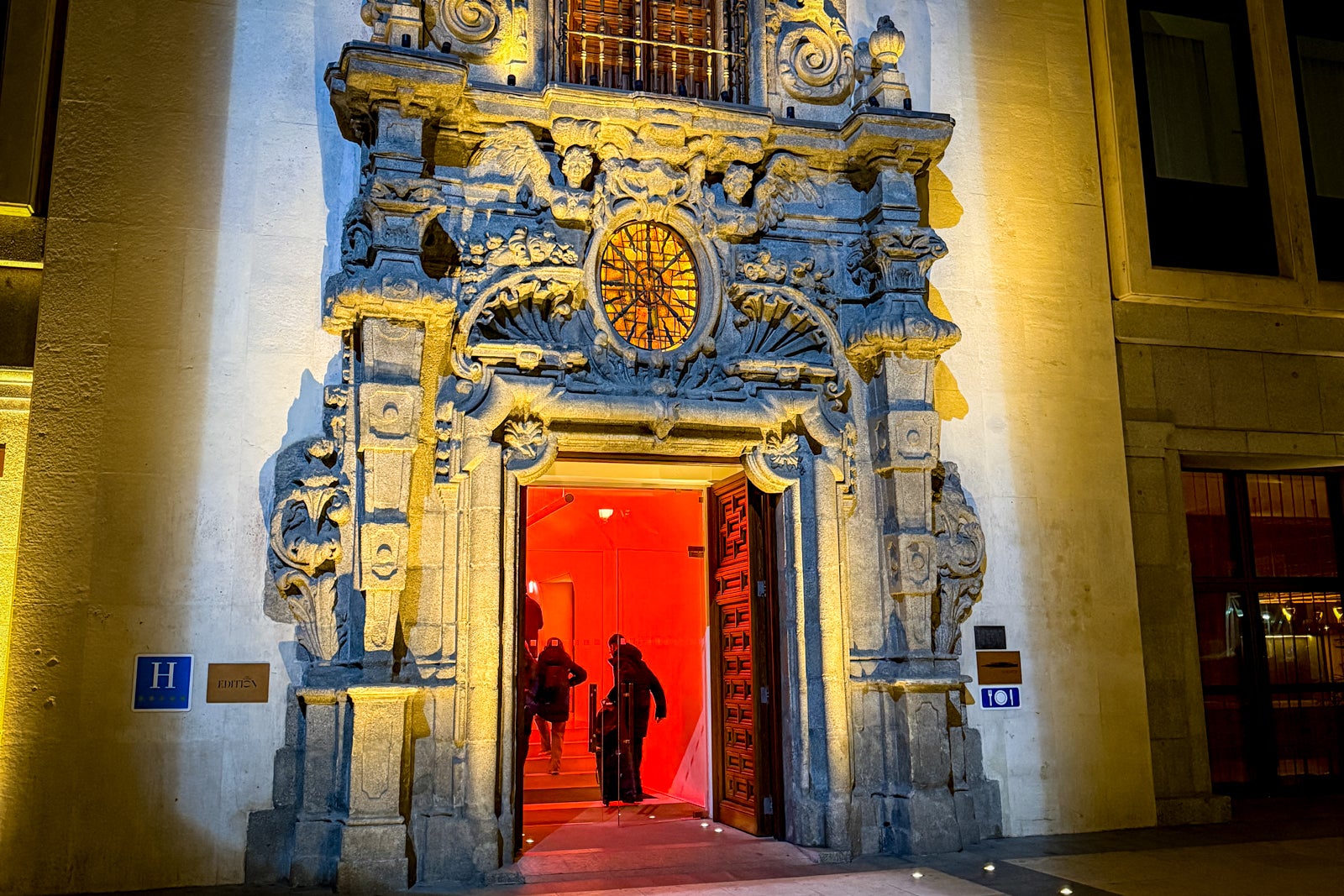
More importantly, I’d check off the bucket-list-hotel portion of the challenge by booking The Madrid Edition through Chase Travel. After earning my Chase Sapphire Preferred card’s $50 annual hotel statement credit on the booking, the hotel came in at 31,585 points, a value of 1.25 cents per point.

I earned 5 points per dollar spent on a Lyft ride to John F. Kennedy International Airport (JFK) with my Chase Sapphire Preferred card* and caught up on movies on the long flight before checking in to The Madrid Edition. The hotel’s iconic Don Pedro de Ribera-designed baroque door was the perfect place for a Brian-worthy selfie.
At the hotel, I finally got to enjoy cocktails with the cool crowd and played a game of pool in what I’ll say is now my favorite hotel lobby in the world.
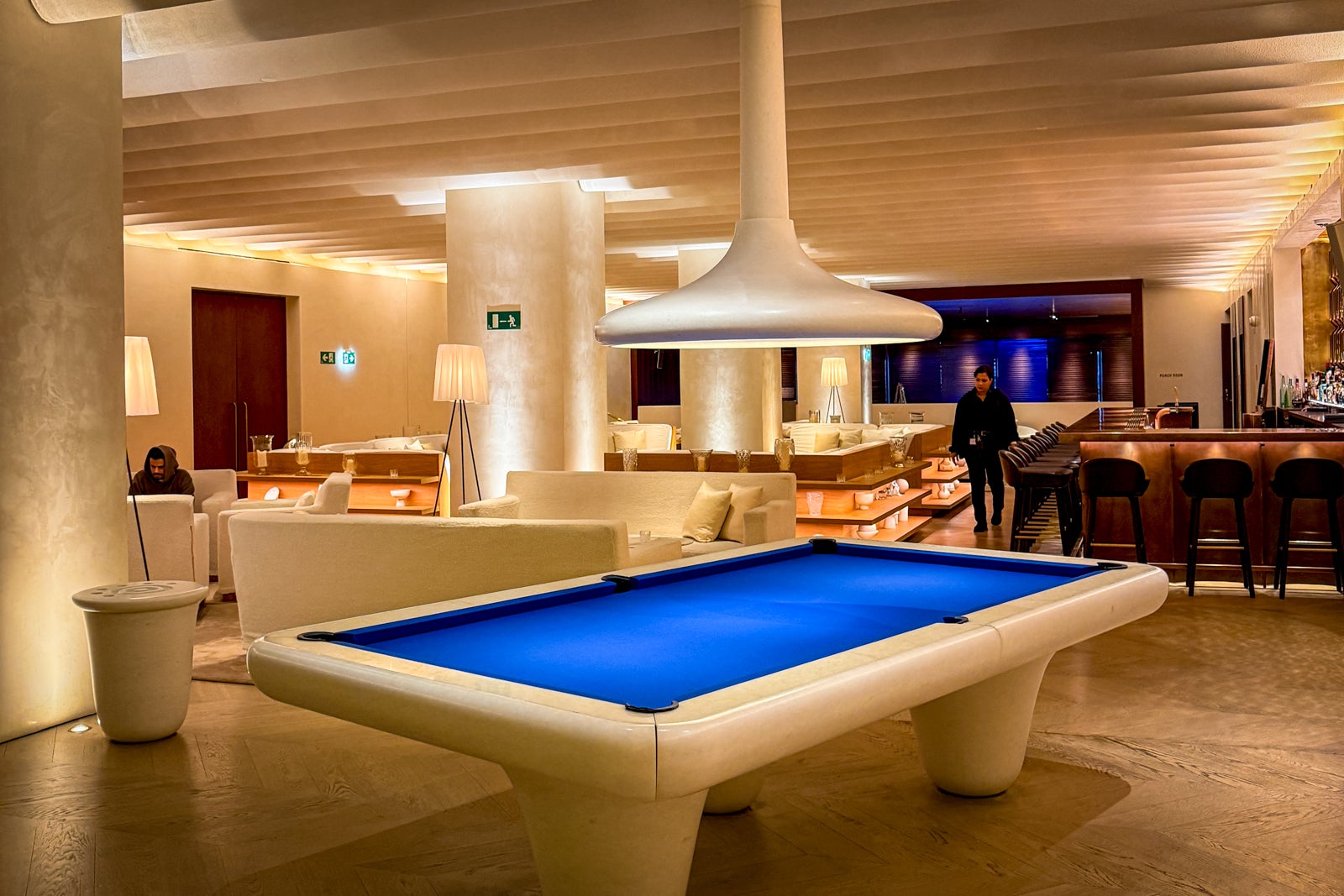
Outside the comfort of my beautiful, nearly all-white room, I had time to roam the streets of Spain’s capital city with a stop for vermouth and tapas at Taberna La Descubierta, where I earned 3 points per dollar spent on dining with my card. I had time to attend a flamenco show and even took a tour of the Royal Palace of Madrid.
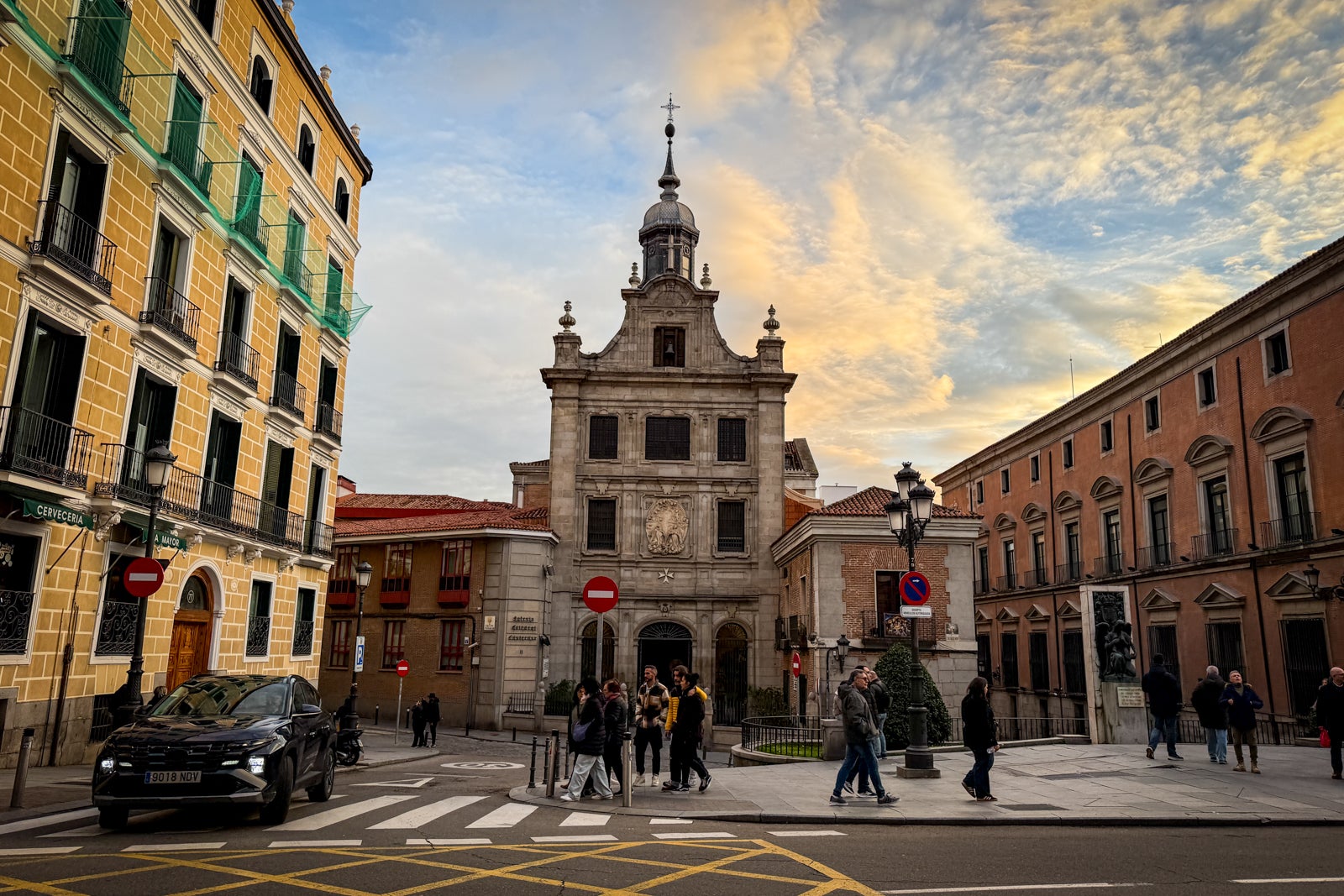
Feeling refreshed, I hopped on a short flight to Marrakech and turned my attention to those beautiful riads and checked in to the dreamy Hotel Izza for two nights for 41,300 points, saving me $521.
1 of 3
TANNER SAUNDERS/THE POINTS GUY
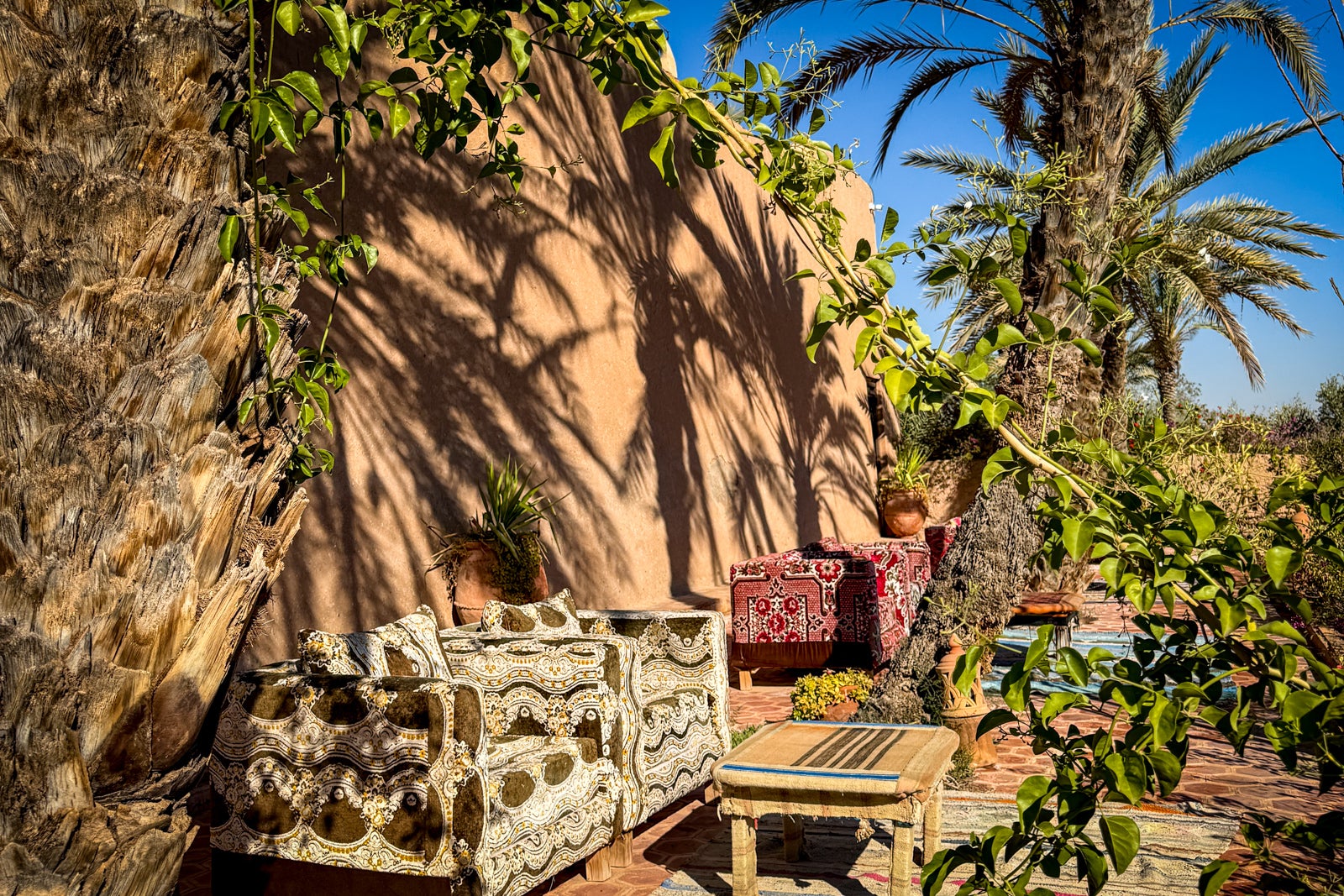
In the heart of the walled Marrakech medina, the oldest part of the city and a UNESCO World Heritage site, Hotel Izza was exactly what I wanted: trendy, design-forward and full of character with tiled courtyards, postcard-worthy photo backdrops and a rooftop restaurant full of greenery. It was the perfect home in Marrakech, and another hotel that ended up being bucket list-worthy to me.
1 of 5
TANNER SAUNDERS/THE POINTS GUY
Once settled in, I headed straight to the city’s famous souks to take advantage of shopping, and even had the chance to make my own shoes with a Moroccan leather worker (a tanner, if you will, just like me!). And in the buzzy, packed center of the medina, I watched snake charmers play music for swaying cobras just like you see in the movies.
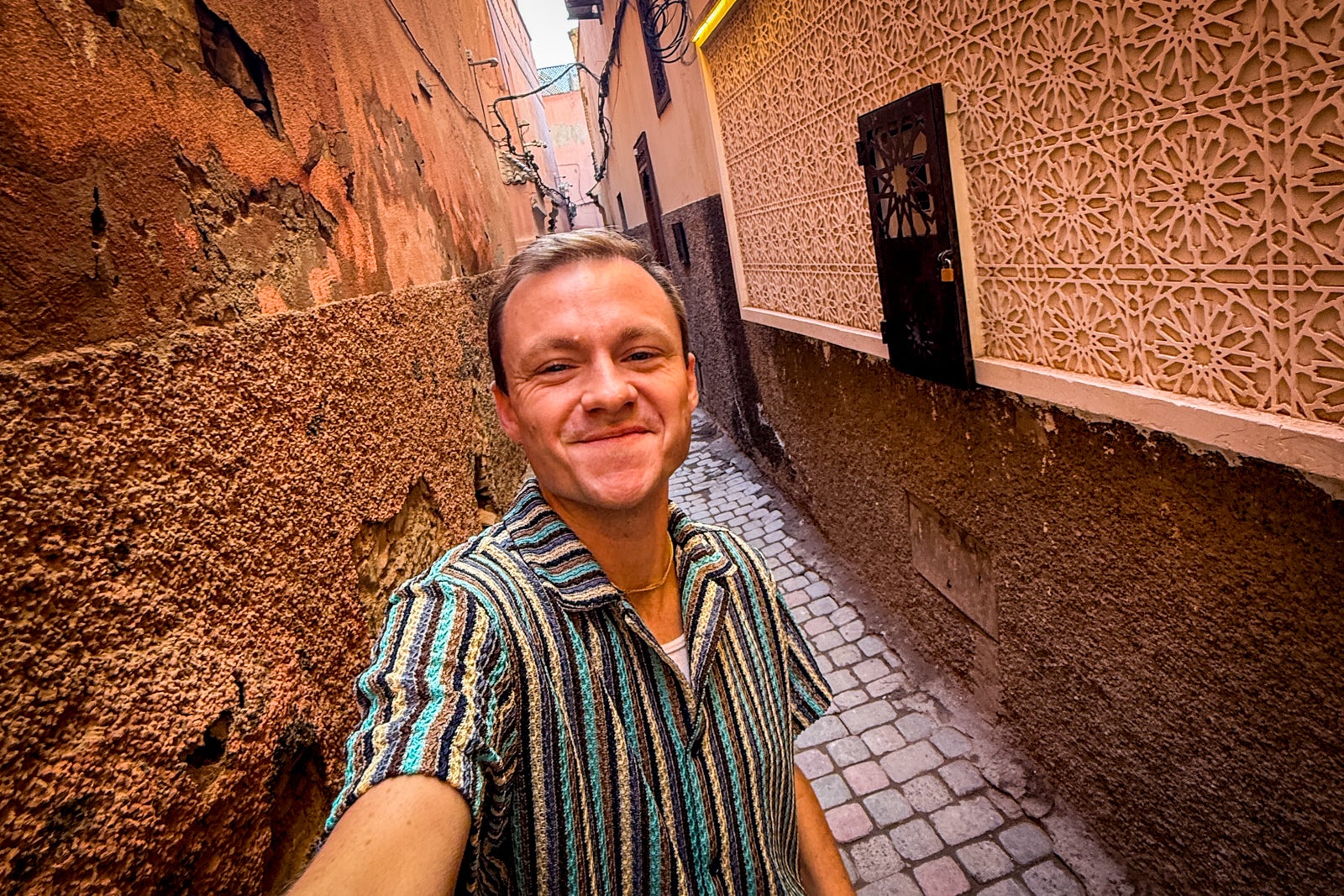
Before I left Marrakech, Brian surprised me with a bonus challenge to take advantage of some self-care. For me, that was easy, because nobody should leave Marrakech without spending a few hours getting a scrub in a traditional Moroccan hammam — and I did just that (in the spirit of competition, of course!).
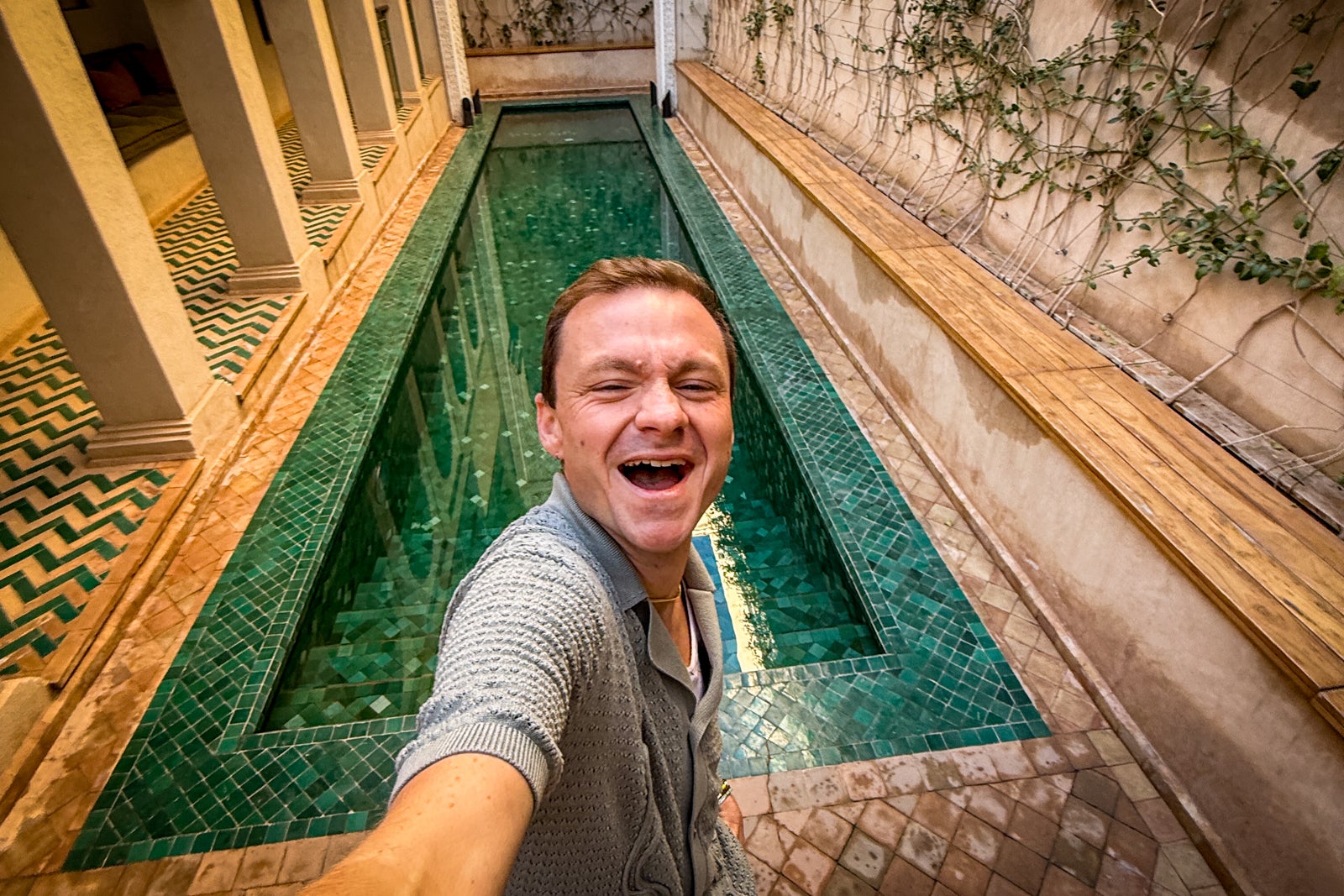
Marrakech was everything I had hoped it would be — like stepping back in time in the souks and medina, a visual feast of graceful palm trees and the snowcapped Atlas Mountains, and some of the friendliest people I’ve ever encountered in my travels.
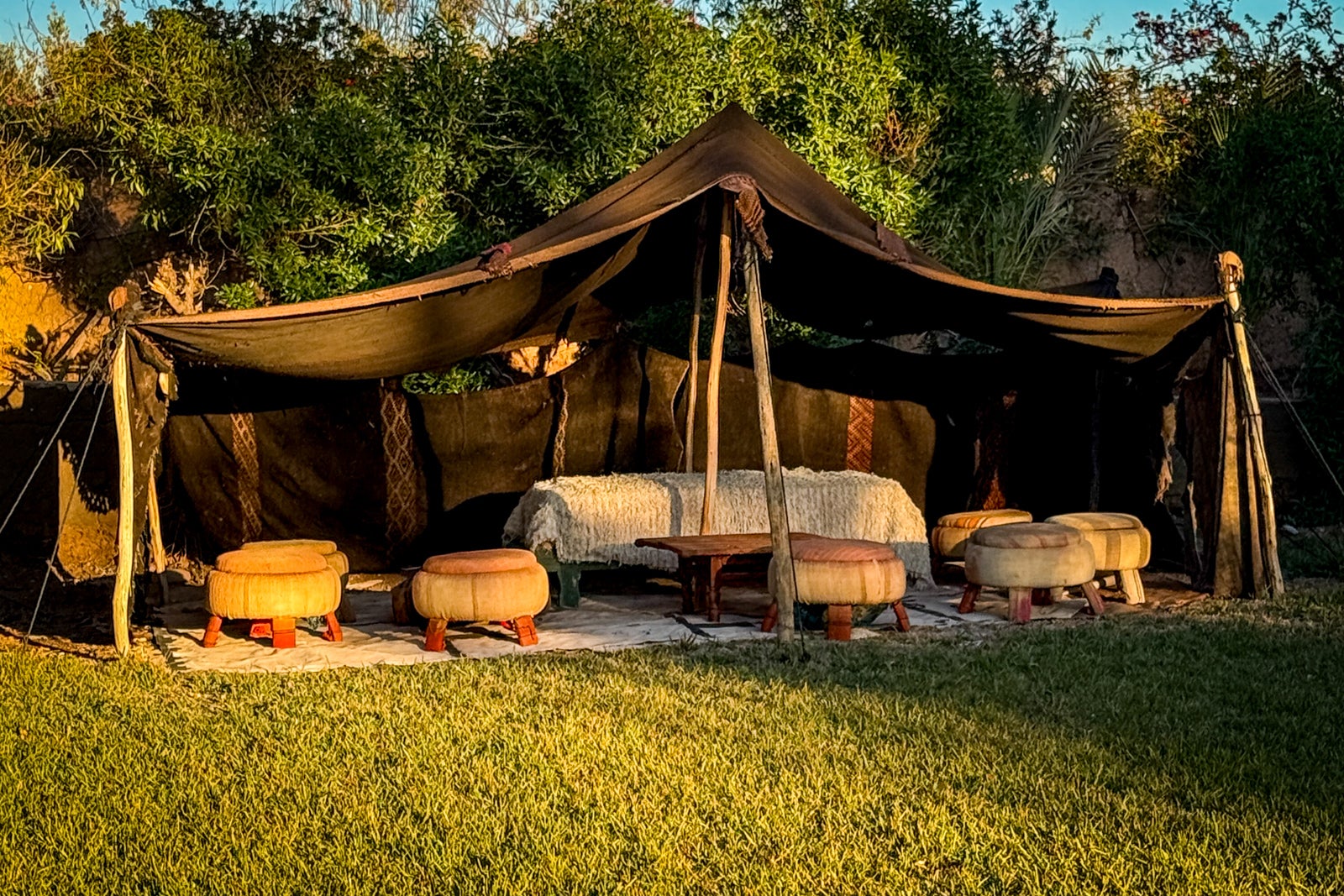
Back during the planning process, I had thought to myself, “What if I actually head into the desert instead of just staying in the city?” With about 40,000 points left in my budget, it made sense to book a night at the castle-like Kasbah Agafay Hotel & Spa at the edge of the Agafay Desert, where I could traverse dunes on an all-terrain vehicle, which was an activity I had never done before, meeting that condition of the challenge.
1 of 4
TANNER SAUNDERS/THE POINTS GUY
A boutique, locally owned hotel, Kasbah Agafay was like staying at a friend’s house … if that house was a traditional desert riad so picture-perfect, it looked like it was right out of a movie. The resort was charming, with beautiful courtyards, a big swimming pool, and lots of plush, colorful seating areas.
1 of 3
TANNER SAUNDERS/THE POINTS GUY
It was also close to the activities around the Agafay Desert, like taking an ATV out across the dunes with the glorious Atlas Mountains looming larger and larger in front of me as I cruised across the sand. Growing up in West Texas, I have always felt connected to the desert, and this adrenaline-filled experience left my blood pumping and my clothes muddy (but only because I thought it would be fun to drive through some big puddles).
1 of 3
TANNER SAUNDERS/THE POINTS GUY
On this leg of the trip, Brian hit me with another bonus challenge to learn about the local culture. I visited the Saida Berber House at the foot of the mountains to experience how the Indigenous communities lived and ate through a fun and informative cooking class that left me both full-hearted and full of traditional tagine, which I made myself.
After a few days of traveling across Spain and Morocco, it was time to return home to New York. Looking back on everything I’d experienced over the last few days, it felt nearly impossible that I had booked this entire trip with points … almost as impossible as packing a Berber-made rug, Moroccan pottery, local olive oil and a new pair of handmade shoes in my suitcase. (Note to self: Check the Chase app for any Chase Offers to finally buy a bigger suitcase at a discount.)
The final tally
So how did Tanner and Lyndsey fare in this epic Points Battle? Let’s look at their final tallies.
Lyndsey’s final tally
Here’s how I took advantage of my 150,000 Chase points, plus a few other card benefits I used:
- Round-trip flights from Los Angeles to Auckland on Fiji Airways and from Auckland to Queenstown on Air New Zealand: 82,523 points
- Park Hyatt Auckland: 25,000 points
- Sofitel Queenstown Hotel & Spa: 37,838 points
- Other card benefits: Taking advantage of Chase transfer partners (World of Hyatt), using Chase Points Boost on the Queenstown hotel, earning 3 points per dollar spent on dining and earning 5 points per dollar spent on Lyft rides to the airport
Total: 145,361 points
Tanner’s final tally
And now for my final points roundup, as well as other card benefits I used:
- Round-trip flight from New York to Marrakech with Madrid stopover: 37,618 points
- The Madrid Edition: 31,585 points
- Hotel Izza: 41,300 points
- Kasbah Agafay Hotel & Spa: 35,440 points
- Other card benefits: $50 annual hotel credit, earning 3 points per dollar spent on dining and earning 5 points per dollar spent on Lyft rides
Total: 145,943 points
And the winner is …
Lyndsey and Tanner both maxed out their stash of points and Chase Sapphire Preferred card benefits to go on two seriously epic trips that made Brian jealous as he followed along on Instagram.
Whether it was the blend of relaxing spa moments and desert thrills or immersive cultural moments with locals in Morocco, Brian’s pick for the winner of this TPG Points Battle was Tanner.
He creatively put his $50 annual hotel credit to work for a bucket-list hotel stay during a stopover in Madrid and also immersed himself in local culture with leatherworking and cooking classes, all while earning 3 points per dollar spent on delicious Moroccan meals.
The posts from Lyndsey’s trip certainly had Brian hankering for some New Zealand wines and outdoor adventures, though.
Congratulations to both contestants, and stay tuned to see how Tanner uses the points he won!
*Valid through Sept. 30, 2027; does not apply to Wait & Save, bike or scooter rides; activation required.

Stacie Harris is a local resident and reporter of the Maple Grove area. Stacie reports on medicine and science for the Maple Grove Report.