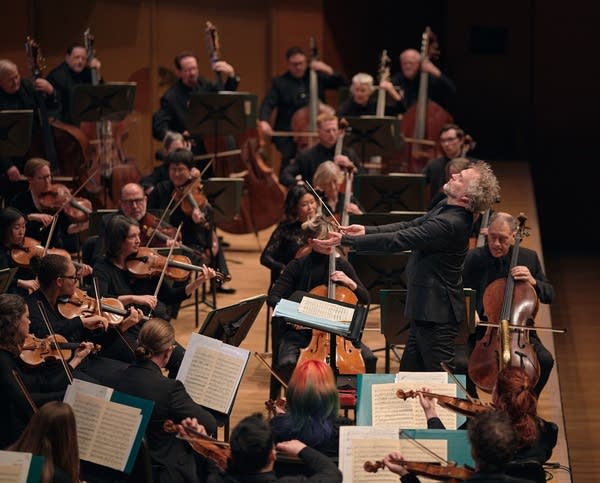
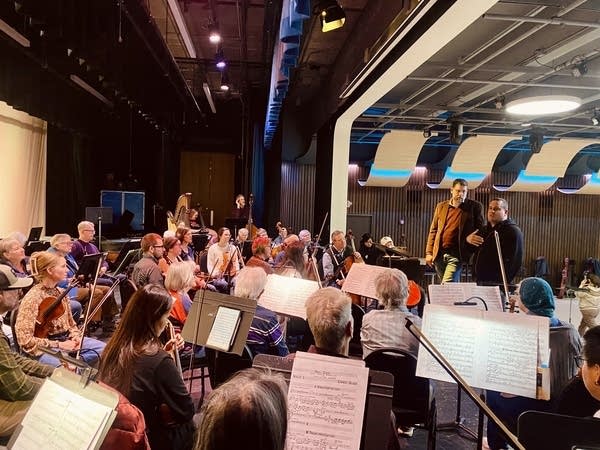
On a May evening in St. Paul, Israeli violinmaker Avshi Weinstein poses a question to the Jewish Community Center Symphony Orchestra before they begin rehearsal.
“Do you have any idea how many labor camps, ghettos, concentration camps were in Europe during the war?” Weinstein asked.
Some musicians respond — a thousand one says, several thousand, says another.
“Close to 40,000,” Weinstein said. “Almost every single camp had an orchestra. Auschwitz actually had seven orchestras. There was a lot of music in the ghettos. “
He explained: “The Nazis wanted to have music.”
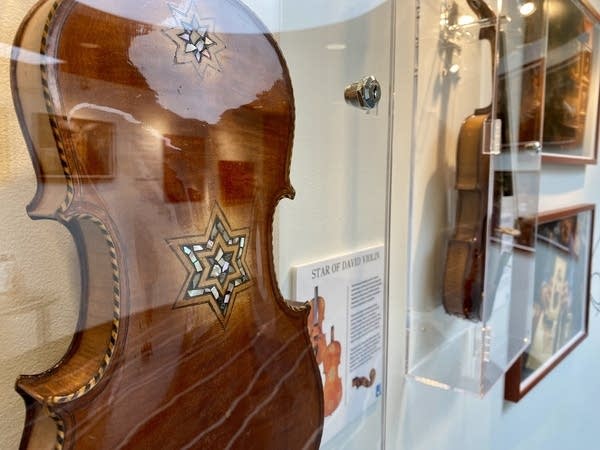
Weinstein is in Minnesota for Violins of Hope, an internationally touring collection of 70 violins that survived the Holocaust. Weinstein also calls it a residency because, for two months, there will also be more than 50 events featuring the violins — exhibitions, lectures, special Shabbat services and concerts spanning the state and even reaching to Sioux Falls, S.D.
The JCC Symphony Orchestra will perform May 20 with violin soloist Marc Levine playing the “Shlomo in Auschwitz” violin.
Katie Kline, senior director of Jewish arts and culture for the Minnesota JCC, says the programming is so expansive because they wanted to reach as many people as possible.
“Survivor stories are becoming increasingly rare,” Kline said. “These instruments are an accessible way for people to hear these stories, to remember them and to continue to share these stories and carry them forward.”
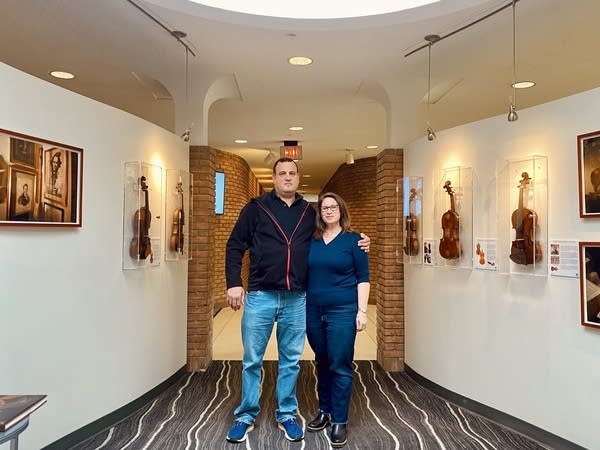
Decades ago, Weinstein co-founded Violins of Hope in Tel Aviv with his father and fellow violinmaker Amnon Weinstein, who died in 2024.
In the 1990s, they put out a request on an Israeli radio station.
“We asked on a radio show if people have instruments which belonged to Jewish people during the war,” Weinstein said. “We started getting more and more instruments.”
In the years since, they recovered and restored dozens of stringed instruments from around the world. Many have written biographies, which are on view at exhibitions at the art galleries of the JCC’s Capp Center in St. Paul and Sabes Center in St. Louis Park, as well as at The Museum of Russian Art and Orchestra Hall in Minneapolis.
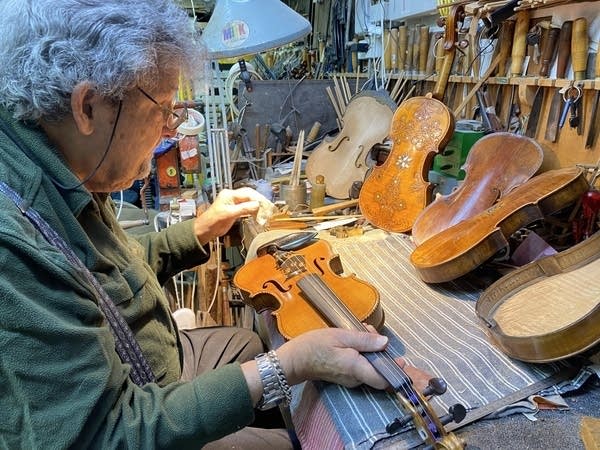
The “POW Violin,” for example, was made by an unknown prisoner during World War II, who engraved a scene of a walled town on its backplate with the inscription “Souvenir de Capitivite” (French for, souvenir of captivity). “For the unknown prisoner who made it, this violin was more than an instrument; it was an act of resistance and means of survival,” the biography states.
The “Vanderveen Violin,” belonged to Dutch prima ballerina and violinist Joyce Vanderveen, who was a teen when the Nazis invaded Holland.
“Joyce escaped Amsterdam with her mother and sister on a bicycle, carrying this violin as her one precious possession,” the biography states. Vanderveen survived the war in hiding, and went on to become a famous dancer. She died in 2008.
“In 1997, Joyce discovered that a childhood magazine photo of her had been cut out and pinned above Anne Frank’s bed in the Secret Annex,” the biography reads.
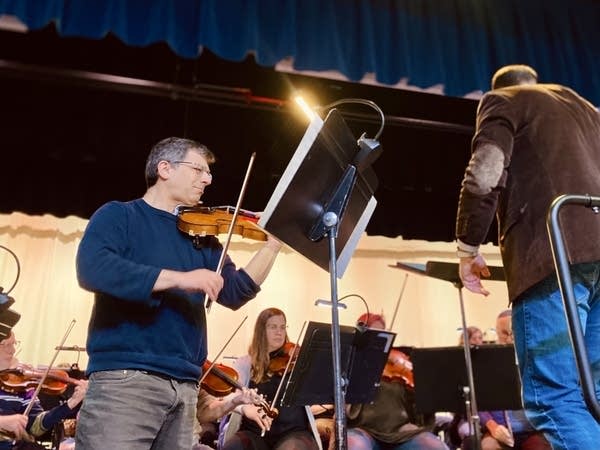
The history of the “Shlomo in Auschwitz” violin, which will be played by Levine on May 20, is unknown, but after it was recovered and repaired, Israeli violinist Shlomo Mintz played it at the gates of Auschwitz, which was captured in the 2018 documentary, "Violins of Hope: Amnon’s Journey."
These stories, Weinstein said, help humanize the millions of people the Nazis killed during the war.
“When I grew up, I could hear survivors. We cannot hear so many survivors today,” Weinstein said. The violins give ”the understanding that it could have happened to your next door neighbor, your cousin, your uncle. It gives it much more personal touch, and we have to make sure that people don’t forget, because if you look around, people do forget.”