Opening a second location sounds like a natural step when business is booming. One store does well, demand goes up, and suddenly expanding seems like the obvious path forward. However, once you get into the nuts and bolts of actually growing, things get trickier. Managing staff, keeping up with infrastructure, staying on top of maintenance, and sorting out logistics can be a lot to worry about. In this article, we will discuss what gas station businesses should seriously evaluate before they consider expanding.
It’s even more apparent in industries like convenience retail and fuel stations. Here, everything from how cars move through the lot to how reliable your pumps are matters for your bottom line. That said, people are still eager to open new locations.
According to the Bank of America, nearly 60% of small and mid-sized business owners planned to expand their businesses. Likewise, 74% expected their revenue to increase in the coming year. Sharon Miller, President of Business Banking, also stated that business owners are approaching the coming year with confidence.
Clearly, optimism around growth remains strong, but many businesses still underestimate how quickly operational inefficiencies can multiply during expansion. In this article, we’ll find out what exactly you should be factoring in when expanding to a new location.
Examining Tradeoffs Between Income vs. Logistical Ease

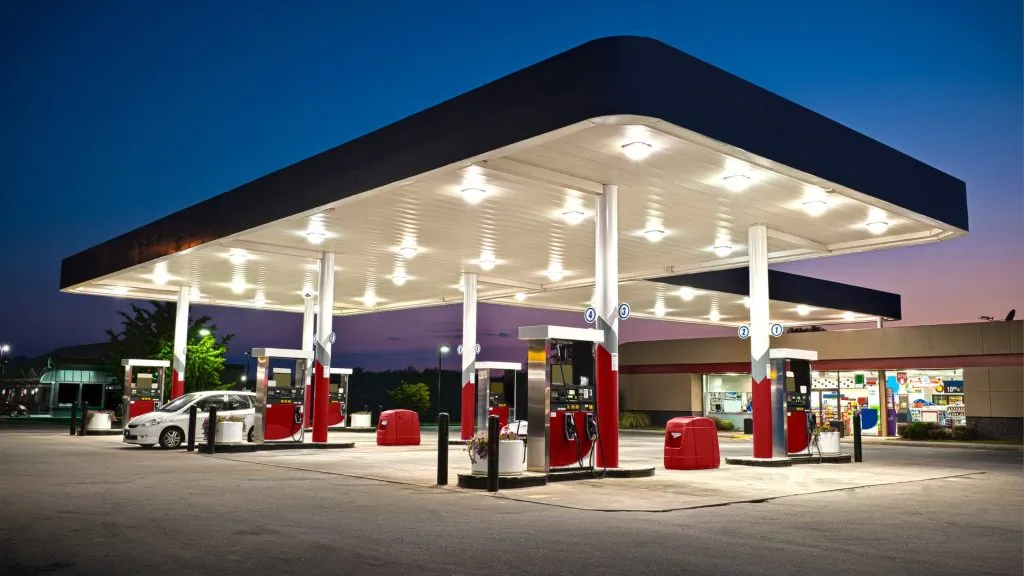
Modern convenience stores and fueling locations involve far more operational coordination than many entrepreneurs initially expect. Fuel systems, traffic flow, parking access, refrigeration equipment, delivery schedules, utility infrastructure, and environmental compliance all have to work together smoothly. Once you begin operating multiple locations, it becomes clear how quickly small layout decisions can affect both efficiency and profitability.
The challenge is that businesses sometimes focus too heavily on operational convenience when evaluating expansion opportunities. A location may look excellent from a logistics standpoint because deliveries are easier, fuel access is simpler, or maintenance operations are more manageable.
However, that does not automatically make it a strong retail environment. In convenience stores, especially, customer movement and accessibility directly influence how much revenue the location can actually generate.
The industry itself reflects this growing shift in thinking. The number of U.S. convenience stores fell for the second consecutive year. As of Dec. 31, 2025, there were 151,975 stores. Despite the overall decline, fuel-selling convenience stores increased by 768, reaching 122,620, the highest in 8 years. This is one reason many companies evaluate total facility fueling system solutions during early planning discussions.
As Shields, Harper & Co. note, a good partner to work with ensures you are getting a future-proof system. The goal is not simply to install pumps or improve fuel operations. It is to create better coordination between fueling systems, traffic movement, maintenance access, and retail operations so the entire property functions efficiently for both employees and customers.
That distinction matters because fuel may bring people onto the property, but the store itself is often where profitability is made. While fuel comprised 61.2% of total U.S. c-store sales in 2024, the in-store side accounted for 60.7% of gross profit dollars. That means the pumps drive traffic, but the store is where margin is made. Overall industry gross profits rose just 1.2% last year to $128.37 billion.
Having Early Discussions With Contractors
Business owners frequently focus heavily on interiors during expansion planning while underestimating the operational importance of the exterior environment. However, the exteriors also matter quite a bit. For convenience stores and fueling locations, especially, pavement quality affects both daily operations and long-term maintenance costs.
Heavy vehicle traffic accelerates surface deterioration much faster than many owners expect. Delivery trucks, fuel tankers, weather exposure, oil spills, and constant braking pressure gradually wear down pavement surfaces. This may seem like a non-issue at first, but it affects proper aesthetics. No one wants to stop at a rundown gas stop. This is why many businesses involve concrete and asphalt contractors much earlier in site planning discussions.
As Milliken Corporation recommends, try to find a concrete contractor who understands proper grading and sub-base preparation. So many contractors skip these important steps to save time and money, given the rising prices of materials.
That’s right; as Statista notes, the producer price index of concrete products has been steadily increasing in America. Over the last 10 years, the index went from 210.8 in 2011 to 392.8 in 2025. When compared to 2024, concrete products increased in price by 2.1%.
Essentially, early planning is increasingly important so you don’t deal with higher costs for redesigns and retrofits in the future.
Considering Stress on Daily Operations
Most businesses look at expansion and focus on things like projected revenue or market demand, maybe customer demographics. Sure, those are important, but honestly, operational stress testing catches issues that pure financial forecasts would miss. Opening a second location puts all sorts of new pressure on everyday systems.
For convenience stores or gas stations, things have to run like clockwork, day in and day out. When a second store opens, any tiny hiccups that weren’t such a big deal before start causing bigger headaches now.
A lot of times, businesses realize their first location ran on informal fixes. Staff would sort out a busted fridge or call the vendor after a quick chat, totally off the books. But with more locations, those quick fixes fall apart. Communication gaps pop up, repairs take longer, and scheduling gets noticeably messy. Customers will notice this, which is the last thing you want.
So, solid expansion means treating your operational systems as real investments. You want to spend time thinking through how everyday routines will hold up under pressure, way before anyone ever visits the new place.

Frequently Asked Questions
1. What permits are required before opening a gas station?
Opening a gas station usually involves zoning approval, environmental permits, underground storage tank permits, fire department inspections, fuel system certifications, and general business licensing. Many locations also require stormwater, signage, and construction approvals. The process can become lengthy because fuel operations face stricter environmental and safety oversight.
2. How do fuel prices affect convenience store profitability?
Higher fuel prices can increase sales volume on paper while still squeezing margins. Many gas stations earn surprisingly small profits from fuel itself. Convenience store purchases like drinks, snacks, and prepared food usually generate stronger margins, which is why inside sales remain extremely important for profitability.
3. Why do some gas stations perform worse than others?
Location plays a major role, but operational issues matter too. Poor traffic flow, difficult entry points, aging infrastructure, limited parking, slow pumps, and weak convenience store offerings can all hurt performance. Some stations also struggle because maintenance problems gradually damage customer experience and repeat visits.
Key Facts and Numbers for Gas Station Businesses
| Percentage of businesses planning to expand | 60% |
| Number of fuel-selling convenience stores | 122,620 outlets |
| Contribution of convenience stores to gas station revenue | 60.7% |
| Overall c-store industry gross profit increase | 1.2% |
| Increase in concrete product prices | 2.1% between 2024 and 2025 |
Gas stations often reveal how demanding expansion can become once a business moves beyond a single successful location. Expansion tends to change the way owners think about their businesses. As we discussed, at one location, many operational problems can be handled through familiarity and quick decision-making. Yet, once another site enters the picture, those same issues begin demanding systems, coordination, and long-term planning.
Moreover, the industry itself has also changed significantly over the past decade. Modern fueling locations increasingly depend on food sales, convenience retail, and customer experience to remain competitive. If you’re seriously thinking of opening a new location, think about what people really want at gas stops. That’s going to be the key to success here.