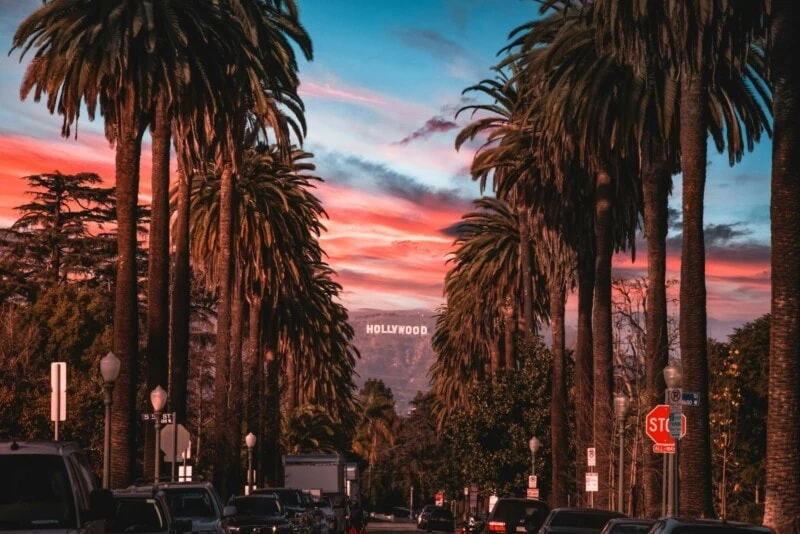

Before we dive into the Los Angeles World Cup 2026 guide, let’s talk about the City of Angels.
Los Angeles was born for the spotlight – sprawling, sun-soaked, and relentlessly itself – across more than 500 square miles of geography that somehow contains mountains, desert, ocean, and freeway all at once. The light here is different.
Locals say it, visitors feel it immediately, and no one can fully describe it. It hits the eucalyptus trees and the canyon walls and the morning mist burning off Santa Monica at 9am in a way that Walt Disney understood when he chose Southern California over every other location on the continent to build his first park. There’s a reason the film industry came here before anywhere else and stayed forever.
The World Cup arrives in June 2026 with eight matches at SoFi Stadium in Inglewood – including the USMNT opener against Paraguay, two knockout rounds, and a Quarterfinal. No other US host city carries more weight in the early stage of the tournament. The US Men’s National Team starts their home World Cup here. This city will be the epicenter of American soccer for the first two weeks of the tournament.
There’s also the food, which covers every cuisine on the planet within an hour’s drive. The beaches. The Korean BBQ at midnight. The tacos that started the conversation and never left it. The music and entertainment scene that has no parallel. The cultural diversity that makes “world in one city” not a marketing slogan but a literal description.
Pack sunscreen. Don’t rent a car unless you have to. Prepare to eat extraordinarily well.
Why Is Los Angeles Different From Other Host Cities

Los Angeles is the second-largest city in the United States and the entertainment capital of the world. Neither of those descriptions fully captures what it is to be here. LA County has over 10 million residents – the most populous county in the US. The greater metro GDP is approximately $1 trillion; if it were a country, it would rank in the top 20 globally. LAX is the second-busiest airport in the United States. None of those numbers explain what it feels like to be in it.
The geographic reality is staggering – The greater LA metro covers over 10,000 square miles. On the same day you can swim in the Pacific, ski in the San Gabriel Mountains, and drive through the desert. Five distinct weather forecasts exist simultaneously across the region. The 405 freeway runs through terrain that transitions from beach to canyon to valley in 40 miles. It is a city that exists in multiple climates simultaneously, which sounds like a marketing line until you experience it on a single afternoon.
The cultural diversity is equally unmatched – Nearly 45% of the greater metro population is Latino. The Korean community in Koreatown is among the largest outside Korea. The Ethiopian community in Little Ethiopia, the Armenian community in Glendale, the Japanese community in Little Tokyo, the Thai community in Thai Town – every World Cup nation playing in Los Angeles has a significant hometown community already here.
The food reflects LA’s international vibe – LA has some of the world’s best Mexican food outside Mexico – the tacos in the San Fernando Valley, the birria spots in East LA, the carnitas that draw people from across the city. The all-you-can-eat Korean BBQ in Koreatown is a rite of passage that ruins Korean BBQ everywhere else forever. The Asian supermarkets here are in a different category from anything in most American cities. The culinary range is so comprehensive that deciding what to eat becomes a genuine daily challenge.
Then there’s the entertainment infrastructure. Every musician tours here. Every film premieres here. Every celebrity lives here. The server at your restaurant in Silver Lake might have a Netflix show in development. That peculiar energy – ambition and creativity and talent concentrated in one sunlit basin – produces an atmosphere that is genuinely unlike any other American city.
The Los Angeles World Cup Strategy
- Accept the car culture early – LA was designed for automobiles. Most attractions, neighborhoods, and the stadium itself require transit planning. Metro is expanding rapidly, opening a free airport shuttle connecting to the city’s main Metro lines just in time for the tournament. The city’s scale still means driving or rideshare will be part of your life here. Budget time for it.
- Stay near the Metro or in a walkable pocket – Downtown LA, Santa Monica, Silver Lake, and Koreatown all offer hotel options with walkable neighborhood access and Metro connectivity. Avoid staying in areas that require a car for every errand.
- Use the Metro to the stadium – The Metro C Line (Green) connects to SoFi Stadium from multiple transfer points. This is the only sane option on match days. Driving to Inglewood for a World Cup match will cost you two hours.
- Don’t plan like New York – You cannot “walk from one neighborhood to the next” the way you can in SF or NYC. Distance between LA neighborhoods can be 30–45 minutes by car. Pick your area for each day and work outward from it.
- Book restaurants ahead – LA’s best restaurants – particularly in Silver Lake, Los Feliz, Beverly Hills, and Venice – book up fast under normal conditions. June 2026 World Cup week is not normal conditions.
- The weather is essentially perfect – June in LA is warm, dry, and near-cloudless. The exception is “June Gloom” – a marine layer that keeps the coast cool and overcast in the mornings before burning off by midday. Don’t panic when the sky is grey at 8am. By noon it’s 75°F and clear.
SoFi Stadium – What to Know

SoFi Stadium in Inglewood is the most technologically advanced stadium in the United States and arguably the most spectacular purpose-built sports venue in North America. It opened in 2020 at a cost of $5.5 billion – the most expensive stadium ever constructed – and hosts the NFL’s Los Angeles Rams and Los Angeles Chargers.
During the 2026 World Cup, it will officially be known as Los Angeles Stadium at Inglewood, following FIFA’s standard neutrality requirements for commercial naming.
Key Stadium Facts
- Capacity – 70,240 (expandable for World Cup)
- Translucent roof canopy – provides shade from the sun, open-air airflow. Not fully enclosed. Expect warm conditions on match days.
- 70,000 square feet of video display – the largest in NFL history at opening
- $5.5 billion construction cost – the most expensive stadium ever built
- Hollywood Park development surrounds the stadium – restaurants, retail, and fan activation space built specifically for events of this scale
Getting There
The Metro to SoFi is simpler than it sounds. From Downtown LA: one transfer – take any downtown Metro line to the A Line (Blue), then transfer to the C Line (Green) toward Inglewood. Total trip approximately 40–50 minutes. From Santa Monica: take the E Line (Expo) east toward downtown, transfer to the C Line. Approximately 30 minutes. Buy a TAP card at any station or use the Metro app – one card covers the whole system.
LAX recently introduced a free airport shuttle service, giving LAX arrivals direct transit to the Metro for the first time. From the airport, the C Line connects to SoFi without a car.
Do not drive. Game day traffic around Inglewood for a World Cup match – particularly USMNT games – will be severe in every direction for hours before and after kickoff. The Metro is your answer.
Arrive 90 minutes early minimum
SoFi is enormous, World Cup security is thorough, and the USMNT opener on June 12 will draw a crowd unlike anything this stadium has seen.
26 Fan Zones
LA will host an astounding 26 fan zones located in different parts of the city! Downtown LA (Union Station), LA County’s Earvin “Magic” Johnson Park, Downtown Burbank, Venice Beach, and West Harbor are just a handful of sites hosting events and programming for World Cup fans.
Official LA FIFA Fan Festival
The LA Memorial Coliseum – site of the 1984 Olympics – will host the official FIFA Fan Festival throughout the tournament. Free to enter, live match screenings, cultural programming. One of the better fan festival venues in the host city roster given the Coliseum’s history.
The 2026 World Cup Matches at SoFi Stadium
Based on the official FIFA release schedule (January 29, 2026), the following matches are assigned to SoFi Stadium. Los Angeles hosts 8 matches – 5 group stages, 2 Round of 32, and 1 Quarterfinal.
|
Match |
Teams |
Date |
Time (PT) |
Stage |
|
Match 6 |
USA vs. Paraguay |
Friday, June 12 |
6:00 PM |
Group D |
|
Match 15 |
Iran vs. New Zealand |
Monday, June 15 |
6:00 PM |
Group G |
|
Match 18 |
Switzerland vs. UEFA Playoff A Winner |
Thursday, June 18 |
12:00 PM |
Group B |
|
Match 16 |
Belgium vs. Iran |
Sunday, June 21 |
12:00 PM |
Group G |
|
Match 59 |
UEFA Playoff C Winner vs. USA |
Thursday, June 25 |
7:00 PM |
Group D |
|
Match 73 |
Group A Runner-Up vs. Group B Runner-Up |
Sunday, June 28 |
12:00 PM |
Round of 32 |
|
Match 84 |
Group H Winner vs. Group J Runner-Up |
Thursday, July 2 |
3:00 PM |
Round of 32 |
|
Match 98 |
Quarterfinal |
Friday, July 10 |
12:00 PM |
Quarterfinal |
The United States plays both of their guaranteed group stage games at SoFi Stadium. June 12 vs. Paraguay is the USMNT opener – the first match of the home World Cup for American soccer. June 25 brings the third group stage match against the UEFA Playoff C Winner. If the US advances through the Round of 32, they travel to San Francisco for July 1. But the American World Cup 2026 story begins here, in Inglewood, on June 12. This is the most anticipated single match on the US host schedule.
Group G: Belgium, Iran, and New Zealand play here. Belgium – ranked among the top nations in world soccer – is the headliner. Their match against Iran on June 21 has group stage implications that will draw significant global viewership.
How to Get World Cup 2026 Tickets
Official tickets are sold exclusively through FIFA’s ticketing portal at FIFA.com. By most ticket market analysts, the USMNT opener on June 12 is the single most in-demand group stage ticket in the entire tournament – demand will exceed supply by a significant margin. Secondary market prices on StubHub and SeatGeek will reflect that accordingly.
Buy through the official channel first. For the June 12 match specifically, set alerts the moment ticketing windows open.
Getting Around Los Angeles to the Stadium

The honest truth about LA transit: the city was designed for cars, and most visitors will use rideshare for much of their time here. That said, the Metro system is genuinely useful for specific areas and is the only viable option to the stadium on match days.
Metro to SoFi Stadium: Take the A Line (Blue) or E Line (Expo) to Rosa Parks Station, then transfer to the C Line (Green) to Inglewood/SoFi Stadium. From Downtown, approximately 40–50 minutes total. From Santa Monica, approximately 30 minutes via the E Line. Buy a TAP card at any Metro station or use the Metro app.
Metro within the city:
- E Line (Expo): Santa Monica ↔ Downtown ↔ transfer point. Most useful for Westside visitors.
- B/D Lines (Purple/Red): Hollywood, Koreatown, DTLA – the subway spine of the city.
- A Line (Blue): DTLA to Long Beach. Transfer point for SoFi.
Rideshare: Uber and Lyft are ubiquitous. Expect surge pricing near the stadium before and after matches. For within-neighborhood movement, rideshare is the pragmatic answer.
Driving: Useful for specific excursions – day trips to Malibu, the Valley, or further afield. Not recommended for match-day travel to SoFi. Freeway traffic in LA is a real and significant factor at any hour; rush hours (7–10am and 4–7pm) are particularly severe.
From LAX: The new LAX airport shuttle connects LAX terminals to the Metro system before the tournament begins. This is the game-changer for 2026 visitors – previously, getting from LAX to the city without a car was inconvenient. Now it’s a single Metro connection. Take the shuttle to the Consolidated Rent-A-Car Center station, then the C Line directly toward SoFi Stadium, or transfer to other lines for the city.
Where to Stay in Los Angeles for World Cup 2026
LA’s hotel landscape is as sprawling as the city itself. The right neighborhood depends entirely on what you want your base to feel like.
Downtown LA (DTLA)
The most transit-connected base in the city. Metro access to SoFi Stadium, walkable access to Little Tokyo, the Arts District, Grand Central Market, and the LA Live entertainment complex. DTLA has transformed significantly in the past decade – it’s no longer the empty corporate grid it once was. For fans who want Metro convenience and urban energy, this is the smart choice.
Best for: Transit-focused visitors, fans attending multiple matches, those who want city walkability.
Santa Monica / Venice
The postcard version of LA – beach, bike path, the Pier, Third Street Promenade, and consistently excellent weather. More expensive, requires driving or rideshare to most of the city’s interior, but offers a genuinely relaxed beach-city energy that the rest of LA doesn’t replicate. The E Line (Expo) connects to downtown.
Best for: Beach-first visitors, couples, travelers who want iconic coastal LA.
Hollywood / Los Feliz / Silver Lake
The creative-class neighborhoods of LA – great restaurants, independent bookshops, music venues, and a street-level energy that the Westside lacks. Silver Lake specifically has become one of the best dining and bar neighborhoods in the country. Not beach-adjacent, but closer to the cultural pulse of what LA actually is in 2026.
Best for: Food and nightlife-focused visitors, travelers who’ve done beach LA before and want the other version.
Beverly Hills / West Hollywood
The luxury and entertainment zone. Proximity to Rodeo Drive, Sunset Strip, West Hollywood’s nightlife, and the hotel infrastructure that LA’s entertainment industry runs on. Higher average cost, excellent service standards throughout.
Best for: Luxury travelers, entertainment industry visitors, anyone splurging on the iconic LA hotel experience.
Hotel Picks By Budget
Luxury:
- The Beverly Hills Hotel – The pink palace on Sunset. One of the most famous hotel addresses in America. Book months in advance.
- Hotel Bel-Air – Hidden in the hills above UCLA. Pool, extraordinary food, and quiet that feels impossible for a city this size.
- The Sun Rose West Hollywood – Sunset Strip, rooftop pool, the current pinnacle of Hollywood hotel culture.
Mid-range:
- The LINE Hotel – Koreatown. Design-forward, excellent food program, walkable to the world’s best Korean BBQ.
- Freehand Los Angeles – Downtown, boutique social hotel, strong bar program.
- Hotel Figueroa – Downtown, historic building, pool, proximity to the Coliseum Fan Festival.
Budget:
Where to Eat in Los Angeles

LA’s food scene is not what people from elsewhere expect it to be. It’s not salads and juice cleanses. It’s one of the most diverse and legitimately extraordinary dining cities in the world, shaped by the largest immigrant communities in North America – and it is best accessed by going to the neighborhoods where those communities live, not by staying in popular tourist areas.
Tacos – The Essential Starting Point
LA has a legitimate claim to the best tacos in the United States.
- Tire Shop Taqueria – Watts. Birria tacos that have made people drive 90 minutes each way, multiple times. Worth every minute.
- Tacos 1986 – Multiple locations, started as a cart. Al pastor and suadero are the move.
- Guisados – East LA and multiple locations. Braised meat tacos, handmade tortillas. Outstanding.
- Leo’s Tacos Truck – Multiple SoCal locations. Al pastor carved off a trompo at 2am. Mandatory.
Korean BBQ – Koreatown
Koreatown is a few square miles of the most concentrated Korean dining outside Seoul, and the all-you-can-eat Korean BBQ here is a rite of passage.
- Park’s BBQ – 8th and Vermont. Considered by many the best in the city. Meat quality is extraordinary.
- Quarters Korean BBQ – AYCE, long lines, worth the wait.
- Sun Nong Dan – Known for the galbi jjim (braised short rib). Life-changing if you’ve never had it.
Grand Central Market
317 S Broadway, Downtown. LA’s great food hall – open since 1917, renovated and reinvented in recent years. Eggslut, Tacos Tumbras a Tomas, Sticky Rice, Belcampo. A complete meal in one building if you want a sampler of LA food culture.
Bestia Arts District
Italian-influenced but Californian at its core. One of the hardest reservations in the city. Reserve weeks ahead. Worth the effort.
Guelaguetza Koreatown
Oaxacan food – mole, tlayudas, mezcal. The best Oaxacan restaurant outside Oaxaca, and it’s not close. One of LA’s most important restaurants.
Erewhon
Multiple locations. The grocery store that has become a cultural phenomenon. The smoothie bar is genuinely extraordinary and genuinely $20 a drink. Go once. Understand LA better afterward.
The San Fernando Valley
Most tourists never cross the hill to the Valley. This is a mistake. The Ventura Boulevard corridor and surrounding neighborhoods have some of the best and most authentic Mexican food in Southern California – in a region where that is saying something significant.
Where to Drink and Watch Games in Los Angeles

LA’s bar scene is enormous, neighborhood-dependent, and oriented around entertainment industry culture in ways that make it unlike any other American city.
Soccer bars:
- The Greyhound – Silver Lake. The city’s most dedicated soccer bar, home to the Los Angeles Spurs (Tottenham Hotspur supporters club). Will be at capacity for every significant World Cup match.
- The Fox and Hounds – Studio City. Down-to-Earth British pub home to LA’s Arsenal fans
- Tom’s Watch Bar – Downtown. Located across the street from Crypto Arena, it’s a go-to for high-energy sports fans
Rooftop bars:
- E.P. & L.P. – West Hollywood. Rooftop with panoramic city views, one of the best vantage points in LA. Book ahead.
- Perch – Downtown, 15th floor rooftop. Downtown skyline views, large outdoor space.
- Spire 73 – Downtown, 73rd floor of the InterContinental. The highest open-air bar in the Western Hemisphere. The view is worth the price of a drink.
Sunset Strip: The Sunset Strip between Doheny and Laurel Canyon is one of the great entertainment corridors in the world. Whisky a Go Go, the Roxy, the Viper Room, the Comedy Store. For one night of archetypal LA nightlife, this is the address.
Venice Boardwalk: Different energy entirely – outdoor, beach-adjacent, chaotic, and entertaining in the way only Venice Beach is. Muscle Beach, street performers, the canals two blocks inland. Do not confuse this with the nightlife scene, but it’s essential LA daytime.
Best Tours and Experiences in Los Angeles
Griffith Observatory
Free entry to the grounds, small admission for the planetarium. The view of the Hollywood Sign, the LA basin, and on clear days the Pacific from the observatory terrace is one of the defining images of the city. Go at dusk. The city lights up below you in a way that earns every cliché ever written about LA at night.
The Getty Center
Free admission (parking fee only). One of the great art museums in America – Rembrandt, Monet, Van Gogh – in a Richard Meier building on a hilltop with gardens and views over the Pacific. Among the best free museum experiences in the country. Book timed entry in advance.
Venice Beach and the Canals
Walk the boardwalk, then turn two blocks inland and find the canals – 100-year-old waterways lined with homes and bridges that feel like they belong in a different city entirely. The contrast is distinctly LA.
Hollywood Sign Hike
Multiple trail access points to the sign – Bronson Canyon and the Brush Canyon Trail are the most popular. Allow 2–3 hours round trip. Bring water. The views of the basin from the ridge above the sign on a clear day are extraordinary.
Santa Monica Pier / Pacific Park
The most photographed pier in America. Ferris wheel, Pacific views, beach access, and the end of Route 66. More tourist than local, worth it once, ideally at sunset.
Disneyland
45 minutes south in Anaheim. The original. Walt Disney chose Southern California for a reason. If you’re here with family or have never been, the proximity to a World Cup trip makes the detour logical.
COSM Los Angeles
One of the most technologically extraordinary entertainment experiences available anywhere. COSM’s immersive shared reality dome puts you inside a visual environment unlike anything else – for World Cup matches you can’t attend in person, watching the game at COSM is a genuinely unique alternative. Book in advance.
Beyond the Game – Los Angeles in June

LACMA (Los Angeles County Museum of Art) – The largest art museum in the western United States. The Chris Burden “Urban Light” installation – 202 antique street lamps at the entrance – is one of the most photographed public art installations in the world. Free to photograph from the outside at any hour.
The Broad – Contemporary art museum in Downtown, free general admission (timed entry required). Jeff Koons, Jean-Michel Basquiat, Cindy Sherman. The permanent collection is world-class and the building itself is architecturally significant.
Little Tokyo – Downtown LA’s Japanese neighborhood – the largest Japanese-American community in the US. Ramen, izakayas, the Japanese American National Museum, and a cultural density that rewards slow exploration.
Malibu – 30 miles up the Pacific Coast Highway from Santa Monica. The PCH drive is one of the great coastal road trips in America. Zuma Beach, Point Dume, and the Getty Villa (the original Getty museum, focused on Greek and Roman antiquities, in a Roman villa overlooking the Pacific) are all worth the drive.
Day Trips:
- Joshua Tree National Park – 2.5 hours east. Otherworldly desert landscape. A full day, ideally with a sunrise.
- Santa Barbara – 90 minutes north on the 101. The American Riviera. Channel Islands backdrop, excellent wine country nearby.
- Palm Springs – 2 hours east. Mid-century modernist architecture, desert heat, pools, and a very specific kind of California weekend energy.
- San Diego – 2 hours south. Balboa Park, the Zoo, the Gaslamp Quarter, and reliably excellent weather.
Los Angeles Fan Culture
Los Angeles has professional soccer infrastructure that almost no other US host city can match. LAFC (Los Angeles Football Club) plays at BMO Stadium and finished the 2022 MLS Cup in one of the greatest MLS finals in history. The LA Galaxy are the most decorated club in MLS history – five championships, the Beckham era, the Zlatan era, and a fan culture that extends into every neighborhood of the city.
The Mexican and Latino communities in LA create a level of ambient soccer culture that exists independently of any scheduled match. El Tri matches at the Rose Bowl and SoFi have sold out for decades. The energy around any Mexico match showing – anywhere, on any screen – is something that has to be experienced to be understood.
For the World Cup: The international fan communities already concentrated here mean that every match at SoFi will have significant national representation even when neither team is American. Paraguay, Switzerland, Belgium, Iran, New Zealand – each of these nations has diaspora communities in Southern California. The stadium will feel international in the truest sense.
The FIFA Fan Festival at the LA Memorial Coliseum adds another layer – live match screenings in one of the most historically significant sports venues in America, 39 days of programming, free to the public. For fans who want the World Cup atmosphere without a match ticket, the Coliseum Fan Festival is one of the best options in the entire host city roster.
Los Angeles World Cup Weather Guide
June in LA:
- Highs: 75–85°F (24–29°C) inland, 65–72°F (18–22°C) near the coast
- Lows: 58–65°F (14–18°C)
- “June Gloom” – marine layer in the mornings, particularly near the coast, burning off by midday. Don’t panic on a grey morning. By noon it will be clear.
- Humidity: Low inland, slightly higher near the ocean. Comfortable throughout.
- Rain: Essentially zero in June. The dry season is in full effect.
Stadium conditions (SoFi, Inglewood):
- Slightly inland from the coast – warmer and clearer than Santa Monica
- The translucent canopy provides shade coverage while allowing airflow
- Evening matches (the 6pm June 12 USMNT opener) will be warm and clear. Pack sunscreen for day matches.
What this means for packing:
Light layers for the coast in the mornings. Shorts and t-shirts for stadium days. Sunscreen is non-negotiable. A light jacket for evening events, especially if you’re spending time near the beach. The most forgiving weather on the entire US host city list.
Biggest Mistakes World Cup Visitors Make in LA
Renting a car and planning to drive to SoFi on match day – The single most common mistake. Traffic around Inglewood before and after a USMNT match will be unlike anything you’ve experienced. The Metro exists, it works, and it will get you there without spending two hours in a parking structure. Take it.
Trying to “see all of LA” in one day – LA is not a city you sightsee in a loop. Venice Beach, Griffith Observatory, Koreatown, and SoFi Stadium are not a logical single-day circuit – they’re each an hour apart. Pick a neighborhood or two per day and go deep rather than wide.
Staying too far from a Metro line – Staying in an area without Metro access means every trip requires a car or rideshare. In a city this size, that adds up fast in both time and money. Downtown, Koreatown, Silver Lake, and Santa Monica all have Metro access. Stay in one of them.
Skipping Koreatown – Most visitors never go. Every visitor who goes wishes they’d gone earlier. The Korean BBQ alone justifies an entire evening. The bars, the 24-hour culture, the food density – Koreatown is one of the best neighborhoods in America and most World Cup visitors will miss it entirely.
Eating only near your hotel – LA’s best food is rarely where tourists are. The best tacos are in the San Fernando Valley and East LA. The best dim sum is in the San Gabriel Valley. Yelp-proximity eating in a tourist neighborhood will give you a mediocre version of a city with an extraordinary food scene.
Underestimating how long everything takes – 20 miles in LA can take 45 minutes at the wrong hour. Build a buffer into every plan. Check traffic before you leave. The 405 is not your friend during rush hour in any direction.
Booking accommodation before checking the Metro map – A beautiful hotel in Woodland Hills or the eastern Valley might look affordable and appealing until you realize it’s an hour from everything and has no Metro access. Cross-reference your hotel location against the Metro system before booking.
Conclusion
The World Cup doesn’t need to convince Los Angeles it’s important. This city hosted the 1994 World Cup Final. It has watched the planet’s greatest athletes perform in its stadium for decades. It already has three professional soccer clubs and a fan base that treats El Tri matches like national holidays.
What June 2026 brings is a city operating at full volume – the entertainment capital, the cultural capital, the taco capital, the city where the light hits the canyon walls in a way that Walt Disney understood before the rest of the world caught up – doing what it does when the world is watching.
The USMNT opener is here. The Quarterfinal is here. The greatest taco of your life is waiting somewhere in the San Fernando Valley right now.
Show up early. Take the Metro. And for goodness sake, leave room for tacos.
Los Angeles doesn’t adjust for the World Cup. The World Cup adjusts to Los Angeles.
Read More:
FIFA World Cup 2026 Packing List
What to Wear to a World Cup Game
Match schedule accurate as of official FIFA release January 29, 2026 – subject to change
Los Angeles World Cup FAQ
Where is the SoFi Stadium?
SoFi Stadium is in Inglewood, California – approximately 4 miles from LAX and 15 miles southwest of Downtown LA. During the World Cup it will be officially called Los Angeles Stadium at Inglewood.
How do I get from LA to SoFi Stadium?
Metro C Line (Green) to Inglewood, with transfers from the A Line (Blue) or E Line (Expo). From Downtown, approximately 40–50 minutes. Do not drive on match days.
How do I get from LAX to the city?
The new LAX free airport shuttles connect terminals to the Metro system for the first time. Take the shuttle to the Metro C Line connection – from there you can reach SoFi Stadium directly, or transfer to other lines for Downtown and the Westside.
What is the weather like in LA during the World Cup?
Warm, dry, and near-perfect. Expect highs of 75–85°F inland. The morning marine layer near the coast burns off by midday. Pack sunscreen and light clothing.
Does LA have a soccer culture?
Yes – one of the strongest in the US. LAFC and the LA Galaxy both compete in MLS. The Mexican and Latino communities in Southern California create an ambient soccer culture that predates professional leagues. El Tri matches at SoFi have sold out for years.
What is the best neighborhood to stay in for the World Cup?
Downtown LA for Metro access, Santa Monica for beach access, Silver Lake or Los Feliz for food and neighborhood culture. All connect to SoFi Stadium via the Metro.
Is LA expensive during the World Cup?
LA is already one of the most expensive US cities. World Cup surcharges on accommodation should be expected, particularly around June 12 (USMNT opener). Book as early as possible.
What should I not miss in LA?
The USMNT opener at SoFi, tacos (specifically birria), Korean BBQ in Koreatown, Griffith Observatory at dusk, the Getty Center, the PCH drive to Malibu, and at least one night in Silver Lake or the Arts District.

Stacie Harris is a local resident and reporter of the Maple Grove area. Stacie reports on medicine and science for the Maple Grove Report.