
Police Have Yet To Catch A Thief Who Used A Waymo To Steal Yoga Clothes


Believe it or not, this is not the first robotaxi-assisted theft.

A burglar used a Waymo to steal a bunch of yoga clothes and seemed to have gotten away with it, according to a report by SF Chronicle. The incident occurred all the way back in January and the suspect remains at large.

The burglar took a Waymo to a San Francisco yoga studio, robbed the place blind and then exited via that same robotaxi, according to security footage described by TechCrunch. Waymo turned over the suspect’s account information to authorities but it didn’t lead police anywhere useful.

Interestingly, authorities weren’t able to get interior footage of the ride itself. Waymo vehicles record everything, but don’t hold onto that footage forever. Reports have indicated that when cops filed a search warrant in April, it was already gone. Police weren’t able to identify the suspect using the vehicle’s exterior camera footage because it had been “blurred for privacy reasons.”

This is potentially good news for people worried about the long-term surveillance capabilities of Waymo vehicles, though we still have some questions as to when the company deletes old footage. Engadget has reached out to Waymo to ask for clarification on that and the blurred exterior camera footage.

Oddly, this isn’t the first time a ne’er-do-well has opted for a Waymo to help commit a crime. Someone used one of the company’s vehicles a getaway car after robbing a grocery store. That person, however, was almost immediately caught.


Source link

Leave a Reply

Subscribe to Our Newsletter

Get our latest articles delivered straight to your inbox. No spam, we promise.

Recent Reviews


Hot on the heels of its recent GPT-5.5 release, OpenAI is updating ChatGPT’s default model to GPT-5.5 Instant. OpenAI touts GPT-5.5 as producing 52.5 percent fewer hallucinated claims in internal testing, and 37.3 percent fewer inaccurate claims when taking on conversations ChatGPT users had flagged for factual errors.

At the same time, OpenAI says it designed the new model to generate more direct responses, “while keeping the warmth and personality that makes ChatGPT enjoyable to use.” GPT-5.5 Instant is also allegedly better at asking fewer unnecessary followup questions and should generate less cluttered outputs, in part thanks to more subdued emoji use. Separately, OpenAI has made the new model faster at searching uploaded files, connected Gmail accounts and prior ChatGPT conversations to generate personalized responses. The upgrade should translate to users needing to repeat themselves less often.

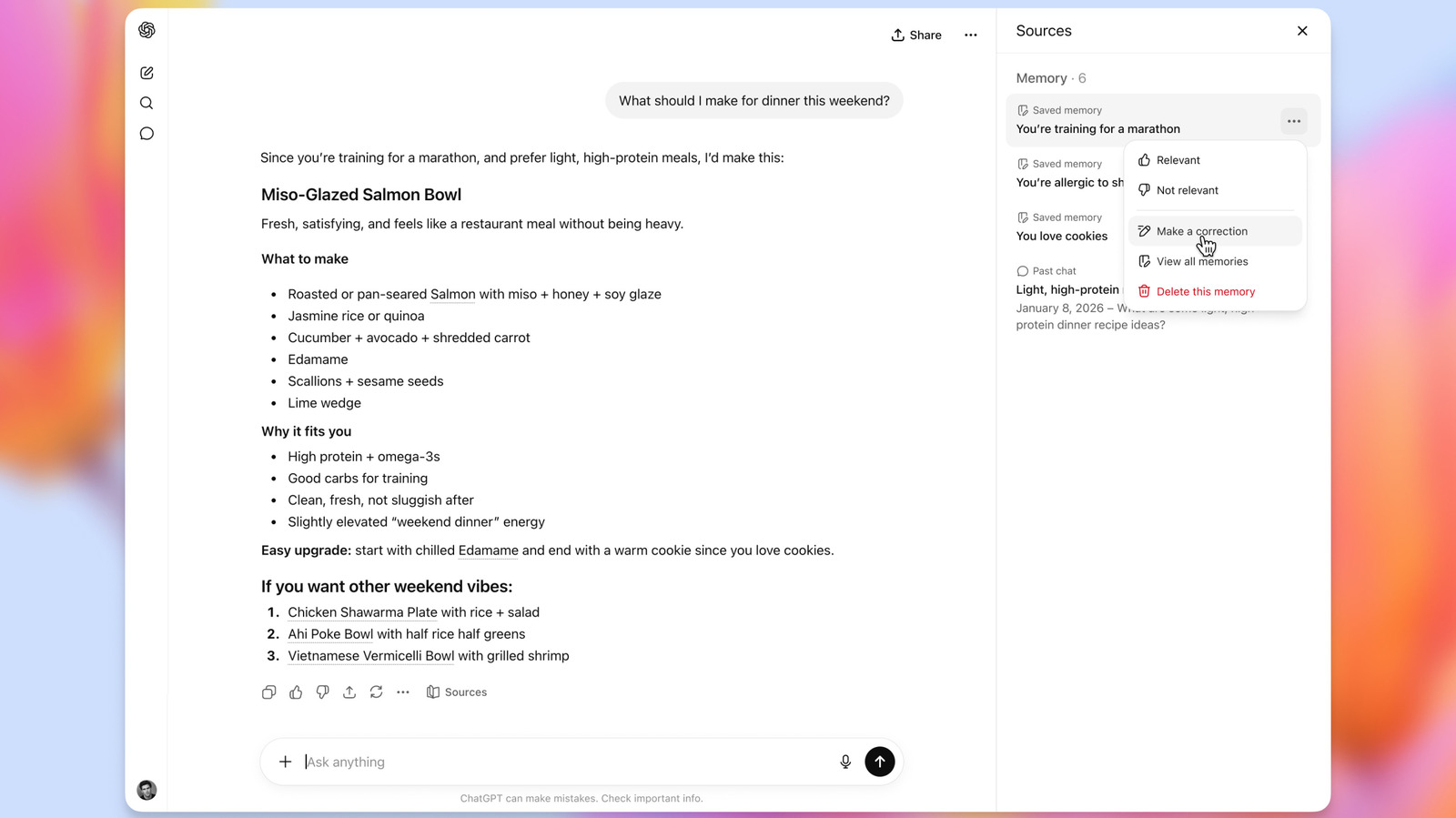
Alongside GPT-5.5 Instant, OpenAI is introducing a feature it calls memory sources, which is designed to give users more visibility over the context ChatGPT may have used to personalize a response. It also gives people the option to delete the information, or update it if it’s no longer relevant.

“Memory sources aren’t shown to others if you choose to share a chat,” OpenAI explains. “You remain in control of what’s in your memory: you can delete chats you no longer want to be cited, delete or change items in saved memories in settings, or use temporary chats that don’t use or update your memory.”

In its current iteration, the feature won’t display every bit of information ChatGPT might have used to inform one of its answers, but the company says it’s working on making it more comprehensive. OpenAI is rolling out GPT-5.5 Instant’s better personalization to Plus and Pro subscribers first, with Free, Go, Business and Enterprise users slated to get access in the coming weeks. All ChatGPT users will get access to the memory sources feature, on both the web and mobile, “soon,” according to OpenAI. As for GPT-5.5 Instant, OpenAI is beginning to deploy to everyone starting today.


Source link