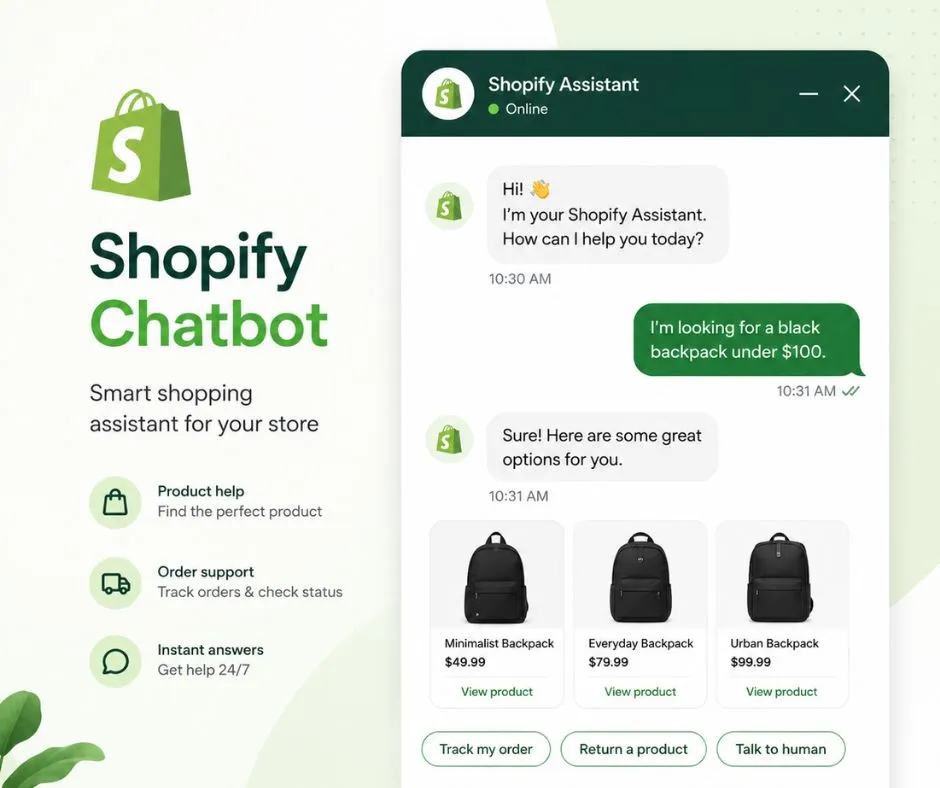
Running a successful Shopify store involves more than attracting visitors. The real challenge begins when potential customers start asking questions.
Many e-commerce businesses invest heavily in advertising, SEO, social media marketing, and email campaigns to drive traffic. Yet a surprising number of sales are lost before customers even reach the checkout page. Often, the reason is not pricing or product quality. It is simply a lack of timely communication.
When shoppers cannot find answers quickly, they move on. In a highly competitive e-commerce environment, every unanswered question can represent a missed sales opportunity.
This is why many Shopify merchants are turning to chatbots to help bridge the gap between customer interest and purchase decisions.
Key Takeaways
|
Why Potential Customers Leave Without Buying
Online shopping offers convenience, but it also removes the ability for customers to speak directly with a salesperson.
When shoppers have questions about product specifications, shipping times, return policies, compatibility, sizing, or stock availability, they often seek immediate answers before making a purchase.
The problem is that many Shopify stores rely on contact forms, email enquiries, or limited support hours. If a customer has to wait several hours or even until the next day for a response, they may purchase from a competitor instead.
Common reasons customers abandon their purchase journey include:
- Unanswered product questions
- Uncertainty about shipping or delivery
- Concerns about returns and exchanges
- Difficulty comparing products
- Lack of confidence in the purchase decision
These moments of hesitation frequently occur just before checkout, making them critical opportunities for businesses to engage and assist potential buyers.
Providing Immediate Answers Around the Clock
One of the biggest advantages of Shopify chatbots is their ability to respond instantly.
Unlike human support teams, chatbots can operate twenty-four hours a day without interruption. Whether a visitor arrives during business hours or late at night, they can receive answers to common questions immediately.
This constant availability helps reduce customer frustration and keeps potential buyers engaged while they are actively considering a purchase.
For e-commerce businesses serving international customers across multiple time zones, this benefit becomes even more valuable. A visitor browsing from another country does not need to wait for the local support team to start work before receiving assistance.

Helping Customers Find the Right Products
Many customers visit a Shopify store without knowing exactly which product they need.
They may have a general problem to solve but require guidance before selecting an item. In a physical store, a salesperson would typically provide recommendations. Online, a chatbot can perform a similar role.
By asking a few simple questions, chatbots can help narrow down options, suggest suitable products, and direct customers toward relevant categories or collections.
This creates a smoother shopping experience and reduces the likelihood of visitors becoming overwhelmed by too many choices.
Reducing Cart Abandonment
Cart abandonment remains one of the biggest challenges for ecommerce businesses.
Customers often add products to their carts but leave before completing the purchase. Sometimes they are distracted, while in other cases they have unanswered concerns preventing them from proceeding.
Chatbots can help address these concerns in real time.
For example, if a customer hesitates at checkout because they are unsure about delivery times or payment options, a chatbot can provide immediate clarification. Removing uncertainty at the right moment can make the difference between a completed order and a lost sale.
Supporting Customers During Peak Sales Periods
Major shopping events such as Black Friday, Cyber Monday, and holiday promotions often generate significant spikes in customer enquiries.
During these periods, support teams can quickly become overwhelmed by repetitive questions regarding promotions, discounts, stock availability, and shipping schedules.
Chatbots help businesses manage increased enquiry volumes without requiring additional staffing.
Rather than waiting in long support queues, customers can receive instant answers while support agents focus on more complex requests that require human attention.
This combination of automation and human support often leads to a better customer experience during busy sales periods.

Collecting and Qualifying Leads
Not every visitor is ready to make a purchase immediately.
Some may still be researching products, comparing options, or seeking additional information before making a decision.
Chatbots can capture valuable lead information during these interactions, including names, email addresses, product interests, and specific requirements.
This information allows businesses to continue nurturing potential customers through follow-up communication and targeted marketing efforts.
Even if a sale does not happen during the first visit, the opportunity remains active rather than being lost entirely.
Creating a More Consistent Customer Experience
Human support quality can vary depending on workload, staffing levels, and response times.
Chatbots help provide consistency by delivering accurate information based on predefined business knowledge.
Many modern solutions, including platforms such as AeroChat, allow businesses to train chatbots using their own content, product information, policies, and frequently asked questions. This helps ensure customers receive responses that align with the business’s actual offerings and processes.
A consistent customer experience helps build trust, which is often a key factor in online purchasing decisions.
Finding the Right Balance Between Automation and Human Support
While chatbots offer significant advantages, they are most effective when used alongside human support rather than as a complete replacement.
Customers with simple questions can receive immediate assistance from a chatbot, while more complex situations can be escalated to human agents when necessary.
This balanced approach improves efficiency while ensuring customers still receive personalised support when required.
Businesses that successfully combine automation with human expertise often achieve better customer satisfaction and stronger operational efficiency.
Conclusion
Many lost ecommerce sales occur because customers cannot obtain the information they need at the moment they need it.
Shopify chatbots help address this challenge by providing instant responses, guiding shoppers through their buying journey, reducing cart abandonment, and supporting customers around the clock.
As customer expectations continue to rise, businesses that respond quickly and consistently are better positioned to convert interested visitors into paying customers. For many Shopify merchants, chatbots are becoming an important tool for reducing missed opportunities and creating a smoother path to purchase.
Looking for proven strategies used by business consultants?
Frequently Asked Questions
1. How do Shopify chatbots help increase ecommerce sales?
Shopify chatbots help increase sales by providing instant answers to customer questions about products, shipping, returns, and stock availability. Quick responses keep shoppers engaged and reduce the likelihood of them leaving the store to buy from a competitor.
2. Can chatbots reduce shopping cart abandonment?
Yes. Chatbots can guide customers through the buying process, answer last-minute questions, recommend products, and provide support during checkout. This helps reduce uncertainty and encourages shoppers to complete their purchases.
3. Should chatbots replace human customer support?
No. The most effective approach combines chatbot automation with human support. Chatbots handle routine questions and provide 24/7 assistance, while human representatives manage complex issues that require personal attention.