Fast fashion produces clothes cheaply and quickly. Many of us have grown accustomed to clicking on an ad and getting a new top, dress or a pair of shorts on our doorstep just days or sometimes hours later, only to throw out the clothing after it quickly grows out of style.
But the pollution that clothing causes doesn't fade away like fashion trends.
Much of the clothing that’s tossed away ends up in landfills and produces methane, a potent greenhouse gas and a significant contributor to warming the climate. Decomposing clothes also can release PFAS, or forever chemicals, and microplastics.
And that’s where an innovative machine designed and built by an engineering professor and her students at the University of Minnesota Duluth could help, by recycling unwanted clothing instead of landfilling it.
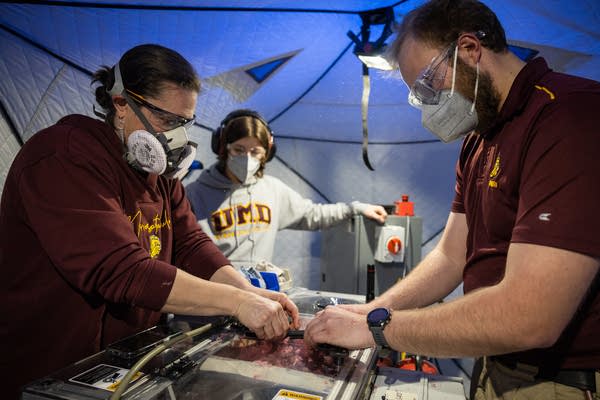
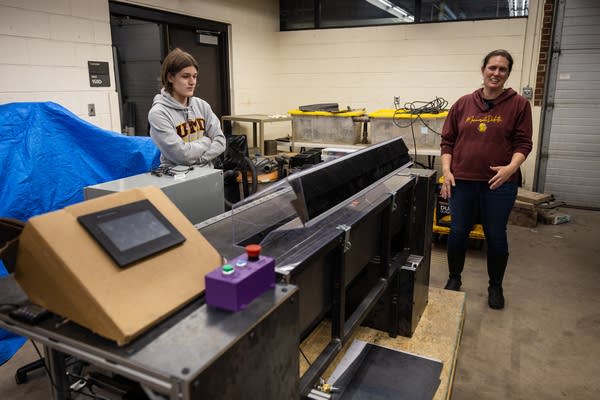
It's called the "fiber shredder." It's the brainchild of Abbie Clarke-Sather, associate professor in mechanical and industrial engineering at UMD, who’s been fine-tuning the contraption with her students for the past decade.
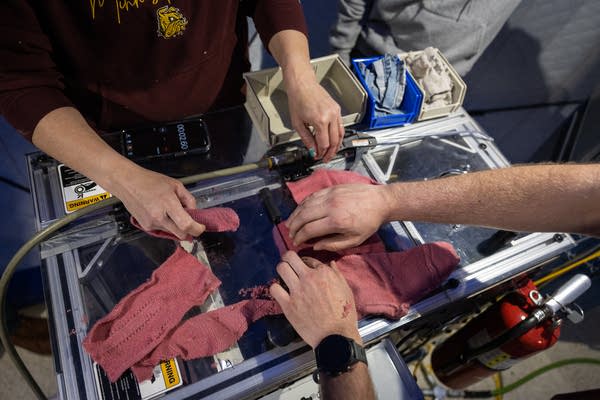
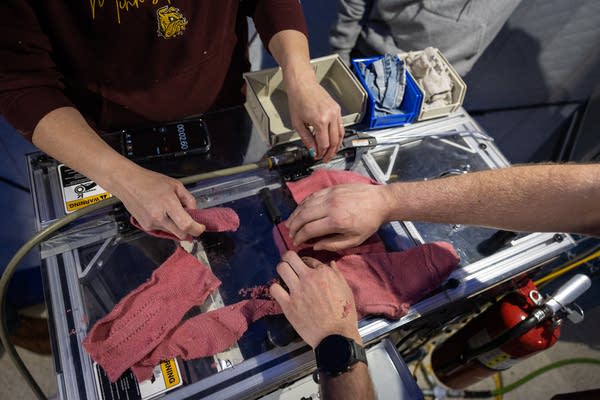
It's about the size of a copy machine. Inside, two drums rotate in opposite directions, with teeth on them “kind of like what you'd find on a fish hook,” she said during a recent demonstration.
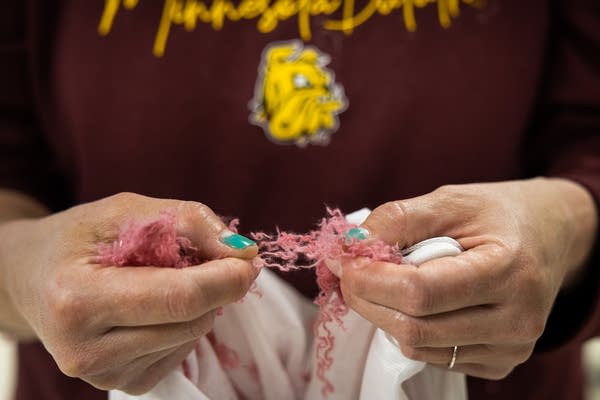
Clarke-Sather dons a face mask, turns on a loud air filter and feeds strips of an old, holey, pink cashmere sweater into the top of the machine. Instead of chopping up the fabric, the drums pull apart the fibers. Ninety seconds later, she’s peering inside a bag full of pink thread that looks like cotton candy.
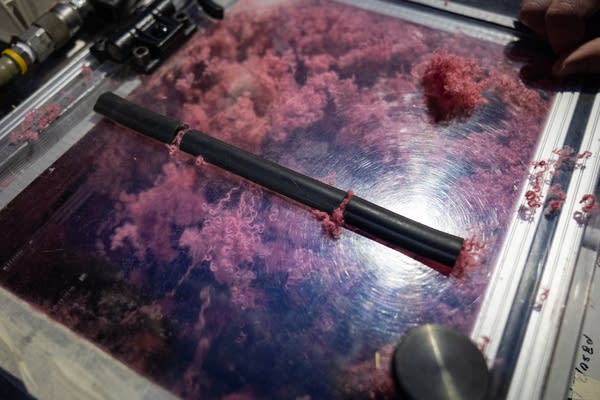
“Look at how long these threads are!” Clarke-Sather exclaims. “Two, three inches long? That's the thing that's really cool about this, is that it preserves the thread length," she explains.
Similar machines tear apart the fabric into smaller pieces or chunks. That material can be “downcycled,” repurposed into less valuable products ranging from insulation and carpet padding to stuffing for mattresses or dog beds. But it can't be spun back into yarn to make clothes again. That requires threads at least two inches long.
“Everybody's going for that holy grail of apparel-to-apparel recycling,” Clarke-Sather said. The fiber shredder, she said, makes that possible.
She’s close to sending the machine out for sale or rent to businesses seeking to recycle their textile waste. One of the places she plans to start is True North Goodwill in Duluth, which receives millions of pounds of donated clothes every year.
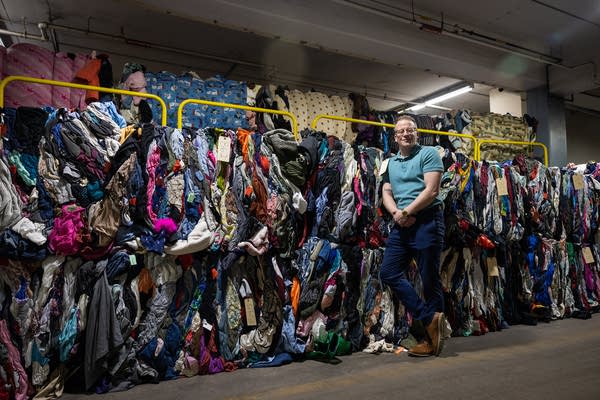
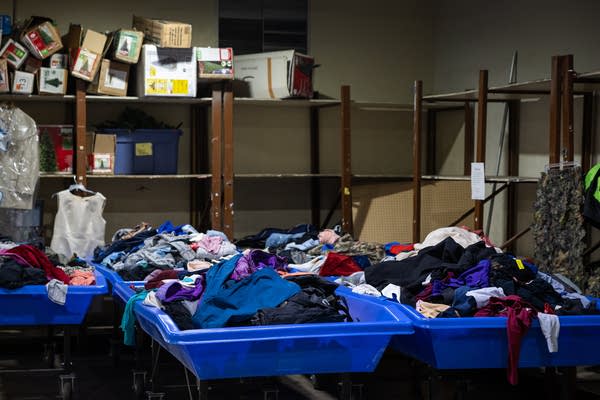
Goodwill sells about 60 percent of the donations they take in. The rest is compressed into thousand pound bales and stacked on the warehouse floor.
"These clothing items were either something that wasn't quality enough to sell — it had rips, tears and stains — or it was an item that just didn't sell,” said Scott Vezina, Vice President of Community Engagement at True North Goodwill.
Many of these leftover clothes will be shipped overseas. Some are repurposed into cleaning rags. But Vezina believes there are untapped markets for this vast amount of used textiles.
“Where the fiber shredder comes in is that it ends up repurposing the material in such an innovative way, that we're going to be able to discover more uses for it, more partners that want to be able to keep more of it out of landfills," Vezina said.
And the amount of textile waste that's landfilled is only increasing. The latest estimate from the U.S. Environmental Protection Agency found that about 17 million tons of textiles were landfilled in 2018, a 50 percent increase over the previous two decades.
One industry development experts say is largely to blame is the growth of "fast fashion," the mass production of cheap clothing that people tend to view as disposable.
"And so we have these increased rates of disposal that are piling up and creating more and more textile waste,” said Tasha Lewis, a professor in fashion and retail studies at the Ohio State University.
“We usually aren't getting rid of clothing because it's threadbare. It's usually because we don't like it, it's too old, we don't have a use for it,” Lewis said.
Only about 15 percent of textiles are recycled, according to the EPA. There isn’t an infrastructure in place in textile recycling similar to what exists for recycling aluminum cans or glass bottles, said Rachel Kibbe, CEO of American Circular Textiles, which advocates for greater clothing reuse and recycling.
There are large recycling plants just beginning to come online in the U.S. that use a chemical process to break down clothing into their basic building blocks. Mechanical recycling that doesn’t use chemicals is more challenging, Kibbe said, because of all the different fabric blends that make up clothing.
The “fiber shredder” struggles with some fabrics, mainly spandex and waterproof material, said Clarke-Sather. But the machine successfully pulls apart blended fabrics, including polyester blends, into usable threads.
It’s also small and portable. “I can literally just put this on a trailer and drive it to your retail store, and you can recycle what you need to,” she said. “Nobody's recycling at this tiny scale.”
Her students are working on a version that’s six times larger than her prototype that she hopes to station at Goodwill to help create a larger market for recycled fibers. But she acknowledges some kind of policy change is likely needed for that market to grow.
“There are some technologies, but there's not guaranteed buyers. So we need to actually incentivize people to put recycled fibers into their products,” said Clark-Sather.
Two years ago, California passed the nation’s first clothing recycling law that could help to jumpstart a market for recycled fabric.
It doesn’t require consumers to recycle clothing. Rather, clothing brands that want to sell their products in the state have to join a “producer responsibility organization” and pay a fee that funds the collection, reuse and recycling of textiles.
“By 2030, we're going to start collecting more clothing in the state of California than we have in the history of the planet,” said Kibbe. “The spirit of the bill is to recycle that which cannot be resold” and to keep clothing out of landfills.
Without such a law in place in Minnesota, Clarke-Sather is working hard to get the fiber shredder into the community. She’s lending it out to organizations that want to try it out, including a community art studio in Minneapolis. She even holds textile recycling office hours.
“I've talked to people that want to recycle their personal stashes all the way to a company across the ocean that wants to recycle their manufacturing waste,” she said. “I really want to encourage people to be creative.”