
Two of the U.S. Department of Education's biggest responsibilities will shift to other federal agencies: safeguarding student civil rights and supervising programs for students with disabilities.
The Trump administration said Tuesday it will move the Office of Special Education and Rehabilitative Services (OSERS) to the U.S. Department of Health and Human Services (HHS). OSERS manages programs that support students with disabilities, offering guidance and oversight to ensure states follow the landmark Individuals with Disabilities Education Act (IDEA), a law that guarantees disabled students access to an equitable public education.
The administration announced it would also move the Education Department's Office for Civil Rights (OCR) to the U.S. Department of Justice. OCR's staff of civil rights attorneys are tasked with protecting students in K-12 schools and universities from discrimination based on disability, gender, race and national origin. OCR has been in tumult for months, targeted repeatedly by the Trump administration for staff cuts, then reversals of those cuts.
The moves to HHS and DOJ would further dismantle an agency that President Donald Trump has vowed to close, and it would leave the Education Department with a shrinking number of responsibilities.
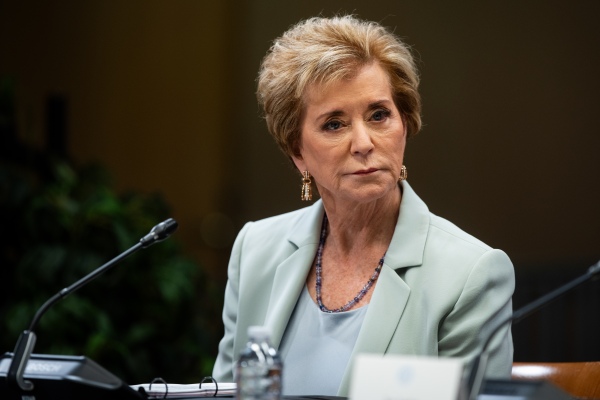
In a press release, Education Secretary Linda McMahon said of shifting special education programs: "Through our partnership with HHS, we will align federal services with the goal of strengthening academic outcomes and supporting individuals with disabilities so that they can achieve greater independence, key life skills, and meaningful employment."
And of moving civil rights enforcement, McMahon said the partnership between OCR and the Justice Department would "ensure stronger, more coordinated civil rights enforcement and robust protections for student privacy."
While the administration claimed the move would better serve some of the nation's most vulnerable children, disability rights advocates sounded the alarm.
"This is another vindictive attempt to undermine public education," says Denise Forte, president and CEO of Ed Trust, a think tank focused on addressing education inequity. "And at this moment, when we know that children with disabilities need more support, not less — HHS is not the place for that."
"My stomach drops for children and parents of infants, toddlers, children and young adults with disabilities," a former OSERS staffer told NPR. "The move would separate out oversight of the implementation of IDEA and it would decimate civil rights protections that have been in place for more than 50 years." The employee, who has disabilities and is the parent of an adult with disabilities, spoke on the condition of anonymity because they fear professional repercussions for speaking publicly on this issue.
The former employee says without federal oversight ensuring the rights of students with disabilities, schools' legal responsibility to disabled students could go unchecked. "If nobody's looking, they could buy football jerseys rather than pay for a one-on-one aide for a child with autism."
This is the latest effort in McMahon's self-described push to "peel back the layers of federal bureaucracy by partnering with agencies that are better suited to manage programs and empowering states and local leaders to oversee the rest."
Edited by: Nirvi Shah and Nicole Cohen
Visual design and development by: LA Johnson
Copyright 2026, NPR