Our favorite points hotels near US roadside attractions


From snowcapped peaks to sandy shorelines, there’s a lot to see when you traverse the expansive network of roadways that connect towns across the U.S. Visiting roadside attractions along the way is practically a rite of passage, in large part because they make the sometimes monotonous trip much more exciting.

Some roadside attractions are conveniently located near national parks or big cities, but others are hidden away in small towns that are farther off the beaten path.

Regardless of their location, I’d argue that they are all worth visiting if you find yourself within driving distance. That’s why we’ve rounded up 10 of the country’s most popular roadside attractions and our favorite nearby points hotels — so now you have no excuse not to go see the world’s largest mailbox.

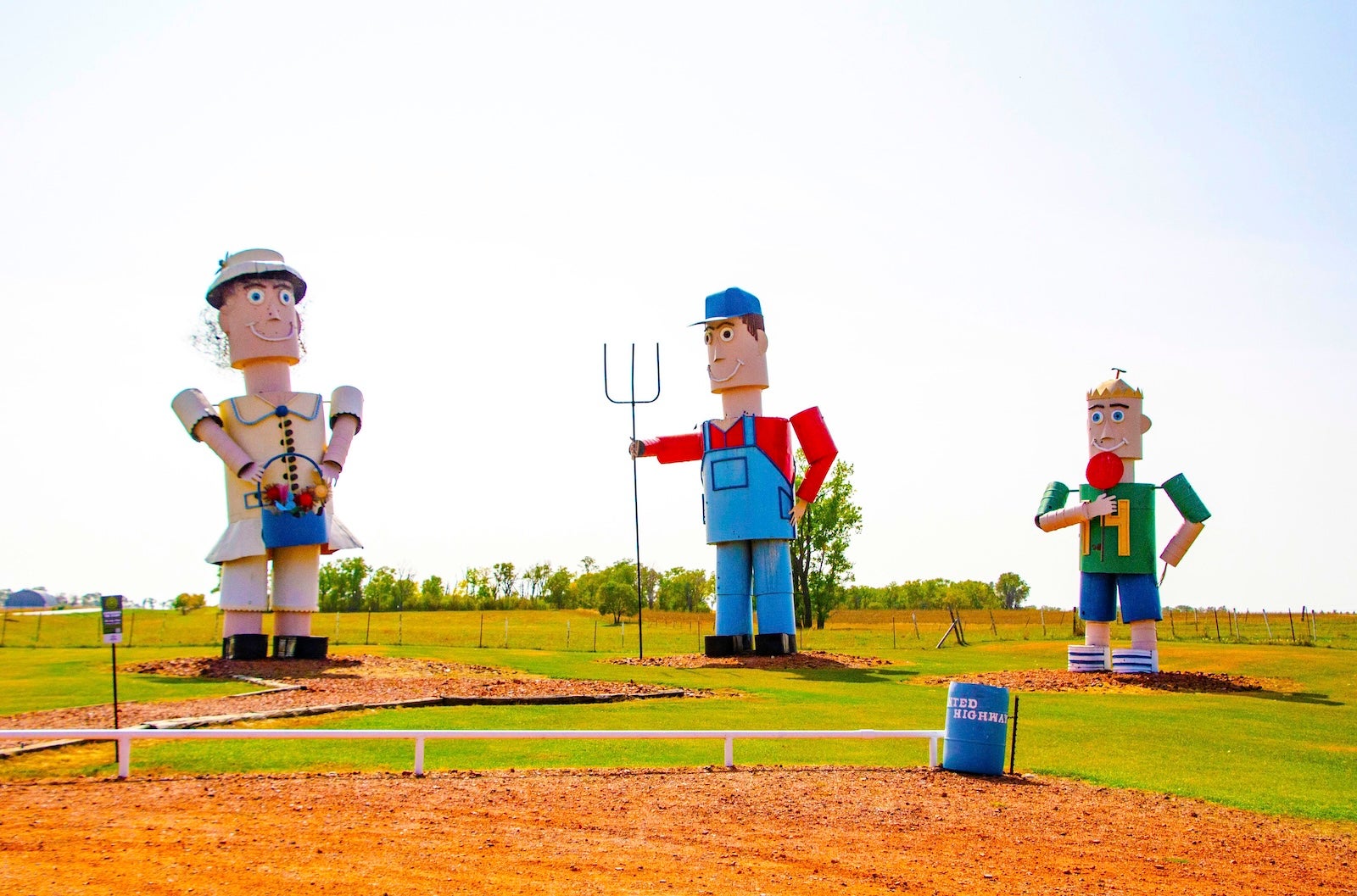
Enchanted Highway — Gladstone, North Dakota
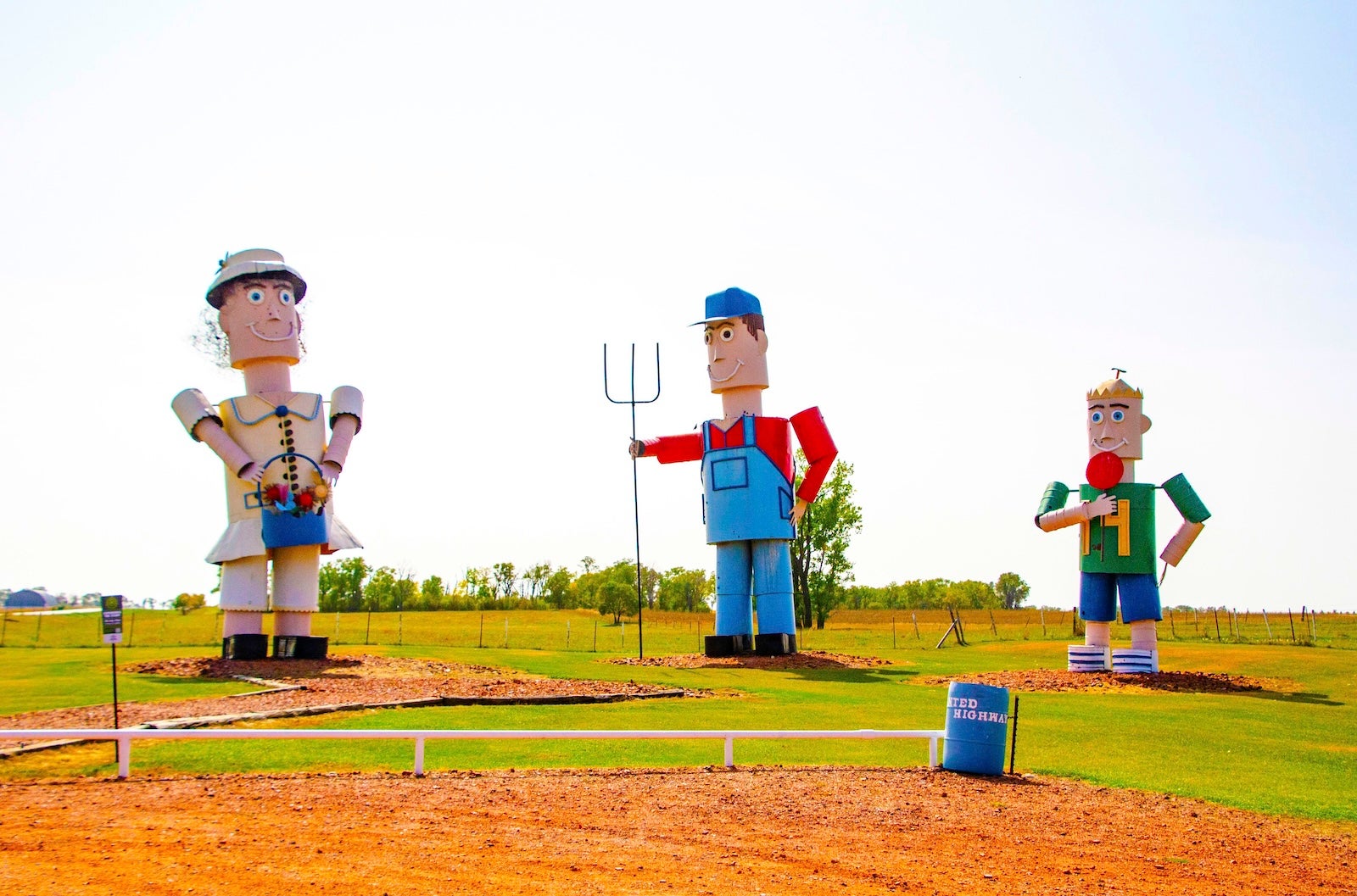
statues on side of road
North Dakota’s Enchanted Highway. FRIEL/EDUCATION IMAGES/UNIVERSAL IMAGES GROUP/GETTY IMAGES

You don’t need to follow a yellow brick road or climb through a looking glass to find the Enchanted Highway. You need only drive along Interstate 94 between the cities of Gladstone and Regent in North Dakota. Along this 34-mile path, you’ll find a series of eight larger-than-life metal sculptures crafted by artist Gary Greff — everything from a colorful flock of pheasants to a dragon-slaying knight.

At the Enchanted Highway’s termination point in Regent, there is a gift shop where you can purchase miniature versions of the statues as keepsakes. You’ll also find a small medieval-themed hotel with a steakhouse and a tavern that you can visit even if you are just passing through.

Staybridge Suites Bismarck
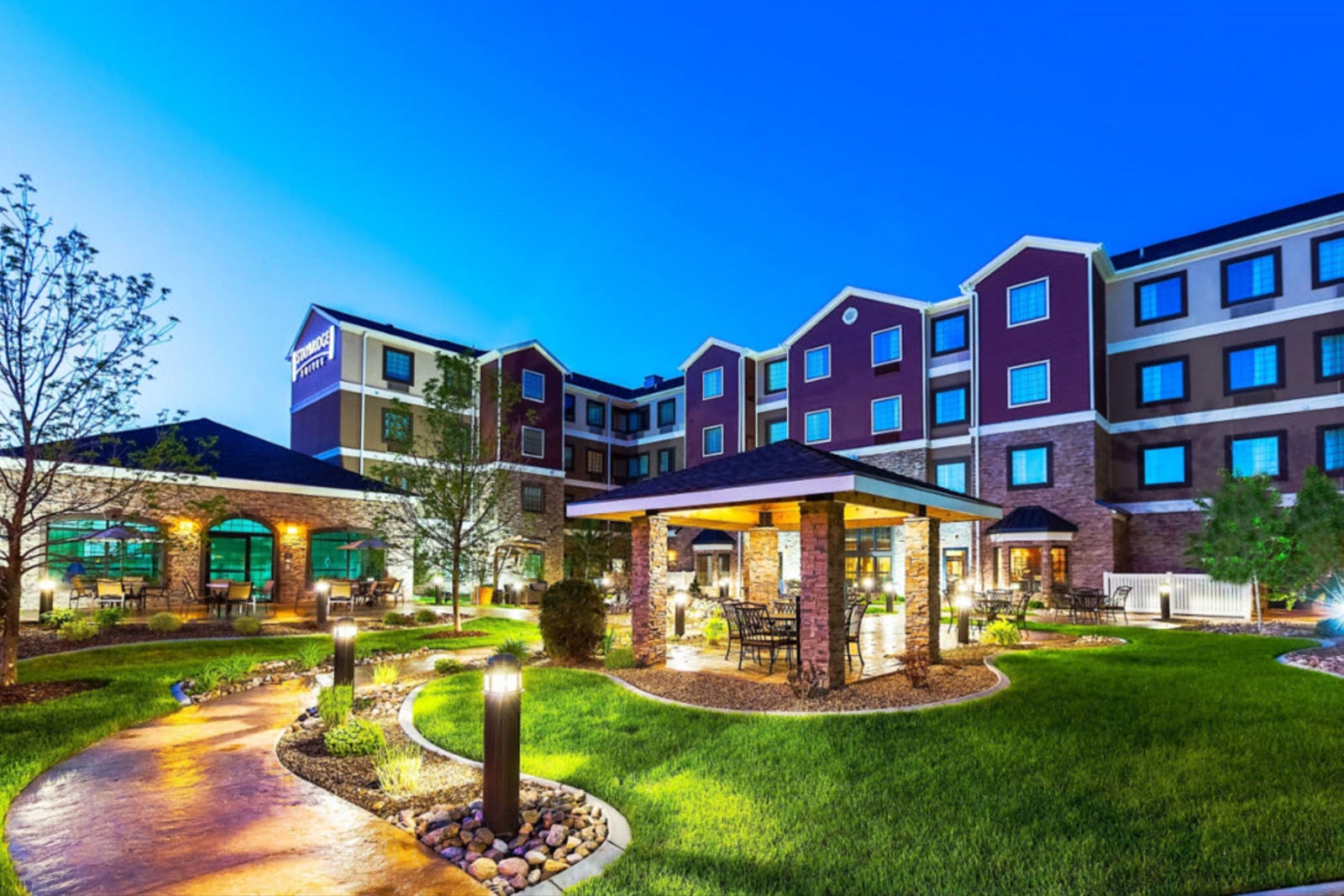
Staybridge Suites Bismarck in North Dakota. IHG

Bismarck, North Dakota, is about an hour away from the Enchanted Highway’s starting point in Gladstone. There are several points hotels in town, but the Staybridge Suites Bismarck shines.

Standard guest amenities include complimentary breakfast, an evening reception with drinks and appetizers on select nights, an indoor pool and hot tub, and a fitness center. The pet-friendly guest rooms have kitchenettes with refrigerators, dishwashers, microwaves and stovetops, as well as spacious living areas.

Rates at the Staybridge Suites Bismarck start around $146 or 25,000 IHG One Rewards points per night.

Unclaimed Baggage — Scottsboro, Alabama

UNCLAIMED BAGGAGE CENTER/FACEBOOK

Have you ever wondered what happens to lost luggage that goes unclaimed? Quite a lot of it ends up in a 50,000-square-foot store in Scottsboro, Alabama. At the aptly named Unclaimed Baggage Center, you’ll find wall-to-wall treasures ranging from AirPods to Armani suits at heavily discounted prices. (Before you ask, no, they can’t help you find your lost baggage.)

Reward your inbox with the TPG Daily newsletter

Join over 700,000 readers for breaking news, in-depth guides and exclusive deals from TPG’s experts

Unclaimed Baggage also houses a cafe that serves lunch, snacks, coffee and ice cream. Each day, store employees choose one lucky visitor to open a suitcase and sort through the contents.

106 Jefferson Huntsville, Curio Collection by Hilton

106 Jefferson Huntsville in Alabama. HILTON

Hilton’s 106 Jefferson Huntsville, located in nearby Huntsville, Alabama, features midcentury modern design with an art-forward flair. The hotel is conveniently located in the center of downtown Huntsville, with shops, restaurants, museums and more just a short walk away.

The hotel’s 115 guest rooms come equipped with down duvets and pillows, Gilchrist & Soames toiletries and Keurig coffee makers. Make time for a visit to the hotel’s rooftop bar, Baker & Able. The bar and its signature cocktails, Miss Able’s Daisy and Miss Baker’s Renewal, are named for the first monkeys to successfully travel to space and back.

Rates at 106 Jefferson Huntsville start around $152 or 54,000 Hilton Honors points per night.

World’s largest ball of twine — Darwin, Minnesota
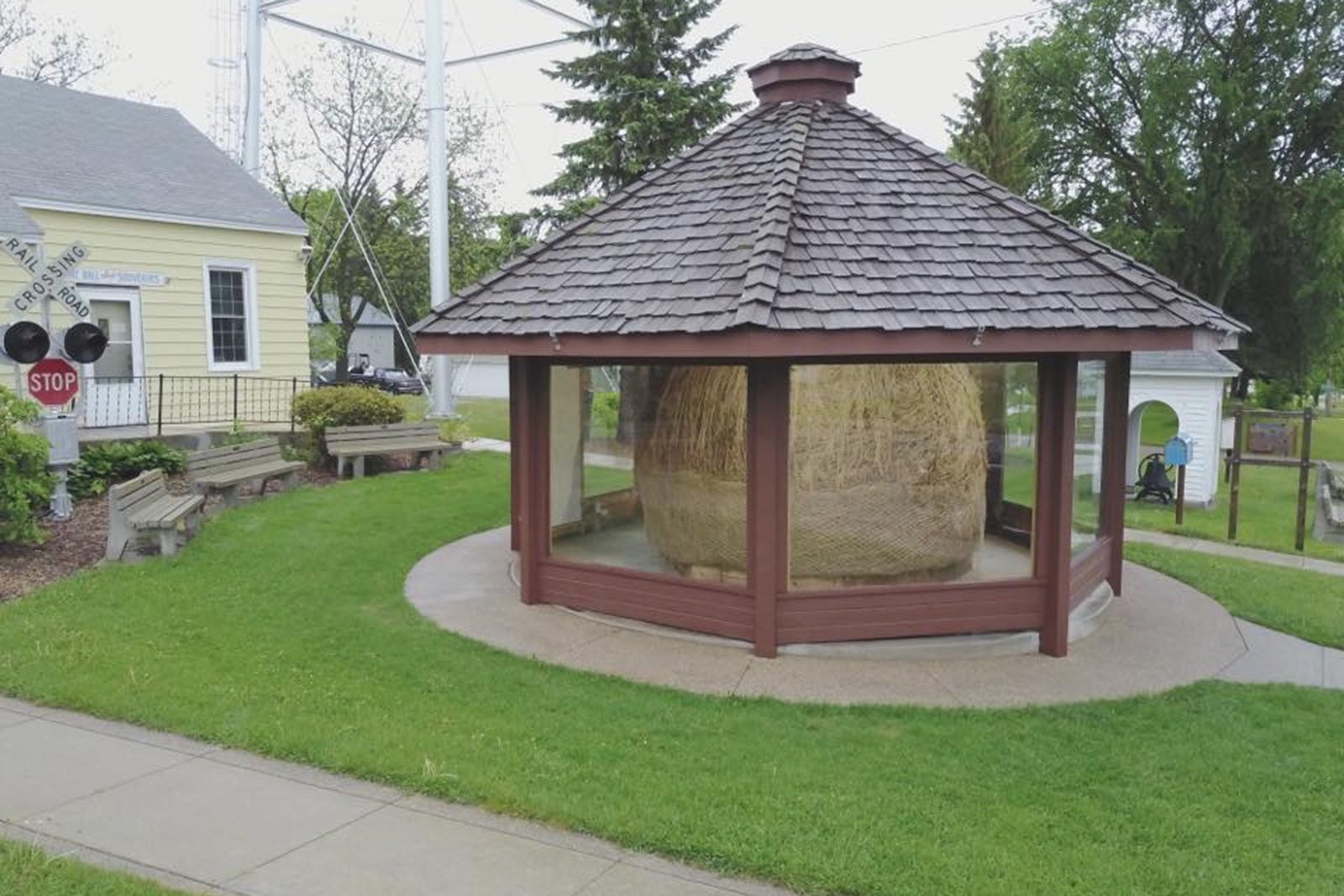
DARWIN TWINE BALL MUSEUM/FACEBOOK

While there are several contenders for the largest ball of twine, the one made by Darwin, Minnesota’s Francis A. Johnson is the largest constructed by a single person. Johnson began rolling the ball in 1950 and kept on rolling for 29 years until it reached 12 feet in diameter and 17,400 pounds.

You can see his carefully wound creation for yourself at the Darwin Twine Ball Museum. If you visit on the second Saturday of August, you can celebrate the town’s annual Twine Ball Day featuring a parade, live music, games and more.

Hotel Ivy, a Luxury Collection Hotel, Minneapolis

Hotel Ivy in Minneapolis. MARRIOTT

Hotel Ivy is just over an hour away in Minneapolis. The hotel is connected to the Minneapolis Skyway System, a collection of enclosed pedestrian bridges that connect several downtown restaurants, hotels and shops.

The 136 guest rooms feature floor-to-ceiling windows with views of downtown, plush bathrobes, Byredo toiletries and luxury bedding. During your stay, pamper yourself at Anda Spa and dine at Masa & Agave, the hotel’s basement-level Mexican cantina.

Rates at Hotel Ivy start around $237 or 49,000 Marriott Bonvoy points per night.

Cadillac Ranch — Amarillo, Texas
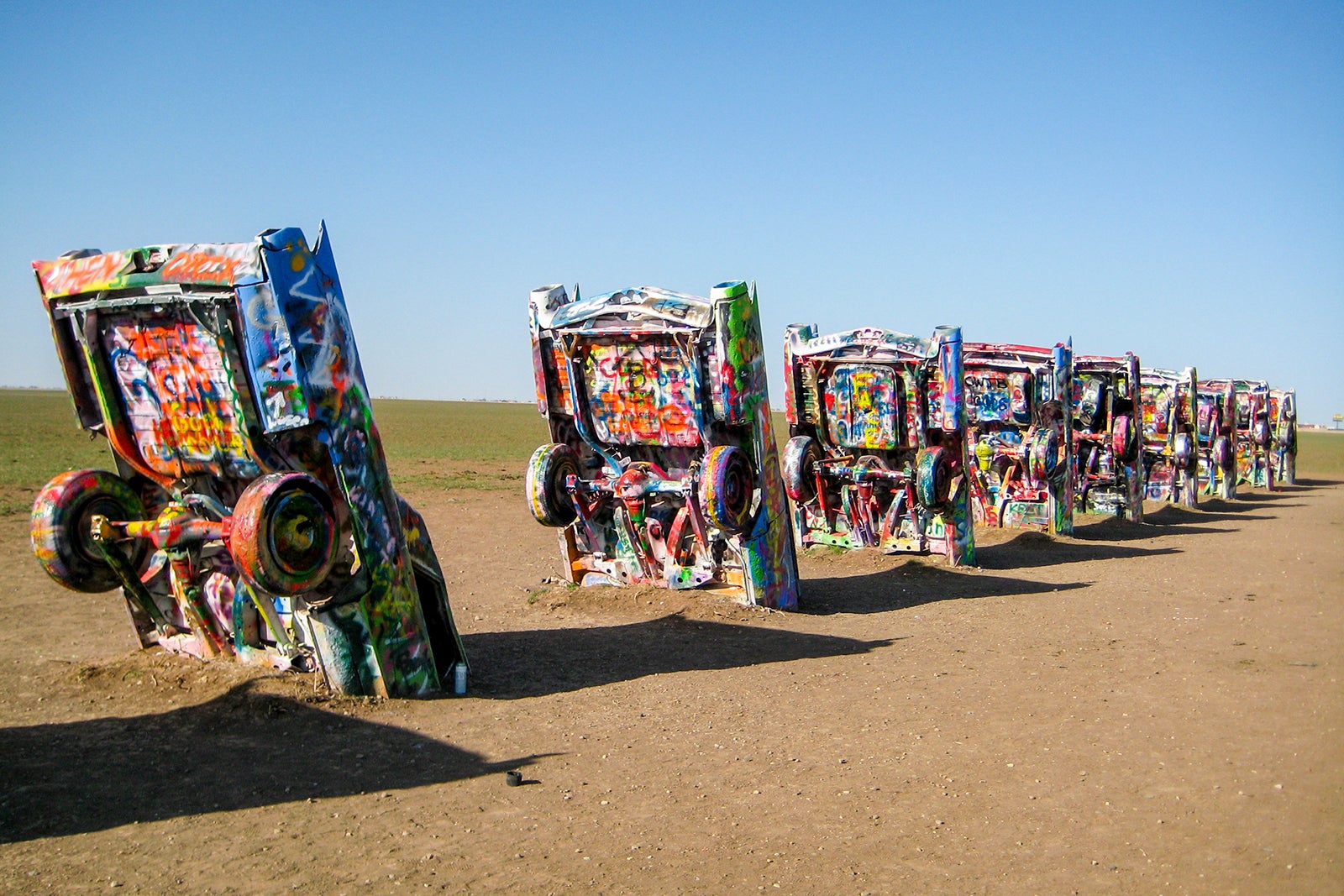
Cadillac Ranch in Texas. RICHIE DIESTERHEFT/WIKIPEDIA

There is possibly no more iconic U.S. road than Route 66. The Mother Road, as it is often called, does more than connect dozens of small towns between Chicago and Los Angeles; it symbolizes the spirit of freedom and possibility that we all feel when we hit the open road. Along that road, you’ll find one of the country’s most iconic roadside attractions: Cadillac Ranch.

The 1970s art installation near the Arnot Road exit comprises 10 Cadillacs half-buried in the ground and coated in countless layers of spray paint. Cadillac Ranch is open 24 hours a day, and there is no fee to visit — but you’ll need to bring your own spray paint if you want to make your mark on this piece of American history.

The Barfield, Autograph Collection

The Barfield in Texas. MARRIOTT

The Barfield is less than a 15-minute drive away from Cadillac Ranch in downtown Amarillo. Located in a historic building on the National Register of Historic Places, The Barfield blends boutique hotel luxury with West Texas style.

Even the hotel’s restaurant, Toscana, melds the namesake flavors of Tuscany, Italy, with Texas steakhouse fare. Meanwhile, the basement-level Paramount Recreation Club serves beer, wine and handcrafted cocktails in a reconstructed speakeasy space from 1927.

Rates at The Barfield start around $205 or 31,000 Marriott Bonvoy points per night.

Southernmost point in the continental US — Key West, Florida
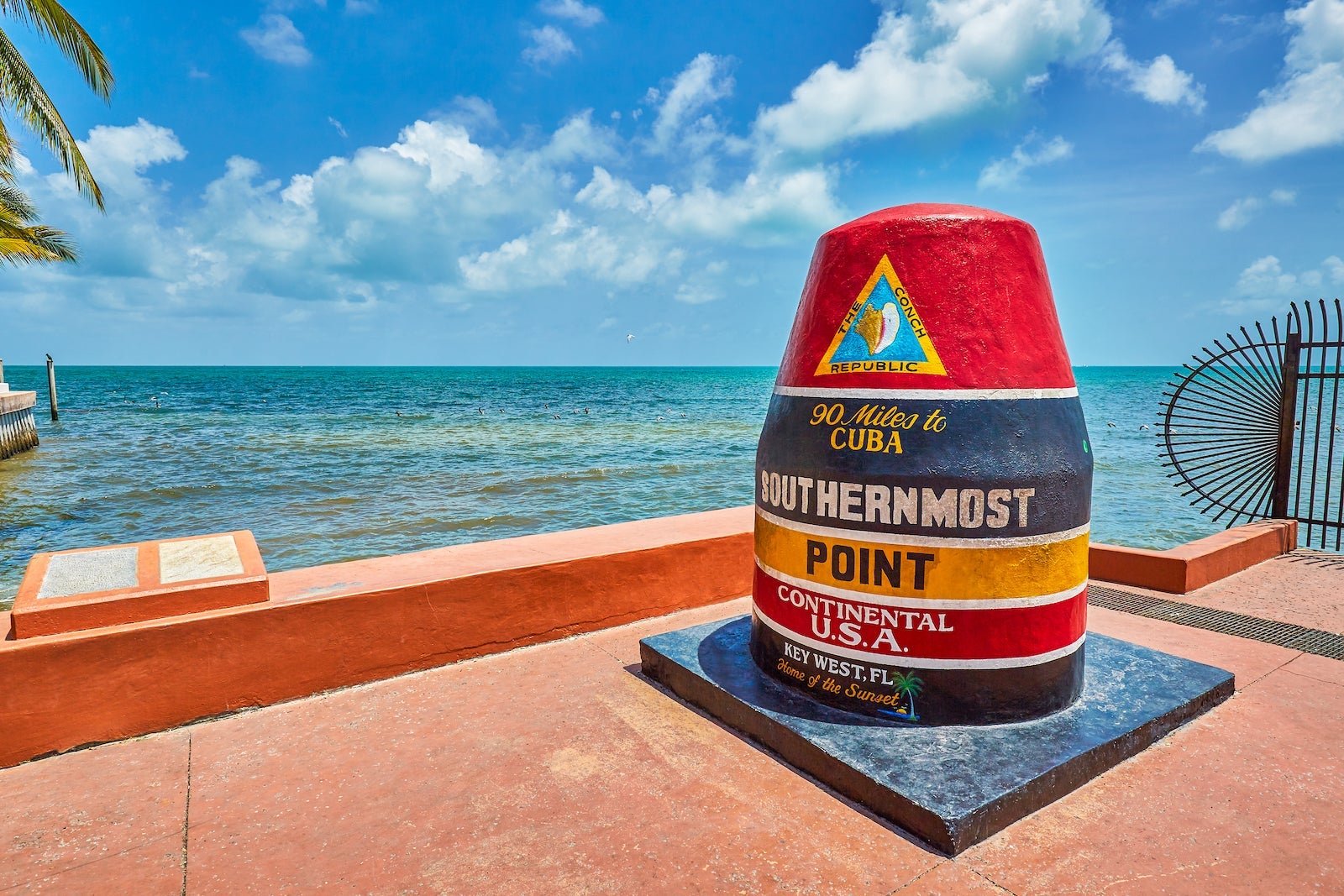
key west
PETER UNGER/STONE/GETTY IMAGES

Key West, Florida, has several claims to fame. Ernest Hemingway once worked and resided there. It’s the birthplace of key lime pie. And you have to cross 42 bridges, including one that’s 7 miles long, to drive there from the mainland.

Key West is also the southernmost city in the continental U.S., marked by the landmark Southernmost Buoy at the intersection of Whitehead Street and South Street. When you visit the buoy (and take the required selfies), you are only 90 miles from Cuba.

The Reach Key West, Curio Collection by Hilton
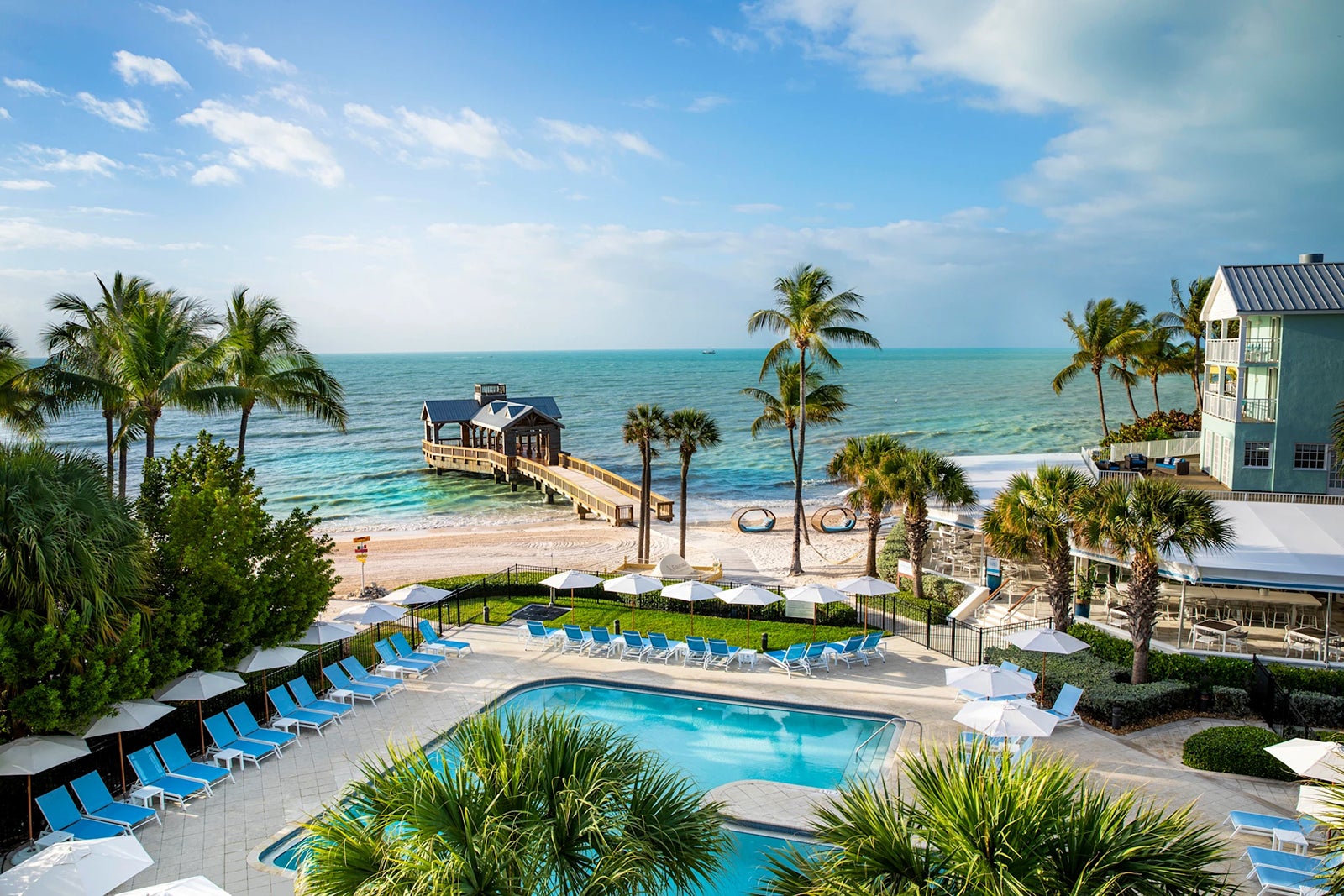
The Reach Key West, Curio Collection by Hilton
The Reach Key West in Florida. HILTON

The Reach Key West is a beachfront hotel within walking distance of the Southernmost Buoy and several other popular attractions, such as The Hemingway Home & Museum and the Key West Lighthouse.

The hotel’s guest rooms have nautical-inspired decor befitting the beachy views outside your window. Not to mention, the oceanfront restaurant, Four Marlins, serves the best key lime pie on the island.

Rates at The Reach Key West start around $239 or 61,000 Hilton Honors points per night.

6-ton prairie dog — Cactus Flat, South Dakota
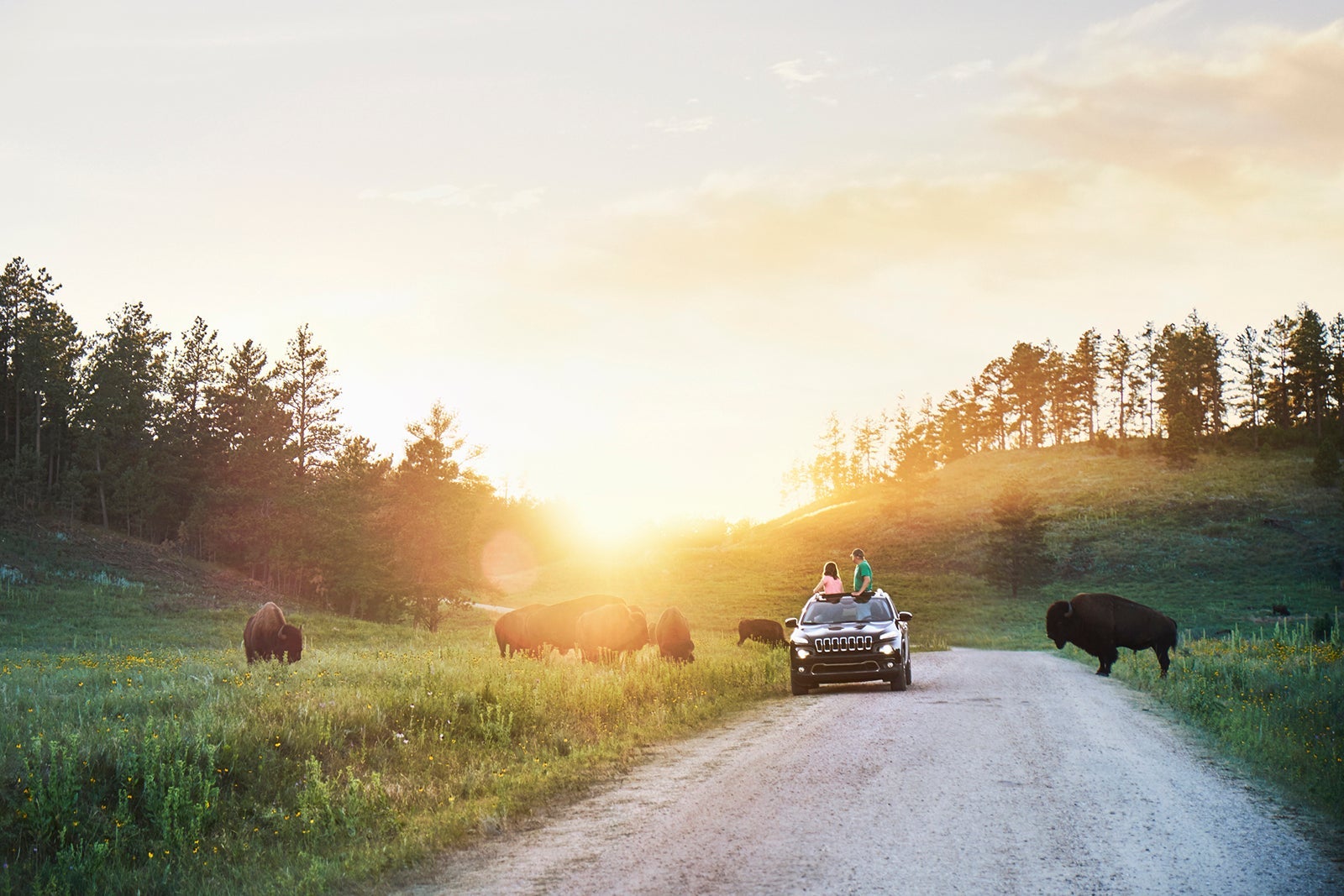
SETH K. HUGHES/GETTY IMAGES

The Ranch Store of the Badlands isn’t just any roadside gift shop. Sure, you can get postcards, T-shirts, snacks and other trinkets, but the big (and I mean big) draw here is the 12-foot-tall, 6-ton giant prairie dog that stands outside the shop.

The reason why this prairie dog towers over the South Dakota plains (other than being an adorable photo-op) is thanks to a colony of real-life prairie dogs that live right next door. There are even peanuts for purchase inside the Ranch Store that you can feed to the prairie dogs.

Hotel Alex Johnson Rapid City, Curio Collection by Hilton
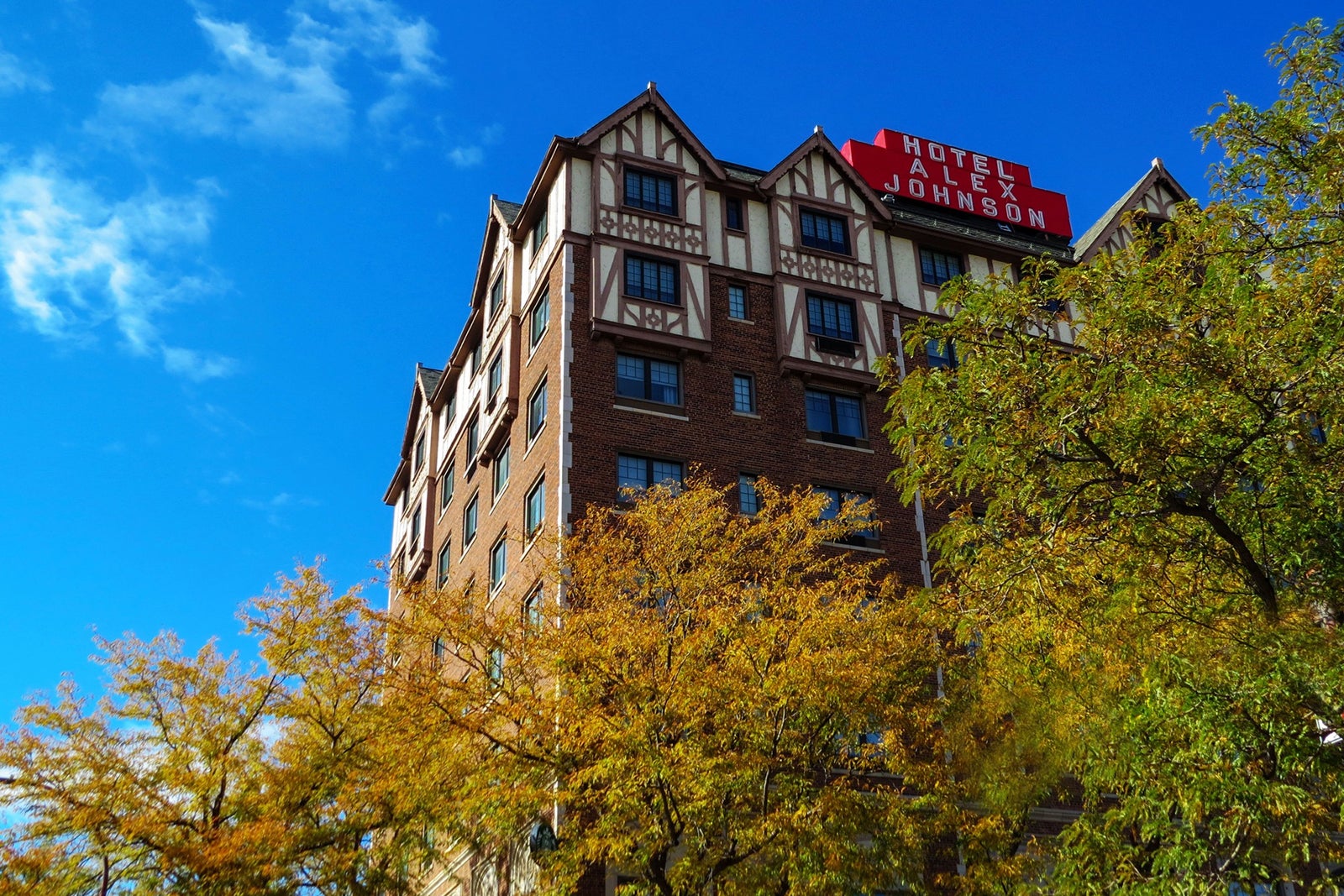
HOTEL ALEX JOHNSON RAPID CITY/FACEBOOK

Hotel Alex Johnson is just over an hour away from the Ranch Store of the Badlands in Rapid City, South Dakota (and only a 30-minute drive from Mount Rushmore National Memorial). Open since 1928, this 143-room boutique hotel pays tribute to the area’s Lakota and Sioux Native American heritage through handcrafted art and decor.

Guests can dine with panoramic views of the Black Hills at Juniper at Vertex, a rooftop-level restaurant. Or, for a taste of Ireland, there’s Paddy O’Neill’s Pub.

Rates at Hotel Alex Johnson start around $78 or 28,000 Hilton Honors points per night.

Wall Drug — Wall, South Dakota

WALL DRUG/FACEBOOK

It’s likely you’ve seen cars with “Wall Drug” stickers plastered on their bumpers over the years without ever knowing quite what — or where — Wall Drug was. Wall Drug is something of an institution in the town of Wall, South Dakota, on the outskirts of Badlands National Park. Open since 1931, Wall Drug began as a small 24-by-60-foot drugstore that made a name for itself by serving up free ice water to thirsty travelers.

Today, the shop (which is located across the street from the original location) spans 76,000 square feet of souvenirs, restaurants, art and, yes, free ice water (or 5-cent coffee and a doughnut if you need a pick-me-up). Be sure to also visit the “Backyard” area, where kids can pan for gold, see a miniature Mount Rushmore and snap a photo atop a giant jackalope.

Under Canvas Mount Rushmore
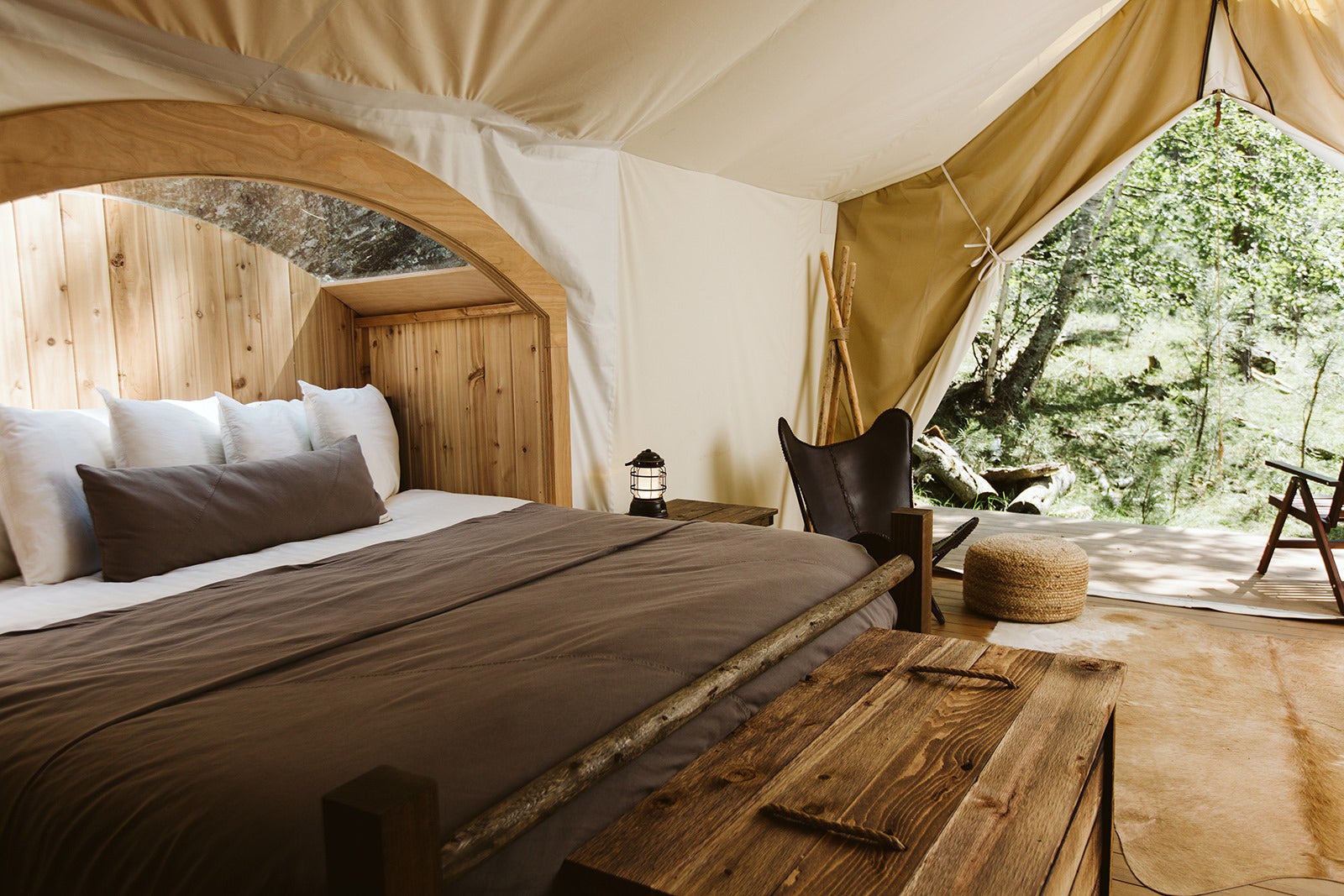
UNDER CANVAS MOUNT RUSHMORE/FACEBOOK

Under Canvas Mount Rushmore is a little over an hour from Wall Drug and less than 4 miles from Mount Rushmore. Here, you can sleep under the stars (best viewed through the viewing window above your bed when you book a Stargazer tent) while surrounded by towering pines.

Glamping tents are outfitted with comfortable beds, wood-burning stoves, private bathrooms and furnished decks. When you aren’t exploring the nearby parks and monuments, you can take part in resort activities like hiking, yoga, live music, games and on-site dining.

Rates at Under Canvas Mount Rushmore start around $252 or 18,125 World of Hyatt points per night.

World’s largest baseball bat — Louisville, Kentucky
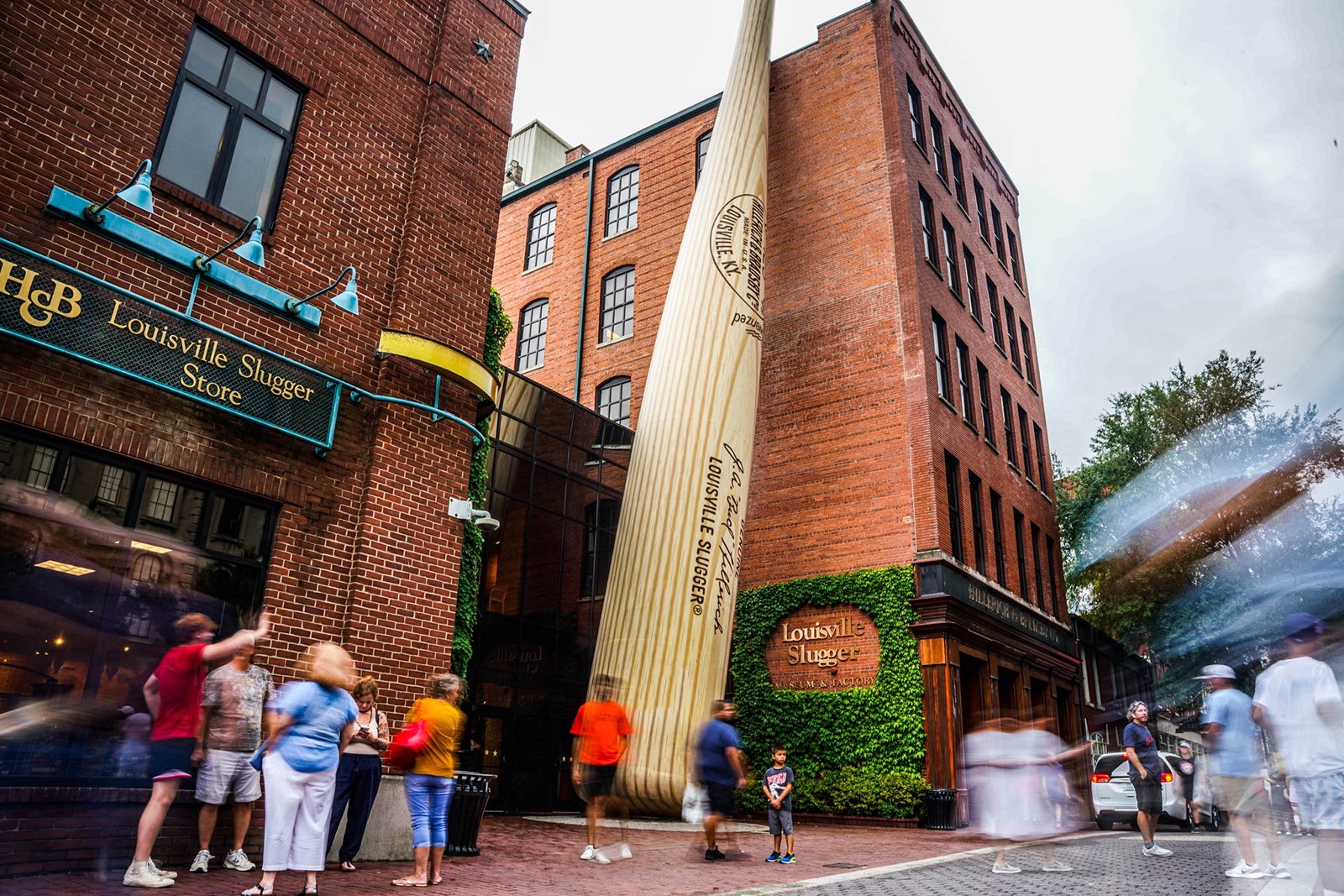
LOUISVILLE SLUGGER MUSEUM & FACTORY/FACEBOOK

Louisville, Kentucky, may be best known for bourbon and horse racing, but Derby City produces approximately 1.8 million Louisville Slugger baseball bats each year, so its connection to America’s pastime can’t be overlooked. You can see exactly how Louisville Slugger transforms trees into home-run hitters at the museum and factory tour.

At the museum’s entrance, you’ll find the world’s largest baseball bat standing 120 feet tall and weighing 68,000 pounds. Anyone can stop and marvel at the bat towering above Louisville’s skyline, but if you step inside and take the factory tour, you’ll go home with your very own miniature Louisville Slugger.

Hotel Bourre Bonne Louisville, Curio Collection by Hilton

Hotel Bourre Bonne Louisville in Kentucky. HILTON

Hotel Bourre Bonne is one of the newest to join Louisville’s lineup of boutique properties. It’s a 15-minute walk or a short drive to the Slugger Museum and other downtown attractions, such as the Kentucky Science Center, the Frazier History Museum, the Muhammad Ali Center and the distilleries in Louisville’s bourbon district.

The decor is bold and sophisticated, with nods to Kentucky’s Southern charm and bourbon heritage. From the rooftop pool and bourbon lounge to the Southern-style steakhouse, all of Hotel Bourre Bonne’s amenities feel luxe and inviting.

Rates at Hotel Bourre Bonne start around $176 or 57,000 Hilton Honors points per night.

Small town full of big things — Casey, Illinois

BIG THINGS IN A SMALL TOWN/FACEBOOK

Casey, Illinois, would like to take your one roadside attraction and raise you 12 Guinness World Record Largest attractions. The small town is home to the world’s largest mailbox (you can even climb inside of it), golf tee, rocking chair and barbershop pole, to name a few. The city keeps a full list and map so you can find them all.

In addition to the world-record holders, there are several other oversized items you can see, including a massive pizza slicer, a piggy bank, a cactus and an ear of corn.

Hilton Garden Inn Terre Haute

Hilton Garden Inn Terre Haute in Indiana. HILTON

Terre Haute, Indiana, is less than 40 minutes from Casey and offers plenty of hotel options. The Hilton Garden Inn Terre Haute is a solid choice thanks to its downtown location, indoor pool, hot tub, fitness center, on-site restaurant serving breakfast and dinner, and variety of room types.

In addition to standard rooms, the hotel offers junior suites, each with two queen beds and a separate living area with a sofa bed that sleeps up to six guests.

Rates at the Hilton Garden Inn Terre Haute start around $125 or 43,000 Hilton Honors points per night.

Bedrock City — Williams, Arizona
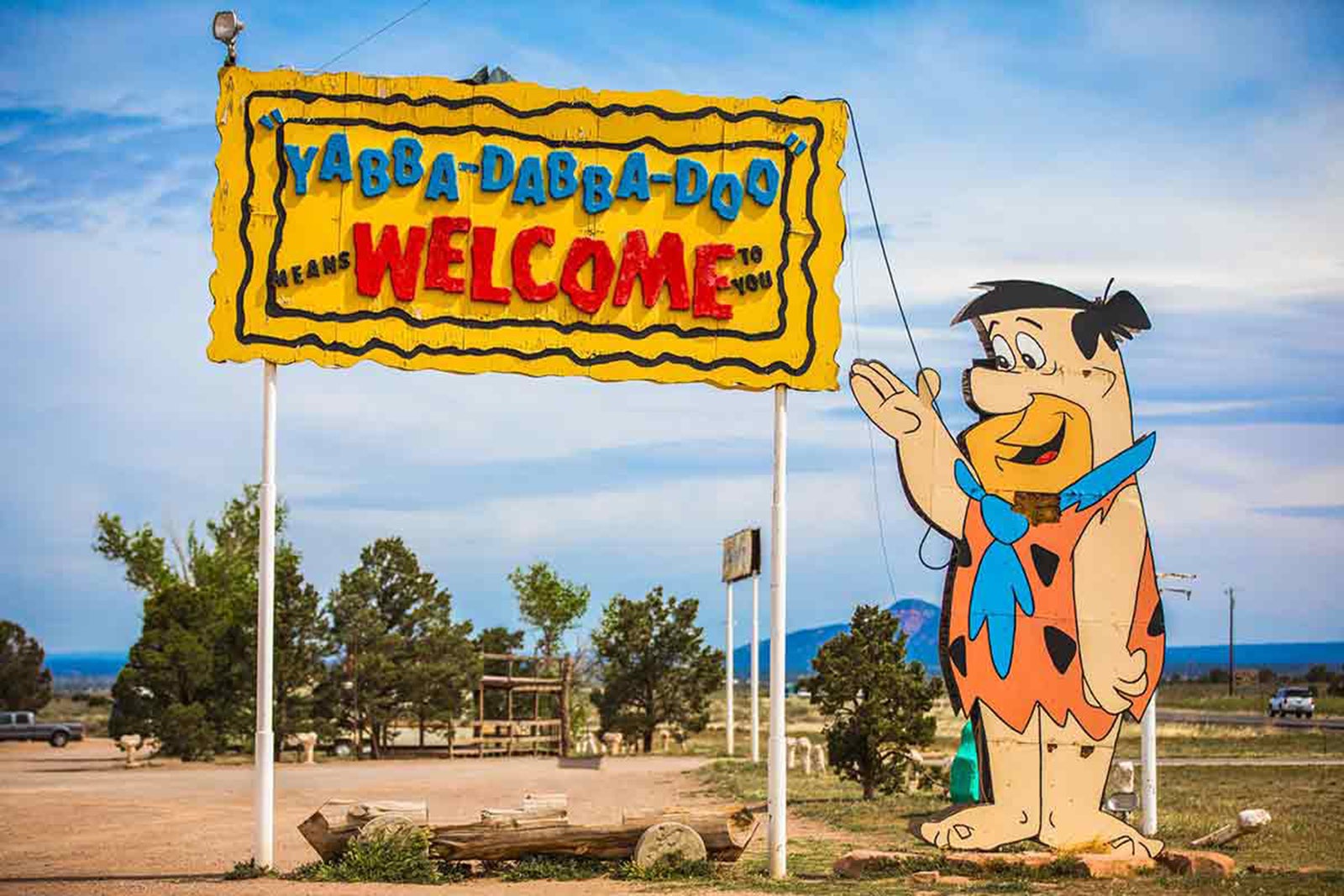
Bedrock City. EXPERIENCE WILLIAMS

There’s so much to do in and around the Grand Canyon that you may forget one very special thing you can’t “Yabba-Dabba-Doo” anywhere else. You only have to drive about 30 minutes from Grand Canyon National Park to travel back to “The Flintstones” stone-age town of Bedrock.

Bedrock City features life-size replicas of iconic landmarks from the show, such as Fred’s house, Barney’s house, a post office and a jail. It also features several character sculptures, vehicles and a brontosaurus slide. Admission is $10 per person, but guests of the on-site campground get in for free.

Under Canvas Grand Canyon
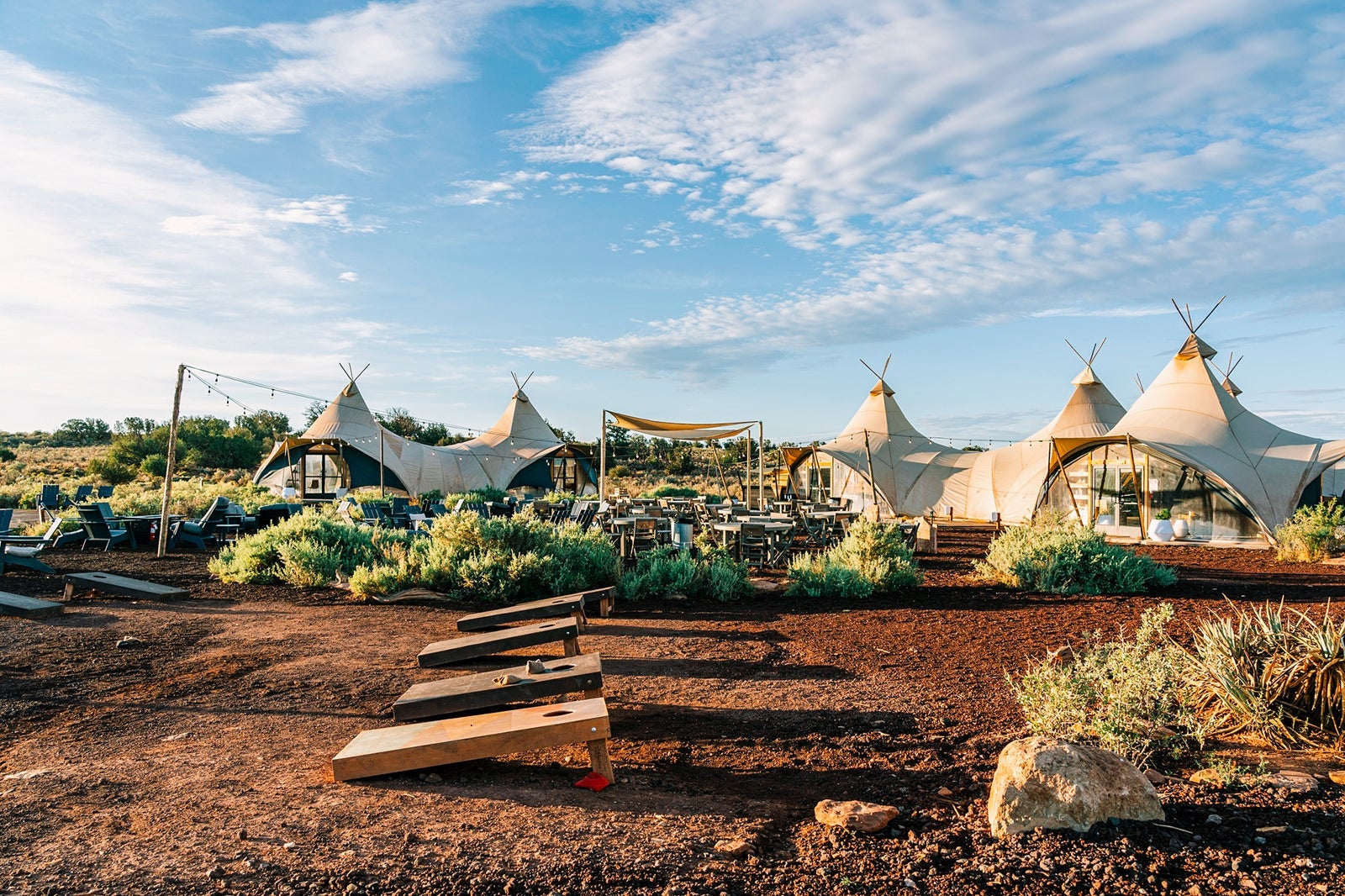
glamping resort near the Grand Canyon
UNDER CANVAS GRAND CANYON/FACEBOOK

Under Canvas Grand Canyon is less than a 10-minute drive from Bedrock City and only a 25-minute drive from the Grand Canyon’s South Rim Entrance. This upscale glamping resort is Dark Sky certified for nighttime views just as gorgeous as those during the day.

Inside your tent, you’ll enjoy amenities like West Elm furnishings and organic bath products in your private bathroom, while outside, you can participate in all kinds of daily activities, including yoga, live music and s’mores by the fire.

Rates at Under Canvas Grand Canyon start around $197 or 16,500 World of Hyatt points per night.


Source link

Leave a Reply

Subscribe to Our Newsletter

Get our latest articles delivered straight to your inbox. No spam, we promise.

Recent Reviews


Step forward in your career with J2EE Development. J2EE is an open-source platform to develop, deploy and manage web-enabled, multi-tier, server-centric, and component-based enterprise applications. As a result of its robustness and security, organizations prefer to work in a Java environment. The demand for Java professionals is very high. So, we are here to help you in clearing your J2EE interview easily. Our experts have gathered and prepared a list of frequently asked questions. So why late? Lets set started with J2EE interview questions.

Let’s get started!

Most Frequently Asked J2EE Interview Questions 

J2EE basic-level Interview Questions:

What is J2EE?

J2EE refers to Java 2 Enterprise Edition. It is used to develop and deploy web-based multi-tier enterprise applications. The J2EE platform combines a range of services, protocols, and application programming interfaces. The J2EE platform includes the capabilities needed to deliver a comprehensive, secure, stable, and fast Java platform at the enterprise level.

Become a Java Certified professional by learning this HKR JavaTraining

What are the components available in J2EE applications?

The components of the J2EE applications consist of:

  • Web-tier components
  • Business-tier components
  • Client-tier components
  • Enterprise Information System software

What do you understand by J2EE client types?

Following are J2EE client types:

  • Application clients
  • Applets
  • Wireless clients, according to Mobile Information Device Profile (MIDP).
  • Java Web Start-enabled clients, through the Java Web, Start technology.

What is ORM?

ORM refers to Object-Relational mapping. Objects in a Java class that are mapped to tables in a relational database utilizing the metadata which describes the mapping of objects to the database. It acts by converting data from one representation to the other.

What is JSF?

JSF refers to JavaServer Faces. It is a user interface that designs a framework for Java web applications. It provides a set of user interface components that can be reused, a standard for web applications. JSF uses the MVC design pattern. It stores the form data on the server automatically and specifies the date of the form when it is displayed on the client side.

What is the servlet?

Servlets is one of the server-side components which delivers a powerful mechanism for server-side program development. Servlets is a platform-independent server. Servlets are designed with different protocols in mind; The most common one is HTTP protocols. The servlets uses the classes of java packages javax.servlet.http.HttpSession, javax.servlet.http.HttpServletRequest, javax.servlet, javax.servlet.http.HttpServletResponse. All the servlets are required to implement the Servlet interface that defines the methods of the lifecycle.

Java Certification Training

  • Master Your Craft
  • Lifetime LMS & Faculty Access
  • 24/7 online expert support
  • Real-world & Project Based Learning


What is a web component?

Java Server Pages technology and Java Servlet components are the web components. Servlet is a component that receives the request sends responses dynamically. JSP pages run like servlets but provide a more natural way to create static content.

What is Hibernate?

Hibernate is an object-relational mapping tool. In hibernate, HQL is used rather than SQL, which saves developers from spending more time on writing native SQL. It has a great association, polymorphism, inheritance, collection, and compositions. This is a great way to persist in the database using Java objects. Hibernate enables you the ability to express queries based on Java criteria.

What is Hashtable?

Hashtable is the same as HashMap, with the exception that Hashtable is synchronized. Hashtable is a synchronized objects cluster in which duplicate values and null values are not permitted.

Java Certification Training

  • Master Your Craft
  • Lifetime LMS & Faculty Access
  • 24/7 online expert support
  • Real-world & Project Based Learning

) What is a J2EE container?

The interface between the low-level platform and a component with specific features which supports the component is referred to as a container. The application server will maintain control and deliver relevant services through a framework or an interface calls as a container.

J2EE intermediate-level Interview Questions:

) What are structs?

The Struts framework is an MVC architecture that designs large-scale applications. It consists of JSP, Java Servlets, Custom tags, and messages. According to the published standards and the proven design templates, struts help you create a scalable development environment for your application.

) Explain ActionErrors, ActionForm and ActionMapping.

ActionError: ActionErrors is an object that wraps up all the available validation errors. If errors are not found, returns either null or an ActionErrors object with no error message recorded. The default implementation tries to switch to HTTP. Maintaining request parameter mapping and request and return all validation errors if the validation fails; a null or an empty set.

ActionForm: It is a Java bean which brings together one or multiple ActionMappings. A java bean becomes FormBean when extending org.apache.struts.action.ActionForm. The ActionForm object is populated automatically on the server-side with the data entered by the customer from the user interface. ActionForm keeps the session state for the web app.

ActionMapping: When mapping actions, we mention the action class for a specific URL, i.e., the path and various target views, i.e., redirect to which the response to the request will be sent. The ActionMapping is the information which the ActionServlet is aware of regarding mapping a specific request to an instance in a specific Action class. The mapping is passed to the method execute() in the Action class, allowing direct access to that information.

) Explain about MVC on structs?

MVC refers to Model View Controller.

Model: In many applications, the model represents the system’s internal state in the form of one or more JavaBeans. 

View: The view is usually built with JavaServer Pages technology. The controller concentrates on receiving customer requests and generating the next stage of the user interface to a suitable View component. 

Controller: The Controller’s main component in the framework is an ActionServlet class servlet. The definition of an ActionMappings set sets up this servlet.

) What are the differences between .ear, .jar, and .war files.

.jar files: These files have the .jar extension. The .jar files include accessories files such as property files, libraries, and resources.

.war files: These files have the .war extension. The .war file includes HTML,  javascript, JSP, and other files required for web application development.

.ear files: The .ear file includes the application’s EJB modules.

) What is the difference between Save() and Saveorupdate()?

Save(): The purpose of this method in Hibernate is to store an object in the database. It will insert an entry if there is a record, otherwise, it does not.

Saveorupdate():  The purpose of this method in Hibernate is to update the objects with the identifier. If the identifiers are not present, this method will call save(). If the identifier is available, then it will call the update method.

) What is the difference between the load and get method?

load() cannot find the object in the database or cache, an exception is issued, and the load() method will never return null. If the object is not found, the get() method will return null. The load() method can return a proxy in place of a persistent instance, get() does not return a proxy

) What is Spring?

Spring is an open-source lightweight framework for developing enterprise applications which solves the complexity of developing enterprise applications also provides a consistent framework for developing J2EE applications that is primarily based on the inversion of control or dependency injection design model.

) What is authorization?

Authorization is the process of determining access to a method or resource. It is based on determining the security role of the primary for an authentication request. A security role may be described as a logical grouping of users that is defined by the person assembling the application. A deployer matches the security roles for the security identities. Security identities can be groups or principles in the operational environment.

) What is an authorization constraint?

An authorization rule that determines who is allowed to access the collection of web resources is called an authorization constraint.

HKR Trainings Logo

Subscribe to our YouTube channel to get new updates..!

) What is EJB?

EJB refers to Enterprise Java Beans. This is the server-side component that runs in the EJB container and wraps the business logic of the enterprise application.

J2EE Interview Questions for Experienced:

) What is a connector?

The connector is a standard container extension mechanism that delivers connectivity to enterprise information systems. It is unique to an enterprise information system and includes application development tools and a resource adapter for the connectivity of enterprise information systems. The resource adapter is connected to a container by supporting system-level contracts that are defined in the Connector architecture.

) Explain JMS, JTA, and JNDI.

JTA: JTA stands for Java Transaction API. Its purpose is to coordinate and manage transactions across the company’s information system.

JNDI: JNDI stands for Java Naming Directory Interface. This is used to access directory services information.

JMS: JMS stands for Java Messaging Service. Its purpose is to receive and send messages using messaging systems.

) What are EDI and EAI?

EDI: EDI stands for Electronic Data Interchange. It is used to exchange data via the value-added network (VAN) that acts as a means of transmission. The installation of EDI is costly and needs customization by exchanging clients. EDI is also based on X12 standards for exchanging documents.

EAI: EAI stands for Enterprise Application Integration. This makes one or multiple applications into one application and needs that data to be transferred to the suitable system at the correct time. For example, during the integration of accounts and sales systems, it is required for sales to send a sales order for accounting for generating an invoice. In addition, accounting has to send a sales invoice to update the data for the sales professionals. This system automatically manages the transaction through the application and removes human mistakes.

) Explain about J2EE tiers.

J2EE includes the following tier:

Client tier: It stands for the browser from which the server gets the requests. In this tier, the interfaces used are the java application, the HTML browser, a non-java application, or an applet.

Middle Tier: This includes an integration tier, a presentation tier, and a business tier. Within the integration tier, the database objects are created. The UI is created at the presentation tier with the help of JSP. The business logic is written at the business tier with the help of EJB.

Backend: It consists of the Enterprise Information System that is used for storing data.

) What is DCOM?

DCOM refers to Distributed Component Object Model. It employs the Object Remote Procedure Call protocol to handle remote objects. The Object Remote Procedure Call is based on Remote Procedure Call and interacts with the runtime services. DCOM supports more than one interface, and components can be built in different programming languages like C, Java, Visual Basics, etc. DCOM is largely used in the Windows platforms.

) What is JRMP?

JRMP refers to the Java Remote Method protocol. This is the way Remote Method Invocation passes java objects as arguments. As Java depends on the serialization of objects which bring together objects in streams, RMI depends on the JRMP protocol to transfer the objects from one Java Virtual Machine to other.

) What is a Secure Socket Layer?

The technology used for communication between the Web browser and the Web server is referred to as the Secure Socket Layer. Specifically, SSL is a protocol which describes the way algorithms should be used for encryption. The technology creates an encrypted link between the two parties, and this link makes it possible to secure the transmission of sensitive information like credit or debit card information, login credentials, and social security numbers.

) What do you mean by id URL?

URL refers to Uniform Resource Locator. It is the textual reference standard for writing arbitrary information on the World Wide Web. The URL is generally structured as – 

protocol://host/local info

protocol – The protocol allows you to retrieve the object (example: HTTP, FTP)

host – The target host’s Internet name.

local info – A String is sent to the protocol handler on the remote host. In most of the cases, this is a filename with an extension.

) What is the JSP directive?

JSP is the process by which metadata information is provided to web containers regarding the JSP file. This metadata is used by the web container during the translation and compilation stages of the JSP lifecycle.

There are three different kinds of JSP directives:

  • Include directive
  • Page directive
  • Taglib directive

) Explain connection pooling?

Connection pooling is an easy concept that is popular for reusing existing connections. This means that if the object connections are well defined and connected already, they may be reused each time there is a need rather than generating a new one.

) What is a J2EE Module?

It is a piece of software that is made up of one/more J2EE components for that similar container type and a deployment descriptor of that type. Into a J2EE application, modules may be assembled or deployed quickly. 

) What is included in the application client module?

An application module includes the class file and a client deployment descriptor. It will be packaged as a JAR file with the extension .jar.

) What is the web module made up of?

The Web module is made up of 

  • JSP files(Java Server pages) 
  • Graphics Interchange format(GIF) file
  • Hypertext Markup Language(HTML) file
  • Servlets class files 
  • Web deployment descriptor

These files will be packaged as JAR files with the extension .war(Web Archive)

) What is the Enterprise Java Bean module made up of?

The Enterprise Java Bean module is made up of the class files for enterprise beans and the EJB deployment descriptor. These files will be packaged as JAR files with the extension .jar.

) What is the resource adapter module made up of?

The resource adaptor module is made up of Java interfaces, native libraries, classes, resource adaptor deployment description and other documentation. These files will be packaged as JAR files with the extension .rar(resource adapter archive).

) What is meant by an Applet?

It is a component of  J2EE that is commonly executed on the web browser. This  can be executed on a wide range of other devices or applications that accept the applet programming model.

) What do you mean by an applet container?

“Applet container” refers to a container that supports the applet programming model.

) What is meant by a thin Client?

A thin client is a lightweight application interface that will not allow functions like complex business rules execution, database  queries or connection to legacy applications.

) What is meant by deployment descriptor?

The Deployment descriptor is according to Extensible MarkUp Language(XML) that has a .xml extension. It can be used to define the deployment options for a component. J2EE applications and modules have their own deployment descriptors.

) What do you mean by a web container in J2EE?

A web container in J2EE refers to an interface between the low level platform and a component with defined functionality which is intended  to support the functionality.

) What will be the file extension that is used for the Hibernate configuration file and hibernate configuration file?

The file name for the hibernate mapping will be written like filename.hbm.xml.

The file name for the hibernate configuration will be written like filename.hbm.xml.

) How should a Hibernate mapping file in the hibernate configuration file be added?

You can add it quickly using the following code:


) What are the core components of a Multi-tier architecture?

Following are the core components of the Multi tier architecture:

  • Presentation Tier: The presentation is displayed using the front-end component included in this tier.
  • Resource Layer: The database is accessed through the back-end component included in this tier.
  • Business Layer: The business logic of the system is provided by the component included in this tier.

) What do you mean by a backing bean?

Backing bean refers to a Javabeans component that relates to JavaServer Pages and contains JavaServer Faces components. Backing bean outlines the characteristics for the page components as well as methods that process them.

This processing will consist of validation, event handling, processing related to navigation.

) What do you mean by build file?

An XML file with one or more asant targets is referred to as a build file. A target is a list of assignments that a user hopes to complete. A user can specify which target should be executed when asant is started. If no target exists, the  project’s default target is carried out.

Java Certification Training

Weekday / Weekend Batches

) What do you mean by CDATA?

A CDATA is an XML tag that is predefined for character data that denotes “don’t interpret these characters.” It is comparable to parsed character data (PCDATA), in which the usual XML syntax is followed. CDATA sections will be used to display XML syntax examples.

) What is the difference between JDK and JIT?

A cross-platform software development environment called JDK (Java Development Kit) provides diverse collections of libraries and tools needed to develop applets and  Java programmes. It even comprises JRE, which offers tools and libraries that accept the bytecode execution. JDK is required for creating and executing Java programmes. In contrast, JIT stands for Just In Time Compiler, a module that exists inside the JVM (i.e., inside JRE). In order to reduce the time for compilation, and improving speed, JIT compilers are used to compile some of the portions of bytecode that carry out similarly to machine code at the same time.

) What are the primary interfaces of the Hibernate framework?

  • Sessionfactory interface
  • Transaction interface
  • Session Interface
  • Query and Criteria Interface
  • Configuration interface

) How do PATH and CLASSPATH differ from each other in relation to J2EE?

  • The two most important environmental variables utilised by Java platforms are PATH and CLASSPATH.
  • PATH refers to the JDK binaries or native libraries such as java.exe. while, the CLASSPATH variable refers to the Java binaries, like JAR files that include bytecode.
  • Regardless of whether Java is installed on the system or not, PATH is a system-level variable. Where as JVM uses CLASSPATH, which is entirely Java-specific, to load the classes needed by running Java programmes.

) What are the phases of servlet life cycle?

Following are the phases of Servlet lifecycle:

  • Classloading phase: Servlet’s class file (*.class) will be loaded by web container.
  • Instantiation phase: The servlet gets instantiated by calling the default no-arg constructor.
  • Initialize phase: init() method will be called only once in the servlet lifetime. Servlet configuration will be assigned to the servlet.  
  • Request Handling phase: The servlet spends most of its time in this phase. Services to various requests will be provided by calling service().
  • Removal phase: before the Servlet destruction, the destroy() function will be called.  The garbage collection will be carried out later.

Conclusion:

All the above are some of the frequently asked J2EE interview questions gathered by our J2EE Experts. We hope you found these questions helpful. Learning these questions will help you in clearing your interview. If you are searching for any other questions related to J2EE, feel free to comment. We would revert with the answer.

About Author

author-image

As a content writer at HKR trainings, I deliver content on various technologies. I hold my graduation degree in Information technology. I am passionate about helping people understand technology-related content through my easily digestible content. My writings include Data Science, Machine Learning, Artificial Intelligence, Python, Salesforce, Servicenow and etc.

Upcoming Java Certification Training Online classes

Batch starts on
28th Jun 2026
Mon – Fri (18 Days)
Weekend
Timings – 10:30 AM IST
Batch starts on
2nd Jul 2026
Mon & Tue (5 Days)
Weekday
Timings – 08:30 AM IST
Batch starts on
6th Jul 2026
Mon & Tue (5 Days)
Weekday
Timings – 08:30 AM IST


Source link