Minneapolis’ Beauty Lounge closes after 14 years


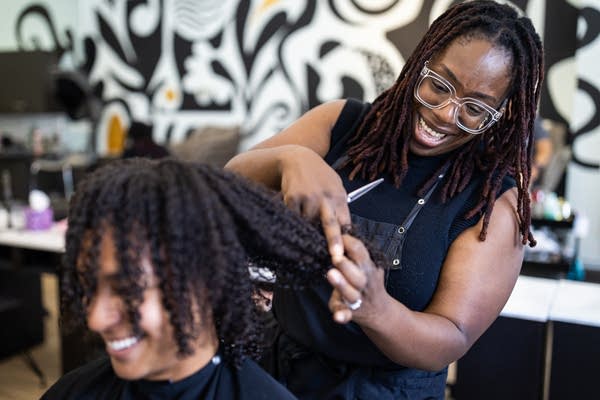
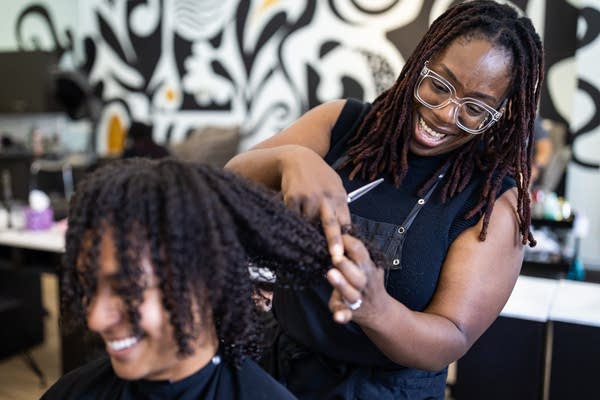
A Black woman styles a woman's hair

For 14 years, Beauty Lounge Minneapolis has been more than a place to get a haircut.

The Uptown salon built a loyal following by serving clients of all hair textures and backgrounds under one roof — an approach owner Melissa Taylor says remains uncommon in the Twin Cities beauty industry.

Now, after more than a decade in business, Beauty Lounge is closing its doors.

“It was extremely difficult to decide to close,” Taylor said.

The salon first opened in northeast Minneapolis in 2011 before relocating to Uptown in 2019. Taylor, who moved to Minnesota from Georgia, said she founded Beauty Lounge with a mission that reflected her own approach to hairstyling.

“When I moved to Minneapolis, that was not the case,” Taylor said of the city's hair industry. “I've always loved doing hair, but I've never said I'm only going to do hair for a certain group of people, like if you have straight hair, I can do it. If you have curly hair, I can do it.”

Taylor describes Beauty Lounge as a multicultural salon, but not simply because it serves a diverse clientele.

“When I say multicultural salon, I truly mean that it is – we're not doing hair based on ethnicity,” she said. “I think that in order to be a proficient hairstylist, you should be comfortable and confident with working with all hair types and hair textures.”
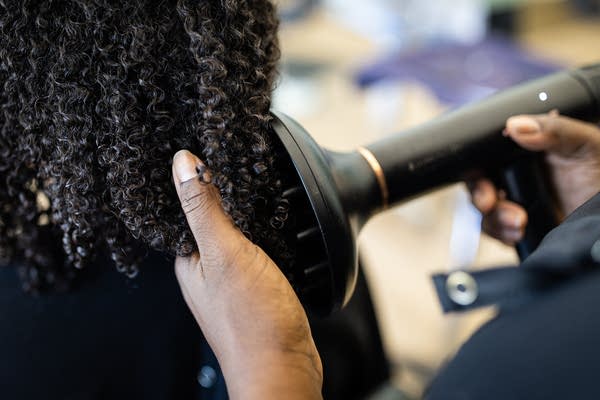
A Black woman styles a woman's hair
Owner and stylist Melissa Taylor dries the hair of her client Betty Annan-Noonoo at The Beauty Lounge on Thursday in Minneapolis.
Ben Hovland | MPR News

She compares hair textures to fabrics.

"If you were a seamstress or you are a fashion designer, and you said, 'Well, I can only work with silk,' or 'I can only work with denim,' I don't think you'd be considered a proficient fashion designer," Taylor said.

That philosophy helped create a space where clients from different backgrounds sat side-by-side, something Taylor believes became one of the salon's defining characteristics.

"I think we have not only built a salon, but we've built a multi-generational community," she said. "There are not many spaces in general where you could have anywhere from a three year old to an 80 or 90 year old in that same space."

She added that the salon became a place where people who otherwise might never meet found common ground.

"There were times that you'd be sitting next to somebody that you would have never crossed paths with in your regular life," Taylor said. "There's an intersectionality that happens in here that doesn't organically happen in other places."

Changing business models

While Beauty Lounge remained busy with clients, Taylor said the salon faced challenges that have become increasingly common across the beauty industry.

One of the biggest shifts, she said, came after the COVID-19 pandemic.

“There has been a huge push for people to work independently,” Taylor said.

Beauty Lounge operated as a commission-based salon, meaning stylists worked as employees while the business covered overhead costs such as products, color, booking systems and other expenses.
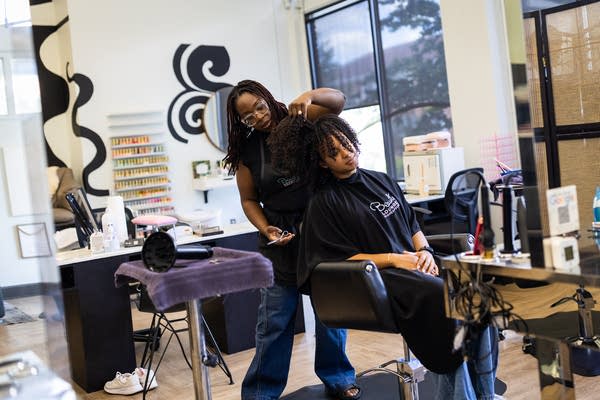
A Black woman styles a woman's hair
Melissa Taylor, owner and stylist at The Beauty Lounge, styles Betty Annan-Noonoo’s hair on Thursday.
Ben Hovland | MPR News

But many newer stylists are increasingly choosing to rent salon suites or operate independently.

“The majority are going into micro salons,” Taylor said. “There are larger buildings that have 100, 200 square foot micro salons in the building, so there may be 30 to 100 different beauty professionals working under the same roof.”

Taylor said independent work can be a good fit for some stylists, but worries the trend has reduced opportunities for mentorship and collaboration.

“I think that community and interacting with other people is important,” she said. “I think it's important for young stylists and new stylists to have a space where they can learn from other people.”

She added that new stylists who move directly into independent suites can miss out on critical professional development.

“When people are going right from cosmetology school into a salon suite, you miss that,” Taylor said. “You become so siloed that you are only becoming good at the things that you already are good at.”

For Beauty Lounge, finding stylists who wanted to work within its collaborative model became increasingly difficult.

“We have had a challenging time finding stylists that want to work in this environment,” Taylor said. “It's not for lack of clientele.”

At the same time, she said rising costs have made operating a small salon more difficult.

“We all know that things are way more expensive than they used to be, significantly more expensive than they used to be,” she said.

Taylor believes the beauty industry itself will survive but expects significant changes ahead.

“I think the industry will be okay, but I think the industry is going to look a lot different in the coming years,” she said.

A place that felt safe

For many clients — particularly women with textured hair who have struggled to find stylists trained to work with their hair type — the Beauty Lounge offered something more than beauty services.

“I think the beauty lounge is safe,” Taylor said. “It feels like a safe space to come to. It feels like a place to block out the outside world.”

A woman checks her phone
Owner and stylist Melissa Taylor checks her client schedule at The Beauty Lounge in Minneapolis on Thursday.
Ben Hovland | MPR News

Over the years, clients and staff navigated major moments together.

“We've been through elections, we've been through unrest, we've been through a pandemic, we've been through a lot of life events together,” she said.

Taylor said the salon's impact extended beyond hairstyling.

“There are a lot of people who have never had a positive salon experience, and the first time they have a positive salon experience, it's like their world opens up and they see themselves differently,” she said.

The salon also helped clients embrace their natural hair textures.

“Whether it's even learning how to love their texture for the first time. That's been really important,” Taylor said.

Although she said Beauty Lounge was not “hugely financially successful,” she considers its community impact a success.

“I do think the salon has been successful in the impact that it's made on our community, and just helping people see themselves differently and feeling good when they leave a space.”

‘Our work continues’

While the physical salon is closing, Taylor says the mission behind Beauty Lounge will continue.

The company will continue its bridal and event styling work and plans to expand services for weddings and photo shoots.

“Absolutely, our work continues,” she said.

Taylor also sees opportunities to continue advocating for inclusive beauty services outside of a traditional salon setting.

“There'll be women with curly hair that say, ‘Oh, typically when I'm on a photo shoot, nobody touches my hair,’” Taylor said. “I don't think that should be the case.”

As she reflects on Beauty Lounge's final chapter, Taylor hopes its legacy extends beyond hair.

“When we close our doors, I really hope people leave the space a little bit less ignorant to what people's experiences are,” she said.

“I hope people leave with a little bit more self love.”

Most of all, she hopes the salon leaves a lasting mark on the community it served for 14 years.

“I really hope we left the Twin Cities a little bit better,” Taylor said. “I've seen so many amazing things happen in this space.”



Source link

Leave a Reply

Subscribe to Our Newsletter

Get our latest articles delivered straight to your inbox. No spam, we promise.

Recent Reviews


Before attending an interview on webMethods, make sure to be strong in basics. Because basics are the main thing that the interviewers look for. Along with basics, you should also have knowledge of how we can implement the services in webMethods.

In this post, we have put together 30 webMethods interview questions with detailed answers. Go through the below frequently asked webMethods interview questions and answers that help increase your potential in cracking the interview.

Most Frequently Asked webmethods Interview Questions

Explain about EAI

Ans: Enterprise application integration (EAI) unites the databases and workflows for business applications. It allows the integration of applications from disparate platforms to share business processes. It simplifies and automates business processes without having to make changes to the existing systems.

What is webMethods?

Ans: webMethods is an integration platform that focuses on application integration,business process integration, and B2B partner integration. It provides flow services to map any data format into the other format and connects applications together. It was founded by Phillip Merrick and Caren Merrick in 1996 and has later acquired by Software AG in 2007. 

  Wish to make a career in the world of WebMethods? Start with WebMethods Training !

Name the modules in webMethods Product Suite

Ans: The webMethods Product Suite contains four modules,

  • Integration and B2B
  • Service-Oriented Architecture
  • Business Process Management
  • Business Activity Monitoring

List the tools of webMethods Integration

Ans: Below are the tools of webMethods integration.

  • webMethods Integration Server
  • webMethods Integration Platform
  • webMethods Adapters
  • webMethods Developer
  • webMethods Broker
  • webMethods Monitor
  • webMethods eStandards Modules
  • webMethods Optimize for Infrastructure
  • webMethods Trading Networks
  • webMethods EDI Module
  • webMethods EDIINT
  • webMethods PIM

What happens when the pub.flow: trace pipeline service is invoked?

Ans: When we invoke pub.flow:tracePipeline service, the Integration Server logs the name-value pairs in the pipeline. 

What is the primary function of the built-in pub.flow: save pipeline service?

Ans: It saves the current pipeline to a specific memory location on the Integration Server.

How can we remove a system lock from an element?

Ans: We can remove the system locks by making the server-side files of an element as readable. Right-click on the locked element, and select lock properties, to view the server-side files of that element. Make the files as readable to unlock them and click on the refresh button.

What is the use of a Web Service Connector?

Ans: A Web service connector is a flow service that contains input and output signatures. It is generated from the WSDL document in the Integration Server. It invokes a Web Service on a different web server.  

How to invoke a service from a browser?

Ans: To invoke a service, open a browser and give the below URL.

http://servername:port/invoke/folder.subFolder.subsubFolder/serviceName

Webmethods Training

  • Master Your Craft
  • Lifetime LMS & Faculty Access
  • 24/7 online expert support
  • Real-world & Project Based Learning


. Can we restore a session on a server?

Ans: If the server goes down or if there is a problem with the network, the developer gets disconnected from the server. When the server gets back online, the developer will get connected to it automatically, and the session will get restored.

. What is the process for opening a session?

Ans: Open the Integration Server and select ‘session’ from the toolbar menu. Give the IP address and port details of the server that you want to connect to.Give the username and password and click on ‘connect’.

 If you have any doubts on Webmethods, then get them clarified from Webmethods Industry experts on our Webmethods Tutorial !

. How can we change the JVM used by Integration Server?

Ans: We can change the JDK used by webMethods by updating it in either IntegrationServer\in\server.bat file or IntegrationServer/bin/server.sh file. Change the JDK path as follows and save the file.

SET JAVA_DIR=

. Explain about startup service

Ans: Startup services are used to generate initialization files or for preparing the environment. The server automatically executes a startup service when it loads a package.

. What is a shutdown service

Ans: Shutdown services are used for executing cleanup tasks like closing files and purging temporary data. It gets automatically executed when a package is unloaded from memory. 

. Explain the use of a pipeline in webMethods?

Ans: Pipeline refers to a data structure that maintains the input and output values of flow service. It collects inputs and outputs from subsequent services in the flow. When we execute a service in the flow, it will access the data from the pipeline.

. Define structural transformations

Ans: Structural transformations refer to the transformation of data in hierarchical nature. It involves splitting data into several fields, merging fields, renaming fields, etc.

. What is a flow service?

Ans: We can use a flow service to wrap a sequence of services within a single service. It manages the flow of data among the services. We can write the flow service in webMethods flow language. 

. What are the ways to check memory usage?

Ans: We can check the memory usage by using any of the below three ways.

  • Administrator Page
  • Top command
  • Free command

. Explain about webMethods Developer

Ans: webMethods Developer is like an IDE used for developing code in the webMethods Integration Server. We can write graphical flows, create, and configure web services. It also provides tools to test and debug the created flows.

HKR Trainings Logo

Subscribe to our YouTube channel to get new updates..!


. If a flow exit does not specify a ‘form’, what is the default behavior?

Ans: If the exit is not specified in a loop, it will throw a java.lang.NullPointerException.

. How do ACLs affect locking?

Ans: We can give authorization to a specific user group by using ACLs (Access Control List). An element can have different ACLs assigned for each level of access. Users in the allowed list of ACLs can lock an element.

. Can we change the order of steps in a flow service?

Ans: A flow service has an order of sequence steps. We can change the order of these steps by using the buttons present on the editor panel. We can use ‘Shift Up’ and ‘Shift Down’ buttons to change the steps, ‘Shift Left’ and ‘Shift Right’ buttons to move a service or branch in a sequence.

. Explain the difference between a drop and delete pipeline variable

Ans: The drop pipeline variable is used for removing a variable from the list of variables. It makes the variable available for garbage collection.The delete pipeline variable is for removing a variable from the current view. If the variable is also present in the previous pipeline, it will appear when you change the view.

. How can we sort using the JDBC select adapter service?

Ans: The sort function is available in the ‘select’ tab. It has a column that says ‘Sort Order’ where we can specify the column that we want to sort by.

If you have any doubts on Webmethods, then get them clarified from Webmethods Industry experts on our Webmethods community !

. Can we organize connection pools?

Ans: Avoid connection pool sharing across different functional areas, even if they are pointing to the same database. If the pool is being used by multiple types, then it becomes difficult to tune the size of the pool. It is also difficult to change the database settings without impacting the other. 

. Can we use a sequence as the target of a branch?

Ans: Yes, we can use a sequence as a target of a branch. We have to set the evaluate label property of the branch step to true. Then set the label property of sequence to the value that it has to process.

. Explain about branch operation

Ans: The branch operation supports conditional processing. It is similar to if-then-else functionality in other programming languages. Based on the value of a variable at runtime, a branch operation gets executed conditionally.

. What are some of the common issues faced while migrating a project?

Ans: Here are some of the common issues faced while migrating a project.

  • A missing jar file
  • Thread hung
  • JDBC adapter is not suspending
  • The scheduler is missed in internal DB or the next run time is not visible

Webmethods Training

Weekday / Weekend Batches


. What should we set the count parameter to repeat operation to execute as long as the specified repeat condition remains true?

Ans: To execute a repeat operation as long as the specified condition, we have to set the count parameter to ‘-1’.

. What is the default port to which the webMethods integration service has an HTTP listener?

Ans:The default port for the HTTP listener is 5555.

About Author

author-image

As a Senior Writer for HKR Trainings, Sai Manikanth has a great understanding of today’s data-driven environment, which includes key aspects such as Business Intelligence and data management. He manages the task of creating great content in the areas of Digital Marketing, Content Management, Project Management & Methodologies, Product Lifecycle Management Tools. Connect with him on LinkedIn and Twitter.

Upcoming Webmethods Training Online classes

Batch starts on
30th Jun 2026
Mon & Tue (5 Days)
Weekday
Timings – 08:30 AM IST
Batch starts on
4th Jul 2026
Mon – Fri (18 Days)
Weekend
Timings – 10:30 AM IST
Batch starts on
8th Jul 2026
Mon & Tue (5 Days)
Weekday
Timings – 08:30 AM IST


Source link