

The past year has brought two fantastic new credit cards to the market.
Last year, we saw Alaska Airlines revamp its Mileage Plan program, rebranding to Atmos Rewards. It also refreshed its two existing cobranded credit cards, and added a third to the lineup: the Atmos™ Rewards Summit Visa Infinite® credit card.
Meanwhile, in the early weeks of 2026, Bilt retired its original credit card and replaced it with a suite of cobranded credit cards, with the Bilt Palladium Card (see rates and fees) being the most premium of the trio.
These two credit cards are now the two most used in my wallet, largely because they let me earn my two favorite loyalty currencies — Atmos Rewards points and Bilt Points — on everything I buy. Even better, they can earn more than 1 point per dollar spent on these purchases.
Here, I’ll show you how I use these two credit cards to earn points every day and how I decide which card to use.
Bilt Palladium Card: My daily driver stateside
The Bilt Palladium Card is by far the card I tap the most these days. It carries a hefty $495 annual fee (see rates and fees), but also includes some great perks like two $200 Bilt Travel hotel credits every year, a Priority Pass Select lounge membership and $200 in annual Bilt Cash*.
Plus, it has a solid welcome bonus — a first for Bilt — which allows you to earn 50,000 bonus points and Bilt Gold elite status for a year after spending $4,000 on the card in the first three months of account opening. Plus, you’ll receive $300 in Bilt Cash* upon approval.
But the real draw of this card is earning 2 Bilt points per dollar spent on all purchases (except tax payments; plus 4% Bilt Cash*, if you elect to earn Bilt Cash). This double points earn rate is valid on everything from groceries to gas to dining.
Even better, you can redeem $200 in Bilt Cash for Points Accelerator, which gives you 3 points per dollar spent on everything through the end of the year or up to $5,000 in purchases. You can redeem Bilt Cash for this perk up to five times per year.

Reward your inbox with the TPG Daily newsletter
Join over 700,000 readers for breaking news, in-depth guides and exclusive deals from TPG’s experts
I always keep it on, and it’s how I spend most of my Bilt Cash. The 4% Bilt Cash I earn on everyday spending is what funds these repeat redemptions all year.
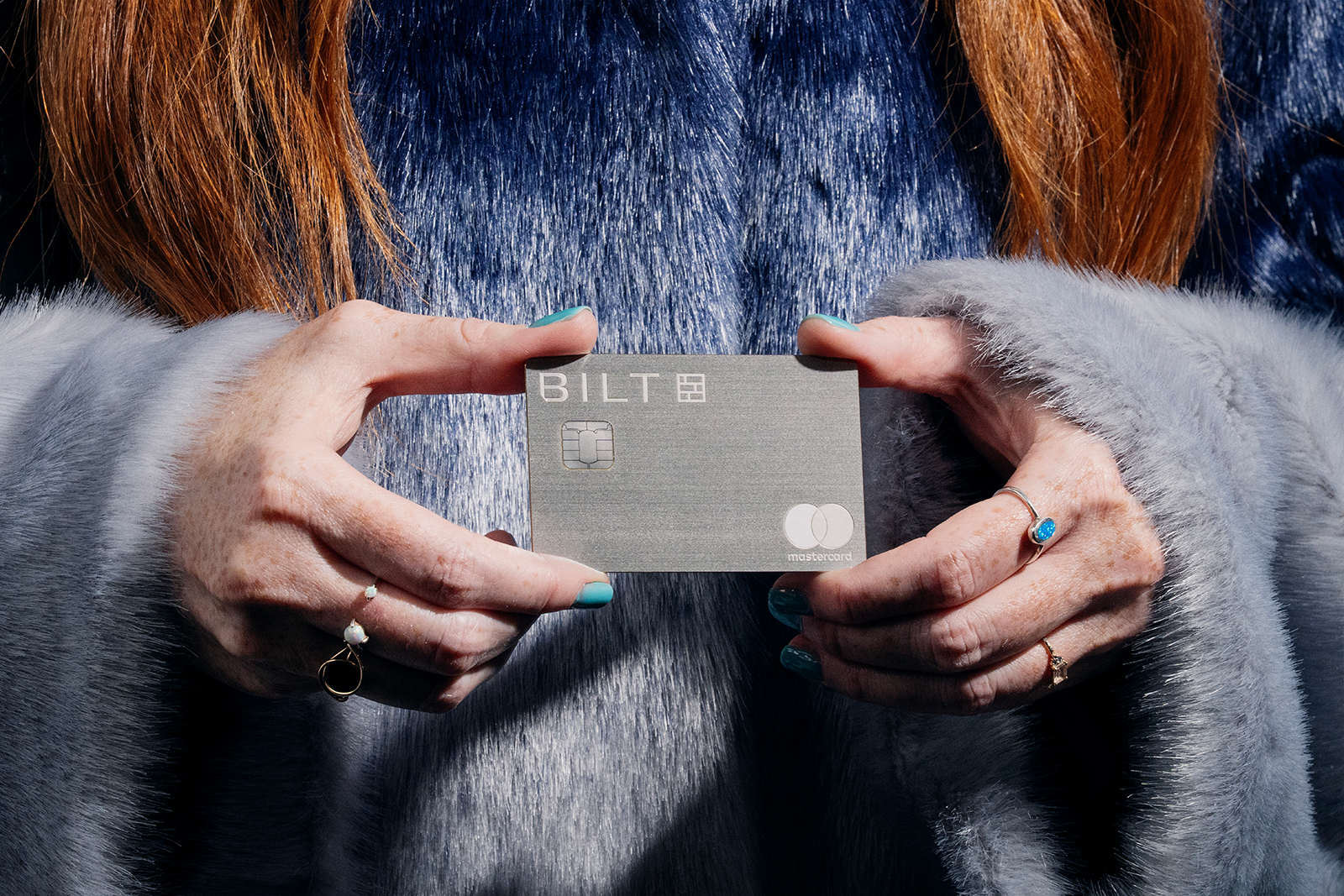
The reason I use this as my daily driver is two-fold.
First, Bilt points are by far the most valuable points on the market. TPG values them at 2.2 cents per point as of our June 2026 valuations, the highest value of any loyalty program.
However, I’ve never redeemed them for less than 3 cents per point. This is largely due to Bilt’s top-tier transfer partners, which include 1:1 transfers to World of Hyatt, Atmos Rewards, Japan Airlines Mileage Bank and Air Canada Aeroplan, among others.

The second reason I use this card is to simplify my finances. For years, I used a stack of four different credit cards to maximize the number of points I earned. However, juggling so many cards each day made it difficult to track my spending.
Now, putting the bulk of my spending on a single card means I can check my spending and pay my bill in one app.
That’s not to say that I don’t use other credit cards from time to time. For example, I use the Chase Sapphire Reserve® (see rates and fees) to book flights and hotels, earning 4 points per dollar spent when booking directly with airlines and hotels.
However, when it comes to dining, groceries and other spending, it goes on the Bilt Palladium Card without a second thought — at least when I’m at home.
*Up to $100 in Bilt Cash rolls over each year.
Related: Why I’m putting the majority of my spending on 1 card in 2026
Alaska Atmos Summit Card: My go-to when I’m abroad
The Alaska Atmos Summit Card is the rare card that treats foreign-currency spending as its own bonus category, earning 3 points per dollar spent on any purchase made abroad.
As an Alaska Airlines elite, I also love that the card earns 1 status point per $2 spent, meaning a $200 purchase abroad earns a whopping 600 Atmos Rewards points and 100 status points. Note that it also earns 3 points per dollar spent on Alaska and Hawaiian purchases and on dining.
As an added bonus, it doesn’t charge foreign transaction fees.
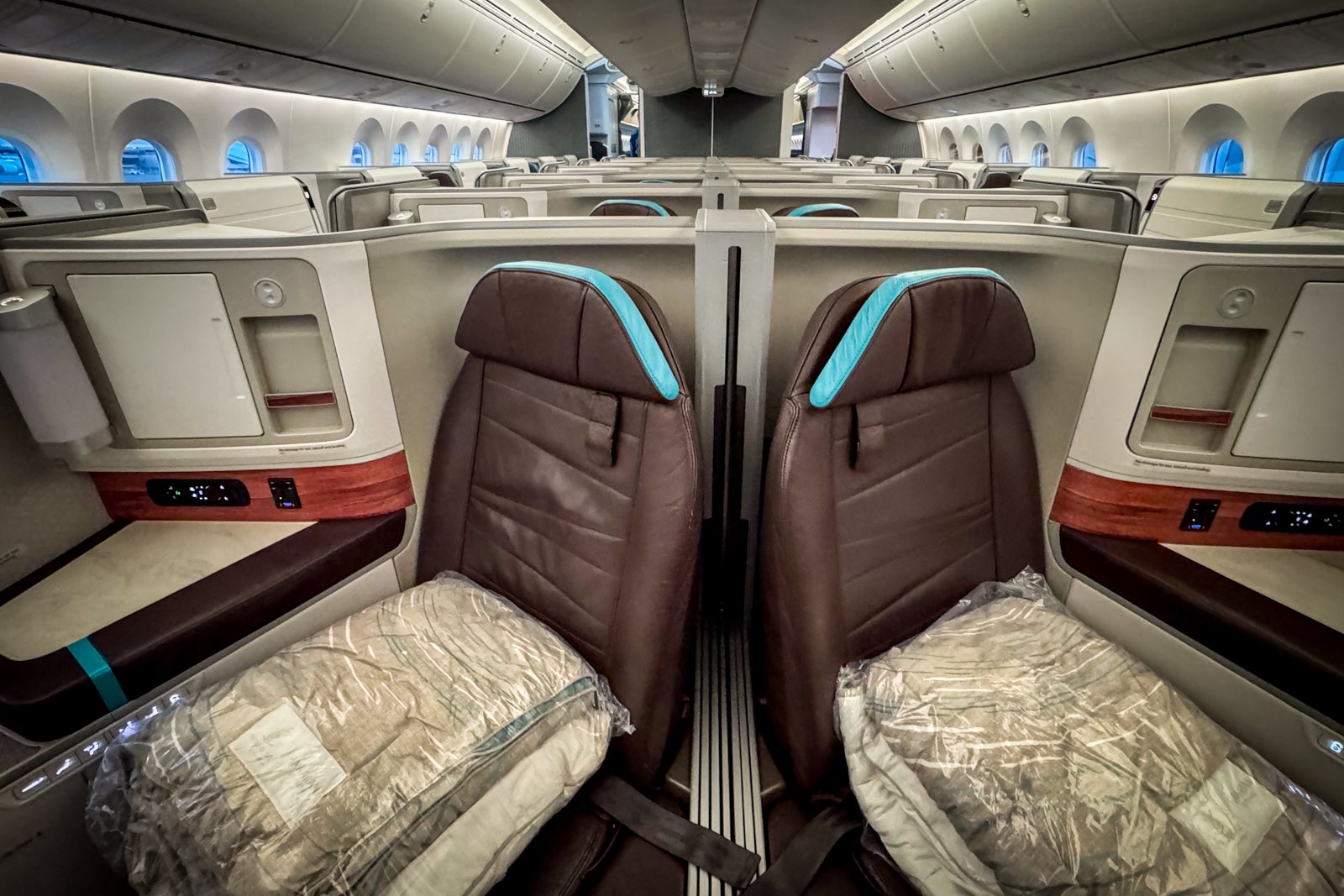
This is now the only card I use abroad, and I’ve racked up thousands of Atmos Rewards points in the process.
The card is packed with other great benefits, including quarterly Alaska Lounge passes, inflight Wi-Fi credits, 10,000 bonus elite points per year and a 25,000-point annual Global Companion Award that can be used for 25,000 points off a companion’s award ticket.
I also just completed the $60,000 annual spending requirement to earn the card’s 100,000-point Global Companion Award, which my wife and I will use when booking a trip to Asia next year. These perks help offset the card’s $395 annual fee.
I like using this card abroad to help me requalify for Atmos Rewards Gold status and to pad my stash of Atmos Rewards points. It also takes the guesswork out of picking which card I should use abroad — instead, I can rest assured knowing I’m getting 3 Atmos Rewards points per dollar spent.
Next to Bilt points, I use Atmos Rewards points the most out of any points program.
Bottom line
I have over 30 credit cards in my wallet, but these days, two of them get the majority of my spending.
I use the Bilt Palladium Card at home and the Alaska Atmos Summit Card abroad. This lets me earn at least 2 points per dollar spent on virtually everything I buy, split between the two loyalty programs I use the most.
It’s also massively simplified my everyday spending, as I can check balances and pay my credit card bill from just two apps. This is a far cry from the days when I used a hodgepodge of cards daily, split among American Express, Chase, Citi and others.
To learn more, check out our full reviews of the Bilt Palladium and Atmos Summit.
Apply here: Atmos Rewards Summit credit card
Apply here: Bilt Palladium Card

Stacie Harris is a local resident and reporter of the Maple Grove area. Stacie reports on medicine and science for the Maple Grove Report.