
The U.S. Supreme Court has preserved birthright citizenship, leaving in place the constitutional principle that has granted citizenship to nearly everyone born in the United States for more than 150 years.
In a 6-3 ruling in Trump v. Barbara, the justices left in place the longstanding interpretation of the 14th Amendment, which states that virtually everyone born on U.S. soil is automatically a U.S. citizen, regardless of their parents' immigration status.
The ruling preserves more than a legal doctrine for many Minnesotans. It protects a pathway that has shaped generations of immigrant families.
For Luis Argueta, communications director for Unidos Minnesota, birthright citizenship is deeply personal.
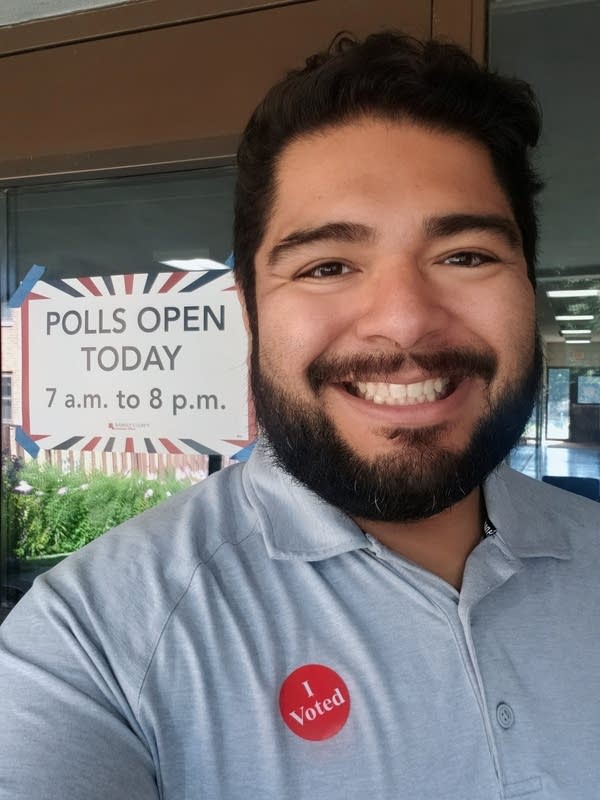
His parents fled El Salvador during the country's civil war and came to the United States to seek asylum.
They would eventually apply for Temporary Protected Status before becoming citizens years later.
Argueta was born in the United States, making him a citizen from birth.
His story is shared by hundreds of thousands of Minnesotans. According to the American Immigration Council, an estimated 280,000 Minnesota residents are U.S.-born citizens with at least one immigrant parent.
“As a son to Salvadorian parents who were raised through the 60s, 70s, and 80s, going into the civil war in El Salvador, they got to a point where they had to flee due to persecution in the late 80s,” Argueta said.
Growing up, Argueta said he recognized early that his citizenship offered opportunities his parents did not have.
“Because I was a citizen, I had access to health care, while my parents did not,” he said. “Even as a small child under the age of eight, I still was very aware that my access to even one of the most basic necessities like healthcare was vastly different than my parents.”
Today, Argueta is a homeowner, taxpayer, volunteer and, he jokes, “the snowplow captain” on his St. Paul block.
He says citizenship provided more than legal status.
“It's the ability to place roots in your community,” Argueta said. “I think that's the biggest difference.”
What is birthright citizenship?
Birthright citizenship comes from the first sentence of the 14th Amendment, adopted in 1868 after the Civil War. The amendment states that people born in the United States and subject to its jurisdiction are U.S. citizens.
The Supreme Court has long interpreted that language to apply to nearly everyone born in the country, with only narrow exceptions such as children of foreign diplomats.
University of Minnesota law professor Jill Hasday said the constitutional language is straightforward.
“This clause, just stated most clearly, says that virtually everyone born in the United States is a citizen at birth, a birthright citizenship, regardless of whether their parents are citizens or not.”
The challenge before the court argued that children born in the United States should not automatically receive citizenship if their parents are not U.S. citizens or lawful permanent residents. The court declined to adopt that interpretation, preserving more than a century of constitutional precedent.
Hasday said changing that understanding could have dramatically altered American society.
“It creates a permanent underclass of people who could be here for generations. They can never access citizenship, and it really hampers their ability to integrate into society and the economy.”
For Argueta, the constitutional guarantee shaped nearly every part of his life.
“Honestly, I'm very blessed and very fortunate and thankful, and I think the 14th Amendment has made a big impact in my life,” he said.
Other immigration rulings could have more immediate consequences
While the birthright citizenship decision drew the most public attention, immigration advocates say two other Supreme Court rulings issued recently could have more immediate effects on immigrants already navigating the legal system.
Julia Decker, policy director at the Immigrant Law Center of Minnesota, said one ruling affects people seeking asylum at the southern border, while another allows the Trump administration to move forward with ending Temporary Protected Status — or TPS — for certain groups, including many Haitians and Syrians.
Asylum ruling narrows access at the border
The asylum ruling centers on when someone is considered to have "arrived" in the United States.
Decker said that historically, migrants who presented themselves at the border and expressed fear of persecution could undergo a credible fear interview. If they established a credible fear, they were often allowed into the United States while their asylum cases proceeded through immigration court.
The Supreme Court's decision, she said, allows the federal government to deny that opportunity to people who have not physically entered the country.
“The core of the ruling is that people who are outside the border of the United States aren't allowed to seek asylum until they actually are inside the country, as opposed to standing at the border, like asking for asylum,” Decker said.
She said the decision effectively gives the administration legal authority to continue policies that turn asylum seekers away before they can begin the asylum process.
“This ruling enshrines that into law,” Decker said. “It gives the green light.”
Decker also noted that one of the dissents warned the ruling could create an unintended consequence by encouraging people to cross the border outside official ports of entry if they believe presenting themselves lawfully will simply result in being turned away.
The decision does not directly affect asylum seekers who are already in the United States waiting for their court hearings, she said.
However, she cautioned that it should be viewed as part of a much broader shift in immigration policy.
“I think from a 10,000-foot view, this decision is really part of a much larger dismantling of just the lawful immigration system,” Decker said. “The pathways are being taken away from people who are attempting to access the pathways that have been laid out for them.”
TPS ruling affects protections for thousands
Another Supreme Court ruling allows the administration to move forward with ending Temporary Protected Status for certain groups while legal challenges continue.
TPS allows people from countries experiencing armed conflict, natural disasters or other extraordinary conditions to temporarily live and work legally in the United States.
The case before the court specifically involved TPS protections for hundreds of thousands of Haitians and several thousand Syrians.
Decker emphasized that the ruling does not eliminate the TPS program itself, which is designated country by country, but it does allow the administration to terminate protections for specific nationalities while litigation continues.
“The administration has been sort of systematically going through and attempting to end designations country by country,” she said.
The Supreme Court sent the case back to a lower court for additional proceedings, leaving open the possibility of further legal action. But for people directly affected, Decker said the practical consequences are immediate.
“People who have the Temporary Protected Status directly on the ground are potentially losing their protections, potentially subject to having to leave the country.”
Immigration advocates say court rulings have real-world effects
Decker said immigration cases often become discussions about legal terminology and court procedures, but she hopes people also consider those affected by the decisions.
“At the baseline, we are talking about people's lives, and we're talking about people and families, and your next-door neighbor,” she said.
She acknowledged that immigration law can seem overwhelmingly technical, with acronyms like TPS and complex court decisions dominating headlines.
“But there are people behind these designations,” she said. “People's lives are changed from one day to the next by these types of rulings.”