How free Is a hotel award night? Marriott vs. Hyatt


Just how much does that “free” hotel stay actually cost you — and what do you get in return?

I recently found myself hotel-hopping across downtown Houston, bouncing between properties in different loyalty programs while trying to stay close to my child’s week-long camp. As I packed and unpacked for what felt like the hundredth time, I started wondering: Which hotel loyalty program really delivers the better award stay experience?

To find out, I compared two nearby properties: the JW Marriott Houston Downtown and the Hyatt Regency Houston Downtown.

Related: Which hotel loyalty program is the best?
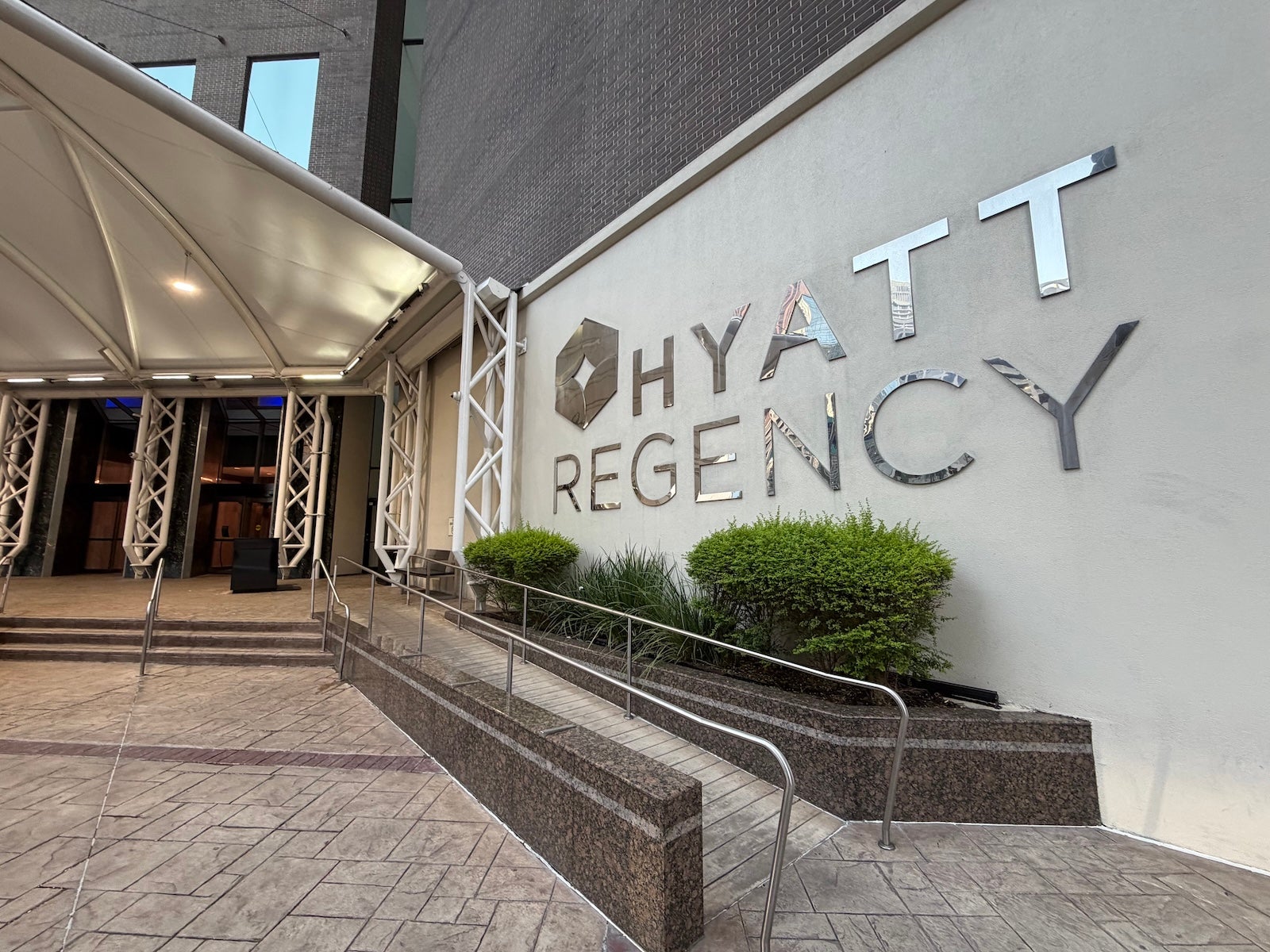
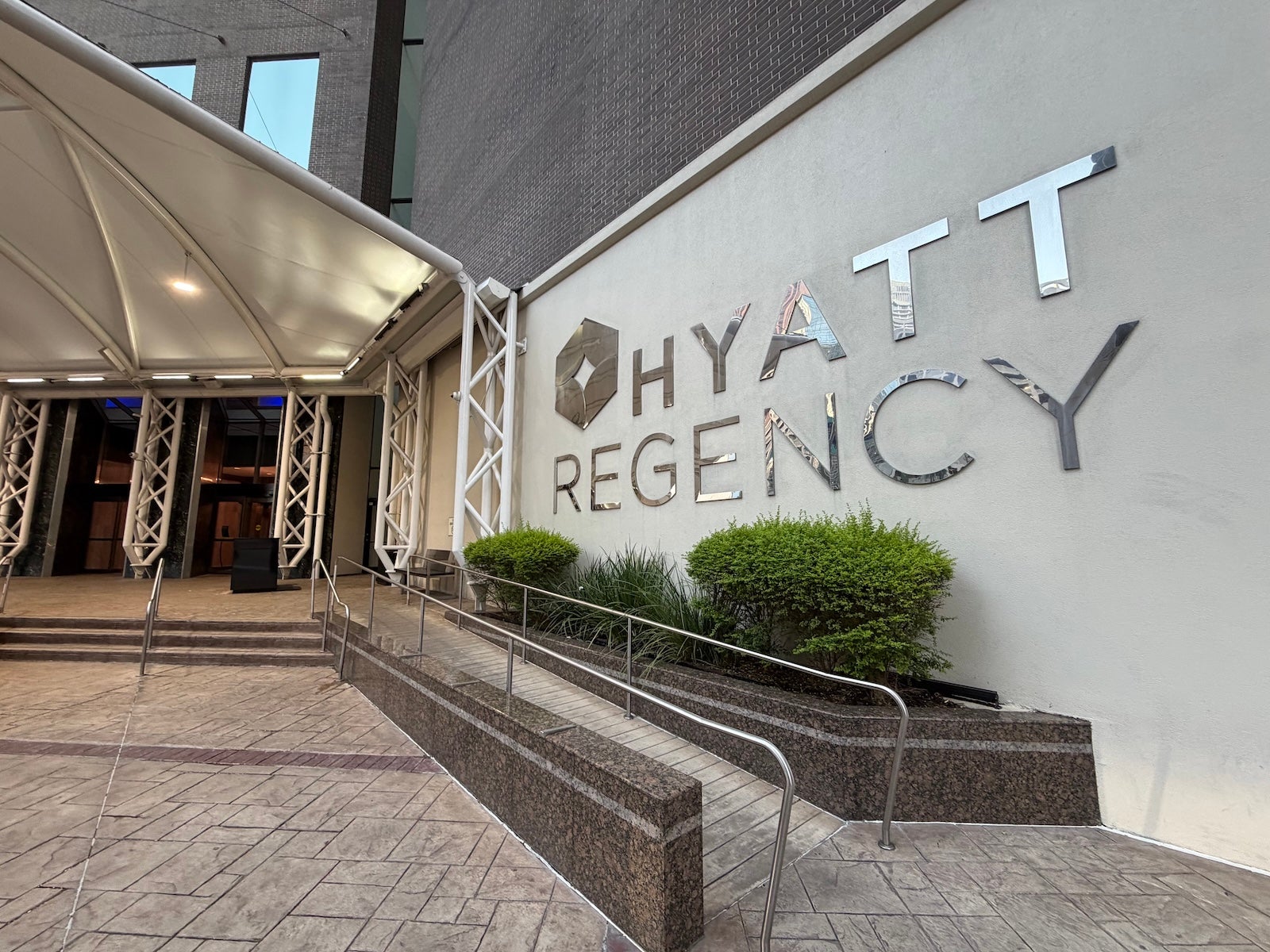
Hyatt Regency Houston Downtown. SUMMER HULL/THE POINTS GUY

The points cost

Before we dive in, it’s only fair to acknowledge that the JW Marriott is generally the more upscale hotel of the two. I’d expect it to cost a bit more in either cash or points. Still, the properties are similar enough — and close enough geographically — to make for a useful comparison, especially since many of the differences highlighted here extend well beyond these specific hotels.

For my June 2026 stays, the award rates were:

Cash rates were hovering around $400 per night at both properties, due to the World Cup and other major events happening in Houston, making an awards redemption an attractive option either way.

JW Marriott Houston Downtown. SUMMER HULL/THE POINTS GUY

Even accounting for the fact that Marriott members often earn points faster through hotel stays and cobranded credit cards than with Hyatt and its generally lower earning ratios, the value gap here is hard to ignore. Based on July 2026 TPG point valuations, 15,000 Hyatt points are worth about $240 in travel, while 62,000 Marriott points are worth roughly $496.

Reward your inbox with the TPG Daily newsletter

Join over 700,000 readers for breaking news, in-depth guides and exclusive deals from TPG’s experts

The comparison became even more one-sided because I used a Category 1-4 Hyatt award night certificate for my stay. Those certificates are relatively easy to earn through Hyatt’s credit card or annual milestone rewards in the World of Hyatt program, allowing me to preserve my Hyatt points entirely.

Advantage: World of Hyatt

Extra fees for the stay

One of Hyatt’s biggest strengths is that award stays generally mean award stays. When you redeem Hyatt points or certificates, resort and destination fees are waived.

The Hyatt Regency Houston Downtown normally charges a $20 destination fee on paid stays, but my award stay did not incur it.

The JW Marriott Houston Downtown didn’t charge a destination fee on either paid or award stays, which was a pleasant surprise. Some nearby Marriott properties charge destination fees, and Marriott generally does not waive them on award stays.

However, my Marriott stay wasn’t entirely free. Parking at the neighboring garage cost $60 for the night, and valet parking would have cost even more.

Related: Perks worth the price: These hotels offer unexpected amenities with the resort fee
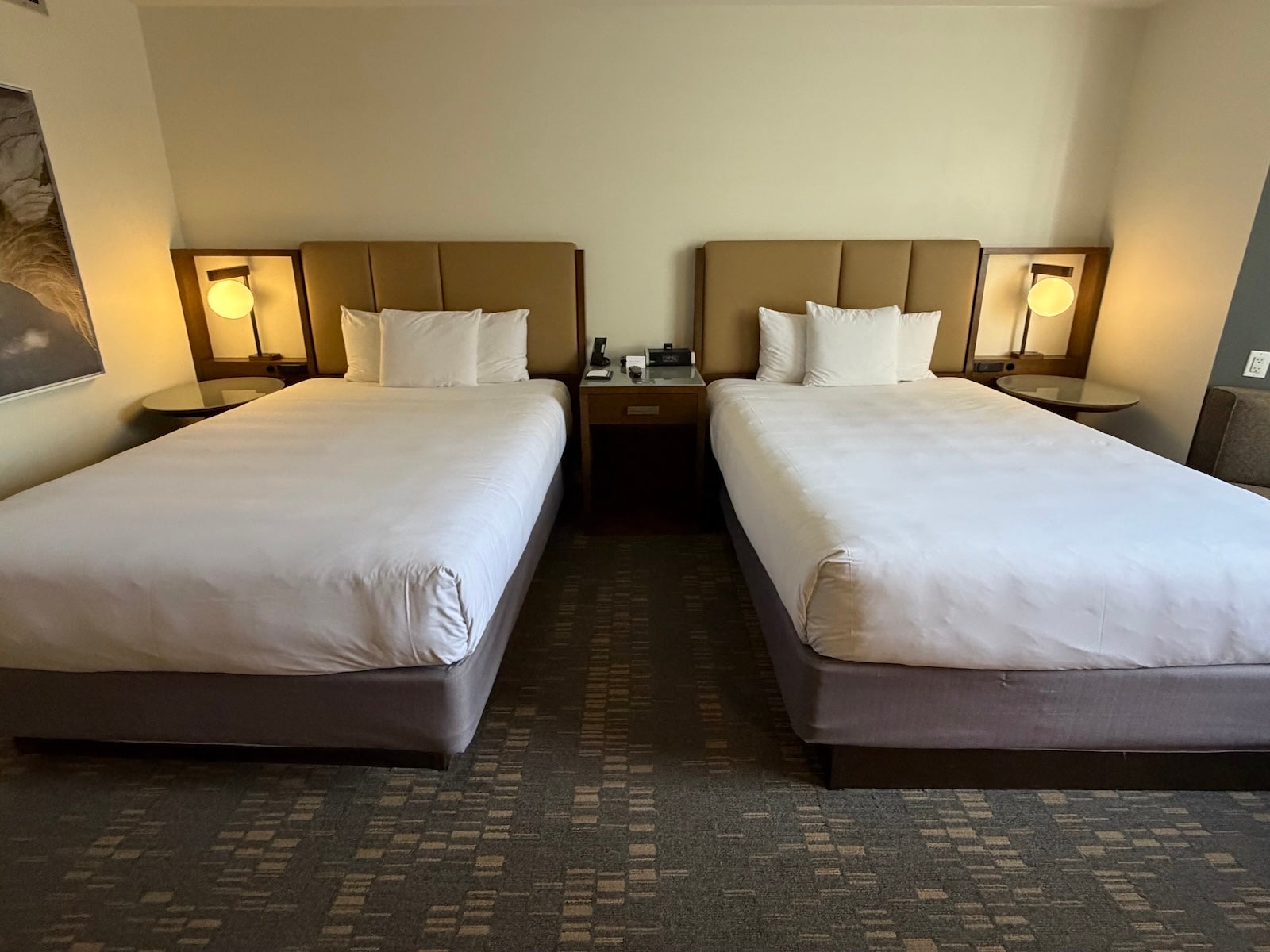
Hyatt Regency Houston Downtown. SUMMER HULL/THE POINTS GUY

Hyatt has another advantage here: Globalist members receive complimentary parking on award stays when parking can be billed to the room. That means top-tier Hyatt elite members can often enjoy award stays with virtually no out-of-pocket costs.

While the waived parking benefit only applies to Globalists, Hyatt’s fee-waiver policy helps make award stays feel much closer to truly free.

Related: What World of Hyatt Globalist status is and why you might want it

Advantage: World of Hyatt

Room upgrade

This category isn’t apples-to-apples, but it’s still worth discussing because upgrades are a tangible perk.

I booked standard rooms at both hotels. In both programs, top-tier elite members are eligible for complimentary upgrades, and both programs offer upgrade certificates through elite milestones.

I chose not to use a Hyatt suite upgrade award because those certificates can cover stays of up to seven nights, making a one-night stay feel like a poor use of a valuable benefit.

With Marriott, however, Nightly Upgrade Awards are applied per night. I attached one to this reservation and received confirmation a few days before arrival that I’d been upgraded into a pretty fantastic true one-bedroom suite with an oversized bathroom.

At Hyatt, my complimentary upgrade was simply a high-floor room. While some travelers may appreciate that, I don’t personally consider a higher floor much of an upgrade — it’s mostly just more time in the elevator.

The spacious suite at the JW Marriott was a genuine highlight of the stay, giving Marriott the edge in this comparison.

Advantage: Marriott Bonvoy

Breakfast and lounge access

I’m a sucker for a free hotel breakfast, especially when traveling as a family.

That said, Marriott’s breakfast benefits can be complicated. Depending on the brand, elite status level and property, breakfast may be included, partially included or not included at all.

Hyatt keeps things much simpler. Hyatt Globalist members generally receive complimentary breakfast for up to two adults and two children.
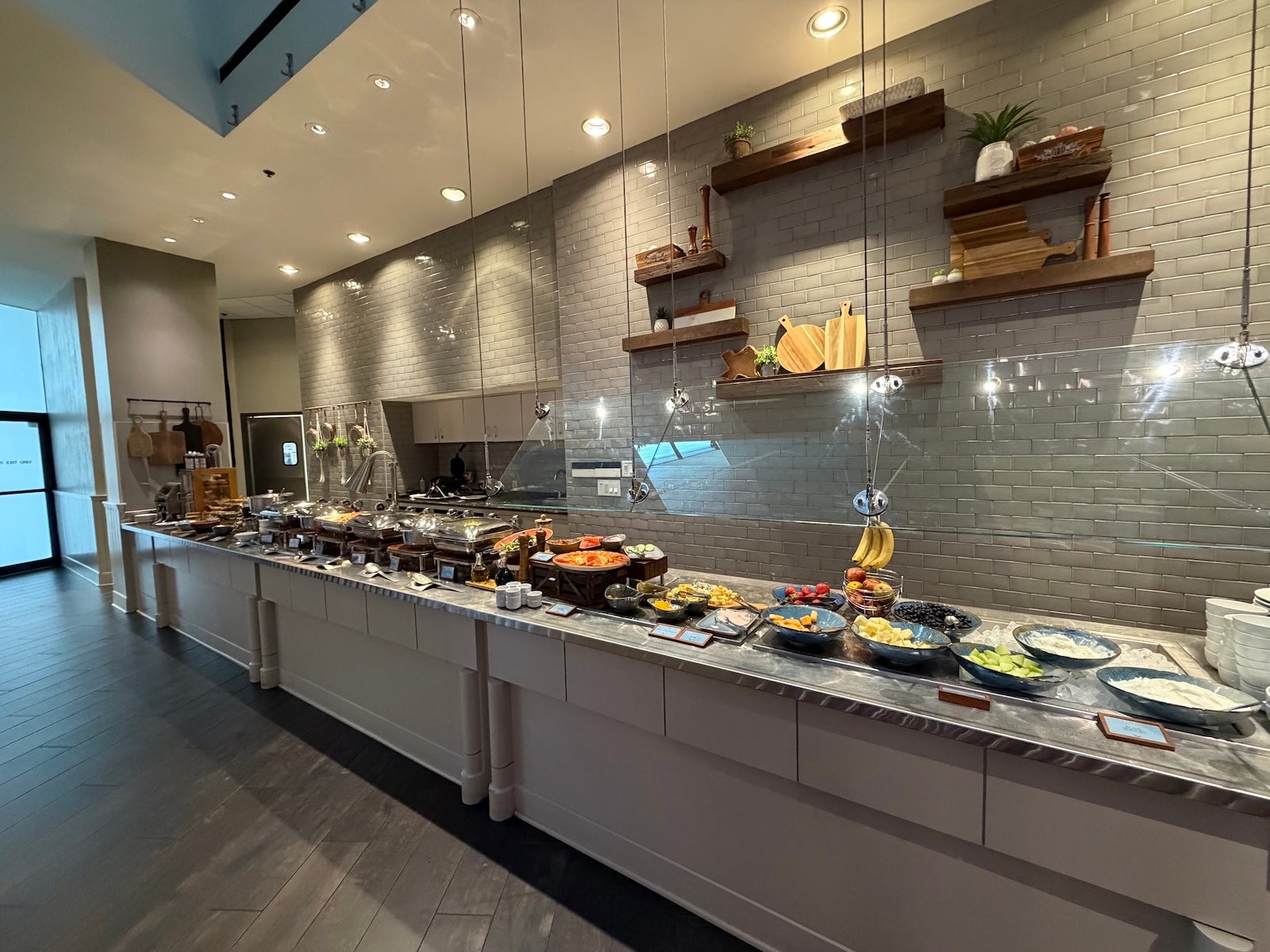
Included breakfast buffet at the Hyatt Regency Houston Downtown.
Included breakfast buffet at the Hyatt Regency Houston Downtown. SUMMER HULL/THE POINTS GUY

At the Hyatt Regency Houston Downtown, that meant a full breakfast each morning in the restaurant. We could choose the buffet or order from the menu, and our breakfast charges — including the gratuity we added — were fully covered.

At this JW Marriott, breakfast was provided via club lounge access, which I get as a Marriott Platinum elite through a certain Marriott credit card.

Lounge breakfasts can be hit or miss, but this one was impressive, complete with an omelet station. The lounge also offered bottled water, soft drinks, snacks and substantial evening appetizers, helping reduce food costs throughout the stay.
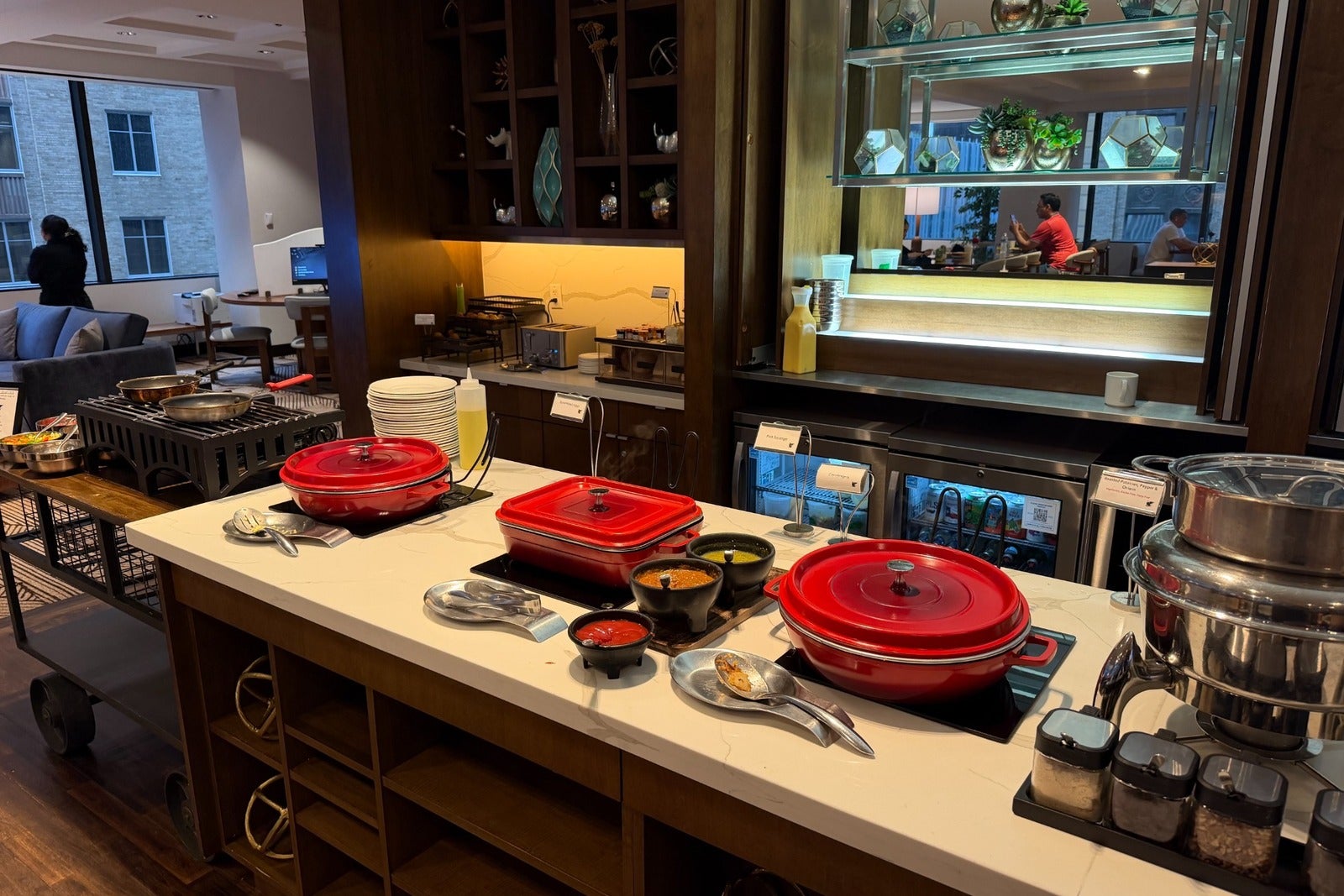

While I’d usually choose a restaurant breakfast over a lounge breakfast, the quality of this lounge made the comparison surprisingly close.

Breakfast and lounge access: It’s a tie

Bottom line

Most of us probably didn’t start collecting points and miles with the goal of spending a week near our kid’s summer camp. But these awards stays saved me nearly $1,000 while also eliminating hours of daily driving into and out of Houston.

Marriott may have had the nicer hotel of these two and won the room-upgrade battle, but Hyatt won the overall value contest.

Between waived resort and destination fees, complimentary breakfast for Globalists and free parking on award stays for top-tier elite members, Hyatt does an excellent job of making “free” feel genuinely free.

But in both cases, I was very grateful to have hotel points and free night certificates ready when I needed them.

Related reading:


Source link

Leave a Reply

Subscribe to Our Newsletter

Get our latest articles delivered straight to your inbox. No spam, we promise.

Recent Reviews


Waterfall Model vs Agile – Table of Content

What is an Agile Model? 

Agile methodology is a squad theory that addresses the full growth of a programming tool while emphasizing product quality. It describes a sprint, which is a time-boxed phase that lasts two weeks. A list of performance metrics is favored at the beginning of each sprint customer feedback. The team and the client assess the jobs at the end of the sprint, writing observations for system development. Agile methodology is defined as a methodology based on broad principles, with more exact techniques based on procedures, such as Scrum and Kanban, being called types of agile methodology.

Agile Model

Agile technique encourages the ongoing communication between development and testing throughout the software development life cycle of any project. The development and testing processes in agile model are performed parallelly in contrast to the Waterfall model.The agile technique promotes open communication between managers, developers, and testers.

The entire project is broken up into manageable incremental builds when using the Agile methodology. Each iteration of these builds lasts one to three weeks, and they are all offered in iterations. For many firms, the agile development process and testing techniques have had great success. Agile’s advantages are openly acknowledged. They are particularly noticeable in workplaces.

Get ahead in your career by learning Agile Course through hkrtrainings Agile Certification Training

Why the Agile Model?

The agile methodology is adopted due to following reasons. They are:

  • It focuses on delivering quality products and makes the customers happy.
  • Agile processes are more efficient and reliable
  • Iit comes with a variety of methods in order to fulfill the needs of the customers.
  • It creates the work culture that increases productivity and quality.
  • The agile principles help in motivating the team members very easily.

What is a Waterfall Model?

Waterfall methodology is a continuous demand to SDLC that separates it into separate stages such as requirement analysis, analysis and design, coding and unit testing, system and user acceptance testing, and deployment. The next phase will start only after the prior phase is finished. A project or a document is anticipated to be approved off between those phases. All phases are really only delivered through and finished once, so all specifications are collected as much as feasible at the outset aim of providing information for the creation of plans, schedules, budgets, and resources. Because it is plan-driven, any changes made after the project has begun would invalidate the original plan and necessitate a restart.

Waterfall model

It is one of the most conventional and simple models to operate. Every phase has specific deliverables and a review procedure due to the conventional development structure of the project. In smaller projects with clearly defined needs, the waterfall paradigm performs well.

The waterfall model is the most widely used Software Development Life Cycle. This approach divides the entire software development process into a number of segments. Given that it is a continuous software development approach, the development in the waterfall model is viewed as flowing steadily downward (like a cascade). Because of how its diagrammatic representation resembles a cascade of waterfalls, this model is known as the “Waterfall Model.”

Agile Online Training

  • Master Your Craft
  • Lifetime LMS & Faculty Access
  • 24/7 online expert support
  • Real-world & Project Based Learning

Why the Waterfall Model?

The waterfall model is preferred due to following reasons. They are:

  • The Waterfall methodology, as an internal process, places little emphasis on the end user or client involved in a project.
  • Its primary goal has always been to assist internal teams in moving more efficiently through project phases, which can be beneficial in the software world.
  •  Waterfall model is not suitable for large-scale projects.
  • The waterfall model’s requirements should be crystal clear from the start; otherwise, the process may be less effective.
  • In large projects, when we are applying a waterfall model, it is challenging to go back and make adjustments in an earlier phase
  • In the waterfall model, testing begins after development is finished. As a result, there is a good likelihood that bugs will be discovered as the project develops.

Comparison between Agile vs Waterfall

Following are some of the differences between Agile and Waterfall models:

  • Life Cycle: The Agile Model is defined as a continuous iteration life cycle used to create and test software While Waterfall is a linear sequential approach for software development and testing.
  • Rigidity: Waterfall approach is a rigid and structured way of developing a software while Agile is a flexible approach to software development.
  • Collaboration: Agile is a collaborative approach to software development that produces better results while Waterfall is a less flexible approach that follows a set of steps and prevents collaboration of the team.
  • Process: In Agile, the whole development process is split up into sprints while in the Waterfall model, the software development process is divided into various phases.
  • Testing: In the Agile model, testing is carried out during the same iteration as programming or development of software. In this approach, the testing team can participate in the requirement modification phase. While in the Waterfall model, testing is done during the development phase. In this approach the testing team finds it challenging to start any modification in needs.
  • Focus: Agile Model is solely concerned with developing a simple method for team communication and customer satisfaction. While Waterfall model focuses on the sequence of steps. It consists of two crucial components: products and processes.
  • Projects: Agile method is appropriate for the projects where it is anticipated that needs may change and evolve while waterfall method is appropriate for projects with clearly specific requirements and no anticipated changes.
  • Customer Satisfaction: By including customers at every stage of the development process, the Agile process places a strong emphasis on customer happiness. While the waterfall model has relatively little customer engagement. It’s because a waterfall model delivers the finished product to the customer after complete development.
  • Scope: Agile methodology accepts change, but at the expense of price, timeliness, or other features. It is effective when the scope is understood in advance while waterfall methodology is effective when the scope is understood in advance or when the conditions of the contract prohibit alterations.
  • Nature of Execution: In Agile methodology, the requirements may change even after the development process has begun, making the agile paradigm adaptable. Contrarily, the waterfall model is strict since it forbids changing the requirements after the development process has begun.
  • Budget: Agile is flexible and welcomes adaptation, experimentation, and changes in course—even in the project’s later stages. The budget is typically more adaptable as a result. While in Agile methodology, the budget is typically established for projects. Since the project is planned out from beginning to end, it is less possible to alter the budget in the middle of it.
  • Documentation: Agile projects often require some level of documentation to keep them stable. Agile, however, favours collaboration above documentation as a preferred method of knowledge transfer. While Waterfall approach offers project milestones that make it easy to gauge progress. Consequently, the waterfall project management style places a high value on thorough documentation.

Advantages and Disadvantages of Agile:

The Advantages of the Agile Model are:

  • It is a client-focused process. As a result, it ensures that the client is constantly involved at all stages.
  • Agile teams are highly motivated and self-organized, so they are more likely to produce better results from development projects.
    The a
  • gile software development method ensures that development quality is maintained.
  • The procedure is entirely based on incremental progress. As a result, the client and team are aware of what is and is not complete. This lowers the risk of the development process.

The Disadvantages of the Agile Model are:

  • Agile necessitates a high level of customer participation, which not all customers are comfortable with or prefer to provide.
  • Agile assumes that every team member is completely committed to the project, which undermines the self-management principle.
  • A time-boxed iteration may not be enough to accommodate all deliverables, necessitating changes in priority and additional sprints, which may result in delays.
  • Agile suggests co-location for effective communication, and it’s not always conceivable.
Project Management & Methodologies, waterfall-vs-agile-description-2, Project Management & Methodologies, waterfall-vs-agile-description-3

Subscribe to our YouTube channel to get new updates..!

Advantages and Disadvantages of Waterfall:

The Advantages of the Waterfall Model are:

  • It is one of the simplest models to manage. Because of the nature of the project, each phase has distinct deliverables and a review process.
  • It works well for smaller projects with easily understood requirements.
  • Project completion will be completed more quickly.
  • Both the process and the results are meticulously documented.
  • Method for changing teams that is easily adaptable
  • This project management methodology is useful for dealing with dependencies.

The Disadvantages of the Waterfall Model are:

  • Structure that is rigid enough to allow for necessary changes
  • There is no exemption for uncertainty.
  • Customer experience is low, resulting in low satisfaction.
  • The sequential approach is not appropriate for a large-scale project with an end result that is too far in the future.
  • Only at the end of the project is testing performed.

Limitations of Agile:

The limitations of the agile model are:

  • It is an ineffective option for small infrastructure projects.
  • Important decisions must be made in the meeting by an expert.
  • When compared to other development methodologies, the cost of implementing an agile method is slightly higher.
  • If the project manager is unsure of what outcome he or she desires, the project can easily detail.

Limitation of Waterfall Model

The limitations of the waterfall model are:

  • It is not a good model for a large project.
  • It is a less effective method if the requirement is not clear from the start.
  • It is extremely difficult to return to previous phases and make changes.
  • After development is completed, the testing process begins. As a result, there is a high likelihood that bugs will be discovered later in development, when they will be costly to fix.

frequently asked Agile Interview Questions and Answers

Agile Online Training

Weekday / Weekend Batches

Conclusion:

Both approaches are adoptable but only based on the customers or clients requirements.After determining the basic methodology to use, one can fine-tune the procedure to best suit our project objectives. Finally, while the manner in which we do our tasks is essential, really what matters is that we produce a solid and sustainable system that fits our customer.

Other Related Article:

1. Agile Prioritization Techniques

2. Agile VS Scrum


Source link