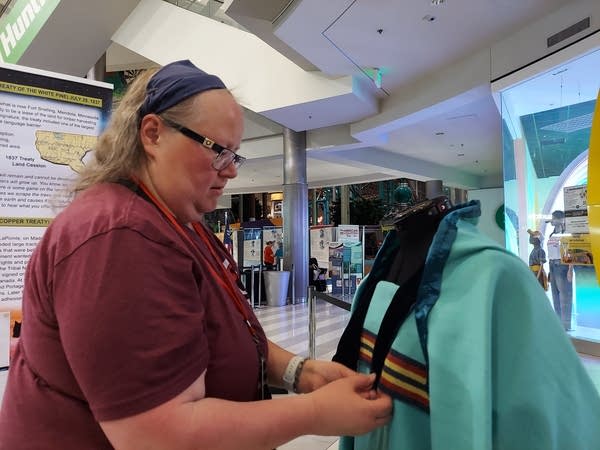
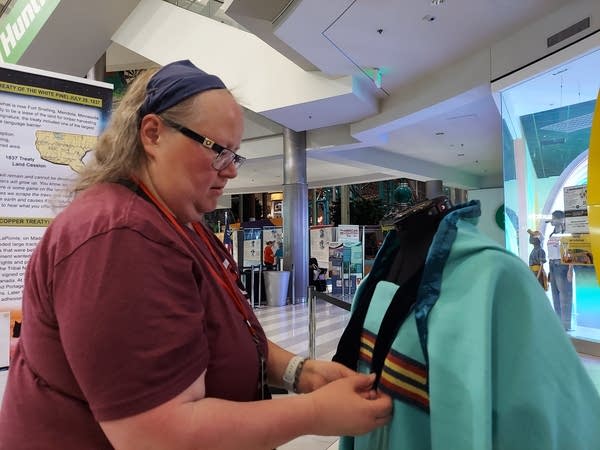
Michele Hakala-Beeksma will walk the runway this weekend at the Mall of America’s celebration of 250 years since the signing of the Declaration of Independence in a dress design that predates the country by generations.
Hakala-Beeksma will model three dresses she made herself, each from a different era of Ojibwe life, in a fashion show that is part of a 250th anniversary event hosted by the Dakota County Historical Society.
"If we don't go there, if there isn't any sort of Native content represented, that would almost feel like exclusion or being ignored," she said. "So that was really sort of an impetus in my heart. I was like, well, we need to have a place there."
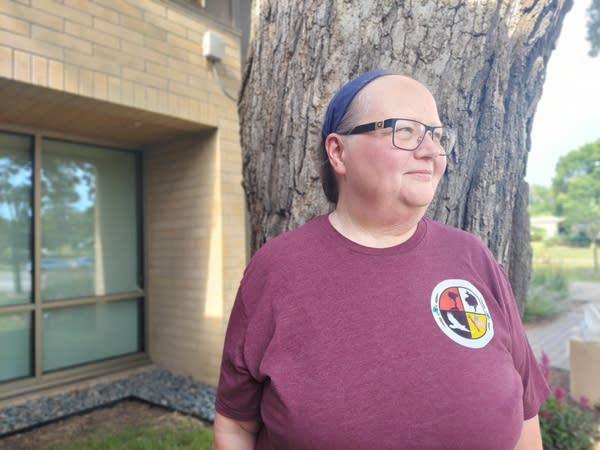
Hakala-Beeksma is a member of the Grand Portage Band of Lake Superior Chippewa and works with the 1854 Treaty Authority.
As an Indigenous person, she taking part in the event was important.
"It's a shared history," Hakala-Beeksma said. "We've been moving forward through time, through these past 250 years, and we're going to continue to move forward through time, and our histories are intertwined."
The 250th anniversary marks the founding of a country, but for the Ojibwe, Dakota and Ho-Chunk nations of this region, 1776 is a late date in a much older story. By bringing treaties and three eras of Ojibwe dress into the celebration, Hakala-Beeksma is insisting that the people who were here first are not a prologue to Minnesota's history but a living part of it.
History on the runway
The fashion show grew out of an earlier event. Matt Carter, executive director of the Dakota County Historical Society, said the society staged one during its World War I commemoration, which drew more attention.
"The most [people] that we saw, where people congregated and just sat and watched and tried to learn and take everything in, was when we did our fashion show," Carter said.
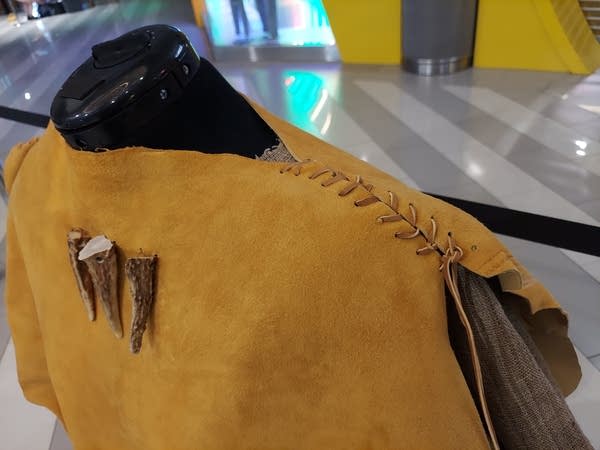
She said the hide dress was the one she least expected to love.
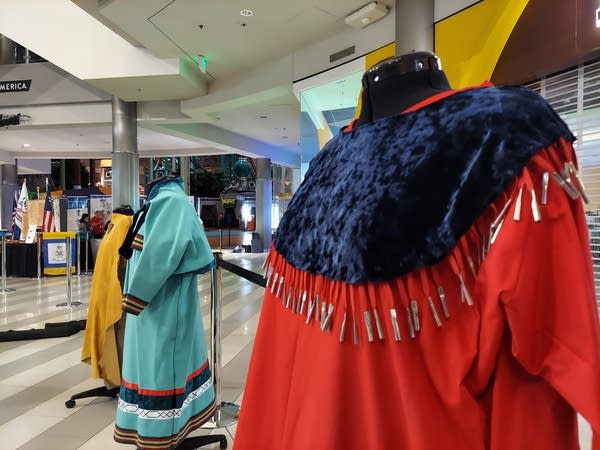
"But having to look into it and thinking about what their life was like during those times, that was very enlightening,” she said. “Just thinking about, how did they know to use the nettle plant to make the fibers and to weave and how much work had to go into it just to make something to wear."
Hakala-Beeksma's home in Grand Portage, in the far northeastern corner of the state, was a crossroads of the fur trade long before it was part of Minnesota.
She serves on the American Indian Advisory Committee of the St. Louis County Historical Society, which holds a collection of paintings of Ojibwe women by the Eastman Johnson made around 1865. She based her strap dress in part on one of those paintings.
"They aren't pictured as being weak or subservient. They're pictured as being capable," she said.
Johnson’s portrait of an Ojibwe woman named Notin e Garbowik—translated as Standing Wind Woman—wearing an ornate strap dress made of silk ribbon and trade blankets inspired Hakala –Beeksma.
"She's a woman of influence and prominence and making decisions and dealing with the men,” Hakala-Beeksma said. She isn't there to be looked at. She means business."
Power and Autonomy
Bruce White, a historian and anthropologist who has worked on treaty cases and fur trade research with tribal nations, said early accounts badly misjudged Ojibwe women’s roles in the economy of the era.
"When I was starting out there were many people who said that the trade victimized Native women, or Native women had no role, no role of autonomy," White said. "But the more I read about it, the more I realized that their autonomy, their power, came through food, through all the ricing that they did, and even that people didn't seem to understand."
In 1776, as the colonies to the east declared independence, Ojibwe women in the western Great Lakes were producers and consumers in the fur trade. Women helped shape the trade through their work harvesting wild rice or trading for specific goods.
What is now Minnesota looked almost nothing like the founding story many read in their grade school social studies texts, White said. White described the region then as a homeland of Dakota and Ojibwe communities, with French and British traders as the main European presence and no Americans to speak of.
In the letters of French-speaking traders, the colonists revolving against the British in Boston were simply "les Bostonnais," the Bostoners, a distant disturbance rather than the story of a nation's founding.
Here all along
That longer view is why the Dakota County Historical Society chose to push the timeframe of its exhibits beyond 1776. Carter said including Native people was essential to how the society approached the anniversary and the history is not his alone to tell.
"As a non-Indigenous person, I can learn about it in the history books," Carter said. "But it didn't impact my family members as losing their land or being pushed off their land into a reservation space. [Indigenous people] can bring that personal connection to it, because it was their family and their ancestors that were directly impacted."
Hakala-Beeksma plans to table with the 1854 Treaty Authority’s exhibit, "Sovereign Nations: Discovering the Treaty Story of Minnesota's Indigenous Peoples." The organization implements the hunting, fishing and gathering rights of the Grand Portage and Bois Forte bands reserved in the 1854 Treaty of La Pointe.
For Hakala-Beeksma, treaties are not moldering documents of afterthoughts to the state of Minnesota’s founding. She said that they are the reason the state exists at all.
"The whole reason you're able to have title to a piece of land in Minnesota is because at some point a treaty was made," she said. "Without that, all that goes away."
The dresses will also be on display throughout the weekend. The first fashion show begins noon Sunday with a second runway show at 2 p.m.