As they compete for the GOP nomination in an August primary, Minnesota's Republican governor candidates are promising to slash state spending. They’ve committed to hefty tax cuts, too.
With financial constraints and, for now, a closely divided Legislature, those budget-related ambitions could be easier said than done.
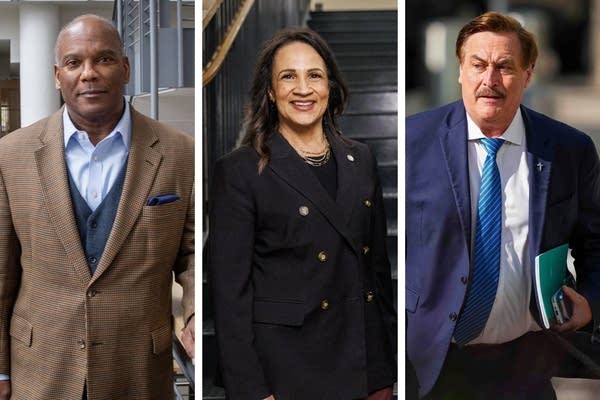
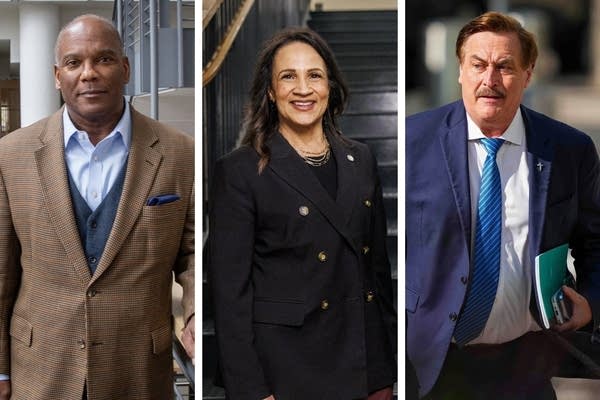
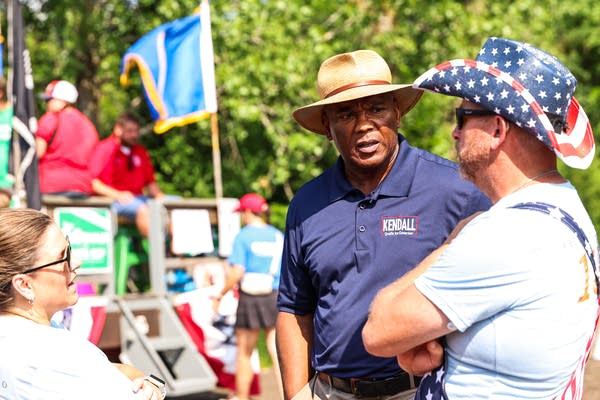
Not long after former healthcare executive Kendall Qualls locked down the Republican Party’s endorsement for governor, he pledged a massive tax cut if he wins the race.
“Under my administration, we’ll deliver a $9 billion fraud rebate,” Qualls said in a June campaign video, citing a former federal prosecutor’s figure about potential fraud over almost a decade. Criminal cases so far have not alleged that level of loss.
In explaining his plan, Qualls told MPR News that the tax cut would come in parts — rebates in each year of a two-year state budget. Qualls said he would pay for it by making vast spending cuts and seeking other cost savings.
“We're looking at a 12 percent budget decrease across the board, and you could manage that with little to no impact at all when you think about operating state budgets,” he said.
Minnesota’s current two-year budget is about $71 billion, with a potential deficit brewing because of a mismatch in revenue and spending.
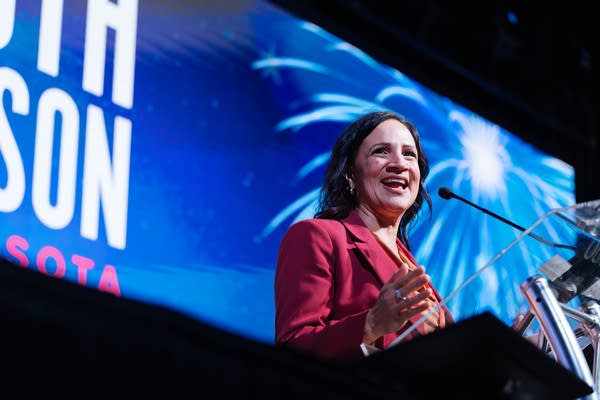
Qualls isn’t alone in saying he’d cut state spending. Republican House Speaker Lisa Demuth said she’d do it, too — and stresses she has already done it as part of negotiations in the narrowly split Legislature.
“When we set the budget going forward, we reduced state spending by $5 billion,” Demuth said at a recent campaign press conference at the Capitol. “We look forward to doing even more.”
Minnesota’s overall budget size did fall between the budget before she became speaker and the one after. Some of that resulted from the expiration of one-time spending made when DFL lawmakers had a sizable but mostly temporary surplus in the prior budget.
Demuth said there are other areas that could be pared back.
“The first way we will do that is ending fraud and cutting back and right-sizing the government,” Demuth said.
She contends that too many state employees have been added under Gov. Tim Walz’s administration.
“There's been an explosion of new FTEs and growth within government in a way that Minnesotans and their family budgets have not experienced, and we look forward to doing further reductions as appropriate,” she said.
Her campaign website says she’d deliver income tax cuts, exempt Social Security benefits from taxes and lower vehicle registration fees along the way.
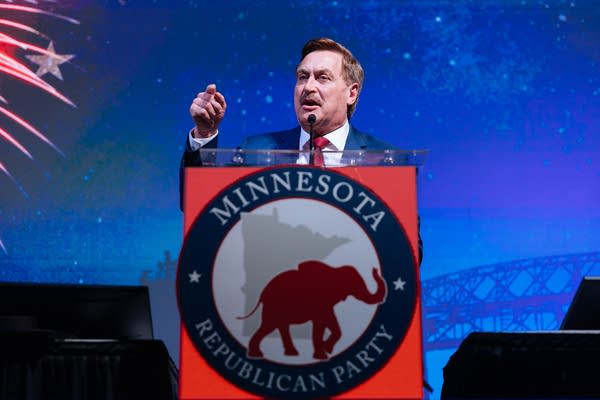
MyPillow CEO Mike Lindell said he’s working on a budget proposal that would streamline state spending. In an interview, he said he would size up programs one-by-one and turn to the private sector for more help funding them.
Lindell also said he’d bring in a state department of government efficiency. He’s modeling it after the DOGE project put in place when President Donald Trump returned to the White House.
"I want to make sure the people that are entitled to it, that need the funds, that need the help, get the help, but it's the right help, and it gets to the root of the problem, rather than just enabling,” Lindell said. “Or a program that just doesn't end, and you don't help the person, you know, the people that need the help.”
He isn’t committing to a firm number in cuts. The former cocaine addict who has since worked in addiction recovery programs said some state programs might need more funding, not less.
“I'm not just going to be a politician that says, ‘I'm going to cut spending, so you're going to save on your taxes,’” Lindell said. “This is all it is like a huge business. You can't hurt someone over here to gain over here.”
Democrats say voters deserve specific details about what the GOP-set cut goals would mean.
The Alliance for a Better Minnesota, a Democratic-aligned group that has traditionally been a big player in races for governor, used the Qualls comments about across-the-board cuts as an opening to connect the GOP candidates to healthcare scaleback approved under Trump.
“What programs is Qualls planning to cut, and how will this affect our families?” asked Marissa Luna, the alliance’s executive director.
The campaign for Amy Klobuchar, a current U.S. senator and the likely DFL nominee for governor, pointed to her plans to make government “more effective, innovative and accountable.” She put out a plan in May to taken on fraud and perform a top-to-bottom audit of state programs to end those that are duplicative or ineffective. But, the campaign said in a written statement, that she would put money toward raising achievement in schools and easing costs of healthcare and housing.
Officials who helped craft previous state budgets say it’s easier to make campaign promises about spending cuts than it is to make them stick.
“It's hard work, and that's why being governor and leading agencies is tough stuff,” said Jim Schowalter, who served in state budget roles under Govs. Tim Pawlenty, Mark Dayton and Tim Walz. “The first idea may make some sense, and it may sound good, but then you start to understand that there's complications or impacts, or there's real people losing out on a decision.”
Tom Hanson, a former commissioner of Minnesota Management and Budget under Pawlenty, said budget cuts are challenging, especially when they’re not being made to fill a budget hole.
“It's pretty tough to find money to cut without directly impacting something that somebody gets,” Hanson said. “You're essentially showing that, well, instead of spending money on A, B and C, I'm going to spend it on D, E, and F. And you’ve got to make the case, and that isn't always easy.”
He said that boils down to making a successful pitch to state lawmakers — who would need to pass a budget — and to the public.
Hanson said there’s a new factor at play in budget debates this time around: fraud. And that might make it easier to pitch Minnesotans on potential cuts.
“Nobody likes to pay money into something that isn't being used properly,” Hanson said. “I think that's a dynamic that we have not seen in budgeting.”
MPR News correspondent Peter Cox contributed to this report.