A Dietitian Shares 10 Fruit and Vegetable Peels You Actually Should Eat


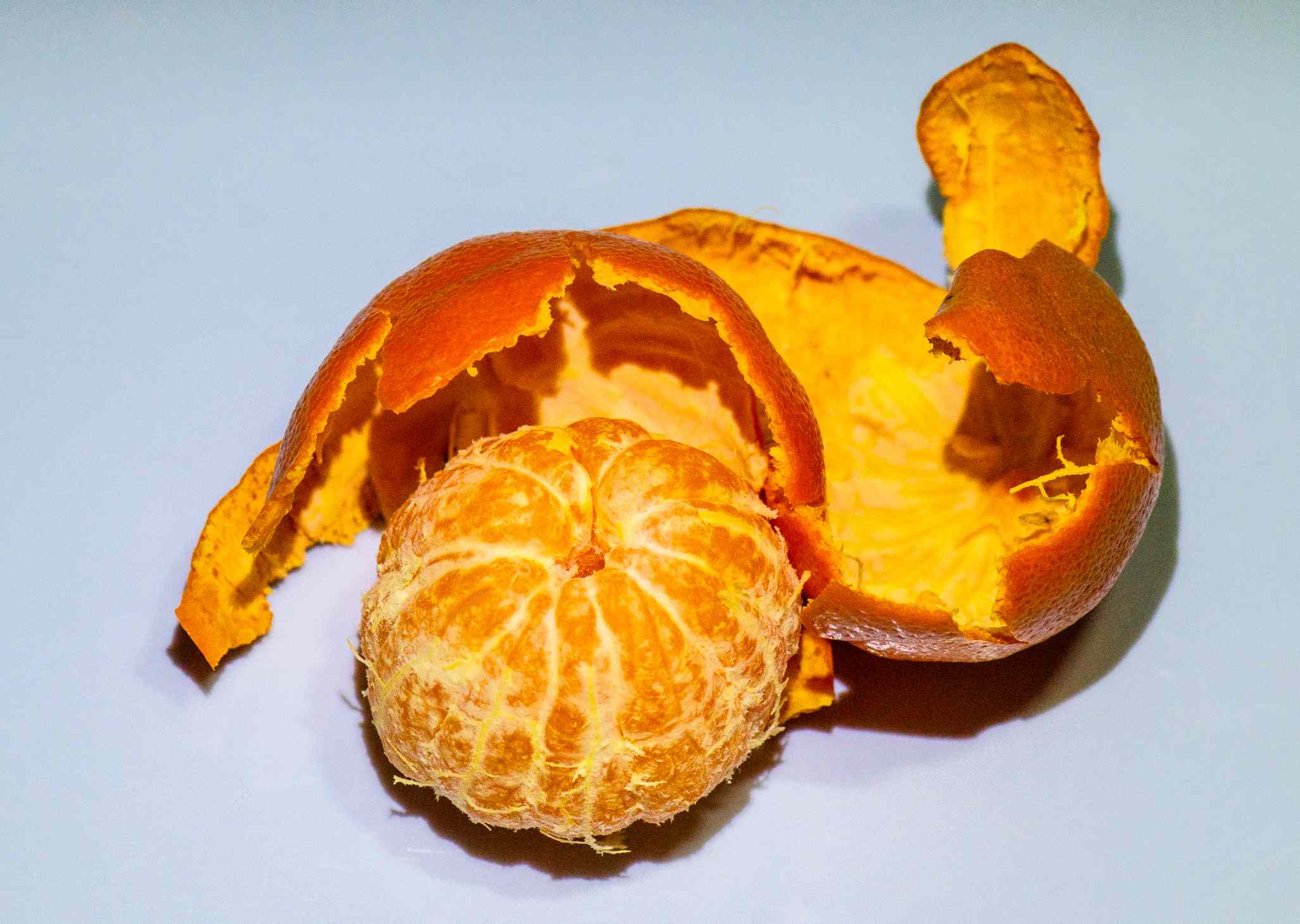
Orange peels are rich in fiber and antioxidants.Credit: Nancybelle Gonzaga Villarroya / Getty Images
Orange peels are rich in fiber and antioxidants.
Credit: Nancybelle Gonzaga Villarroya / Getty Images
  • Many fruit and vegetable skins contain more fiber, vitamins, and antioxidants than the flesh alone.
  • Leaving the skin on produce can support digestion, fullness, and steadier blood sugar levels.
  • Always wash produce well before eating the skin to reduce dirt, bacteria, and pesticide residue.

Many people throw away fruit and vegetable skins, but those outer layers can be full of nutrients. Eating produce with the skin on can help you get more fiber, vitamins, minerals, and beneficial plant compounds. Here are some of the best fruit and vegetable skins you can safely eat.

1. Apple

Credit: Alena Bogdanova / Getty Images

Apple skins are safe to eat and contain much of the fruit’s fiber. Keeping the skin on can nearly double the fiber compared to peeled apples. Fiber supports digestion and helps you feel full longer, which may support weight management.

The peel also contains antioxidants, including quercetin. Antioxidants help protect cells from damage that can contribute to chronic disease. Quercetin may help limit the growth of harmful bacteria in the digestive tract, which can reduce inflammation and support gut health.

2. Kiwi

Credit: Photo by Cathy Scola / Getty Images

Eating kiwi fruit with the skin on adds extra fiber and antioxidants. Research suggests that eating gold kiwi with the skin on can increase fiber intake by about 50% compared to eating the flesh alone.

The skin also contains vitamins C and E, which support immune health and help protect cells from damage. If the fuzzy texture is off-putting, rubbing the skin with a towel or choosing gold kiwi can make it easier to eat.

3. Peach

Credit: Inna Vostrikova / Getty Images

Peaches are a good source of vitamins A and C, fiber, and antioxidants. Much of the fiber and antioxidants are found in the soft, fuzzy skin. Peach skin contains chlorogenic acid, which has antioxidant and anti-inflammatory effects and may reduce blood pressure and cholesterol levels.

4. Potato

Credit: Caterina Oltean / Getty Images

Potato skins contain many important nutrients and antioxidant compounds. Keeping the skin on a baked potato adds about 1.5 grams more fiber, which can help slow how quickly your body digests the carbohydrates, supporting steadier blood sugar levels.

Compared to a peeled potato, a baked potato with the skin provides over three times more iron and about 35% more potassium. Many people do not get enough iron and potassium in their diets.

5. Watermelon

Credit: semenovp / Getty Images

Watermelon rind is often thrown away, but it is safe to eat and contains fiber and citrulline. Citrulline is an amino acid that helps support blood flow and heart health.

Most people eat the white rind between the watermelon’s flesh and outer peel. It’s firm, so it’s usually cooked or pickled, but it can also be blended into smoothies or added to stir-fries for extra nutrients.

6. Orange

Credit: EyeEm Mobile GmbH / Getty Images

Orange peels are edible but very bitter when eaten raw, so they’re usually used as zest in recipes rather than eaten in large amounts. Even a small amount of orange peel is a concentrated source of vitamin C, providing about 9% of your daily needs in just 1 tablespoon.

The peel is also rich in fiber and antioxidants, including flavonoids and a compound called limonene. Limonene is a natural plant compound that gives citrus its smell and has antioxidant and anti-inflammatory properties. While more human research is needed, some studies suggest it may help protect brain cells and support healthy aging.

7. Banana

Credit: Vlad Serbanescu / Getty Images

Banana peels are edible, though they’re less commonly eaten than the fruit inside. The peel contains fiber, potassium, and antioxidants, including carotenoids and flavonoids. These compounds may help protect cells from damage and support gut health. Many of these antioxidants increase as the banana ripens.

Banana peels also contain tryptophan, an amino acid the body uses to make serotonin, a chemical involved in mood and sleep.

8. Grapes

Credit: Ali Majdfar / Getty Images

Grape skins are rich in fiber and a range of antioxidants. Red grape skins are especially high in resveratrol, a plant compound that has been studied for its potential to help lower the risk of heart disease and some cancers. Limited research also suggests resveratrol may promote weight management and blood sugar control, though more human studies are needed.

9. Carrots

Credit: deepblue4you / Getty Images

Carrot skins are edible and nutrient-dense. Studies show the peel contains more minerals and antioxidants than the inner root, including beta-carotene and chlorogenic acid.

The body converts beta-carotene into vitamin A, which supports healthy vision, the immune system, and skin health.

Research also suggests that juicing or cooking whole carrots can help break down plant cell walls, which may make beta-carotene easier for the body to absorb.

10. Onion

Credit: ma-no / Getty Images

Onion skins are often thrown away, but they contain fiber and antioxidant compounds. Red onion skins are especially rich in anthocyanins, which may help reduce inflammation and support heart, liver, and brain health.

Because onion skins are tough, they’re best used during cooking, such as in soups, stews, or homemade stock, rather than eaten raw. They can also be dried and ground into a powder to add flavor and nutrients to dishes.

How to Safely Eat Fruits and Vegetable Skins

Eating fruits and vegetables with the skin on can boost nutrition. However, the outer surface can also carry dirt, bacteria, and pesticide residue. Rinsing produce properly helps reduce these contaminants.

Here are a few tips to follow to safely eat fruit and vegetables with the peel:

  • Rinse produce under running water right before eating or cutting.
  • Rub produce with your hands, or scrub firm skins from potatoes or carrots with a clean produce brush.
  • Wash produce even if you plan to peel it, since germs can transfer during cutting.
  • Avoid washing produce with soap or bleach.
  • Cut away bruised or damaged areas before eating.

Some produce, such as apples, grapes, peaches, and potatoes, is more likely to hold pesticide residue on the skin. Washing thoroughly or choosing organic options for these foods may help reduce exposure.

Is It Better to Wash Produce With Vinegar or Baking Soda?

Soaking produce in water is safe and effective. Using baking soda or vinegar may help remove a little more residue, but it is not necessary. The most important thing is to wash fruits and vegetables before eating them, no matter which method you use.




Source link

Leave a Reply

Subscribe to Our Newsletter

Get our latest articles delivered straight to your inbox. No spam, we promise.

Recent Reviews


UFT vs Selenium – Table of Content

What is selenium?

Selenium is an open source tool that made a sensation when this arrived in the business sector. It’s a free software with all the great features and was therefore able to quickly gain market share where QTP was a figurehead. Selenium provides various functions and is premised on larger-scale java scripting.

Become a master of Selenium by going through this HKR Selenium Training!

Why selenium?

Selenium facilitates testers to write the code to write the script in one operating system and to run the same test scripts on multiple browser platforms. WebDriver is now becoming part of the W3C standard for all browsers, thus designing browsers that will obviously support Selenium.

The important feature of this test automation tool is that it enables testers to test user experience modules, provides a wide variety of test options, results were compared and finally verifies whether or not they are consistent with the expected application behavior. Selenium’s “SENDKEYS” method equates test scripts written in different languages into Selenium in an accurate manner.

Selenium is considered as an important tool because of its attractive benefits such as transparency, platform independence, fosters continuous integration efforts, reduces the turnaround time and can be easily integrated with other automation tools as well.

Acquire Selenium with Ruby certification by enrolling in the HKR Selenium with Ruby Training program in Hyderabad!

UFT Training

  • Master Your Craft
  • Lifetime LMS & Faculty Access
  • 24/7 online expert support
  • Real-world & Project Based Learning

What is UFT?

It is one of most major trading players on the market. It primarily uses VB Scripting as its scripting language. It’s very simple to use and packed with advanced features. It uses the Object Repository to identify and capture objects. It can be easily integrated with many other automation tools, such as the Quality Center, and can update the results.

Why UFT?

UFT One/QTP is a Micro Focus automated testing testing tool that uses computerized analysis to assess glitches in a test application.UFT One is mainly used only for functional testing, regression and service testing. Using UFT One, you can optimize user behavior on a web-based or client-based software program and test and recognize bugs on the same actions for different users, different data sets, different Windows operating systems and/or different browsers.

UFT One is among the most popular commercial automation testing tools available in the market today. It is recognized for its simplicity of use and assistance by the vendor and a huge automation tester community. Due to this reason, qualified UFT One experts have always been in demand.

Brief History of Selenium

Jason Huggins developed Selenium in 2004 in Chicago. He was working at Thoughtworks as an Engineer on web app testing. Using JavaScript, Jason developed a program for testing. After using it, he realized the faults in manual testing. He named it JavaScriptTestRunner initially, but after that, he renamed it Selenium core and made it open source.

But still, there were some issues with using it. If someone uses JavaScript with a different domain name, it is forbidden to do so. For this, testers must install the Selenium Core and Web Servers, including web app testing that belongs to the same domain. Thus, another Engineer from ThoughtWorks, Paul Hammant, developed a Selenium Remote Control (RC) solution. Later, two other components, Selenium Grid and Selenium IDE, were created by two other professionals in 2006.

Brief History of Selenium

Further, in 2008 the core team of Selenium automation testing combined Selenium RC and Web Driver and brought Selenium 2. After many years changes & improvements took place in it, and it paved the way to release Selenium 3. 

Later, after a few years, Selenium became an open-source tool and has become a more powerful tool in the market. Many companies use Selenium for web automation testing of various apps. It makes web testing easier and faster.

Career Aspects 

Many organizations, especially those which are service-based, use Selenium which is now a popular open-source tool. Many companies use it for web and application testing. It is highly adaptable due to its flexibility to integrate with major programming languages. Further, there is good growth for Selenium in the future, and there are many job opportunities in this field. It is easy to learn and practice for everyone interested in web automation testing.

Brief History of UFT 

Mercury Interactive initially developed UFT in 1998, and its first version was Astra QuickTest. But later, in 2006, it was acquired by HP, and it became HP QTP. Later, in 2011, HP combined the two tools, “HP Service Test” and “HP QuickTest Professional,” and released a new device with the name “HP UFT 11.5” (Unified Functional Testing). Then, in 2016 was completely sold to another company Micro Focus which is managing and supporting UFT.

Career Aspects

UFT is a more powerful and useful tool in comparison to Selenium. Due to its huge license cost, many business entities still need to be ready to adopt this tool for automation. Moreover, UFT integrates with many tools, mostly paid tools. They are reducing their demand in the market.
For beginners in Automation, UFT is not the right fit to learn as there are only a few job opportunities for freshers. Further, it offers a free trial of 60 days, after which you need to buy the tool for further usage. It is a major drawback here. Also, there needs to be more information available on UFT, which makes it difficult to learn in-depth.

If you want to Explore more about Selenium? then read our updated article – Selenium Tutorial

Software Testings, uft-vs-selenium-description-0, Software Testings, uft-vs-selenium-description-2

Subscribe to our YouTube channel to get new updates..!

Comparison between Selenium and UFT:

Here we are going to discuss the key differences between UFT and selenium in detail.

Environment virtual support:

UFT: Deploy UFT to provide Citrix, AWS, and Azure virtual worlds, or run web and mobile tests from Docker containers.

selenium: It can also be integrated with those environments as well.

Software type:

UFT: UFT is a desktop based application.

Selenium: It is a s et of API’s

Cost:

UFT: It is a paid version, you need to purchase the license in order to use it.

Selenium: Where as selenium is an open source and free tool where you need to download and use it.

Application Type:

UFT: It supports web, mobile, API, hybrid, RPA, and enterprise apps.

Selenium: Selenium will only be used for web-based applications. It is a big downside of selenium over QTP.

Application Languages:

UFT: UFT could be used to test the functionality, the service layer and the database layer for all three layers of the application. 

Selenium: Selenium is only used to test the front end or the interface layer.

Supported Languages and Browsers:

UFT: It supports visual basic script language and chrome, firefox, safari and IE browsers.

Selenium: It supports java, python, ruby, perl PHP, javascript languages, and safari, firefox, chrome,IE, opera , headless browsers, etc.

Frequently asked Selenium Interview Questions and Answers !!

Operating systems and IDE:

UFT: Supports microsoft windows and comes with builtin UFT IDE

Selenium: Supports microsoft windows, apple OS X and linux, and comes with eclipse, intellij and other IDe that are supported by Java.

Supported technology:

UFT: Supports almost every significant software application and environment, such as SAP, Oracle, Salesforce, mainframes, embedded frameworks, headless browsers, and more.

Selenium: Selenium is struggling while automating SAP, Salesforce, mainframes applications.

Required coding skills:

UFT: You needed less programming knowledge as it provides keyword-driven testing that streamlines test creation and maintenance. Acquisition flows from the application screens and utilize UFT’s robust recording/replay capture technology.

Selenium: You need to have a good knowledge of programming language. For each Selenium binding, you need to know the programming language.

Test execution performance:

UFT: It needs more system resources. It can operate on Windows VM that uses more resources and needs more maintenance.

Selenium: Selenium requires less system resources and can be used in Windows or Linux VM applications. Linux VM is lightweight compared to Windows VM.

Tools integration:

UFT: Can be integrated with limited tools and mostly that are paid tools only

Selenium: Can be integrated with paid tools very easily.

Test reports:

UFT: Test reports are generated by default.

Selenium: For test reports these are needs to be integrated with other tools

Career Growth:

UFT: UFT offers less jobs, limited scope for expansion

Selenium: Selenium comes with more scope, more jobs in future as well.

Cost

UFT: HP UFT is a license-based testing tool that offers a trial period of 60 days to its new users. But after that, you need to buy the license, which costs much higher.

Selenium: Selenium has a good market share compared to HP UFT, an open-source tool. Many enterprises prefer to use it to manipulate the Selenium architecture as needed. Also, they can expect much better performance while conducting tests.

Join our Selenium Training In Kolkata today and enhance your skills to new heights!

UFT Training

Weekday / Weekend Batches

Conclusion

So we’ve seen so many discrepancies between UFT and Selenium. The main key driver is the automation cost. If you’ve a budget plan and you can manage QTP, it’s best because it has various characteristics. If your project has a lower budget, go to Selenium, but you need to make more effort.

Selenium is limited to the web page. If your test cases need to communicate with your desktop, such as uploading files, download files a file and checking, etc., Selenium may not function reliably in those instances, while UFT can easily streamline those contexts. Integrating Selenium with Test Management Tools is no easier than UFT. Selenium needs to be integrated with various reporting tools and managing.Selenium needs to be incorporated with various tools for reporting and managing data that are accessible in UFT by default. UFT scripts are going to be more stable than Selenium. UFT is rich in performance available to Selenium.

With the help of disitivcitve feature of UFT it can easily reduce the amount resources need in writing the scripts whereas selenium requires more resources to write lines of code.But you’re going to get less help available on UFT’s public online forums, but it has proper support as it’s a paid tool. 

Related Articles:


Source link