Adversity and Conflicts — Firm Finds Lawyer Moonlighting on Adverse Matter, Another Data Center Conflicts Dust Up


Hearing held in Simpson data center lawsuit” —

  • “While preliminary development plans for a proposed data center have gotten approval, legal challenges related to the project have come before a judge for the first time. A status conference took place Monday in Simpson Circuit Court regarding a lawsuit brought by TenKey LandCo I LLC, the company that owns the land in Franklin where the proposed data center would be built.”
  • “TenKey’s project visualizes three large facilities built on about 200 acres on Steele Road, dedicated to cloud-based data storage and infrastructure to cool the computers necessary for such an operation. The Franklin Planning and Zoning Commission recently approved a preliminary development plan, but the lawsuit concerns an ordinance passed late last year by Simpson County Fiscal Court that would require any data center operation within the county to obtain a conditional use permit.”
  • “TenKey has sued the fiscal court, essentially arguing that the county government has overstepped its authority in attempting to regulate a project that would be located within Franklin’s city limits and be subject to the city’s planning and zoning regulations. Attorney Kathryn Eckert is part of a group of TenKey representatives who have requested that Simpson Circuit Judge Mark Thurmond issue a judgment invalidating the fiscal court’s ordinance.”
  • Eckert also filed a motion to disqualify Smith and attorney Josie Keusch, both from the Bowling Green law firm English, Lucas, Priest and Owsley, from representing the fiscal court in the lawsuit. According to court filings, TenKey retained a different ELPO attorney, Michael Vitale, in November, to write a cease-and-desist letter to a Franklin resident who posted defamatory statements online concerning TenKey and data center project manager Adam DeSimone.”
  • “The resident removed those statements. With ELPO attorneys retained now to represent the fiscal court, Eckert argued that represents a conflict of interest, with TenKey representatives having already shared confidential information about the project with Vitale to help him draft the cease-and-desist letter.”
  • “Smith countered that TenKey retained ELPO last year just for the letter, and had performed no other services for the company and had no communication with them since November. Smith also argued that the cease-and-desist letter and the current lawsuit involving the legality of the fiscal court’s ordinance are ‘substantially different’ issues and ELPO had received no confidential information from TenKey.”

Texas Firm Sues Former Associate For Running Her Own Firm” —

  • “Texas law firm Hoover Slovacek LLP has sued a former associate in state court, accusing her of running her own law firm and representing clients adverse to her employer while still working there full-time.”
  • “Hoover Slovacek accused Nancy Truong of opening and operating Integrity Law Group PLLC without disclosing that to firm management, it said in its complaint, filed Monday. It also accuses her of representing parties adverse to the firm, including obtaining a judgment against one of its clients.”
  • “On March 6, 2025, Hoover Slovacek learned that Truong obtained a judgment against one of its clients using an email address associated with Integrity Law Group, the petition states. She also allegedly coerced a legal assistant to file legal documents on behalf of her own firm while being employed by Hoover Slovacek.”
  • “Hoover Slovacek is suing Truong for breach of contract, stating she broke her employment agreement by not complying with its policies, and that her actions hurt the firm, including through its payment of compensation and benefits.”
  • “The firm also alleges a breach of fiduciary duty, as Truong owed it fiduciary duties of loyalty and good faith, including the duty to disclose conflicts and to refrain from competing and acting adversely to the firm’s interests while employed there.”


Source link

Leave a Reply

Subscribe to Our Newsletter

Get our latest articles delivered straight to your inbox. No spam, we promise.

Recent Reviews


Lost a crucial document because your system crashed before you could save it? Worry no more! Microsoft Word has introduced an automatic save option that regularly backs up your work, so you’ll never lose your progress again.

Users will now be able to manage their Word documents without thinking about saving them manually. The new Microsoft Word update allows users to automatically save their documents to the cloud as soon as they start documenting any content piece.

Raul Munoz, the Senior Product Manager at Microsoft, has stated about the new feature, “We are modernizing the way files are created and stored in Word for Windows! Now you don’t have to worry about saving your documents: Anything new you create will be saved automatically to OneDrive or your preferred cloud destination.

Microsoft additionally hints at introducing similar features for Windows Excel and PowerPoint, which are now live.

How Does the Auto-save Feature Work?

The auto-save option can be accessed and used effectively with the compatible Word for Windows version. Let’s understand how the process works-

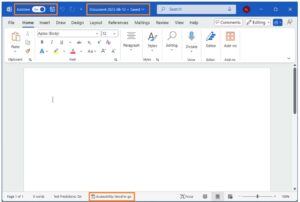
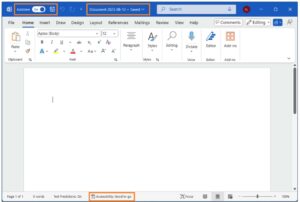
Primarily, users need to create a fresh document in Word and switch the AutoSave option on. Unlike the previous default document name- DocumentN, the autosave feature saves the files with the date.

Microsoft Word Update - Step 1

Source: Microsoft Tech Community

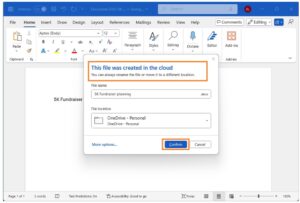
To change the name of the file and its location, users need to select Save or press Ctrl+S. After selecting the file name and location, press Confirm to save the changes.

Microsoft Word Update - Step 2

Source: Microsoft Tech Community

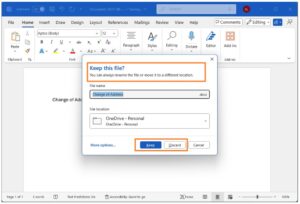
In case users try to close the file before it gets saved, a dialog displays on the screen asking whether they intend to Discard or Keep the file. If users try to close empty files, Word discards them without asking for confirmation.

Microsoft Word Update - Step 3

Source: Microsoft Tech Community

Availability of the Auto-Save Feature of Microsoft Word Update-

The AutoSave feature of Microsoft Word update is available to users with Version 2509 (Build 19221.20000) or newer. This advancement is set to enhance accessibility and address the challenge of lost files. Similar features have been introduced on Windows Excel and PowerPoint as well.

Advantages of the Latest Microsoft Word Update

Microsoft Word’s new auto-save feature will unlock several benefits for users. Alongside increased security, it offers flexible file management capabilities. Let us discuss other significant advantages-

Flexibility in File Storage and Control: Users can store and manage their files more flexibly than ever. As users are in charge of the documents, they can adjust file names and locations to save, organizing the files according to convenience.

Never Lose Your Files: The auto-save feature in Microsoft Word addresses the challenge of losing files due to not saving them manually. As soon as you start making progress in a file, it automatically gets saved.

Enhanced Security and Compliance: Files saved in your organization’s cloud servers already adhere to the set security guidelines and practices. Hence, users do not need to think about protecting the files separately.

Increased Accessibility: The auto-save feature enables enhanced accessibility of Word files. It can be accessed from diverse types of devices and platforms once shared, including Android, iOS, and web browsers. Changes made to the file will get synced on all devices and platforms.

Better Collaboration: The AutoSave feature has made collaboration within and across teams easier. Users can easily share the cloud file and initiate collaboration by making changes, adding comments, and resolving comments in real time.

Agentic AI Support: The Word files are now equipped with Copilot agentic AI support. Users can unlock AI-powered capabilities whenever they need to improve or update their documents. Nevertheless, to use Copilot in Word, a Microsoft 365 Copilot license is needed.

Additional Tips: 

  • Users will be able to easily change the location for new documents. Right-click on any cloud folder in the File section of Word, then select Set as Default Location to choose the location.
  • Users can manage how their files are created, whether in the traditional manner or automatically in the cloud, in the Save tab of Word Options, and opt in or opt out for Create new files in the cloud automatically.

Key Elements to Keep in Mind-

  • When a new Word session is started while another is running, the new file does not autosave. Hence, users need to close the previous file to enable the auto-save option for new files.
  • Users may sometimes encounter a delay in refreshing the recent files list while changing the name of a document.
  • If users disable the option for Show the Start screen when this application starts, remember that the first file they create will not autosave automatically.

Concluding Remarks!

Microsoft has been making significant advancements in its 365 Office platforms for better collaboration and enhanced productivity of diverse teams within an organization. With the integration of Copilot and flexible features, the firm is aiming to boost user experience and accessibility of the tools, including Word for Windows.

Learn about the major technological shifts and practices with KnowledgeNile!


FAQs:

1. What is the AutoSave feature in Microsoft Word?

Answer: The AutoSave feature in Microsoft Word lets users save their files automatically.

2. What is the purpose of AutoSave?

Answer: The AutoSave feature aims to reduce the challenges of data loss in unwanted circumstances, such as power shortages and device failures.

3. Where are AutoSave Word documents stored?

Answer: Automatically saved Word files are stored in cloud storage, like OneDrive.


Recommended For You:

Oracle identity cloud vs Microsoft Active Directory: Which to opt for and why?


Source link