Federal judge extends order requiring access to lawyers for Minnesota immigration detainees


A federal judge on Thursday extended her order requiring that federal authorities give immigrants detained in Minnesota access to attorneys immediately after they are arrested and before they are transferred out of state.

U.S. District Judge Nancy Brasel issued a preliminary injunction requiring that U.S. Immigration and Customs Enforcement must ensure that people detained at a holding facility in Minneapolis are entitled to reach lawyers quickly and to communicate with them privately while their cases proceed.

“Due process is not a game of keep-away,” the judge wrote. “ICE recognizes detainees’ right to access counsel in theory and written policy, but not in practice. Instead, it has placed obstacle after obstacle in front of detainees and their attorneys, blocking communication between clients and counsel.”

Brasel's decision followed a temporary restraining order she issued Feb. 12, when she said it appeared the federal agency had failed to plan for how to protect the constitutional rights of people detained during the Trump administration's immigration crackdown known as Operation Metro Surge.

“The Constitution does not permit the government to arrest thousands of individuals and then disregard their constitutional rights because it would be too challenging to honor those rights,” Brasel wrote in February.

The judge on Thursday extended her original order mandating that the government ensure that every noncitizen held at the Bishop Henry Whipple Federal Building be given the opportunity to contact an attorney within one hour of their detention.

She maintained her requirement that detained people must not be transferred out of state for the first 72 hours of their detention to ensure that they have time to reach attorneys, and that their lawyers have time to try to halt any transfers.

The Advocates for Human Rights filed the lawsuit in January, saying immigrants in detention have a fundamental right to access to counsel. It welcomed the decision, which will remain in place pending further proceedings.

“The ability to speak freely and privately to an attorney is crucial to due process and essential to protecting people from unjust rulings, coercive detention, and life-threatening deportation,” Michele Garnett McKenzie, executive director of the public interest law firm, said in a statement.

Officials with the Department of Homeland Security and ICE did not immediately respond to emails requesting comment on the ruling.

During a hearing last week, Jeffrey Dubner, an attorney for the plaintiffs, told the judge that the government's compliance with her temporary restraining order had been “fitful at best.”

The judge issued her initial order on the same day that border czar Tom Homan officially declared Operation Metro Surge over. Government officials say new detentions have subsided since then, as the number of ICE officers in Minnesota has receded from a high of around 3,000 to close to their previous levels of over 100. They say there are times now when there are no people detained at Whipple.

Government attorney Christina Parascandola told the judge that ICE had been complying with her order and that extending it with a preliminary injunction was unnecessary. She said conditions at Whipple have “returned to a more manageable pace” with the wind-down of the surge.

But local immigration attorneys testified that it was often impossible to reach their clients in Whipple, even when they went there in person, or to get information on whether their clients were there or had been transferred to larger facilities in Texas.

One attorney, Hanne Sandison, testified that when she and a few others were allowed inside under the judge's order to see conditions there, she was unable to get the phones to work. In the one place where the phones did work, she said, ICE officers would have been able to hear every word.




Source link

Leave a Reply

Subscribe to Our Newsletter

Get our latest articles delivered straight to your inbox. No spam, we promise.

Recent Reviews


Lost a crucial document because your system crashed before you could save it? Worry no more! Microsoft Word has introduced an automatic save option that regularly backs up your work, so you’ll never lose your progress again.

Users will now be able to manage their Word documents without thinking about saving them manually. The new Microsoft Word update allows users to automatically save their documents to the cloud as soon as they start documenting any content piece.

Raul Munoz, the Senior Product Manager at Microsoft, has stated about the new feature, “We are modernizing the way files are created and stored in Word for Windows! Now you don’t have to worry about saving your documents: Anything new you create will be saved automatically to OneDrive or your preferred cloud destination.

Microsoft additionally hints at introducing similar features for Windows Excel and PowerPoint, which are now live.

How Does the Auto-save Feature Work?

The auto-save option can be accessed and used effectively with the compatible Word for Windows version. Let’s understand how the process works-

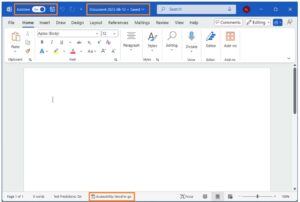
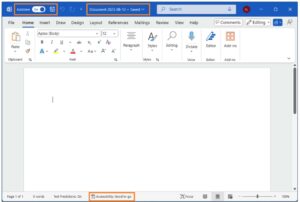
Primarily, users need to create a fresh document in Word and switch the AutoSave option on. Unlike the previous default document name- DocumentN, the autosave feature saves the files with the date.

Microsoft Word Update - Step 1

Source: Microsoft Tech Community

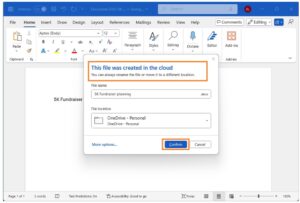
To change the name of the file and its location, users need to select Save or press Ctrl+S. After selecting the file name and location, press Confirm to save the changes.

Microsoft Word Update - Step 2

Source: Microsoft Tech Community

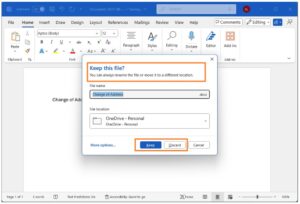
In case users try to close the file before it gets saved, a dialog displays on the screen asking whether they intend to Discard or Keep the file. If users try to close empty files, Word discards them without asking for confirmation.

Microsoft Word Update - Step 3

Source: Microsoft Tech Community

Availability of the Auto-Save Feature of Microsoft Word Update-

The AutoSave feature of Microsoft Word update is available to users with Version 2509 (Build 19221.20000) or newer. This advancement is set to enhance accessibility and address the challenge of lost files. Similar features have been introduced on Windows Excel and PowerPoint as well.

Advantages of the Latest Microsoft Word Update

Microsoft Word’s new auto-save feature will unlock several benefits for users. Alongside increased security, it offers flexible file management capabilities. Let us discuss other significant advantages-

Flexibility in File Storage and Control: Users can store and manage their files more flexibly than ever. As users are in charge of the documents, they can adjust file names and locations to save, organizing the files according to convenience.

Never Lose Your Files: The auto-save feature in Microsoft Word addresses the challenge of losing files due to not saving them manually. As soon as you start making progress in a file, it automatically gets saved.

Enhanced Security and Compliance: Files saved in your organization’s cloud servers already adhere to the set security guidelines and practices. Hence, users do not need to think about protecting the files separately.

Increased Accessibility: The auto-save feature enables enhanced accessibility of Word files. It can be accessed from diverse types of devices and platforms once shared, including Android, iOS, and web browsers. Changes made to the file will get synced on all devices and platforms.

Better Collaboration: The AutoSave feature has made collaboration within and across teams easier. Users can easily share the cloud file and initiate collaboration by making changes, adding comments, and resolving comments in real time.

Agentic AI Support: The Word files are now equipped with Copilot agentic AI support. Users can unlock AI-powered capabilities whenever they need to improve or update their documents. Nevertheless, to use Copilot in Word, a Microsoft 365 Copilot license is needed.

Additional Tips: 

  • Users will be able to easily change the location for new documents. Right-click on any cloud folder in the File section of Word, then select Set as Default Location to choose the location.
  • Users can manage how their files are created, whether in the traditional manner or automatically in the cloud, in the Save tab of Word Options, and opt in or opt out for Create new files in the cloud automatically.

Key Elements to Keep in Mind-

  • When a new Word session is started while another is running, the new file does not autosave. Hence, users need to close the previous file to enable the auto-save option for new files.
  • Users may sometimes encounter a delay in refreshing the recent files list while changing the name of a document.
  • If users disable the option for Show the Start screen when this application starts, remember that the first file they create will not autosave automatically.

Concluding Remarks!

Microsoft has been making significant advancements in its 365 Office platforms for better collaboration and enhanced productivity of diverse teams within an organization. With the integration of Copilot and flexible features, the firm is aiming to boost user experience and accessibility of the tools, including Word for Windows.

Learn about the major technological shifts and practices with KnowledgeNile!


FAQs:

1. What is the AutoSave feature in Microsoft Word?

Answer: The AutoSave feature in Microsoft Word lets users save their files automatically.

2. What is the purpose of AutoSave?

Answer: The AutoSave feature aims to reduce the challenges of data loss in unwanted circumstances, such as power shortages and device failures.

3. Where are AutoSave Word documents stored?

Answer: Automatically saved Word files are stored in cloud storage, like OneDrive.


Recommended For You:

Oracle identity cloud vs Microsoft Active Directory: Which to opt for and why?


Source link