How Startup Companies Create Buzz Around New Product Launch


Startup launches rarely fail because the product is bad; they fail because nobody is paying attention at the right moment. Creating buzz is less about “going viral” and more about stacking small, intentional signals—clear messaging, visible proof, and a launch plan that gives people a reason to talk. In this article, we will discuss how you can generate buzz for your new product launch.

When a startup treats awareness like a funnel (curiosity, credibility, action), it can earn attention without a massive ad budget. The goal is to make the right people think, “I should look,” and give them a path to do it.

Start With a Story People Can Repeat for Your New Product Launch

product launch

Before tactics, lock in the one-sentence “why” behind the product: what problem is being removed, for whom, and what’s different about the approach. Then build a simple narrative arc—the pain today, the turning point, and the better tomorrow—and repeat it everywhere. 

Convert that story into assets people can share: an elevator pitch, a short demo script, two customer-style quotes, and visuals that show outcomes rather than menus. If founders and teammates explain it differently, the market hears noise, so write a small message guide with the exact words to use for the problem, the audience, and the benefit.

Engineer Early Social Proof Before the Big Day

Buzz accelerates when outsiders validate the product, so create “proof moments” weeks before launch. Run a beta with a waiting list, a partner pilot, or a limited pre-order that makes demand visible. Ask early users to share tiny wins—screenshots, before-and-after results, or a 15-second clip—and make it easy by giving them a prompt and a place to post. 

Collect testimonials and objections at the same time, then turn them into a simple proof hub: a landing page with clear pricing, FAQs, short case snippets, and a demo that answers the top doubts in plain language. Bonus tip: seed a few honest reviews or expert quotes under embargo so they can publish on launch day.

Make the Launch Feel Like an Event, Not a Post

Treat launch week like programming, not a single announcement. Plan a sequence of small “drops”: a teaser, a behind-the-scenes build, a live demo, a customer spotlight, and a final launch offer with a clear deadline. Spread those moments across channels—email, LinkedIn, X, community groups, podcasts, niche newsletters—so you are not betting on one algorithm. 

Give supporters a share kit with prewritten captions, images, and a short video, then run a public feedback loop with fast replies, a visible changelog, and transparent shipping notes that prove the team is listening.

Small Business Coach: A Custom Carpentry Success Story

Pitch the Right People With a Clean Angle

Reporters and creators do not cover “new product” as a category; they cover timely stories, so lead with a clean angle. Tie the launch to a surprising data point, a contrarian insight, or a market shift that makes your product easier to navigate. 

Build a tight press package (one page, images, demo access, and three sharp bullets) and start with smaller, highly relevant outlets where audiences match your buyer. If you want a specialist to help shape those pitches and earn coverage efficiently, a digital PR agency like pr.digital positions itself as a modern, agile partner for brands that refuse to blend in.

Conclusion on Your New Product Launch

The most reliable buzz is earned, not hoped for. When startups combine a repeatable story, early proof, event-style programming, and a focused pitch list, attention becomes predictable. Track what earns saves, replies, and sign-ups, then refine the message and ship improvements quickly. A strong launch is really the first chapter of momentum you keep building.

google business page


Source link

Leave a Reply

Subscribe to Our Newsletter

Get our latest articles delivered straight to your inbox. No spam, we promise.

Recent Reviews


Lost a crucial document because your system crashed before you could save it? Worry no more! Microsoft Word has introduced an automatic save option that regularly backs up your work, so you’ll never lose your progress again.

Users will now be able to manage their Word documents without thinking about saving them manually. The new Microsoft Word update allows users to automatically save their documents to the cloud as soon as they start documenting any content piece.

Raul Munoz, the Senior Product Manager at Microsoft, has stated about the new feature, “We are modernizing the way files are created and stored in Word for Windows! Now you don’t have to worry about saving your documents: Anything new you create will be saved automatically to OneDrive or your preferred cloud destination.

Microsoft additionally hints at introducing similar features for Windows Excel and PowerPoint, which are now live.

How Does the Auto-save Feature Work?

The auto-save option can be accessed and used effectively with the compatible Word for Windows version. Let’s understand how the process works-

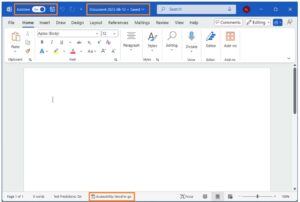
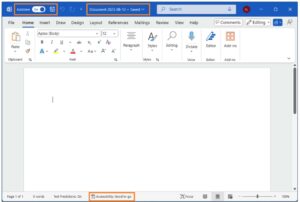
Primarily, users need to create a fresh document in Word and switch the AutoSave option on. Unlike the previous default document name- DocumentN, the autosave feature saves the files with the date.

Microsoft Word Update - Step 1

Source: Microsoft Tech Community

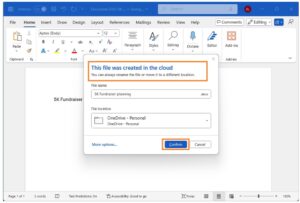
To change the name of the file and its location, users need to select Save or press Ctrl+S. After selecting the file name and location, press Confirm to save the changes.

Microsoft Word Update - Step 2

Source: Microsoft Tech Community

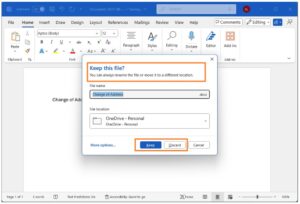
In case users try to close the file before it gets saved, a dialog displays on the screen asking whether they intend to Discard or Keep the file. If users try to close empty files, Word discards them without asking for confirmation.

Microsoft Word Update - Step 3

Source: Microsoft Tech Community

Availability of the Auto-Save Feature of Microsoft Word Update-

The AutoSave feature of Microsoft Word update is available to users with Version 2509 (Build 19221.20000) or newer. This advancement is set to enhance accessibility and address the challenge of lost files. Similar features have been introduced on Windows Excel and PowerPoint as well.

Advantages of the Latest Microsoft Word Update

Microsoft Word’s new auto-save feature will unlock several benefits for users. Alongside increased security, it offers flexible file management capabilities. Let us discuss other significant advantages-

Flexibility in File Storage and Control: Users can store and manage their files more flexibly than ever. As users are in charge of the documents, they can adjust file names and locations to save, organizing the files according to convenience.

Never Lose Your Files: The auto-save feature in Microsoft Word addresses the challenge of losing files due to not saving them manually. As soon as you start making progress in a file, it automatically gets saved.

Enhanced Security and Compliance: Files saved in your organization’s cloud servers already adhere to the set security guidelines and practices. Hence, users do not need to think about protecting the files separately.

Increased Accessibility: The auto-save feature enables enhanced accessibility of Word files. It can be accessed from diverse types of devices and platforms once shared, including Android, iOS, and web browsers. Changes made to the file will get synced on all devices and platforms.

Better Collaboration: The AutoSave feature has made collaboration within and across teams easier. Users can easily share the cloud file and initiate collaboration by making changes, adding comments, and resolving comments in real time.

Agentic AI Support: The Word files are now equipped with Copilot agentic AI support. Users can unlock AI-powered capabilities whenever they need to improve or update their documents. Nevertheless, to use Copilot in Word, a Microsoft 365 Copilot license is needed.

Additional Tips: 

  • Users will be able to easily change the location for new documents. Right-click on any cloud folder in the File section of Word, then select Set as Default Location to choose the location.
  • Users can manage how their files are created, whether in the traditional manner or automatically in the cloud, in the Save tab of Word Options, and opt in or opt out for Create new files in the cloud automatically.

Key Elements to Keep in Mind-

  • When a new Word session is started while another is running, the new file does not autosave. Hence, users need to close the previous file to enable the auto-save option for new files.
  • Users may sometimes encounter a delay in refreshing the recent files list while changing the name of a document.
  • If users disable the option for Show the Start screen when this application starts, remember that the first file they create will not autosave automatically.

Concluding Remarks!

Microsoft has been making significant advancements in its 365 Office platforms for better collaboration and enhanced productivity of diverse teams within an organization. With the integration of Copilot and flexible features, the firm is aiming to boost user experience and accessibility of the tools, including Word for Windows.

Learn about the major technological shifts and practices with KnowledgeNile!


FAQs:

1. What is the AutoSave feature in Microsoft Word?

Answer: The AutoSave feature in Microsoft Word lets users save their files automatically.

2. What is the purpose of AutoSave?

Answer: The AutoSave feature aims to reduce the challenges of data loss in unwanted circumstances, such as power shortages and device failures.

3. Where are AutoSave Word documents stored?

Answer: Automatically saved Word files are stored in cloud storage, like OneDrive.


Recommended For You:

Oracle identity cloud vs Microsoft Active Directory: Which to opt for and why?


Source link