How to Optimize WordPress for ChatGPT, Gemini & AI Overviews


Most WordPress owners still optimize for ten blue links. The traffic has already moved somewhere else. 

Someone asked ChatGPT for the best CRM for a small agency. Gemini quietly assembles a buying guide. Google answers a question inside an AI Overview before a single website loads. In all three cases, your ranking position barely matters. What matters is whether the engine trusts your page enough to quote it. 

That is a different game with different rules. And the sites winning it made a quiet shift months ago. 

Here is what it actually takes to optimize WordPress for AI search. The practical version, not theory. The stuff that decides whether a model picks your content or scrolls past it. 

One honest note first. Nobody can promise you a fixed slot inside an AI answer the way you might chase a keyword ranking. These systems are probabilistic. But the inputs they reward are knowable, and WordPress hands you more control over those inputs than almost any other platform, once it is set up right. A clean build matters more here than it ever did, which is why a lot of this work overlaps with proper WordPress Development Services rather than plugin tweaks alone. 

How AI search engines actually choose what to cite for WordPress

wordpress

Classic SEO ranks pages. Generative engines do something closer to sourcing. 

Ask ChatGPT Search or Gemini a question, and the model retrieves candidate passages, reads them, decides which ones are clear and trustworthy enough to build an answer on, then cites a few. So the unit of competition has changed. It is no longer the page. 

It is the passage. 

That single shift explains almost everything that follows. A model rewards content it can lift cleanly. A self-contained paragraph that answers one specific question, in plain language, without needing the three paragraphs above it for context, has a real edge. Vague intros and buried answers get skipped, because the engine cannot pull a confident sentence out of them. 

Three things consistently decide whether your WordPress content gets picked: 

  • Extractability. Can a machine pull a complete, accurate answer from one section without misreading it? 
  • Entity clarity. Does the model understand exactly what your page is about, who wrote it, and which brand it belongs to? 
  • Corroboration. Do other trusted sources repeat the same facts, so the model feels safe quoting yours? 

Hold those three in your head. Everything below is just execution against them. For the wider strategic picture across engines, this breakdown of the future of SEO across LLM, GEO, and AEO pairs nicely with the tactical steps here. 

Structured data that AI engines can actually use

Here is where most WordPress sites quietly lose. 

Structured data is how you tell a machine, in a language it never misreads, what your content represents. For AI search this is not optional polish. It is how engines resolve entities and trust authorship. A page with proper schema is easier to understand, easier to attribute, easier to cite. 

These are the types that pull real weight: 

Schema type  What it does for AI search  Where to use it 
Article + Author  Ties content to a named Person entity so the model has someone to attribute expertise to  Every blog post 
Organization  Defines your brand once, with logo and verified profiles, as the entity everything links back to  Sitewide 
FAQPage  Pre-formatted, self-contained answers that AI Overviews love to extract  Pages with genuine questions 
BreadcrumbList  Signals site hierarchy and topical structure  Sitewide navigation 

The Article and Author gap is the one I see most. Anonymous content struggles in AI search because the model has nobody to credit. Connect every post to a real, named author backed by a full Person entity. It ties straight into E-E-A-T. 

Now the catch. Most WordPress SEO plugins claim to output this automatically, but the defaults rarely link authors to full Person entities or fill out Organization properly. Don’t take the plugin’s word for it. Open the rendered page, run it through a structured data validator, and check what actually ships. The gap between what plugins promise and what they deliver is wide. 

And one rule you never break. Schema describes content that exists. Never mark up an answer, rating, or FAQ that isn’t visibly on the page. Both Google and the AI engines treat that as manipulation, and that is exactly the kind of shortcut that bites you a year later, not today. 

Writing content that LLMs can extract and quote

Good AI search content reads differently from older SEO copy. It is more direct, and it front-loads the answer. 

The pattern that works is simple: state the answer, then explain it. A model scanning your section should hit a clean, quotable sentence in the first line or two, before any background. If your answer lives in paragraph four, you have already handed the citation to a competitor who put theirs in paragraph one. 

A few habits that move the needle: 

  • Write answer-first sections. Open with a 40 to 60 word direct response under each question-style heading, then expand below it. That short block is what gets pulled into an AI Overview. 
  • Use real specifics. Models trust concrete detail far more than vague claims. “Improves performance” gets ignored. “Cut largest contentful paint from 4.1 seconds to 1.8 seconds after switching to a lightweight theme” gets remembered. Numbers, platform names, versions, timeframes. Specificity reads as expertise to people and machines alike. 
  • Keep questions and answers tight. If a heading asks something, the text right below answers that exact thing. Wandering off-topic mid-section wrecks extraction. 
  • Cover the whole question. AI engines favor pages that resolve the full query, including the follow-ups a reader would naturally ask next. Thin pages that answer half the question rarely get cited, because the model has to stitch sources together and it would rather find one that stands alone. 

This is where Answer Engine Optimization and Generative Engine Optimization stop being buzzwords and turn into formatting decisions. If that distinction still feels fuzzy, this GEO vs AEO vs SEO comparison lays out where each one applies. 

Technical WordPress setup for AI crawlers

AI engines can only cite what they can reach and render. WordPress makes this manageable, but a few technical points decide whether crawlers see your content cleanly. 

Start with crawler access, because this is where sites lose visibility without realizing it. Different engines send different bots, and a lot of WordPress installs block them by accident through aggressive security or firewall rules, then wonder why they never show up in AI results. 

Engine  Crawler to allow  Note 
ChatGPT Search  OAI-SearchBot  GPTBot handles broader collection 
Google AI Overviews  Googlebot  Powered by the standard Google index 
Gemini training  Google-Extended  Separate control, doesn’t affect normal indexing 
Perplexity  PerplexityBot  Check it isn’t firewall-blocked 

Crawler names shift fast, so verify these against current documentation before you finalize anything. Check your robots.txt and any security plugin rules against this list. 

Beyond access, three things matter: 

Make rendering simple. If your key content only appears after heavy JavaScript runs, some crawlers may not see it reliably. Server-rendered or statically delivered content is the safer bet. One more reason a clean build beats a plugin-heavy one. 

Keep it fast. Slow pages get crawled less and trusted less. Core Web Vitals, caching, image optimization, a lean theme. All of it feeds into how often and how deeply engines process your site. 

Consider an llms.txt file. This is an emerging proposal, not a settled standard, so treat it as a cheap experiment rather than a fix. The idea is a plain-text file pointing AI systems to your most important content. Adoption is uneven right now. Worth adding, not worth losing sleep over. 

If your stack is bloated with overlapping plugins, that is usually the first thing to clean up. The right AI plugins for WordPress can genuinely help with content structuring and schema. But more plugins is not the goal. Fewer, better ones are. 

Optimizing for ChatGPT, Gemini, and Google AI Overviews

The fundamentals carry across all three engines. The emphasis just shifts a little per platform. 

Engine  What it leans on most  Your priority 
Google AI Overviews  Its existing search index  Strong classic SEO, plus answer-first content and clean schema. If you rank well and your pages are extractable, you are most of the way there 
ChatGPT Search  Clear authorship, citations, corroborated facts  Make your author and brand entities unmistakable, and let OAI-SearchBot reach you 
Gemini  Entity clarity and Knowledge Graph presence  Keep brand info consistent everywhere, build strong internal topical clusters 

See the overlap? Clear entities, clean extraction, real authorship, fast pages. Optimize for those four and you are optimizing for all three engines at once. Chasing each one separately is mostly wasted effort. 

Building entity and topical authority for WordPress

wordpress

Citations follow trust. And trust is built across your whole site, not one page. 

Topical authority means covering a subject thoroughly enough that engines see you as a reliable source on it. One excellent post helps. A connected cluster of posts covering schema, content strategy, technical setup, and the platforms involved, all internally linked, signals genuine depth. That cluster is what convinces a model you actually know the topic. 

E-E-A-T sits underneath all of it: 

  • Real author bios with relevant credentials 
  • Accurate, current information 
  • Honest treatment of limitations 
  • Sources where claims need backing 

Those signals tell both Google and the AI engines that your content deserves to be repeated. In practice, that means a proper author archive, named contributors with linked profiles, and consistent organization details. The boring stuff. It compounds. 

AI search optimization checklist for WordPress

Treat this as your working pass. Most sites can knock out the high-impact items in a focused week. 

  1. Add Article and Person schema to every post, with named, credible authors. 

     2. Set up complete Organization schema once, with same As links to verified profiles. 

     3. Validate all structured data with a real validator, not just the plugin dashboard. 

     4. Rewrite key sections answer-first, with a clean 40 to 60 word response up top. 

     5. Replace vague claims with specific numbers, names, and timeframes. 

     6. Add genuine FAQ blocks with FAQPage schema where real questions exist. 

     7. Confirm robots.txt and security plugins are not blocking AI crawlers. 

     8. Reduce reliance on client-side rendering for core content. 

     9. Fix Core Web Vitals and trim plugin bloat. 

    10. Build internal links into topical clusters around your main subjects. 

    11. Keep brand and author information consistent everywhere. 

    12. Add an llms.txt file as a low-cost experiment. 

    13. Review quarterly, since AI search behavior is still shifting fast. 

Work top to bottom. The schema and content items return the most for the least effort. 

more than profit a client achievement of small business coach associates

FAQs 

Does optimizing WordPress for AI search hurt my normal Google rankings?  

No. The work overlaps heavily with strong traditional SEO. Cleaner structure, faster pages, better schema, and clearer authorship help both classic rankings and AI citations. You are reinforcing your foundation, not trading one for the other. 

Do I need to block AI crawlers to protect my content?  

That depends on your goals. Blocking GPTBot or Google-Extended limits training use but can also cut your visibility in AI search features. If you want to be cited, you generally want these crawlers in. Decide based on whether discovery or content protection matters more to you. 

Which schema matters most for AI Overviews and ChatGPT?  

Articles with a real Person author, Organization, and FAQPage carry the most weight. They help engines understand what your content is, who stands behind it, and which parts are directly quotable. 

Is llms.txt actually necessary right now?  

Not necessary. It is an emerging proposal with uneven adoption. Adding one is cheap and low-risk, so it is worth doing as an experiment, but it will not make or break your AI search visibility today. 

How often should I update an AI search strategy?  

Roughly quarterly. These engines, their crawlers, and their citation behavior are changing faster than traditional search ever did. A quick review every few months keeps you ahead of the shifts. 

CTA 

AI search rewards sites built clean from the ground up, with proper schema, fast rendering, and content structured for extraction. That is hard to retrofit onto a messy build. If you want a WordPress site engineered to get cited by ChatGPT, Gemini, and Google AI Overviews, you can hire WordPress developer talent at Elsner to handle the technical and structural work end to end.

google business page


Source link

Leave a Reply

Subscribe to Our Newsletter

Get our latest articles delivered straight to your inbox. No spam, we promise.

Recent Reviews


Major hotel companies have seen the value in investing in all-inclusive resorts in recent years, refreshing a formula that once felt tired. Thanks to their efforts, these properties routinely feature fresh, modern design, fantastic restaurants and curated experiences from snorkeling excursions to guided tours of historical sites, all for one reasonable price.

Now you can stay at fabulous all-inclusive resorts that are ideal for honeymooners, ones that are just for adults and many that are great for the whole family.

Hilton hasn’t hesitated to embrace the all-inclusive concept, opening a slew of all-inclusive hotels in Mexico and the Caribbean in the past few years, including the Hilton Cancun Mar Caribe All-Inclusive Resort in Mexico and Zemi Miches All‑Inclusive Resort, Curio Collection by Hilton in the Dominican Republic.

Related: The best Hilton hotels in the world

While Hilton’s all-inclusive portfolio is smaller than those of its competitors, its resorts pack a powerful, value-added punch. So, whether you’re a die-hard Hilton Honors member or a free agent just looking for a good deal, chances are there’s a Hilton all-inclusive for you.

Here are TPG’s favorite Hilton all-inclusive resorts to consider for your next warm-weather getaway.

Hilton Cancun Mar Caribe All-Inclusive Resort

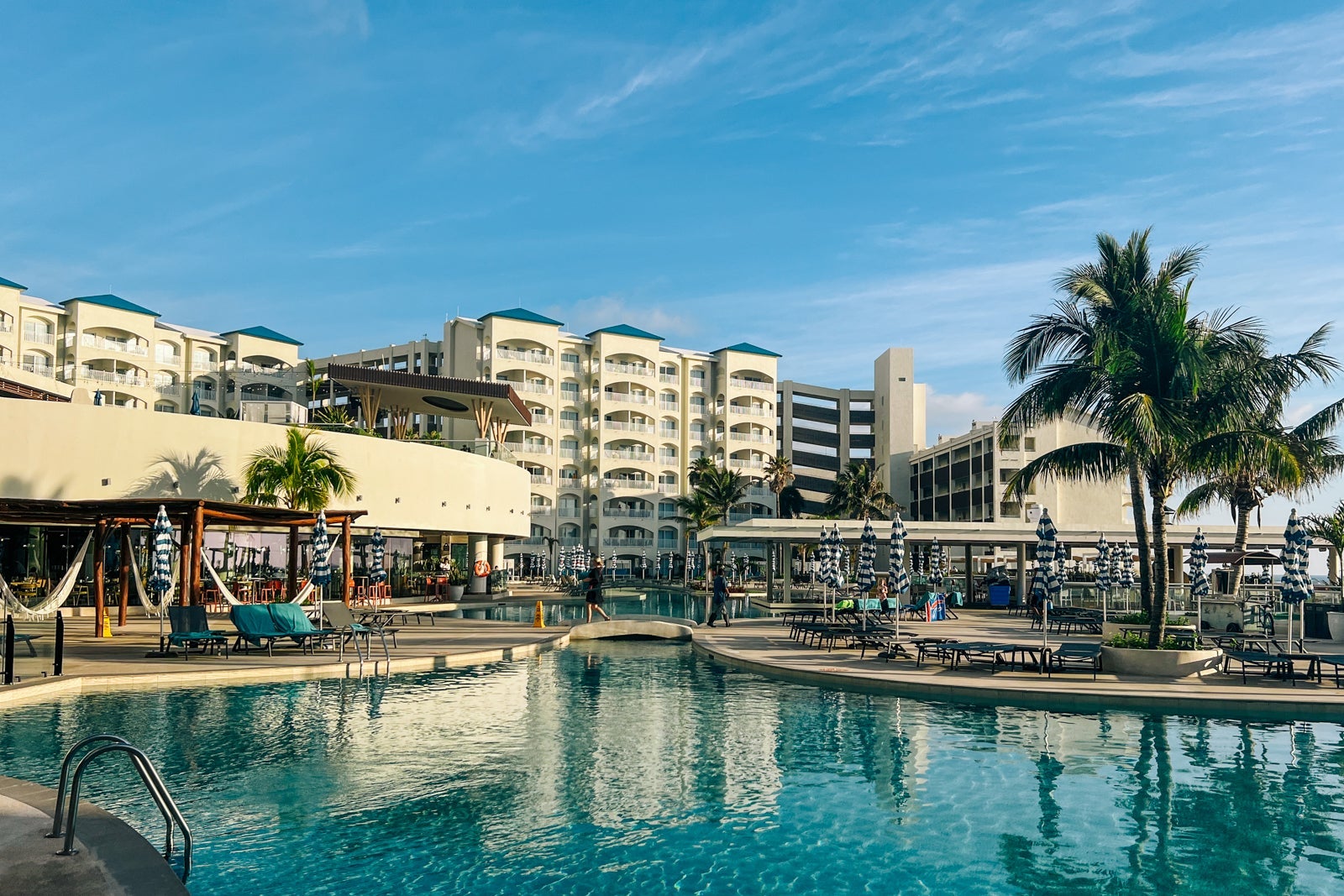
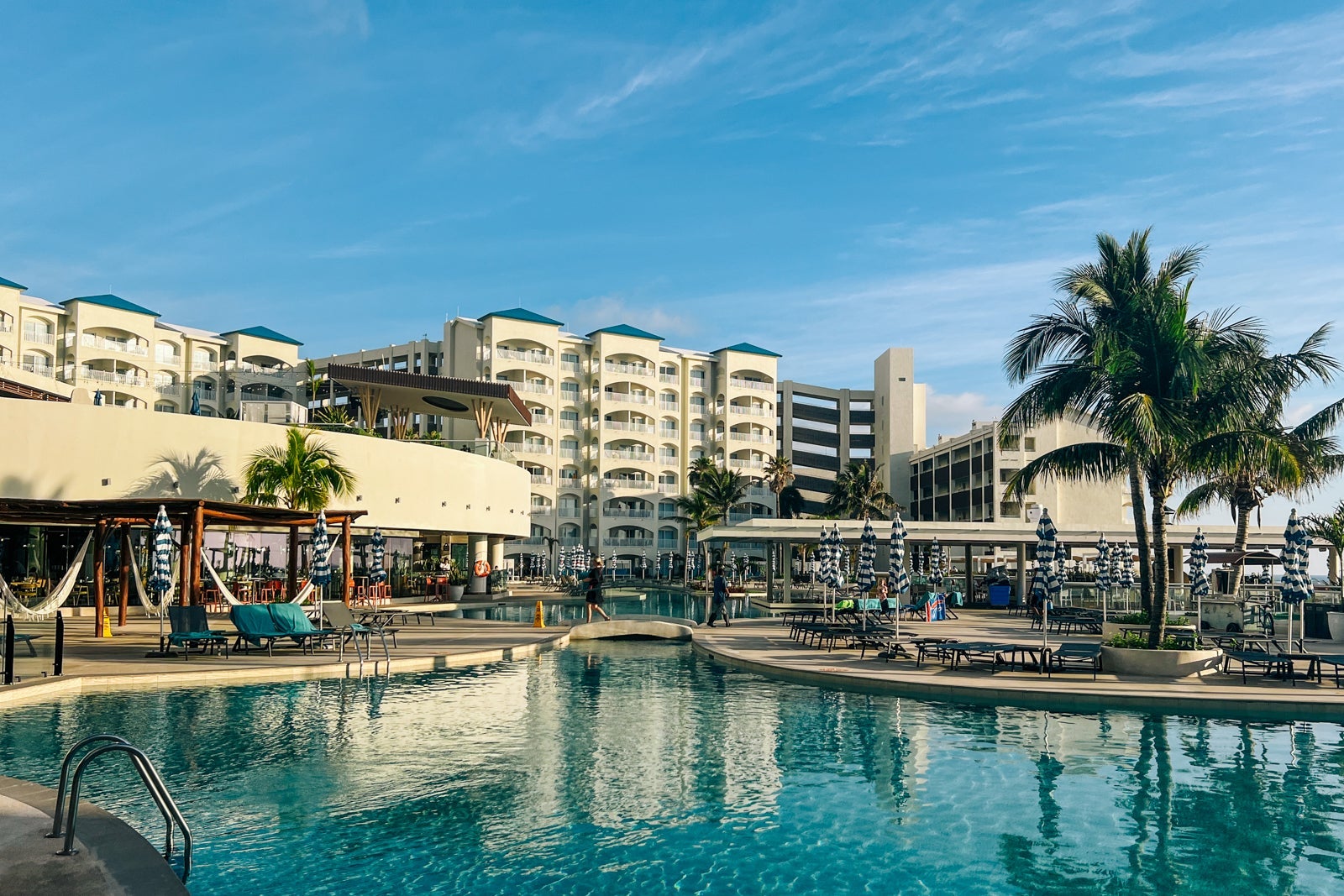
Hilton Cancun Mar Caribe all-inclusive resort in Tulum, Mexico
CLINT HENDERSON/THE POINTS GUY

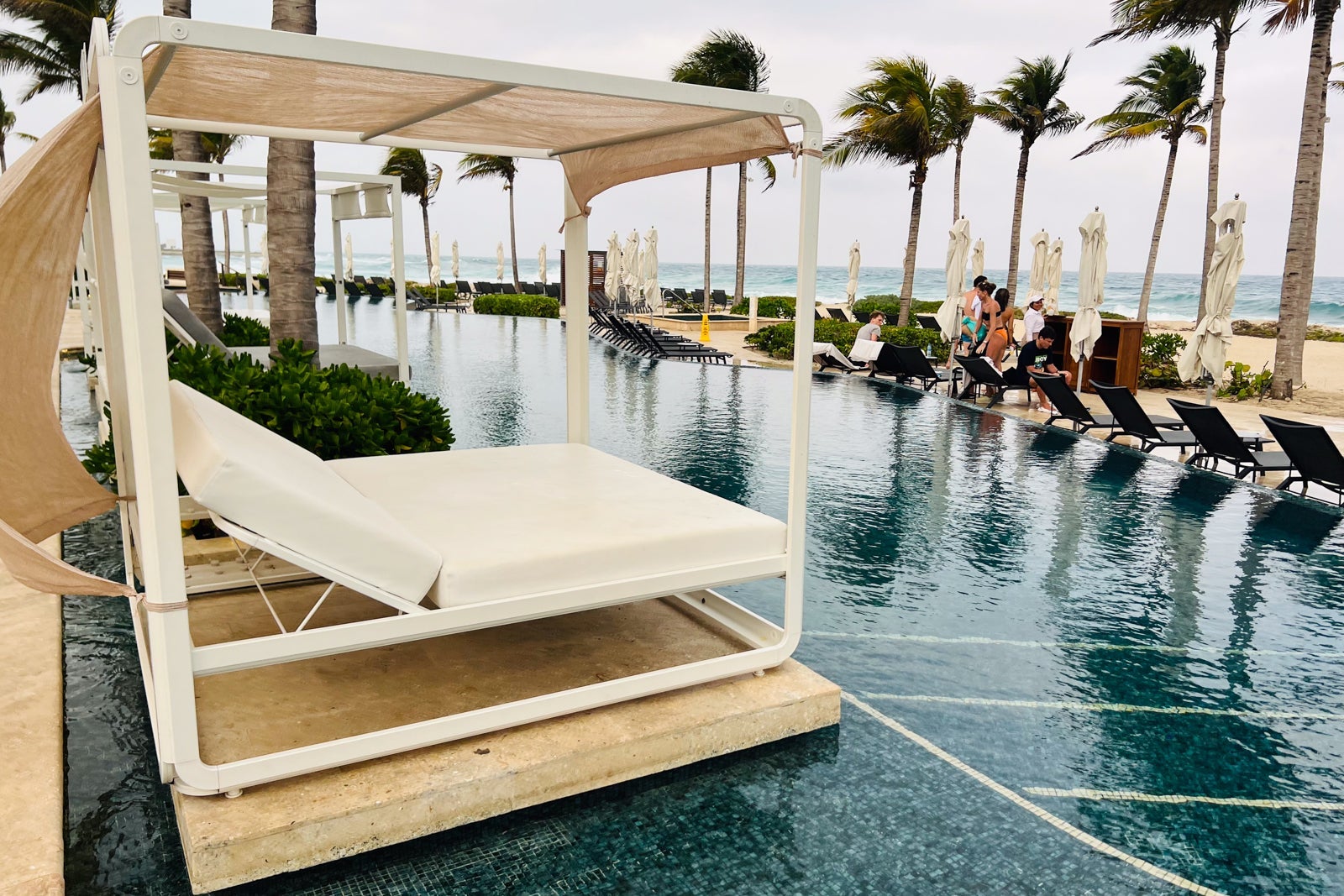
One of Hilton’s properties in Cancun, Mexico, this all-inclusive resort is a winner with its views and amazing restaurant lineup — as TPG found out when we checked in to the property. The Hilton Cancun Mar Caribe All-Inclusive Resort is just the place for you if you’re looking for a sunny getaway that earns top marks for service, has spacious rooms and suites, and keeps guests well fed.

All of the resort’s 540 guest rooms and suites come with balconies, and some suites even have private plunge pools. Modern furnishings with tropical flair, a complimentary minibar restocked daily, and either ocean or pool views are offered across all rooms and suites. If you’re in the mood to splurge, book an Enclave room or suite for a private lounge and pools, as well as special welcome amenities — some Enclave suites even feature direct beach access.

From the international breakfast buffet to poolside bites at Seasalt, the Hilton Cancun Mar Caribe keeps you well fed and hydrated all day long. We’re especially fond of Maxal, the resort’s Mexican fine dining restaurant. Of course, don’t forget to have fun in the sun: The resort features 13 swimming pools, kids and teens clubs, and a spa for those looking for a little more tranquility and rejuvenation in their getaway.

Reward your inbox with the TPG Daily newsletter

Join over 700,000 readers for breaking news, in-depth guides and exclusive deals from TPG’s experts

Rates at the Hilton Cancun Mar Caribe All-Inclusive Resort start at $440 or 100,000 Hilton Honors points per night, based on double occupancy.

Hilton Cancun, an All-Inclusive Resort

family playing at water park
Hilton Cancun, an All-Inclusive Resort. HILTON

When we sent a reviewer out a few months after opening back in 2021, one thing was immediately clear at the Hilton Cancun, an All-Inclusive Resort: This place is wonderful for families.

About 20 minutes from Cancun’s Hotel Zone, this all-inclusive resort is in a shared complex with Hilton’s Waldorf Astoria Riviera Maya. Both resorts occupy more than 100 acres, giving visitors plenty of room to stretch out while vacationing in Mexico.

At the 715-room Hilton Cancun, guests are treated to modern accommodations with at least 430 square feet of space and amenities like wardrobes and spacious bathrooms. Plus, most rooms and suites have balconies or patios. Book a swim-up room for an even more memorable experience so you don’t have to go far to cool off.

With 12 different restaurants, bars and specialty snack shops, nobody will go hungry. The Hilton Cancun’s restaurants have a much more upscale vibe than what you’d expect to find at an older-generation all-inclusive resort, with options ranging from an international buffet to a taqueria with a walk-up window to an open-flame grill serving sizzling steaks and seafood. Should you crave a sweet treat, there’s even an ice cream and churro shop.

During the day, visitors can swim in two infinity pools or post up at the beach, where activities like soccer and volleyball are scheduled at regular intervals. Families will particularly love that teens and kids clubs have various activities to entertain younger guests throughout the day. Hilton Cancun also specializes in immersive experiences like a Full Moon Dining Series, snorkeling excursions to Isla Mujeres and guided tours of Chichen Itza.

Rates at the Hilton Cancun, an All-Inclusive Resort start at $400 or 100,00 Hilton Honors points per night, based on double occupancy.

Related: Best all-inclusive resorts in Cancun

Mangrove Beach Corendon Curacao All-Inclusive Resort, Curio by Hilton

MANGROVE BEACH CORENDON CURUCAO ALL INCLUSIVE RESORT/FACEBOOK

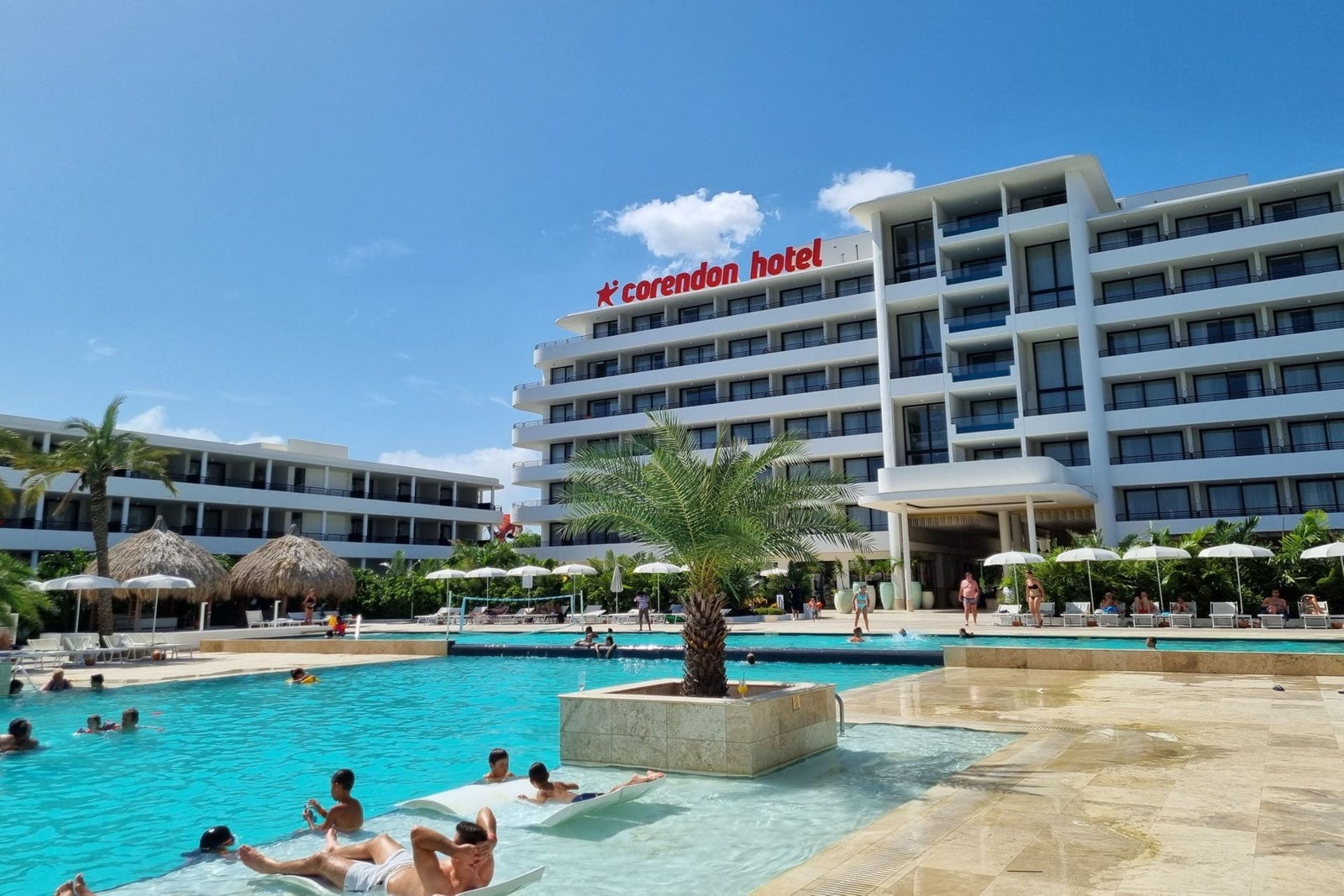
The Dutch Caribbean island of Curacao begs travelers to grab a beach chair and enjoy the crystalline waters of the Caribbean. This resort, part of Hilton’s Curio Collection, is another excellent family-friendly affair. It has a water park with a cobra-themed waterslide, four pristine swimming pools, a scuba diving center and sports like volleyball on the private stretch of sand. Kids can enjoy a playground and various daily activities specifically tailored to younger guests.

When we say this 399-room resort was built for families, we mean it, especially when you factor in that one of the room setups features a king-size bed plus two twins. But no matter what size of room you need, from a standard king to the two-bedroom presidential suite, expect modern decor with bold colors, private outdoor spaces and air conditioning.

There’s a restaurant to satisfy every palate, including Dushi Sushi Club, Ristorante Siciliano and Cor & Don’s BBQ Restaurant. Grab a drink at Pera Lobby Bar & Patisserie until midnight, while the Flamingo Beach Bar stays open 24-hours. Don’t miss The Don Cigar Lounge, where cigars and cognac are offered.

Guests can book a beachside massage in one of several thatched-roof cabanas to unwind. Bike rentals are also available for those who’d rather venture off-site to check out their surroundings.

Rates at Mangrove Beach Corendon Curacao All-Inclusive Resort, Curio by Hilton start at $329 or 95,000 Hilton Honors points per night, based on double occupancy.

Hilton Tulum Riviera Maya All-Inclusive Resort

CLINT HENDERSON/THE POINTS GUY

Hilton’s first all-inclusive resort in Tulum, the Hilton Tulum Riviera Maya All-Inclusive Resort has a wow factor, and our reviewer was impressed with the laid-back vibe, top-notch amenities and eco-sensitive design.

Across the resort’s 735 rooms and suites, all of which have balconies or patios, guests will find natural touches reflecting the property’s environment and modern amenities like high-definition TVs and ample storage space. For a more premium experience, reserve an Enclave-level room with access to a private lounge with food, drinks and a concierge; exclusive reservations and dining options; two private pool areas; and special fitness and wellness activities.

There are a whopping 13 bars and restaurants to enjoy, ranging from the chic La Luce Italian restaurant and must-have sushi at Noriku to an elegant steakhouse and a poolside seafood restaurant. If you prefer lots of options, be sure to visit Vela Norte, where a variety of international and Mexican dishes are available buffet-style.

Activities are seemingly endless at this Mexican resort. You can relax by the pools (one of which has a special splash zone for kids), hit up the neighboring Conrad’s spa for a treatment, take advantage of the kids and teens clubs, partake in a yoga class, learn about local art and so much more.

Rates at the Hilton Tulum Riviera Maya All-Inclusive Resort start at $392 or 80,000 Hilton Honors points per night, based on double occupancy.

Related: TPG’s favorite points hotels on the beach in Mexico

The Rif at Mangrove Beach Corendon Curacao All-Inclusive, Curio by Hilton

The Rif at Mangrove Beach Corendon Curacao. FACEBOOK

If you feel like you’ve already read about Mangrove Beach Corendon Curacao All-Inclusive, Curio by Hilton above, you have. The Rif is that resort’s sister property, but with a more adult-leaning attitude (though technically it’s family-friendly).

The 384-room beachfront resort feels more intimate than some all-inclusives, with four restaurants and one centerpiece pool framed with palm trees and rows of sun beds. When The Rif guests want more dining options and family-friendly amenities such as a water park and playground, they only have to walk next door to the sister resort, Mangrove Beach Corendon Curacao. Meanwhile, The Rif remains a haven of calm. The private beach, where guests sometimes swim with sea turtles, is a tropical paradise surrounded by the Caribbean Sea and lush mangrove forests. Thatched-roof cabanas and wood loungers with cushions are tastefully tropical. On-property restaurant options at The Rif include the Turkish restaurant Sofra and the colorful Mexican restaurant Maya, specializing in shareable small plates.

Many of The Rif’s bright, modern guest rooms have balconies or swim-up pool terraces. The resort is just over a mile from UNESCO-protected Willemstad, Curacao’s capital, known for pastel-colored colonial buildings and a 19th-century fort.

Rates at The Rif at Mangrove Beach Corendon Curacao All-Inclusive, Curio by Hilton start at $360 or 93,000 Hilton Honors points per night, based on double occupancy.

Hilton Vallarta Riviera All-Inclusive Resort

MATT MOFFITT/THE POINTS GUY

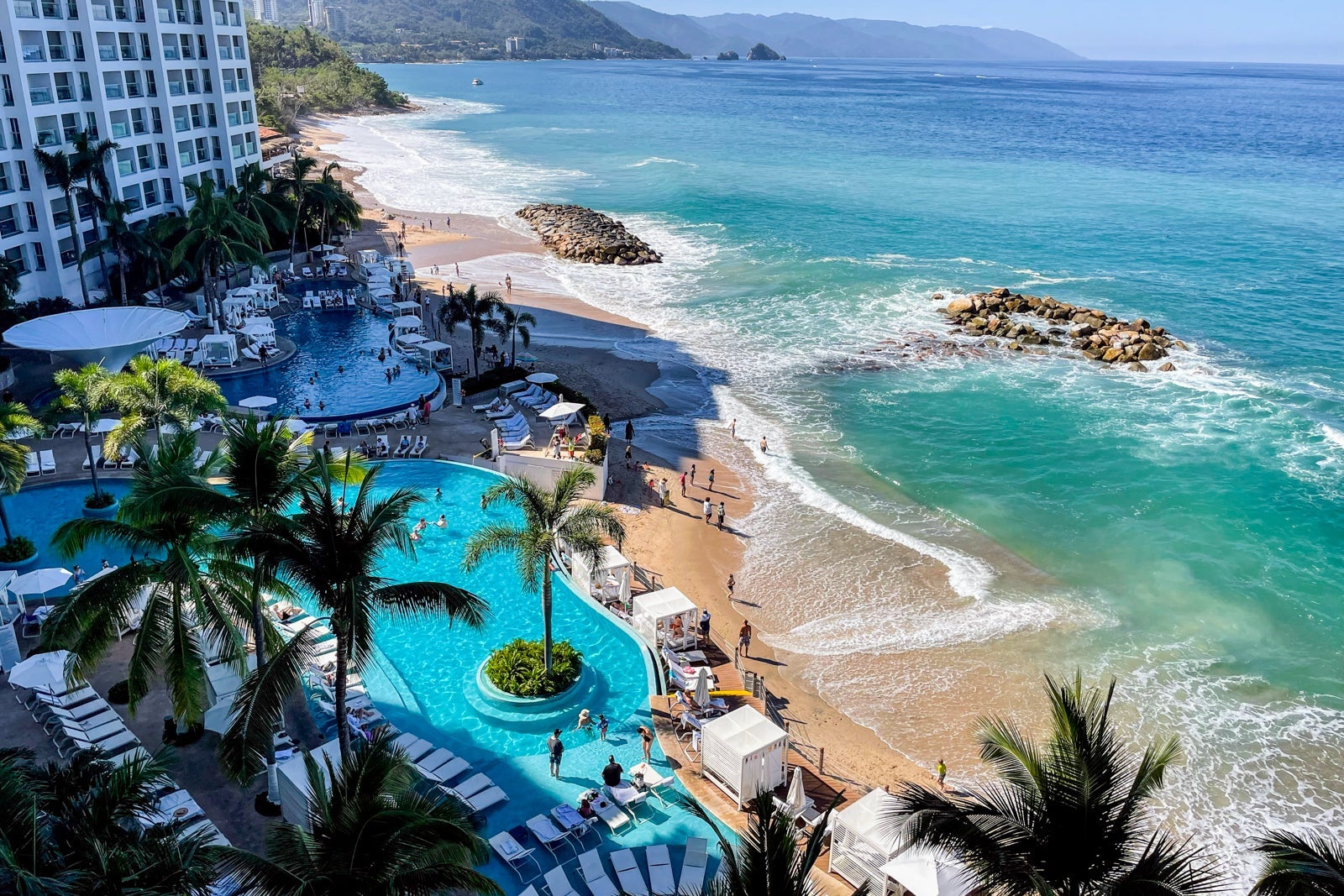
People flock to Puerto Vallarta’s Hilton Vallarta Riviera All-Inclusive Resort for the ultimate Mexican beach vacation.

All 444 rooms and suites have balconies with ocean views. Each accommodation has a spacious bathroom with a walk-in shower, a minibar, a Nespresso machine and a smart TV to help you catch some z’s in comfort. Should you wish to upgrade your experience, book an Enclave room to receive a welcome amenity, nightly turndown service, a minibar with premium goodies, and access to the Enclave Lounge. Breakfast, coffee, snacks and happy hour beverages are served there daily.

Activities and amenities abound, but nothing tops sidling up to one of the two oceanfront infinity pools and grabbing an ice-cold margarita from the swim-up bar. The Eforea Spa deserves praise for its impressive treatment menu, plus rejuvenating hydrotherapy pools. For more action, participate in beach sports competitions or attend the resort’s nightly pool parties.

Make sure to bring a healthy appetite. Maxal is the place to go for authentic Mexican dishes, while La Luce will satisfy your craving for trattoria-style Italian fare. If you’d rather savor a mix of Southeast Asian flavors, check out Sunan. Not to be missed are the Mojito Lounge, where you can sip a cocktail from an indoor swing, and the chic Sky Bar.

Whether you’re traveling as a family or a couple without kids, know that there’s space for everyone. The resort has an adults-only wing and kids and teen clubs with age-appropriate activities.

Rates at the Hilton Vallarta Riviera All-Inclusive Resort start at $400 or 100,000 Hilton Honors points per night, based on double occupancy.

DoubleTree by Hilton Bodrum Isil Club All-Inclusive Resort

DOUBLETREE BY HILTON BODRUM ISIL CLUB RESORT/FACEBOOK

Not all of Hilton’s all-inclusive resorts are in Mexico and the Caribbean; a handful can be found in Turkey, including in stylish, A-lister-approved Bodrum. One of the region’s best resorts is an all-inclusive take on the popular DoubleTree brand.

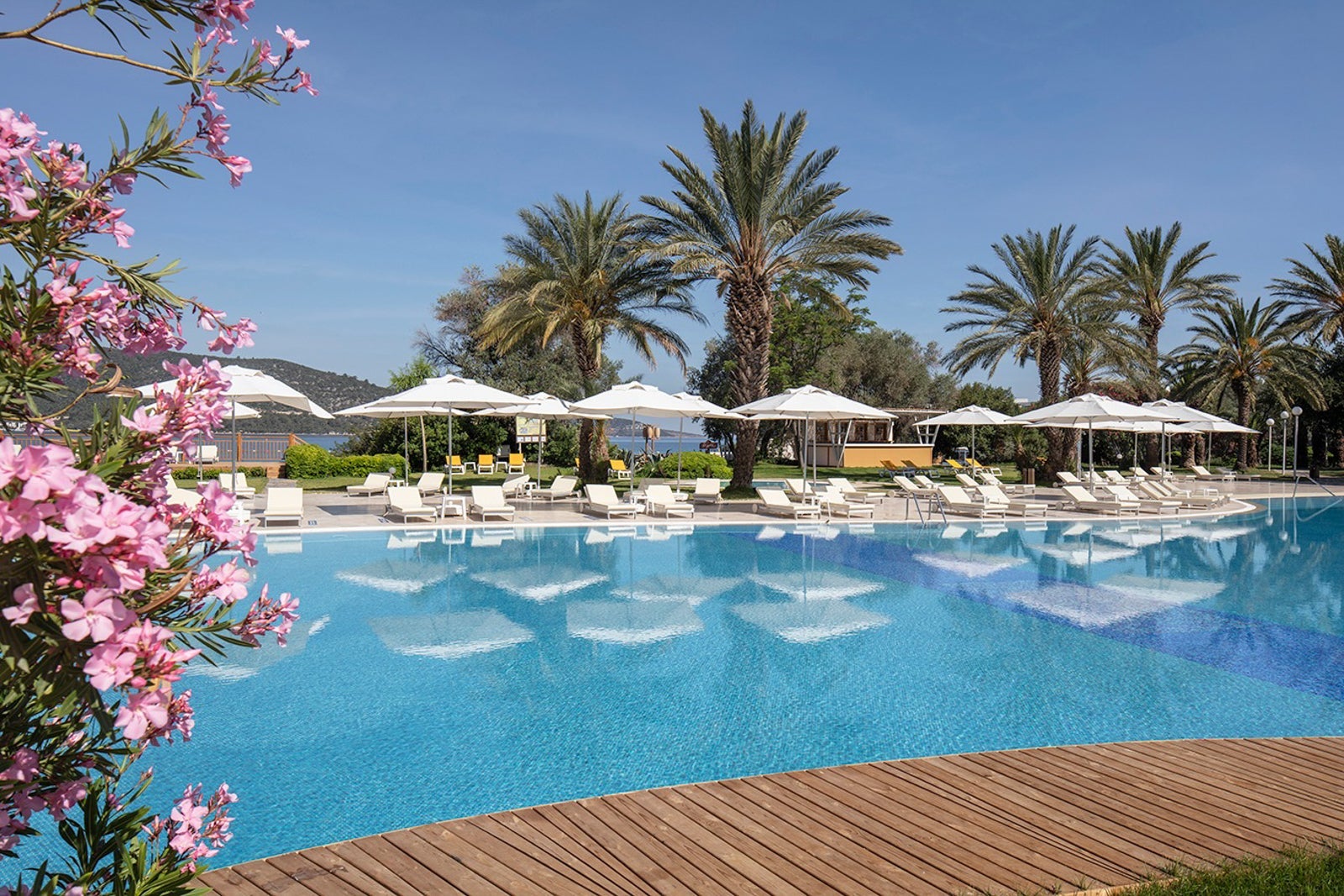
At the DoubleTree by Hilton Bodrum Isil Club All-Inclusive Resort, you can practice your backhand swing on a tennis court, play table tennis and lounge on the beach facing the Aegean Sea. Other highlights include a pool that looks out over turquoise waters and a kiddie pool with waterslides. There’s even an elevated spa with a full menu of treatments and a Turkish hammam.

When your stomach starts to grumble, you’ll have four dining outlets to choose from: an indoor-outdoor buffet open throughout the day, an Italian restaurant with beautiful outdoor seating, a seafood restaurant by the water, and a casual poolside spot for breakfast and snacks. The Sunset Lounge Bar is the most memorable of the three bars due to its location on a massive outdoor terrace.

Inside the 277 guest rooms and suites, you’ll find all you need for a restful night’s sleep. The predominantly white spaces come outfitted with minifridges, high-definition TVs, walk-in showers, and attached balconies or terraces, among other modern-day amenities.

Rates at the DoubleTree by Hilton Bodrum Isil Club All-Inclusive Resort start at $150 or 49,000 Hilton Honors points per night, based on double occupancy.

Related: 8 lessons I learned from my first all-inclusive vacation

Hilton Dalaman Sarigerme Resort & Golf

HILTON DALAMAN SARIGERME RESORT AND SPA/FACEBOOK

Another great Turkish Hilton all-inclusive resort is on the Aegean in Mugla, east of Bodrum. The Hilton Dalaman Sarigerme Resort & Spa also sits at the mouth of the Dalaman River, so the views are stunning.

At this 538-room resort, accommodations come in all shapes and sizes, from entry-level king guest rooms with balconies to luxurious Lake House villas with swim-up pool access, living rooms and soaking tubs. If you need to accommodate a large group, the three-bedroom presidential suite sleeps 10 and comes with butler service and round-trip ground transportation from the airport, plus a kitchen and four bathrooms.

Getting bored at the Hilton Dalaman Sarigerme is practically impossible. There are 10 pools to explore, waterslides to whiz down, a private beach, a kids club and a sprawling 24-hour fitness center. Adrenaline junkies can try water sports like kiteboarding and windsurfing. If relaxation is what’s calling, skip the adventure and plan a day of pampering at the Elysion Spa.

Food and beverage options range from an Instagram-cool teppanyaki restaurant and a glitzy Italian eatery to a piano bar and an international buffet. If you feel sluggish, head to Citrus Coffee & Bar for an authentic Turkish coffee pick-me-up.

Rates at the Hilton Dalaman Sarigerme Resort & Spa start at $356 or 90,000 Hilton Honors points per night, based on double occupancy.

Related reading:


Source link