Max Cullen and the Moorhead Spuds are still in pursuit of their second-straight state title.
But senior goalie Keaton LeGrande and his Lakeville South teammates made them work for it.
Cullen scored two goals to lift Moorhead past the Cougars 4-1 in the Class 2A state quarterfinals Thursday night at Grand Casino Arena.
But the Spuds (25-3-1) had a difficult time getting the puck past LeGrande for much of the game, despite managing 33 shots-on-goal.
Still, it is Moorhead — the tournament’s No. 2 seed — advancing to face the winner of Thursday’s late matchup between surprising No. 6 seed Andover and No. 3 seed Edina in the semifinals at 8 p.m. Friday.
The Spuds are attempting to become the first Class 2A team to repeat as state champions since Edina in 2013 and ’14.
Lakeville South (14-12-3) managed a few shots early before Moorhead began steadily keeping the puck on the opposite side of the ice.
But the Cougars defense did a good job in front of LeGrande, who played well – finishing the first period with nine saves.
Senior forward Carter Ernst managed to get off Lakeville South’s first shot in over six minutes late in the period, but after Spuds sophomore Will Arnold recorded the save, Cullen took the puck down the ice to score unassisted on the other end with 4:31 to play.
It was his 26th goal of the season and put Moorhead on top 1-0 going into the first intermission.
The Spuds kept up the pressure in the second period, taking 11 shots-on-goal in the first 10 minutes of play to the Cougars’ two. But even after Moorhead went on the power play with 6:32 remaining, LeGrande continued to assure they came up empty.
In fact, the best opportunity to score in that stretch came on a short-handed shot from directly in front of the Spuds’ net by Lakeville South junior Charlie Hunst that was stopped by Arnold.
Yet Moorhead finally struck again with 28 seconds left in the period on Cullen’s second goal of the game, extending its lead to 2-0 going into the third.
The Spuds went on another power play early in the final period, but the Cougars again killed it off. Then, seconds later, senior forward Tristan Lawrence got to a rebound off a shot by Hunst and drove it home to cut the gap to 2-1 with 14:08 to play.
But Lakeville South could not tie things up, despite gaining a five-on-three advantage for almost a minute-and-a-half.
That left it to Max’s cousin Joey, a sophomore forward, to put things out-of-reach on a goal with 6:01 remaining.
After killing off a Cougars’ power play, the Spuds added a final goal from senior Mr. Hockey finalist Tyden Bergeson with 2:51 to go.
Lost a crucial document because your system crashed before you could save it? Worry no more! Microsoft Word has introduced an automatic save option that regularly backs up your work, so you’ll never lose your progress again.
Users will now be able to manage their Word documents without thinking about saving them manually. The new Microsoft Word update allows users to automatically save their documents to the cloud as soon as they start documenting any content piece.
Raul Munoz, the Senior Product Manager at Microsoft, has stated about the new feature, “We are modernizing the way files are created and stored in Word for Windows! Now you don’t have to worry about saving your documents: Anything new you create will be saved automatically to OneDrive or your preferred cloud destination.”
Microsoft additionally hints at introducing similar features for Windows Excel and PowerPoint, which are now live.
How Does the Auto-save Feature Work?
The auto-save option can be accessed and used effectively with the compatible Word for Windows version. Let’s understand how the process works-
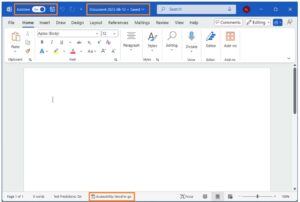
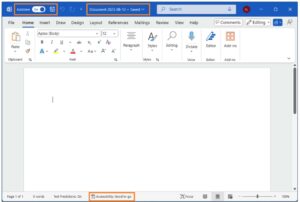
Primarily, users need to create a fresh document in Word and switch the AutoSave option on. Unlike the previous default document name- DocumentN, the autosave feature saves the files with the date.
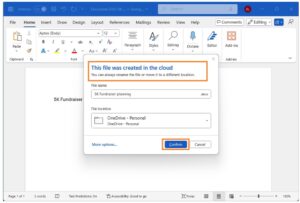
To change the name of the file and its location, users need to select Save or press Ctrl+S. After selecting the file name and location, press Confirm to save the changes.
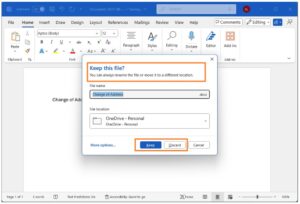
In case users try to close the file before it gets saved, a dialog displays on the screen asking whether they intend to Discard or Keep the file. If users try to close empty files, Word discards them without asking for confirmation.
Availability of the Auto-Save Feature of Microsoft Word Update-
The AutoSave feature of Microsoft Word update is available to users with Version 2509 (Build 19221.20000) or newer. This advancement is set to enhance accessibility and address the challenge of lost files. Similar features have been introduced on Windows Excel and PowerPoint as well.
Advantages of the Latest Microsoft Word Update
Microsoft Word’s new auto-save feature will unlock several benefits for users. Alongside increased security, it offers flexible file management capabilities. Let us discuss other significant advantages-
Flexibility in File Storage and Control: Users can store and manage their files more flexibly than ever. As users are in charge of the documents, they can adjust file names and locations to save, organizing the files according to convenience.
Never Lose Your Files: The auto-save feature in Microsoft Word addresses the challenge of losing files due to not saving them manually. As soon as you start making progress in a file, it automatically gets saved.
Enhanced Security and Compliance: Files saved in your organization’s cloud servers already adhere to the set security guidelines and practices. Hence, users do not need to think about protecting the files separately.
Increased Accessibility: The auto-save feature enables enhanced accessibility of Word files. It can be accessed from diverse types of devices and platforms once shared, including Android, iOS, and web browsers. Changes made to the file will get synced on all devices and platforms.
Better Collaboration: The AutoSave feature has made collaboration within and across teams easier. Users can easily share the cloud file and initiate collaboration by making changes, adding comments, and resolving comments in real time.
Agentic AI Support: The Word files are now equipped with Copilot agentic AI support. Users can unlock AI-powered capabilities whenever they need to improve or update their documents. Nevertheless, to use Copilot in Word, a Microsoft 365 Copilot license is needed.
Additional Tips:
Users will be able to easily change the location for new documents. Right-click on any cloud folder in the File section of Word, then select Set as Default Location to choose the location.
Users can manage how their files are created, whether in the traditional manner or automatically in the cloud, in the Save tab of Word Options, and opt in or opt out for Create new files in the cloud automatically.
Key Elements to Keep in Mind-
When a new Word session is started while another is running, the new file does not autosave. Hence, users need to close the previous file to enable the auto-save option for new files.
Users may sometimes encounter a delay in refreshing the recent files list while changing the name of a document.
If users disable the option for Show the Start screen when this application starts, remember that the first file they create will not autosave automatically.
Concluding Remarks!
Microsoft has been making significant advancements in its 365 Office platforms for better collaboration and enhanced productivity of diverse teams within an organization. With the integration of Copilot and flexible features, the firm is aiming to boost user experience and accessibility of the tools, including Word for Windows.
Learn about the major technological shifts and practices with KnowledgeNile!
FAQs:
1. What is the AutoSave feature in Microsoft Word?
Answer: The AutoSave feature in Microsoft Word lets users save their files automatically.
2. What is the purpose of AutoSave?
Answer: The AutoSave feature aims to reduce the challenges of data loss in unwanted circumstances, such as power shortages and device failures.
3. Where are AutoSave Word documents stored?
Answer: Automatically saved Word files are stored in cloud storage, like OneDrive.
To provide the best experiences, we use technologies like cookies to store and/or access device information. Consenting to these technologies will allow us to process data such as browsing behavior or unique IDs on this site. Not consenting or withdrawing consent, may adversely affect certain features and functions.
Functional
Always active
The technical storage or access is strictly necessary for the legitimate purpose of enabling the use of a specific service explicitly requested by the subscriber or user, or for the sole purpose of carrying out the transmission of a communication over an electronic communications network.
Preferences
The technical storage or access is necessary for the legitimate purpose of storing preferences that are not requested by the subscriber or user.
Statistics
The technical storage or access that is used exclusively for statistical purposes.The technical storage or access that is used exclusively for anonymous statistical purposes. Without a subpoena, voluntary compliance on the part of your Internet Service Provider, or additional records from a third party, information stored or retrieved for this purpose alone cannot usually be used to identify you.
Marketing
The technical storage or access is required to create user profiles to send advertising, or to track the user on a website or across several websites for similar marketing purposes.