Modern Reconciliation Software Helps Entrepreneurs Stay Audit


Heaps of paperwork are difficult to manage for finance teams especially as transaction volumes grow and complexities arise. s This becomes more complex during audit periods, especially if there are missing records or other discrepancies. Today being audit-ready requires that businesses step up their accounting game. This is where automated reconciliation software comes to the rescue. It uses advanced AI and ML technology to compare different sets of financial records, identify matches and discrepancies without the need for continuous human involvement. Hence, instead of mechanically seeking and locating data, accounting experts can perform strategic analysis, making enterprises audit-ready at all times. 

Key Takeaways

  • Automated reconciliation software improves audit-readiness by creating a centralized, secure platform with a single, reliable source of data.
  • AI and ML reduce manual errors and enforce consistent accounting rules, leading to fewer discrepancies and smoother audits.
  • Real-time transparency and complete audit trails build trust and credibility, allowing auditors to verify processes independently.
  • Faster closing processes and improved security help finance teams work efficiently, closing books up to 30% faster while maintaining data integrity.

Importance of  automated reconciliation 

Today’s enterprises operate in a fast-paced, digitally dominated financial environment, where financial records must be complete, accurate, and organized at all points for easy, seamless auditing. In manual procedures, accounting teams have to arduously match bank statements with ledger entries on every line. This delays close cycles and exposes the accounting process to a high margin of error. When processes are manual, it can take hours or even days to find the source of a discrepancy. It can also make it difficult to identify clear trails of digital history for evidence. When teams work with multiple spreadsheets, it can lead to confusion over the latest updates. Most importantly, the closing crunch at monthly deadlines can be a stress- and burnout-inducing factor for and burnout-inducing for the accounting teams. 

 On the other hand, companies using automated reconciliation close their books 30% faster than those relying on manual processes.

How automated reconciliation software improves audit-readiness

Automated reconciliation systems allow accounting experts to get real-time insights, acting as an instant, hands-on assistant for the finance department. Here are some of five ways how  automated software for accounts reconciliation ensures audit-readiness–

Reconciliation software helps entrepreneurs stay audit ready

1. A single, reliable source of data

When accounting workflows are manual, data is  scattered i across different platforms and documents, including emails, spreadsheets, and desktops. Automated software for reconciliation organizes and stores all data in one central, secure platform. 

Hence, it leads to faster audits as a single, authoritative source can provide all the data that auditors need. This eliminates confusion and speeds up the review process.

2. Consistent, error-prone accounting 

Automated software enforces the consistent application of preset rules by accounting teams for every single action. Automating the matching of transactions based on pre-set criteria, like amount, date, or reference number, can significantly bring down the risk of errors. When there are fewer errors, there will be fewer discrepancies to explain to auditors, leading to smoother completion of audits.

3. Real-time transparency and complete audit trails 

The most significant advantage of automated software for reconciliation is that it records every action taken. Hence, every approval, every matched transaction, and every rule being applied leaves a permanent trail for auditors to confirm in real time.

They can verify the processes independently, without the need for extensive interviews of the teams involved. This leads to greater trust and credibility as the overall transparency of the reconciliation process increases.

4. Faster closing processes

Efficient and accurate  monthly or quarterly financial close is the end-goal for every enterprise that prepares for audits. Automated software can cut down reconciliation time from days to mere minutes. This means that the closing process will finish faster, which gives the management teams and auditors faster access to accurate financial statements. A faster closing cycle also means that the enterprise gets more time to prepare reviews and analyses before the audit can even begin.

  1. Improved security and control

Manually prepared and maintained spreadsheets can be very volatile, as they can be altered, accidentally deleted, or fall prey to unauthorized access. Modern software for reconciliation allows enterprises to integrate role-based access options, which helps to ensure that only authorized personnel can access data. 

Thus, only the concerned professionals can certify reconciliations or post journal entries. The software tracks all changes made, which creates a controlled environment aligning with key audit standards around data integrity and security. 

how a construction business gained clarity

Conclusion

For enterprises to function competently and professionally in this digitally dominated age, they must use advanced technology to remain audit-ready at all times. Automated reconciliation software builds a centralized, transparent, fast, and secure account reconciliation system, which leads to more efficient accounting procedures and creates instant audit-readiness for businesses.

Frequently Asked Questions

What is automated reconciliation software and why is it important?

Automated reconciliation software uses AI and machine learning to compare financial records, identify matches, and flag discrepancies with minimal human involvement. It is important because it improves accuracy, reduces manual work, and helps businesses stay audit-ready at all times.

How does automated reconciliation software improve audit-readiness?

Automated reconciliation software improves audit-readiness by creating a centralized source of financial data, reducing errors through consistent rule-based matching, and generating complete audit trails. This makes it easier for auditors to verify records and speeds up the review process.

Why is automated reconciliation better than manual accounting processes?

Automated reconciliation is better than manual processes because it closes books faster, reduces the risk of errors, improves transparency, and strengthens security controls. It also helps accounting teams spend less time chasing discrepancies and more time on strategic analysis.

scaling small businesses with google business page


Source link

Leave a Reply

Subscribe to Our Newsletter

Get our latest articles delivered straight to your inbox. No spam, we promise.

Recent Reviews


Lost a crucial document because your system crashed before you could save it? Worry no more! Microsoft Word has introduced an automatic save option that regularly backs up your work, so you’ll never lose your progress again.

Users will now be able to manage their Word documents without thinking about saving them manually. The new Microsoft Word update allows users to automatically save their documents to the cloud as soon as they start documenting any content piece.

Raul Munoz, the Senior Product Manager at Microsoft, has stated about the new feature, “We are modernizing the way files are created and stored in Word for Windows! Now you don’t have to worry about saving your documents: Anything new you create will be saved automatically to OneDrive or your preferred cloud destination.

Microsoft additionally hints at introducing similar features for Windows Excel and PowerPoint, which are now live.

How Does the Auto-save Feature Work?

The auto-save option can be accessed and used effectively with the compatible Word for Windows version. Let’s understand how the process works-

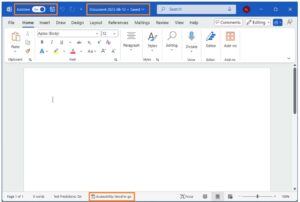
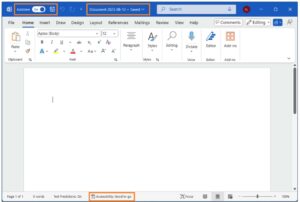
Primarily, users need to create a fresh document in Word and switch the AutoSave option on. Unlike the previous default document name- DocumentN, the autosave feature saves the files with the date.

Microsoft Word Update - Step 1

Source: Microsoft Tech Community

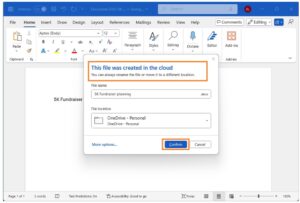
To change the name of the file and its location, users need to select Save or press Ctrl+S. After selecting the file name and location, press Confirm to save the changes.

Microsoft Word Update - Step 2

Source: Microsoft Tech Community

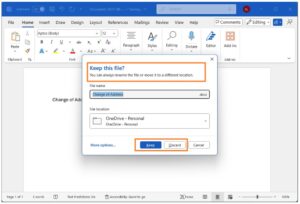
In case users try to close the file before it gets saved, a dialog displays on the screen asking whether they intend to Discard or Keep the file. If users try to close empty files, Word discards them without asking for confirmation.

Microsoft Word Update - Step 3

Source: Microsoft Tech Community

Availability of the Auto-Save Feature of Microsoft Word Update-

The AutoSave feature of Microsoft Word update is available to users with Version 2509 (Build 19221.20000) or newer. This advancement is set to enhance accessibility and address the challenge of lost files. Similar features have been introduced on Windows Excel and PowerPoint as well.

Advantages of the Latest Microsoft Word Update

Microsoft Word’s new auto-save feature will unlock several benefits for users. Alongside increased security, it offers flexible file management capabilities. Let us discuss other significant advantages-

Flexibility in File Storage and Control: Users can store and manage their files more flexibly than ever. As users are in charge of the documents, they can adjust file names and locations to save, organizing the files according to convenience.

Never Lose Your Files: The auto-save feature in Microsoft Word addresses the challenge of losing files due to not saving them manually. As soon as you start making progress in a file, it automatically gets saved.

Enhanced Security and Compliance: Files saved in your organization’s cloud servers already adhere to the set security guidelines and practices. Hence, users do not need to think about protecting the files separately.

Increased Accessibility: The auto-save feature enables enhanced accessibility of Word files. It can be accessed from diverse types of devices and platforms once shared, including Android, iOS, and web browsers. Changes made to the file will get synced on all devices and platforms.

Better Collaboration: The AutoSave feature has made collaboration within and across teams easier. Users can easily share the cloud file and initiate collaboration by making changes, adding comments, and resolving comments in real time.

Agentic AI Support: The Word files are now equipped with Copilot agentic AI support. Users can unlock AI-powered capabilities whenever they need to improve or update their documents. Nevertheless, to use Copilot in Word, a Microsoft 365 Copilot license is needed.

Additional Tips: 

  • Users will be able to easily change the location for new documents. Right-click on any cloud folder in the File section of Word, then select Set as Default Location to choose the location.
  • Users can manage how their files are created, whether in the traditional manner or automatically in the cloud, in the Save tab of Word Options, and opt in or opt out for Create new files in the cloud automatically.

Key Elements to Keep in Mind-

  • When a new Word session is started while another is running, the new file does not autosave. Hence, users need to close the previous file to enable the auto-save option for new files.
  • Users may sometimes encounter a delay in refreshing the recent files list while changing the name of a document.
  • If users disable the option for Show the Start screen when this application starts, remember that the first file they create will not autosave automatically.

Concluding Remarks!

Microsoft has been making significant advancements in its 365 Office platforms for better collaboration and enhanced productivity of diverse teams within an organization. With the integration of Copilot and flexible features, the firm is aiming to boost user experience and accessibility of the tools, including Word for Windows.

Learn about the major technological shifts and practices with KnowledgeNile!


FAQs:

1. What is the AutoSave feature in Microsoft Word?

Answer: The AutoSave feature in Microsoft Word lets users save their files automatically.

2. What is the purpose of AutoSave?

Answer: The AutoSave feature aims to reduce the challenges of data loss in unwanted circumstances, such as power shortages and device failures.

3. Where are AutoSave Word documents stored?

Answer: Automatically saved Word files are stored in cloud storage, like OneDrive.


Recommended For You:

Oracle identity cloud vs Microsoft Active Directory: Which to opt for and why?


Source link