Robotaxis are testing in Minnesota


Driverless vehicle testing has already started in Minnesota, and, for now, it’s under the supervision of humans behind the wheel.

That could change soon.

Autonomous vehicle company Waymo began testing its computer-automated vehicles in Minneapolis in late 2025, but says it will eventually launch passenger service in the Twin Cities, as it did in ten other cities in the southern U.S.

The road to driverless cabs and other vehicles in the state goes through the Legislature — and it could be a long one. Waymo doesn’t plan to launch its service in Minnesota until the state enacts new laws to set up basic regulations.

Waymo bill

A bill sponsored by Rep. Jon Koznick, R-Lakeville, would do that by giving the Minnesota Department of Transportation power to authorize driverless vehicle companies, spelling out insurance requirements and requiring autonomous vehicles comply with state traffic laws.

Rep. Jon Koznick
Rep. Jon Koznick. R-Lakeville. (Courtesy of Jon Koznick)

Koznick said the bill was a work in progress but that it’d create a “clear and predictable framework” for driverless cars in the state. Though the existing proposal is encountering resistance from Democratic-Farmer-Labor lawmakers and labor groups, who say it doesn’t do enough to protect road safety and jobs. Local rideshare drivers with services like Uber and Lyft have said they’re worried about competition from unmanned cabs.

“This is not about whether the technology will advance or not,” Sen. Erin Maye Quade, DFL–Apple Valley, said at a news conference calling for caution on automated vehicles. “It’s about how we guide those advancements so people, workers, children and families aren’t casualties in the name of progress.”

Sen. Erin K. Maye Quade.
Sen. Erin Maye Quade, DFL-Apple Valley. (Courtesy of the Minnesota Senate)

Maye Quade and her House DFL colleague Rep. Samantha Sencer Mura, DFL-Minneapolis, want a driverless vehicle bill that includes a safety advisory board and an economic analysis to understand how the introduction of the new technology will affect workers like rideshare drivers and truckers. Their effort has the backing of labor groups, including the AFL-CIO and SEIU — the Service Employees International Union.

Amid those concerns, the House Transportation Committee heard the bill on Wednesday, where, for now, it remains stalled as lawmakers seek to address them. Koznick’s bill failed to move forward on a party-line vote after multiple DFL-backed amendments seeking to change regulations on autonomous vehicles didn’t pass.

Rep. Brad Tabke, DFL-Shakopee, who co-chairs the Transportation Committee with Koznick, said the state needed to weigh the change more carefully.

“I very much believe that there are … good, important future uses for autonomous vehicles,” he said as he called to table the bill for future discussion. “I also believe that before we go in that direction, we have to have an intermediate step, and we have to have a step in there that isn’t just going from 0 to 60.”

Gray areas

Waymo currently operates in a legal gray area in Minnesota. State law neither authorizes nor prohibits the testing of automated vehicles on Minnesota roads. For that reason, the Minnesota Department of Transportation doesn’t have any oversight specific on autonomous vehicles, according to a department spokesperson.

Presently, Waymo operates in 10 metropolitan areas in five states, including the San Francisco Bay Area and Los Angeles in California, Houston and Austin in Texas and Phoenix, Arizona. The Twin Cities is among the more than 20 metros where Waymo has public plans to expand, and would be among the company’s first cold-weather cities.

After a winter of testing, the company is working on “refining the rider experience and logistics required for consistent service in snow,” CEO Dmitri Dolgov said in a social media post on March 3.

In a letter in support of Koznick’s bill, Minnesota Technology Association President Joel Crandall said a new regulatory framework would help the state’s technology sector by showing that new industries can “take root and grow.”

“AVs also stand to benefit employers and workers directly: reliable, modern transportation options provide access, help attract and retain talent, and can give commuters time back in their day,” he wrote.

Safety aspects of autonomous vehicles remain debated, but industry groups claim the technology could reduce road fatalities by removing human error from driving.

Costs, questions

Besides the general convenience or cost-saving potential of eliminating the need for a human driver, driverless vehicles also could prove invaluable for people with disabilities, testifiers told the committee Wednesday.

“Not driving means my wife has to run every errand, not being able to drive means I will never be able to go out on a diaper run, not be able to make that quick trip to the grocery store,” said Cole Davies, a board member with the Epilepsy Foundation of Minnesota. “Access to autonomous vehicles would not just make the lives of people with disabilities much better. It would make the lives of those who care for them easier.”

Despite a general atmosphere of optimism about self-driving vehicles, many groups remain skeptical about the rollout.

Labor groups like the AFL-CIO aren’t the only ones that object to the self-driving car legislation in its current form. Groups representing local governments and the trucking industry also have concerns.

The League of Minnesota Cities, which represents more than 800 local governments, opposed language in the current bill that would prevent local officials from putting restrictions on automated vehicles, such as licensing, permitting and fees.

The Minnesota Trucking Association had concerns about insurance liability on crashes involving automated vehicles and advocated for a “phased-in approach” to introducing the technology on state roads.

To that end, association president John Hausladen advocated for more safety testing and data sharing from automated-vehicle makers — especially data from challenging winter conditions.

“Minnesota is different than Phoenix,” he said. “So we better make sure it works in Detroit Lakes or International Falls.”




Source link

Leave a Reply

Subscribe to Our Newsletter

Get our latest articles delivered straight to your inbox. No spam, we promise.

Recent Reviews


Lost a crucial document because your system crashed before you could save it? Worry no more! Microsoft Word has introduced an automatic save option that regularly backs up your work, so you’ll never lose your progress again.

Users will now be able to manage their Word documents without thinking about saving them manually. The new Microsoft Word update allows users to automatically save their documents to the cloud as soon as they start documenting any content piece.

Raul Munoz, the Senior Product Manager at Microsoft, has stated about the new feature, “We are modernizing the way files are created and stored in Word for Windows! Now you don’t have to worry about saving your documents: Anything new you create will be saved automatically to OneDrive or your preferred cloud destination.

Microsoft additionally hints at introducing similar features for Windows Excel and PowerPoint, which are now live.

How Does the Auto-save Feature Work?

The auto-save option can be accessed and used effectively with the compatible Word for Windows version. Let’s understand how the process works-

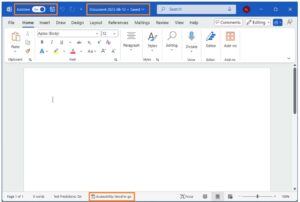
Primarily, users need to create a fresh document in Word and switch the AutoSave option on. Unlike the previous default document name- DocumentN, the autosave feature saves the files with the date.

Microsoft Word Update - Step 1

Source: Microsoft Tech Community

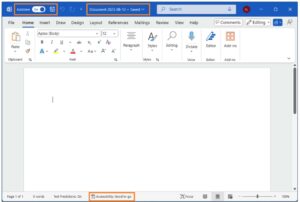
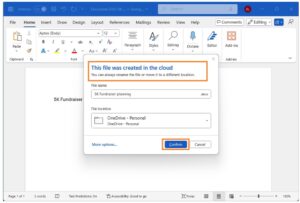
To change the name of the file and its location, users need to select Save or press Ctrl+S. After selecting the file name and location, press Confirm to save the changes.

Microsoft Word Update - Step 2

Source: Microsoft Tech Community

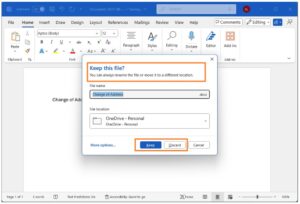
In case users try to close the file before it gets saved, a dialog displays on the screen asking whether they intend to Discard or Keep the file. If users try to close empty files, Word discards them without asking for confirmation.

Microsoft Word Update - Step 3

Source: Microsoft Tech Community

Availability of the Auto-Save Feature of Microsoft Word Update-

The AutoSave feature of Microsoft Word update is available to users with Version 2509 (Build 19221.20000) or newer. This advancement is set to enhance accessibility and address the challenge of lost files. Similar features have been introduced on Windows Excel and PowerPoint as well.

Advantages of the Latest Microsoft Word Update

Microsoft Word’s new auto-save feature will unlock several benefits for users. Alongside increased security, it offers flexible file management capabilities. Let us discuss other significant advantages-

Flexibility in File Storage and Control: Users can store and manage their files more flexibly than ever. As users are in charge of the documents, they can adjust file names and locations to save, organizing the files according to convenience.

Never Lose Your Files: The auto-save feature in Microsoft Word addresses the challenge of losing files due to not saving them manually. As soon as you start making progress in a file, it automatically gets saved.

Enhanced Security and Compliance: Files saved in your organization’s cloud servers already adhere to the set security guidelines and practices. Hence, users do not need to think about protecting the files separately.

Increased Accessibility: The auto-save feature enables enhanced accessibility of Word files. It can be accessed from diverse types of devices and platforms once shared, including Android, iOS, and web browsers. Changes made to the file will get synced on all devices and platforms.

Better Collaboration: The AutoSave feature has made collaboration within and across teams easier. Users can easily share the cloud file and initiate collaboration by making changes, adding comments, and resolving comments in real time.

Agentic AI Support: The Word files are now equipped with Copilot agentic AI support. Users can unlock AI-powered capabilities whenever they need to improve or update their documents. Nevertheless, to use Copilot in Word, a Microsoft 365 Copilot license is needed.

Additional Tips: 

  • Users will be able to easily change the location for new documents. Right-click on any cloud folder in the File section of Word, then select Set as Default Location to choose the location.
  • Users can manage how their files are created, whether in the traditional manner or automatically in the cloud, in the Save tab of Word Options, and opt in or opt out for Create new files in the cloud automatically.

Key Elements to Keep in Mind-

  • When a new Word session is started while another is running, the new file does not autosave. Hence, users need to close the previous file to enable the auto-save option for new files.
  • Users may sometimes encounter a delay in refreshing the recent files list while changing the name of a document.
  • If users disable the option for Show the Start screen when this application starts, remember that the first file they create will not autosave automatically.

Concluding Remarks!

Microsoft has been making significant advancements in its 365 Office platforms for better collaboration and enhanced productivity of diverse teams within an organization. With the integration of Copilot and flexible features, the firm is aiming to boost user experience and accessibility of the tools, including Word for Windows.

Learn about the major technological shifts and practices with KnowledgeNile!


FAQs:

1. What is the AutoSave feature in Microsoft Word?

Answer: The AutoSave feature in Microsoft Word lets users save their files automatically.

2. What is the purpose of AutoSave?

Answer: The AutoSave feature aims to reduce the challenges of data loss in unwanted circumstances, such as power shortages and device failures.

3. Where are AutoSave Word documents stored?

Answer: Automatically saved Word files are stored in cloud storage, like OneDrive.


Recommended For You:

Oracle identity cloud vs Microsoft Active Directory: Which to opt for and why?


Source link