The stars are stepping out for Essence‘s big event!
Zendaya, who might be married, posed for photos on the white carpet as she arrived at the 2026 ESSENCE Black Women In Hollywood Awards held at Fairmont Century Plaza in Los Angeles.
The annual event honors “Black women’s labor and leadership in an industry where they have historically been underrepresented in both executive ranks and leading roles.”
We’ve now compiled photos of the stars in attendance so that you could see who’s there and what they wore!
Keep reading to find out more…Keep scrolling to see the stars at the event…
Zendaya
FYI: Zendaya is wearing vintage Cachè.
Kerry Washington
FYI: Kerry is wearing a Brandon Maxwell dress.
Nnamdi Asomugha
Chase Infiniti
FYI: Chase is wearing a Schiaparelli gown.
Rege-Jean Page
Coco Jones
Tyriq Withers
Teyana Taylor
Ryan Michelle Bathe
Natasha Rothwell
FYI: Natasha is wearing an Etro dress.
Nathalie Emmanuel
Tia Mowry
Lexi Underwood
Loretta Devine
Amber Riley
Jayme Lawson
Marsai Martin
William Stanford Davis
Skye P. Marshall
FYI: Skye is wearing Christian Siriano.
Leslie Jones
Loni Love
Halle Bailey
Lynn Whitfield
Krys Marshall
Kandi Burruss & daughter Riley
Eva Marcille
Garcelle Beauvais
Holly Robinson Peete
Wunmi Mosaku & husband Tash Moseley
Chloe Bailey
FYI: Chloe is wearing a Harris Reed dress.
Tyrese Gibson
Jackee Harry
Danielle Brooks
Bozoma Saint John
Karen Pittman
Laverne Cox
Jurnee Smollett
Aldis Hodge
Sheryl Lee Ralph
Mya
Yvonne Orji
Boris Kodjoe
Ryan Coogler & wife Zinzi
Kyla Pratt
Olandria Carthen
Delroy Lindon & wife Nashormeh
Yaya DaCosta
Ryan Destiny
Lamorne Morris
Kiersey Clemons
Cynthia Bailey
Browse through the gallery to see more photos of the stars stepping out for the event…
Lost a crucial document because your system crashed before you could save it? Worry no more! Microsoft Word has introduced an automatic save option that regularly backs up your work, so you’ll never lose your progress again.
Users will now be able to manage their Word documents without thinking about saving them manually. The new Microsoft Word update allows users to automatically save their documents to the cloud as soon as they start documenting any content piece.
Raul Munoz, the Senior Product Manager at Microsoft, has stated about the new feature, “We are modernizing the way files are created and stored in Word for Windows! Now you don’t have to worry about saving your documents: Anything new you create will be saved automatically to OneDrive or your preferred cloud destination.”
Microsoft additionally hints at introducing similar features for Windows Excel and PowerPoint, which are now live.
How Does the Auto-save Feature Work?
The auto-save option can be accessed and used effectively with the compatible Word for Windows version. Let’s understand how the process works-
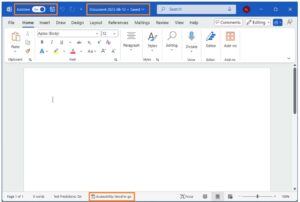
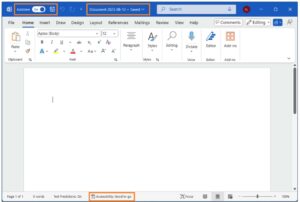
Primarily, users need to create a fresh document in Word and switch the AutoSave option on. Unlike the previous default document name- DocumentN, the autosave feature saves the files with the date.
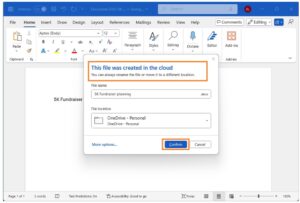
To change the name of the file and its location, users need to select Save or press Ctrl+S. After selecting the file name and location, press Confirm to save the changes.
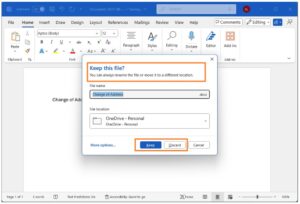
In case users try to close the file before it gets saved, a dialog displays on the screen asking whether they intend to Discard or Keep the file. If users try to close empty files, Word discards them without asking for confirmation.
Availability of the Auto-Save Feature of Microsoft Word Update-
The AutoSave feature of Microsoft Word update is available to users with Version 2509 (Build 19221.20000) or newer. This advancement is set to enhance accessibility and address the challenge of lost files. Similar features have been introduced on Windows Excel and PowerPoint as well.
Advantages of the Latest Microsoft Word Update
Microsoft Word’s new auto-save feature will unlock several benefits for users. Alongside increased security, it offers flexible file management capabilities. Let us discuss other significant advantages-
Flexibility in File Storage and Control: Users can store and manage their files more flexibly than ever. As users are in charge of the documents, they can adjust file names and locations to save, organizing the files according to convenience.
Never Lose Your Files: The auto-save feature in Microsoft Word addresses the challenge of losing files due to not saving them manually. As soon as you start making progress in a file, it automatically gets saved.
Enhanced Security and Compliance: Files saved in your organization’s cloud servers already adhere to the set security guidelines and practices. Hence, users do not need to think about protecting the files separately.
Increased Accessibility: The auto-save feature enables enhanced accessibility of Word files. It can be accessed from diverse types of devices and platforms once shared, including Android, iOS, and web browsers. Changes made to the file will get synced on all devices and platforms.
Better Collaboration: The AutoSave feature has made collaboration within and across teams easier. Users can easily share the cloud file and initiate collaboration by making changes, adding comments, and resolving comments in real time.
Agentic AI Support: The Word files are now equipped with Copilot agentic AI support. Users can unlock AI-powered capabilities whenever they need to improve or update their documents. Nevertheless, to use Copilot in Word, a Microsoft 365 Copilot license is needed.
Additional Tips:
Users will be able to easily change the location for new documents. Right-click on any cloud folder in the File section of Word, then select Set as Default Location to choose the location.
Users can manage how their files are created, whether in the traditional manner or automatically in the cloud, in the Save tab of Word Options, and opt in or opt out for Create new files in the cloud automatically.
Key Elements to Keep in Mind-
When a new Word session is started while another is running, the new file does not autosave. Hence, users need to close the previous file to enable the auto-save option for new files.
Users may sometimes encounter a delay in refreshing the recent files list while changing the name of a document.
If users disable the option for Show the Start screen when this application starts, remember that the first file they create will not autosave automatically.
Concluding Remarks!
Microsoft has been making significant advancements in its 365 Office platforms for better collaboration and enhanced productivity of diverse teams within an organization. With the integration of Copilot and flexible features, the firm is aiming to boost user experience and accessibility of the tools, including Word for Windows.
Learn about the major technological shifts and practices with KnowledgeNile!
FAQs:
1. What is the AutoSave feature in Microsoft Word?
Answer: The AutoSave feature in Microsoft Word lets users save their files automatically.
2. What is the purpose of AutoSave?
Answer: The AutoSave feature aims to reduce the challenges of data loss in unwanted circumstances, such as power shortages and device failures.
3. Where are AutoSave Word documents stored?
Answer: Automatically saved Word files are stored in cloud storage, like OneDrive.
To provide the best experiences, we use technologies like cookies to store and/or access device information. Consenting to these technologies will allow us to process data such as browsing behavior or unique IDs on this site. Not consenting or withdrawing consent, may adversely affect certain features and functions.
Functional
Always active
The technical storage or access is strictly necessary for the legitimate purpose of enabling the use of a specific service explicitly requested by the subscriber or user, or for the sole purpose of carrying out the transmission of a communication over an electronic communications network.
Preferences
The technical storage or access is necessary for the legitimate purpose of storing preferences that are not requested by the subscriber or user.
Statistics
The technical storage or access that is used exclusively for statistical purposes.The technical storage or access that is used exclusively for anonymous statistical purposes. Without a subpoena, voluntary compliance on the part of your Internet Service Provider, or additional records from a third party, information stored or retrieved for this purpose alone cannot usually be used to identify you.
Marketing
The technical storage or access is required to create user profiles to send advertising, or to track the user on a website or across several websites for similar marketing purposes.