
6 credit card bonuses to earn by spending $1,000 or less


Some of the best welcome bonuses out there offer as many as 200,000 points, but ask for thousands or even tens of thousands in spending in just a few months to earn them.

Whether you’re a student, young professional, retiree or someone else in a situation that calls for a fixed budget, these welcome offers may just not be realistic to attain. It’s easy to think you need to give up on points and miles as a hobby because you can’t meet the spending requirements for the best bonuses.

Thankfully, that’s far from the truth. You can absolutely get involved in points and miles without spending thousands on welcome bonuses. There are a number of cards with great bonuses that require $1,000 or less in spending.

Even if you’re a avid travel rewards enthusiast with all of the top cards, these welcome offers can still boost your points and miles stash.

Chase Freedom Unlimited

Welcome offer: Earn $200 bonus cash back after spending $500 on purchases in the first three months from account opening.

My take on this card: The Chase Freedom Unlimited® (see rates and fees) has had a spot in my wallet for three years. It’s one of my favorite cards to use for everyday spending, since it earns at least 1.5% cash back on all purchases.

ZERO CREATIVES GMBH/GETTY IMAGES

This isn’t as high a rate as you’ll see on some other cards, but since I also hold the Chase Sapphire Preferred® Card (see rates and fees), I’m able to turn my rewards into transferable Chase Ultimate Rewards points. That, along with no annual fee, makes up for the lower earning rate.

Even if you don’t have a higher-tier Chase card, your rewards can still be redeemed for statement credits, gift cards and purchases through Amazon (among other options).

To learn more, check out our full review of the Chase Freedom Unlimited.

Reward your inbox with the TPG Daily newsletter

Join over 700,000 readers for breaking news, in-depth guides and exclusive deals from TPG’s experts


Apply here: Chase Freedom Unlimited


Chase Freedom Flex

Welcome offer: Earn $200 bonus cash back after spending $500 on purchases in the first three months from account opening.

My take on this card: My second-ever credit card was the Chase Freedom Flex® (see rates and fees). I still use it regularly to take advantage of its biggest strength: earning 5% cash back in rotating quarterly categories (on up to $1,500 in spending, then 1% back; activation required).

Man using a laptop
TOM WERNER/GETTY IMAGES

Like the Freedom Unlimited, the Freedom Flex’s rewards can become transferable Ultimate Rewards points with a premium Chase card. Without this option, its rewards can be redeemed for the same options as the Freedom Unlimited. Also like the Freedom Unlimited, this card has no annual fee.

Many of the Freedom Flex’s rotating quarterly categories, such as PayPal and Amazon purchases, charitable donations and pet supply stores, are not easy to find as bonus categories on other cards.

To learn more, check out our full review of the Freedom Flex.


Apply here: Chase Freedom Flex


Wells Fargo Autograph

Welcome offer: Earn 20,000 bonus points after spending $1,000 on purchases in the first three months from account opening.

According to TPG’s June 2026 valuations, this welcome offer is worth $350.

My take on this card: The Wells Fargo Autograph® Card (see rates and fees) is an underrated card, in my opinion. It’s often overshadowed by cards from giants like Chase and American Express, but it deserves your consideration — especially since it has no annual fee.

It’s not too common to see a no-annual-fee card that offers access to transfer partners, especially without reduced transfer ratios. Wells Fargo Autograph cardholders can transfer points to any of Wells Fargo’s 10 transfer partners, including popular choices such as Air France-KLM Flying Blue and Iberia Club.
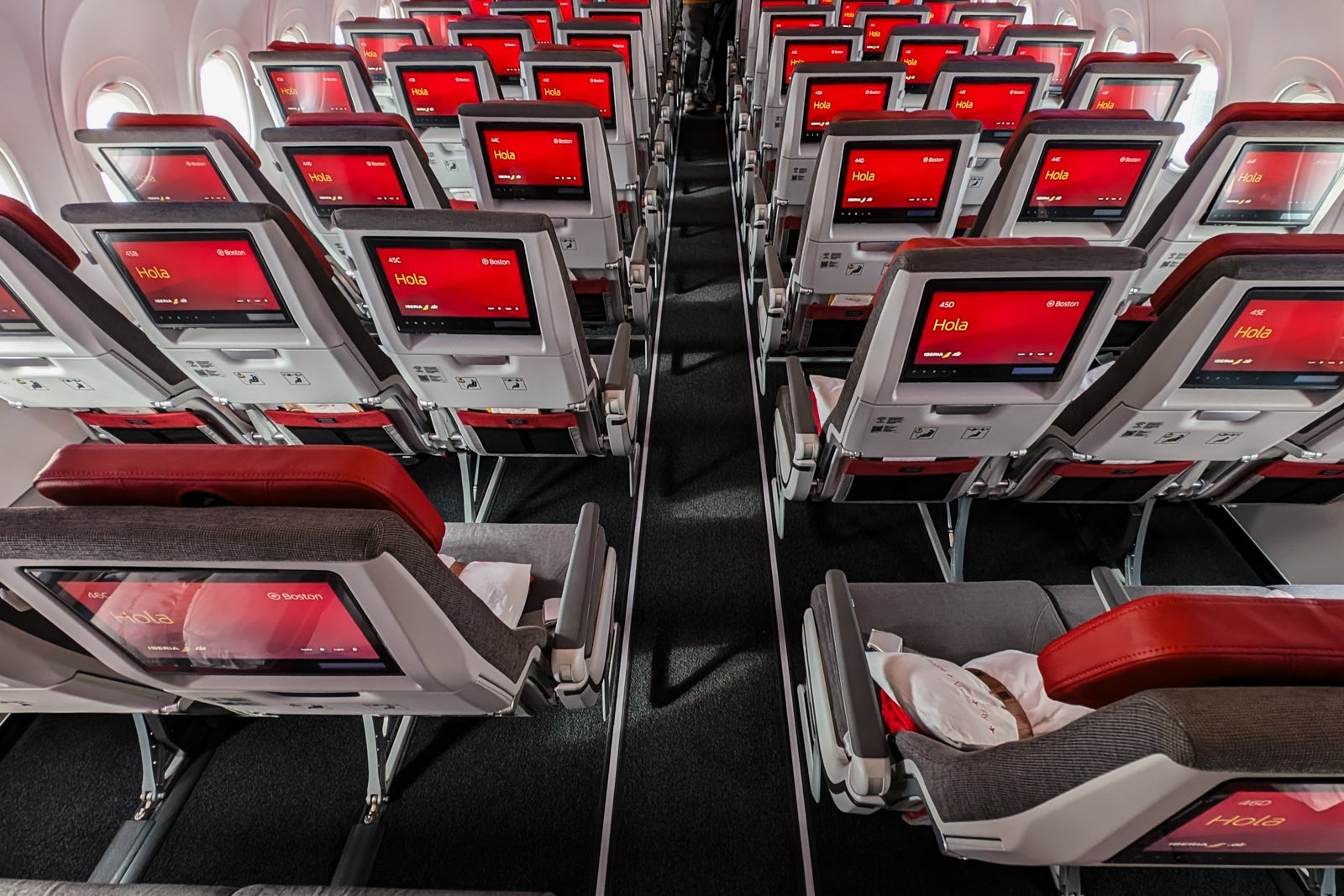
Iberia Airbus A321XLR economy
BEN SMITHSON/THE POINTS GUY

I also love that this card earns bonus points on a lot of categories, including dining, travel, gas, transit and streaming services. That makes it a great choice for a beginner seeking simplicity.

To learn more, check out our full review of the Wells Fargo Autograph.


Apply here: Wells Fargo Autograph


Citi Strata Card

Welcome offer: Earn 20,000 bonus points after spending $1,000 on purchases in the first three months from account opening.

According to TPG’s June 2026 valuations, this welcome offer is worth $380.

My take on this card: The Citi Strata℠ Card (see rates and fees) is another great beginner card, since it offers access to Citi’s transfer partners for no annual fee (albeit at reduced transfer ratios). That includes American Airlines AAdvantage, a TPG favorite.

SEAN CUDAHY/THE POINTS GUY

Like the Wells Fargo Autograph, the Citi Strata offers a range of bonus categories. Those categories include a self-select bonus category, allowing you to earn 3 points per dollar spent in one of the following categories:

  • Cosmetic stores/barber shops/hair salons
  • Fitness clubs
  • Live entertainment
  • Pet supply stores
  • Select streaming services

Most of those categories are difficult to find as bonus categories on other cards, so that’s a unique strength of the Citi Strata.

To learn more, check out our full review of the Citi Strata.


Apply here: Citi Strata Card


United Gateway

Welcome offer: Earn up to 40,000 bonus miles:

  • 30,000 miles after spending $1,000 on purchases in the first three months from account opening.
  • 10,000 additional miles after adding an authorized user in the first three months from account opening.

According to TPG’s June 2026 valuations, this welcome offer is worth up to $540.

My take on this card: If you’re interested in an airline card but don’t want to pay an annual fee, the United Gateway℠ Card (see rates and fees) may be a good pick for you.

SEAN CUDAHY/THE POINTS GUY

You’ll earn bonus miles on United purchases and receive 25% back as a statement credit on inflight food, beverage and Wi-Fi purchases. It may not be a card that offers free checked bags and award ticket discounts by default, but it’s a great entry point to see what airline cobranded cards can offer.

To learn more, check out our full review of the United Gateway.


Apply here: United Gateway Card


Frontier Airlines World Mastercard

Welcome offer: Currently, new Frontier Airlines World Mastercard® cardholders can earn 60,000 bonus miles after spending $1,000 on purchases and paying the annual fee in full in the first three months from account opening.

According to TPG’s June 2026 valuations, this welcome offer is worth $780.

My take on this card: If you fly Frontier at least a couple of times each year, this card easily pays for itself. Checked bags on Frontier start at $29, but you’ll receive two free checked bags with the Frontier Mastercard. Assuming you check one bag, you’ll be able to cover this card’s $99 annual fee in just two roundtrip flights.

SEAN CUDAHY/THE POINTS GUY

As long as you make a purchase with your card in the first three months from account opening, you’ll automatically receive Frontier Gold Elite status. This comes with perks like free seat upgrades and a complimentary carry-on bag.

Holding the Frontier Mastercard can make up for the shortcomings that low-cost airlines like Frontier choose to have in exchange for cheap airfare.

To learn more, check out our full review of the Frontier Airlines Mastercard.

The information for the Frontier Airlines World Mastercard has been collected independently by The Points Guy. The card details on this page have not been reviewed or provided by the card issuer.

Bottom line

It’s possible to earn solid welcome bonuses without spending thousands of dollars. All of these welcome offers can be earned with $1,000 or less in spending, making them great options for anyone interested in travel rewards.

Whether you’re a beginner, living on a fixed budget or just looking for an easy welcome bonus to boost your rewards balance, consider one of these six cards the next time you open a card.

Just remember to check the card’s application requirements before hitting “Submit”.

Related: Getting started with points, miles and credit cards to travel


Source link

Leave a Reply

Subscribe to Our Newsletter

Get our latest articles delivered straight to your inbox. No spam, we promise.

Recent Reviews


Expedite your Tibco Business events with our recently designed HKR’s Tibco Business Events Interview Questions with answers. This blog is specially designed under the guidance of the SME team to help the fresher as well as experienced professionals. The Tibco Business event is one of the popular business tools to offer complex event processing or CEP. As the Tibco business events market is growing like anything and you can expect huge job openings across the world. As per the latest research, almost 0.67% of the software products are developed on the basis of Tibco business events tools.

Most Frequently Asked Tibco BE Interview Questions

What is the Tibco business event tool?

Ans: Tibco business event is a popular tool used to process any complex business events. These business events in software systems are later used to predict any business changes and to perform in a better way.

Become a  Tibco BE Training Certified professional by learning this HKR Tibco BE Training!

What are the key features of using Tibco Business Event?

Ans: Below are the important key features of using Tibco Business event;

  • Tibco business event is a high-performance event processing platform for applications that are used to monitor, analyze, and respond to parallel event streams.
  • Tibco business event extreme drivers deliver dramatic new levels of performance, scalability, and robustness for demanding complex event processing (CEP) and real-time event-driven applications.
  • This platform automatically manages consistency for efficient parallel processing and high vertical scalability.
  • A hybrid rules and java programming model enables applications to maximize the capabilities of languages, seamlessly share data and events.

What is the role of channels and destinations in the Tibco Business event?

Ans: Channels are nothing but resources used to establish the connectivity and communication between various business events. The events are like JMS sources, RV sources, and HTTP sources.

Destinations are specified with channels and explain the source and sink for the Tibco business messages.

Mention the product compatibility used in Tibco Business events?

Ans: The Tibco business Events Extreme data grid feature is compatible with Tibco Active spaces enterprise edition version 2.0.2 hot fix 9.

What are the packages installed in the Tibco business event?

Ans: Below are the important packages installed in Tibco Business events such as;

  • rpm –q compat-expat1 –compat-expat1-1.95.8-8.el6.x86_64
  • rpm-q pstack –pstack-1.2-7.2.2
  • rpm –q gdb –gdb-7.0.1-42.el5.
  • rpm –q sysstat –sysstat-7.0.2-11.e15

Tibco BE Training

  • Master Your Craft
  • Lifetime LMS & Faculty Access
  • 24/7 online expert support
  • Real-world & Project Based Learning


Explain the hardware required to install the Tibco business event?

Ans: Below are bowsers which are supported;

1. Chrome 16

2. Firefox 9

3. Internet Explorer 9

4. Safari 5

The disk space and memory requirements;

Disk space – 4 Gb

Memory – 2 Gb RAM

Java compatibility:

Tibco business event uses the two JRE versions:

1.7.0_45 –default JRE

1.6.0_30.

How events are generated in the Tibco Business event?

Ans: The events can be generated in Tibco business event using instance created on the base of input channels.

What do you mean by RMS and mention its uses?

Ans: RMS is also known as Rule management Server this is a business event component. This is used to manage decision projects and also provides various mechanisms.

  • This RMS offers user authentication, authorizing project decisions, and also consists of project management features.
  • This RMS enables the decision manager to communicate the rule management server and also helps users to check project decisions, decision tables of local copies, and commit changes.

How can we prioritize and de-prioritize rules for a business event?

Ans: In the Tibco business event tool, to perform a specific event, users can have multiple event rules. The rule priority value can be decided on the base of the sequence where rules are triggered. The value which is closer to 1 means that we can have a higher priority.

. Describe the flow messages used in the Tibco Business event?

Ans: Steps:

1. In the Business events the messages will be received through various channels along with appropriate destinations.

2. At first, the event preprocessor will be executed.

3. Here all the incoming messages will be converted to business events.

4. Rules will be triggered on the basis of these available events.

. What is CDD and what’s its significance?

Ans: CDD stands for Cluster deployment description, this is an XML file. This file consists of required information related to the deployment of the Tibco business event project.

. Why scorecards are used in the Business event?

Ans: Scorecards are a type of concept used in business events. Scorecards are sometimes used as a static variable in various programming languages, this scoreboard offers project-wide scope and single instance. These scoreboards are used to keep track or store the information which is later used throughout the project interference agent.

. Mention the steps involved in the Tibco business event installation process?

Ans: The steps included are;

1. Installation guide -> this gives complete installation information

2. Application Architect’s guide -> this consists of details like architectural details or rule programming.

3. Application Developer’s guide -> this consists of details like programmer documents used in rule programming.

4. Decision manager user’s guide -> this gives details like user documentation and decision tables information.

5. Web studio user’s guide -> consists of user documentation available on Web studio.

6. Architect’s guide -> Consists of architectural details on the application platform.

7. Java developer’s guide -> Contains whole java programmer documentation

8. Performance tuning guide -> Application performance documentation which holds tuning information.

9. System guide -> which consists of machine resources information for the application.

10. Code snippets -> source code for the programming snippets and java developer’s guide.

. Mention the difference between Tibco BW and Tibco BE?

Ans: Tibco BW is also known as the information bus company warehouse tool. This is an information, integration, and analytical tool. Tibco BW software is used to manage, integrate, and monitor the business level enterprise tool. This is widely used because of its flexibility, scalability, and reliability.

Tibco BE is a tool used to process complex business events. These business events are used to predict any business changes and enable them to perform in a better way.

. What is an event preprocessor and explain?

Ans: An event preprocessor is the same as a rule function. This type of rule function is used to process any incoming messages before these messages are converted into business events.

. What is the relationship between decision tables and virtual rule functions?

Ans: Decision tables are considered as an implementation for virtual rule functions. And virtual rule functions consist of one or more decision tables.

Final words:

I hope I have tried my best to explain the very important Tibco Business event interview questions and answers. Learning only this article is not enough to get into top companies. You should have a thorough knowledge of industry-based projects, to become a master in this tool please visit our website www.hkrtraining.com.

. Define Rules and how TIBCO BE rules work.

Ans: Rules in TIBCO BE state the actions that need to be taken on specific conditions. Moreover, rules will activate when specified conditions are met based on events.

HKR Trainings Logo

Subscribe to our YouTube channel to get new updates..!

. What is the use of TIBCO BE Concepts?

Ans: The concepts are built to hold any entity’s properties. In the Rules and Rules Functions, Concepts’ instances are often produced using data from the events.

. What is the use of Routers?Ans. Routers help move messages between the different EMS servers.

Ans: Routers help move messages between the different EMS servers.

Related Article: Tableau Prep Training

. List out the various acknowledgement modes in TIBCO EMS.

Ans: These acknowledgement modes available in TIBCO EMS for message delivery included.:-

  • Auto
  • Client
  • Explicit
  • Dups_ok
  • Transitional
  • No_ack

. What is the way to Configure a Client for Fault Tolerant Connection?

Ans: Here, it needs to mention different servers as a comma-separated list of various URLs, and both URLs should use the same protocols. Such as TCP or SSL. 

. Name the various messages used in EMS.

Ans: The following types of messages are used in EMS.

  • Text
  • Stream
  • Bytes
  • Simple
  • Map
  • Object 
  • XML Test

. How can we develop RESTful Web Services in TIBCO?

AnsTIBCO offers a plugin for JSON and REST, which help develop RESTful Web Services within TIBCO Designer.

. Define the process of integrating TIBCO BE with TIBCO BW.

Ans: Based on the configured channel type in TIBCO BE, you can easily send messages to TIBCO BW and get responses. For example, if TIBCO BE configures a JMS channel, you can send JMS messages to specific destinations from TIBCO BW. Then you will get a response through the Recieve JMS Message activity.

. What does a Flow Control Property state in TIBCO?

Ans: It states the maximum size of messages pending on the server.

. Name the storage methods used in TIBCO EMS Server.

Ans: There are two storage methods- Database and File Based.

. Mention the various Delivery modes supported by TIBCO EMS.

Ans: The following are the various delivery modes that TIBCO EMS supports:-

  • Persistent
  • Non-persistent
  • Reliable

Tibco BE Training

Weekday / Weekend Batches

. Define Shared State in the fault-tolerant operations in TIBCO.

Ans: In TIBCO, the fault-tolerant servers connect with Shared State, which includes persistent messages and client information.

. Distinguish between Rendezvous (RV) and EMS.

Ans: Both are different products and have different architectures. TIBCO EMS uses a client-server architecture, and RV uses distributed architecture. Further, EMS uses the TCP protocol, whereas RV uses the TRDP protocol offered by TIBCO. In EMS, the producer sends messages to the central server, whereas in RV, the producer directly sends messages to the consumer.

. What is meant by Fail Safe in TIBCO BE?

Ans: The Fail Safe attribute controls whether the server writes persistent messages asynchronously or synchronously to the disk. Also, the messages sent are securely stored on the disk before they are sent. It ensures that no messages are lost.

. What is the Message size that TIBCO EMS supports?

Ans: The maximum message size that TIBCO EMS supports is 512MB.

About Author

author-image

Kavya works for HKR Trainings institute as a technical writer with diverse experience in many kinds of technology-related content development. She holds a graduate education in the Computer science and Engineering stream. She has cultivated strong technical skills from reading tech blogs and also doing a lot of research related to content. She manages to write great content in many fields like Programming & Frameworks, Enterprise Integration, Web Development, SAP, and Business Process Management (BPM). Connect her on LinkedIn and Twitter.

Upcoming Tibco BE Training Online classes

Batch starts on
7th Jul 2026
Mon & Tue (5 Days)
Weekday
Timings – 08:30 AM IST
Batch starts on
11th Jul 2026
Mon – Fri (18 Days)
Weekend
Timings – 10:30 AM IST
Batch starts on
15th Jul 2026
Mon & Tue (5 Days)
Weekday
Timings – 08:30 AM IST


Source link