Dietitians Share How to Choose the Healthiest Cottage Cheese


Cottage cheese is a trendy high-protein pick nowadays, thanks to its neutral flavor—perfect for both sweet and savory recipes—and impressive nutrition profile. In cottage cheese, you’ll find calcium, phosphorus, B vitamins, magnesium, zinc, and more, and many brands also include probiotics. However, not all cottage cheese varieties are the same. Here are nine ways to pick the healthiest option at the grocery store.

Cottage cheese often contains more protein than a serving of Greek Yogurt. Ideally, it should have at least 13-15 grams of protein per half-cup serving.

“Protein is essential for recovery after exercise, maintaining muscle mass across the lifespan, and enhancing satiety in meals and snacks, making meals more nourishing and satisfying,” Yasi Ansari, MS, RDN, CSSD, registered dietitian based in California, told Health.

For a cheese that’s mild in flavor, cottage cheese can be surprisingly high in sodium, said Cindy Chou, RDN, registered dietitian, chef, and founder of The Sound of Cooking. Certain brands have nearly 400 milligrams per serving, which is about 17% the recommended daily limit.

Excessive sodium consumption over time can lead to high blood pressure and increase your risk of heart disease. That being said, Ansari noted that it’s important to consider your individual sodium intake.

“If you’re at risk for higher sodium losses (from heavy sweating during intense exercise, for example), cottage cheese can actually help support your needs,” she said. “It’s also important to consider your total daily sodium intake. If cottage cheese is your only high-sodium item, it’s unlikely to have significant health consequences.”

Your best bet is to look for either low-sodium varieties of cottage cheese, or options with 300 milligrams or less per serving.

Some cottage cheeses can be full of hard-to-recognize ingredients like preservatives, gums, and stabilizers. There are very few studies that understand the long-term effects of these ingredients.

“Choose products with minimal ingredients—ideally just milk, cream, salt, and cultures,” said Jeanne Hendricks, RDN, certified sports dietitian and owner of Jeanne Hendricks Nutrition.

Cottage cheese can be a fantastic source of probiotics—if you choose the right variety. “All cottage cheese is fermented, but not all brands contain live and active cultures,” Hendricks said. “Look for labels stating ‘live cultures.’”

Brands that contain gut-healthy probiotics, like Good Culture, typically advertise them on their packaging.

While it won’t impact nutritional content, cottage cheese’s texture still matters. “Some people prefer small curds for a smoother feel, others like large curds for a heartier bite,” Hendricks said.

Certain brands may also have a dryer texture versus a silky, creamier one. If dry cottage cheese isn’t your thing, look for the word “creamy” on the packaging—or choose a higher-fat variety.

You’ll find a variety of fat content options when it comes to cottage cheese, ranging from full-fat to low-fat to fat-free. “Whole milk cottage cheese tends to be creamier, while low-fat versions may have a slightly tangier taste, although this can vary from brand to brand,” Chou said.

However, higher-fat varieties also have more saturated fat. While this nutrient is controversial, some studies have found it to be correlated with increased heart disease risk when consumed in high amounts.

Flavored or sweetened cottage cheeses can be loaded with added sugar, which promotes inflammation in the body and taxes your immune system. “Consider plain varieties of cottage cheese and add your own fruit, honey, or jam,” Ansari said.

Cottage cheese typically contains lactose—something important for individuals with lactose intolerance to consider. Choose a lactose-free cottage cheese if needed.

You can knock out several of these must-have cottage cheese qualities simply by picking a high-quality brand. Registered dietitians love options like Good Culture, Nancy’s, Kalona SuperNatural Organic, Organic Valley, and Breakstone’s.




Source link

Leave a Reply

Subscribe to Our Newsletter

Get our latest articles delivered straight to your inbox. No spam, we promise.

Recent Reviews


Lost a crucial document because your system crashed before you could save it? Worry no more! Microsoft Word has introduced an automatic save option that regularly backs up your work, so you’ll never lose your progress again.

Users will now be able to manage their Word documents without thinking about saving them manually. The new Microsoft Word update allows users to automatically save their documents to the cloud as soon as they start documenting any content piece.

Raul Munoz, the Senior Product Manager at Microsoft, has stated about the new feature, “We are modernizing the way files are created and stored in Word for Windows! Now you don’t have to worry about saving your documents: Anything new you create will be saved automatically to OneDrive or your preferred cloud destination.

Microsoft additionally hints at introducing similar features for Windows Excel and PowerPoint, which are now live.

How Does the Auto-save Feature Work?

The auto-save option can be accessed and used effectively with the compatible Word for Windows version. Let’s understand how the process works-

Primarily, users need to create a fresh document in Word and switch the AutoSave option on. Unlike the previous default document name- DocumentN, the autosave feature saves the files with the date.

Microsoft Word Update - Step 1

Source: Microsoft Tech Community

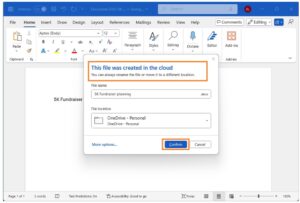
To change the name of the file and its location, users need to select Save or press Ctrl+S. After selecting the file name and location, press Confirm to save the changes.

Microsoft Word Update - Step 2

Source: Microsoft Tech Community

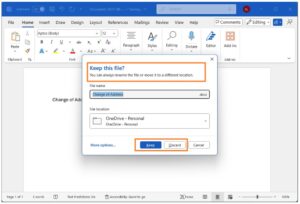
In case users try to close the file before it gets saved, a dialog displays on the screen asking whether they intend to Discard or Keep the file. If users try to close empty files, Word discards them without asking for confirmation.

Microsoft Word Update - Step 3

Source: Microsoft Tech Community

Availability of the Auto-Save Feature of Microsoft Word Update-

The AutoSave feature of Microsoft Word update is available to users with Version 2509 (Build 19221.20000) or newer. This advancement is set to enhance accessibility and address the challenge of lost files. Similar features have been introduced on Windows Excel and PowerPoint as well.

Advantages of the Latest Microsoft Word Update

Microsoft Word’s new auto-save feature will unlock several benefits for users. Alongside increased security, it offers flexible file management capabilities. Let us discuss other significant advantages-

Flexibility in File Storage and Control: Users can store and manage their files more flexibly than ever. As users are in charge of the documents, they can adjust file names and locations to save, organizing the files according to convenience.

Never Lose Your Files: The auto-save feature in Microsoft Word addresses the challenge of losing files due to not saving them manually. As soon as you start making progress in a file, it automatically gets saved.

Enhanced Security and Compliance: Files saved in your organization’s cloud servers already adhere to the set security guidelines and practices. Hence, users do not need to think about protecting the files separately.

Increased Accessibility: The auto-save feature enables enhanced accessibility of Word files. It can be accessed from diverse types of devices and platforms once shared, including Android, iOS, and web browsers. Changes made to the file will get synced on all devices and platforms.

Better Collaboration: The AutoSave feature has made collaboration within and across teams easier. Users can easily share the cloud file and initiate collaboration by making changes, adding comments, and resolving comments in real time.

Agentic AI Support: The Word files are now equipped with Copilot agentic AI support. Users can unlock AI-powered capabilities whenever they need to improve or update their documents. Nevertheless, to use Copilot in Word, a Microsoft 365 Copilot license is needed.

Additional Tips: 

  • Users will be able to easily change the location for new documents. Right-click on any cloud folder in the File section of Word, then select Set as Default Location to choose the location.
  • Users can manage how their files are created, whether in the traditional manner or automatically in the cloud, in the Save tab of Word Options, and opt in or opt out for Create new files in the cloud automatically.

Key Elements to Keep in Mind-

  • When a new Word session is started while another is running, the new file does not autosave. Hence, users need to close the previous file to enable the auto-save option for new files.
  • Users may sometimes encounter a delay in refreshing the recent files list while changing the name of a document.
  • If users disable the option for Show the Start screen when this application starts, remember that the first file they create will not autosave automatically.

Concluding Remarks!

Microsoft has been making significant advancements in its 365 Office platforms for better collaboration and enhanced productivity of diverse teams within an organization. With the integration of Copilot and flexible features, the firm is aiming to boost user experience and accessibility of the tools, including Word for Windows.

Learn about the major technological shifts and practices with KnowledgeNile!


FAQs:

1. What is the AutoSave feature in Microsoft Word?

Answer: The AutoSave feature in Microsoft Word lets users save their files automatically.

2. What is the purpose of AutoSave?

Answer: The AutoSave feature aims to reduce the challenges of data loss in unwanted circumstances, such as power shortages and device failures.

3. Where are AutoSave Word documents stored?

Answer: Automatically saved Word files are stored in cloud storage, like OneDrive.


Recommended For You:

Oracle identity cloud vs Microsoft Active Directory: Which to opt for and why?


Source link