This Is What Will Happen if You Try to Make Popcorn in an Air Fryer


When I searched online to see if it’s possible to pop popcorn in an air fryer, I ran into a dead end. Some websites say that you can and even encourage air-fried popcorn, while others caution against it. Unable to find a clear answer, I felt it was my duty as a devoted popcorn lover to go straight to the source for us all, which is why I reached out to an actual air fryer manufacturer and professional chefs to get a final answer.

Experts weigh in on air fryer popcorn

I reached out to Ninja, makers of the Ninja Crispi, CNET’s pick for the best air fryer overall. While the air fryer is a versatile appliance that can even roast a whole chicken, it can’t pop popcorn — yet. 

Well, technically it can, but that doesn’t mean it should.

“At Ninja, we’re always testing the boundaries of what our technology can do, and popcorn in an air fryer is something our culinary and product development teams have explored. However, we advise against trying to make popcorn in an air fryer,” a Ninja Kitchen representative tells CNET. “Air fryers circulate heat differently than traditional popcorn makers, which means kernels don’t reach the sustained heat needed in the required time.”

Because popcorn is lightweight, Sharniquia White, chef and registered dietitian, explains that if you try to make it in an air fryer, it can fly up into the device’s heating element, get stuck near the fan, burn from uneven airflow and leave you with a frustrating amount of unpopped kernels. All cons, no pros. 

Given the safety hazards and unsatisfying results, you’ll want to avoid using an air fryer for popcorn. At least until the technology catches up. 

The Ninja Crispi Pro air fryer on a countertop roasting a whole chicken.

While air fryers such as the Ninja Crispi Pro can roast an entire chicken, they can’t pop popcorn just yet.

Ninja

The best way to make popcorn, according to pro chefs

Since the air fryer is out for popcorn, I asked my chef sources for their recommendations on making the best popcorn. 

White says that the stovetop wins every time if you want a fluffy texture, rich flavor and full expansion of your kernels. She provides these handy instructions for getting the best results:

  1. Heat 2-3 tablespoons of oil in a large, heavy-bottom pot over medium heat.
  2. Add 2-3 kernels to test if the oil is hot enough. When they pop, add ½ cup kernels.
  3. Cover and gently shake the pot occasionally.
  4. Remove from heat when popping slows.
  5. You control the oil, the salt and the outcome.

However, if you make popcorn all the time, plant-based chef Shauna McQueen, MS, RD, founder of Food School, recommends purchasing a low-cost pan with a lid you can crank to move the popcorn kernels around. 

“The other option is automatic and will self-stir the kernels,” McQueen adds. “I’ve used both and have had to replace both within a few years of use, but find the automatic one most convenient.”

As for the healthiest way to make popcorn…

“If you’re reaching for the air fryer because you want to use less oil, you’re thinking in the right direction,” White says. “However, an inexpensive air popper or a measured stovetop method is more reliable and safer. Popcorn is already a whole-grain, fiber-rich snack. The goal isn’t to eliminate oil entirely; it’s to be intentional about how much you use and what you add.”

Whether you pop it on the stove or buy a device that air-pops your popcorn, it’s best to avoid microwave popcorn. According to McQueen, it may contain additives like TBHQ, which is used to extend the shelf life of processed foods. While the FDA considers it safe in appropriate amounts, it has been linked to potential health issues.

A close-up of popcorn.

If you want less oil on your popcorn, consider investing in an air popper or being more intentional about the toppings you use.

Jonathan Knowles/Getty Images

The healthiest popcorn toppings

If extra flavor is what you’re after, McQueen suggests the following anti-inflammatory toppings: curry powder, cayenne, garlic powder or chili powder. For a cheesy flavor plus B-vitamins, opt for nutritional yeast. Her favorites include a curry-style popcorn made with curry powder, garlic powder and a small amount of nutritional yeast; chili powder with lime and za’atar; or everything bagel seasoning. 

As for White, she likes adding smoked paprika, cinnamon with a pinch of salt, fresh lime zest and sea salt or dried dill, “for an unexpected herb twist.”

The bottom line

Though it’s tempting, you shouldn’t make popcorn in your air fryer. Instead, use what you already have on hand and prepare it on the stovetop. 

If you can’t get enough of the stuff and make it all the time, consider these options that are under $50: a stovetop popcorn maker or an oil-free air popper.

Either way, to keep your popcorn as healthy as possible, go light on the oil, butter and salt. Personally, I’ll be topping mine with chili powder, lime and za’atar next time my popcorn craving strikes, which will likely be in a few minutes after writing this tasty piece. 


Source link

Leave a Reply

Subscribe to Our Newsletter

Get our latest articles delivered straight to your inbox. No spam, we promise.

Recent Reviews


Lost a crucial document because your system crashed before you could save it? Worry no more! Microsoft Word has introduced an automatic save option that regularly backs up your work, so you’ll never lose your progress again.

Users will now be able to manage their Word documents without thinking about saving them manually. The new Microsoft Word update allows users to automatically save their documents to the cloud as soon as they start documenting any content piece.

Raul Munoz, the Senior Product Manager at Microsoft, has stated about the new feature, “We are modernizing the way files are created and stored in Word for Windows! Now you don’t have to worry about saving your documents: Anything new you create will be saved automatically to OneDrive or your preferred cloud destination.

Microsoft additionally hints at introducing similar features for Windows Excel and PowerPoint, which are now live.

How Does the Auto-save Feature Work?

The auto-save option can be accessed and used effectively with the compatible Word for Windows version. Let’s understand how the process works-

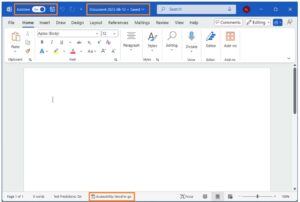
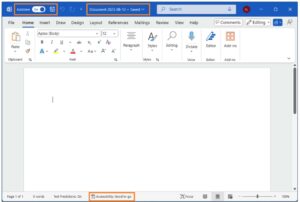
Primarily, users need to create a fresh document in Word and switch the AutoSave option on. Unlike the previous default document name- DocumentN, the autosave feature saves the files with the date.

Microsoft Word Update - Step 1

Source: Microsoft Tech Community

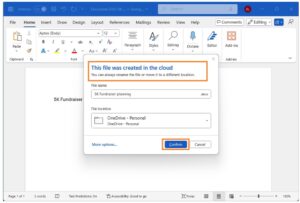
To change the name of the file and its location, users need to select Save or press Ctrl+S. After selecting the file name and location, press Confirm to save the changes.

Microsoft Word Update - Step 2

Source: Microsoft Tech Community

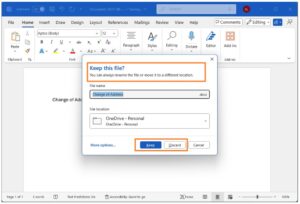
In case users try to close the file before it gets saved, a dialog displays on the screen asking whether they intend to Discard or Keep the file. If users try to close empty files, Word discards them without asking for confirmation.

Microsoft Word Update - Step 3

Source: Microsoft Tech Community

Availability of the Auto-Save Feature of Microsoft Word Update-

The AutoSave feature of Microsoft Word update is available to users with Version 2509 (Build 19221.20000) or newer. This advancement is set to enhance accessibility and address the challenge of lost files. Similar features have been introduced on Windows Excel and PowerPoint as well.

Advantages of the Latest Microsoft Word Update

Microsoft Word’s new auto-save feature will unlock several benefits for users. Alongside increased security, it offers flexible file management capabilities. Let us discuss other significant advantages-

Flexibility in File Storage and Control: Users can store and manage their files more flexibly than ever. As users are in charge of the documents, they can adjust file names and locations to save, organizing the files according to convenience.

Never Lose Your Files: The auto-save feature in Microsoft Word addresses the challenge of losing files due to not saving them manually. As soon as you start making progress in a file, it automatically gets saved.

Enhanced Security and Compliance: Files saved in your organization’s cloud servers already adhere to the set security guidelines and practices. Hence, users do not need to think about protecting the files separately.

Increased Accessibility: The auto-save feature enables enhanced accessibility of Word files. It can be accessed from diverse types of devices and platforms once shared, including Android, iOS, and web browsers. Changes made to the file will get synced on all devices and platforms.

Better Collaboration: The AutoSave feature has made collaboration within and across teams easier. Users can easily share the cloud file and initiate collaboration by making changes, adding comments, and resolving comments in real time.

Agentic AI Support: The Word files are now equipped with Copilot agentic AI support. Users can unlock AI-powered capabilities whenever they need to improve or update their documents. Nevertheless, to use Copilot in Word, a Microsoft 365 Copilot license is needed.

Additional Tips: 

  • Users will be able to easily change the location for new documents. Right-click on any cloud folder in the File section of Word, then select Set as Default Location to choose the location.
  • Users can manage how their files are created, whether in the traditional manner or automatically in the cloud, in the Save tab of Word Options, and opt in or opt out for Create new files in the cloud automatically.

Key Elements to Keep in Mind-

  • When a new Word session is started while another is running, the new file does not autosave. Hence, users need to close the previous file to enable the auto-save option for new files.
  • Users may sometimes encounter a delay in refreshing the recent files list while changing the name of a document.
  • If users disable the option for Show the Start screen when this application starts, remember that the first file they create will not autosave automatically.

Concluding Remarks!

Microsoft has been making significant advancements in its 365 Office platforms for better collaboration and enhanced productivity of diverse teams within an organization. With the integration of Copilot and flexible features, the firm is aiming to boost user experience and accessibility of the tools, including Word for Windows.

Learn about the major technological shifts and practices with KnowledgeNile!


FAQs:

1. What is the AutoSave feature in Microsoft Word?

Answer: The AutoSave feature in Microsoft Word lets users save their files automatically.

2. What is the purpose of AutoSave?

Answer: The AutoSave feature aims to reduce the challenges of data loss in unwanted circumstances, such as power shortages and device failures.

3. Where are AutoSave Word documents stored?

Answer: Automatically saved Word files are stored in cloud storage, like OneDrive.


Recommended For You:

Oracle identity cloud vs Microsoft Active Directory: Which to opt for and why?


Source link