Razer’s new Blade 16 has Intel’s latest chips and ultra-fast RAM


After leaning into some questionable AI antics at CES 2026, Razer is making some altogether more practical updates to its 16-inch laptop by giving it newer chips and faster RAM. The new Razer Blade 16 features Intel’s new Core Ultra chips and speedy LPDDR5X-9600 MHz RAM, and is available to order today for $3,500.

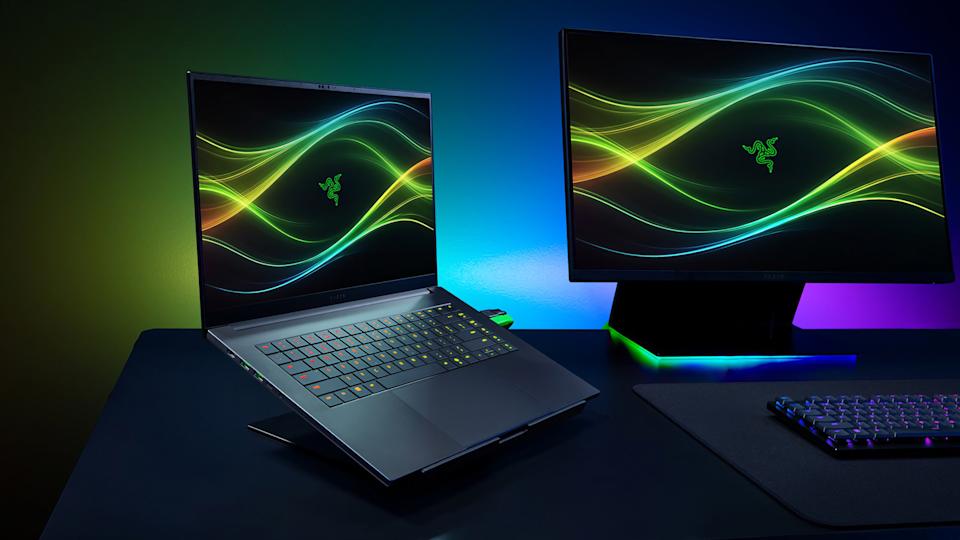
The Razer Blade 16 is designed to split the difference between the portable Razer Blade 14 and the monstrous Razer Blade 18, mostly by being thin but offering improved performance. Razer says the 2026 Blade 16 is 0.59 inches (14.9mm) at its thinnest point, which matches the thinness of the 2025 Blade 16. The laptop also has a similar 16-inch QHD+, 240Hz OLED screen to last year’s model, though the company says it’s 100 nits brighter than before. Port selection also remains respectable: the laptop includes three USB 3.2 Gen 2 Type-A ports, a Thunderbolt 4 port, a Thunderbolt 5 port, a full-sized HDMI 2.1 port and a UHS-II SD card reader.

A Razer Blade 16 laptop viewed from the front next to a monitor.

Razer

The real notable upgrade is Razer’s switch from AMD Ryzen chips to new Intel Core Ultra 9 386H chips on the 2026 Razer Blade 16. The new Core Ultra chips are some of Intel’s first processors made with its new 18A process and pitched as the company’s comeback. Razer says the new chip es 16 cores and an integrated NPU that “provides up to 50 TOPS” for things like image generation and live translation, which the Razer Blade 16 supports natively as a Copilot+PC. The efficiency of the new chip also contributes to the laptop’s up to 15 hours of battery life. Of course, if you want power, the Razer Blade 16 has it: the laptop includes NVIDIA’s GeForce RTX 50 Series Laptop GPUs and up to 64Gb of LPDDR5X-9600MHz RAM, which should give the Razer Blade 16 plenty of pep for games.

Hardware upgrades don’t come cheap, and the higher $3,500 starting price of the Razer Blade 16 — which includes 32GB of RAM, 1TB of storage and a GeForce RTX 5080 GPU at a minimum — is likely reflective of the growing cost of memory and storage that’s already negatively impacting the PC industry.

The Razer Blade 16 is available to purchase now through Razer’s website.


Source link

Leave a Reply

Subscribe to Our Newsletter

Get our latest articles delivered straight to your inbox. No spam, we promise.

Recent Reviews


Chalk up a win for creative artists against AI companies. On Wednesday, the UK government abandoned its previous position on copyrighted works. It’s currently working on a data bill that, if unaltered, would have allowed AI companies like Google and OpenAI to train models on copyrighted materials without consent. Artists and other copyright holders would only have been offered a mere opt-out clause.

After significant backlash, the UK backed off from that position. “We have listened,” Technology Secretary Liz Kendall said on Wednesday. However, the government’s new stance is, well, not a stance at all. It currently “no longer has a preferred option” about how to handle the issue.

Still, backpedaling from its previous position is viewed as a win for artists. UK Music CEO Tom Kiehl described the decision as “a major victory,” while promising to work with the government on the next steps.

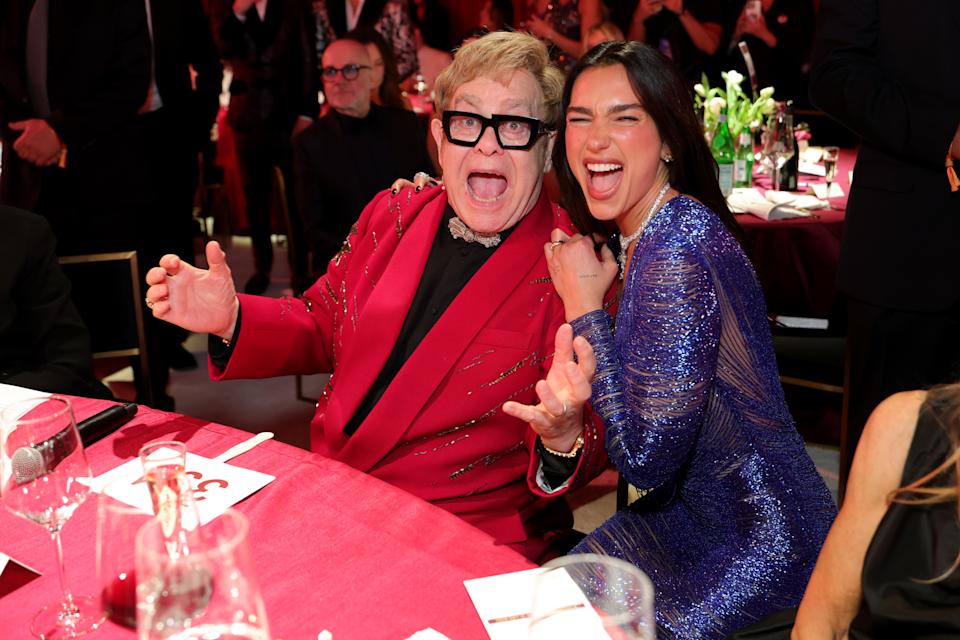
WEST HOLLYWOOD, CALIFORNIA - MARCH 15: (Exclusive Coverage) (L-R) Elton John and Dua Lipa attend Elton John AIDS Foundation's 34th Annual Academy Awards Viewing Party on March 15, 2026 in West Hollywood, California. (Photo by Kevin Mazur/Getty Images for Elton John AIDS Foundation)

Elton John and Dua Lipa spoke out against the government’s previous stance. (Photo by Kevin Mazur/Getty Images for Elton John AIDS Foundation) (Kevin Mazur via Getty Images)

Last year, some of Britain’s highest-profile artists objected to the government’s position. Sir Elton John and Dua Lipa were among those speaking out. Even Sir Paul McCartney weighed in, warning that the AI industry could “rip off” artists and lead to a “loss of creativity.”

“You get young guys, girls, coming up, and they write a beautiful song, and they don’t own it, and they don’t have anything to do with it,” McCartney told the BBC in 2025. “And anyone who wants can just rip it off. The truth is, the money’s going somewhere… somebody’s getting paid.”

The government will now weigh its options, taking “the time needed” to balance the wishes of artists and the tech industry. “We will not introduce reforms to copyright law until we are confident that they will meet our objectives for the economy and UK citizens,” it wrote in a report. “This means protecting the UK’s position as a creative powerhouse, while unlocking the extraordinary potential of AI to grow the economy and improve lives.”

“Any reform must ensure that right holders can be fairly rewarded for the economic value their work creates, and that they are protected against unlawful and unfair use of their work. It must also ensure that AI developers can access high-quality content.”


Source link