:max_bytes(150000):strip_icc():format(jpeg)/Health-GettyImages-1311685399-1323caf7053140f98e084054b0bb28e9.jpg "An assortment of healthy food items like avocado seeds beans and chocolate laid out on a table")
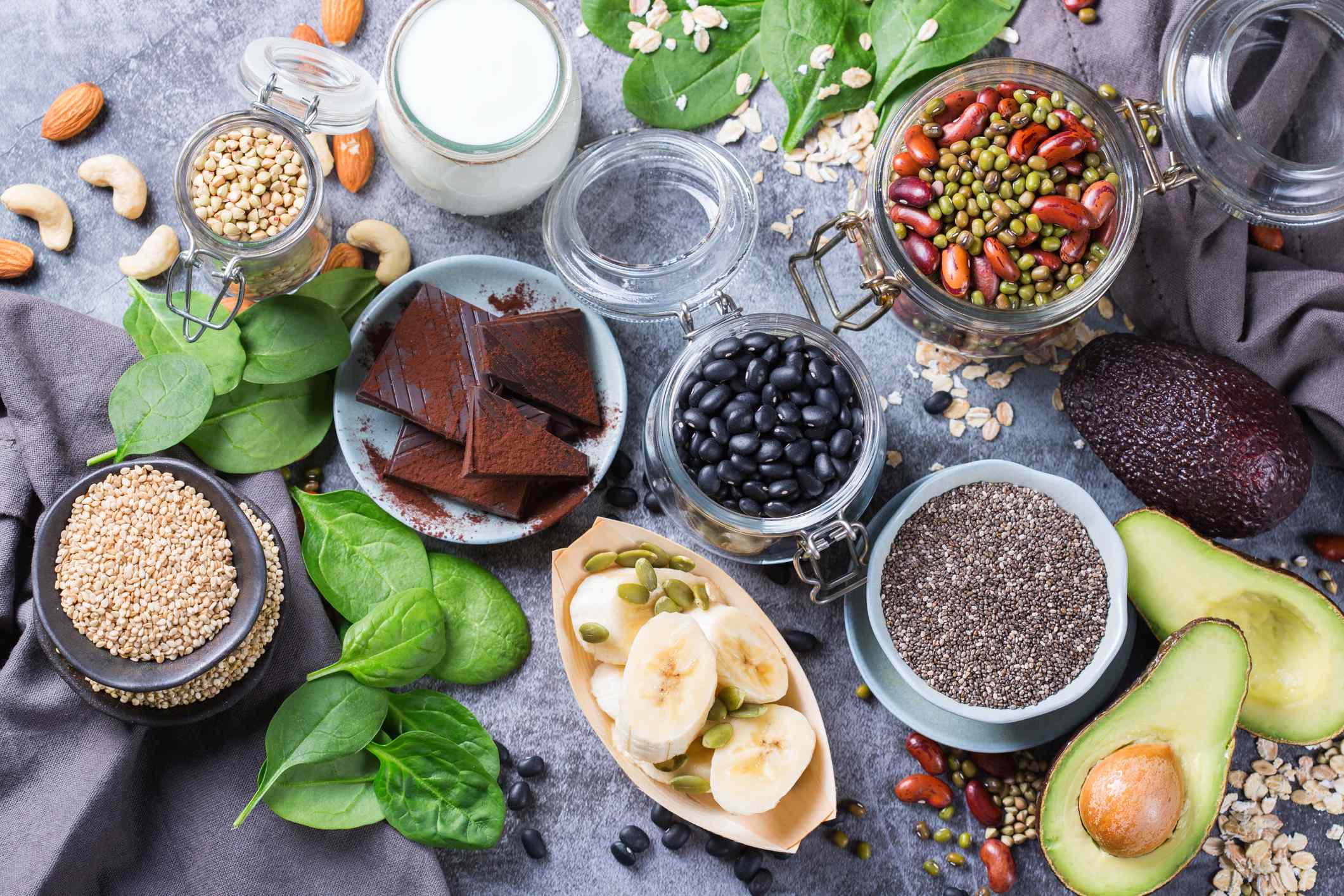
- Magnesium-rich foods like seeds, nuts, and leafy greens may help support sleep and reduce stress.
- These foods also contain tryptophan, omega-3s, and other mood-boosting nutrients.
- Eating a variety of magnesium-rich foods as part of a nutritious, balanced diet may help support better sleep and overall well-being.
Magnesium plays a key role in sleep and stress regulation. Eating more magnesium-rich foods may help you feel calmer and support better sleep over time.
1. Pumpkin Seeds

Magnesium content: 154 milligrams, 37% of the Daily Value (DV)
Serving size: 1 ounce (without shells)
Pumpkin seeds are one of the richest dietary sources of magnesium, with 1 ounce covering 37% of your daily needs. They're also a good source of tryptophan, an amino acid the body uses to make melatonin. Studies have shown that eating tryptophan-rich foods can help improve total sleep time.
2. Almonds

Magnesium content: 76.5 milligrams, 18% of the DV
Serving size: 1 ounce
Snacking on almonds is another easy way to meet your daily magnesium needs. One ounce, or about 28 almonds, provides around 18% of the Daily Value (DV).
Magnesium helps your muscles relax and plays a role in how your body responds to stress. When magnesium levels are low, you may feel more sensitive to stress.
Almonds also provide healthy fats and fiber, which have been associated with improved mood.
3. Spinach

Magnesium content: 157 milligrams, 37% of the DV
Serving size: 1 cup (boiled)
Spinach is a nutrient powerhouse, packed with magnesium as well as tryptophan and antioxidant compounds that protect against cell damage.
It also provides fiber, which helps keep your digestion regular and supports gut health. A healthy gut may support better sleep by helping regulate hormones that control your sleep-wake cycle.
4. Dark Chocolate

Magnesium content: 64.6 milligrams, 15% of the DV
Serving size: 1 ounce
Dark chocolate is a surprisingly good source of magnesium, especially varieties with a higher cocoa content. It also contains compounds that may help support mood by increasing serotonin levels in the brain. Enjoying a small piece in the evening can feel satisfying and may help you wind down.
5. Avocado

Magnesium content: 58.3 milligrams, 14% of the DV
Serving size: 1 avocado
Avocados provide magnesium along with fiber and heart-healthy fats. These nutrients help keep blood sugar stable, which may prevent energy crashes and irritability. The combination can support a stable mood and relaxation.
6. Black Beans

Magnesium content: 120 milligrams, 29% of the DV
Serving size: 1 cup cooked
Black beans are rich in magnesium, fiber, and plant-based protein. They also provide several B vitamins, including B6. Vitamin B6 helps support neurotransmitter production, which plays a role in mood.
7. Salmon

Magnesium content: 71.4 milligrams, 17% of the DV
Serving size: 1 large filet
Salmon provides magnesium along with omega-3 fatty acids, which have been linked to improved mood and brain health. These healthy fats may also help reduce inflammation and support more restful sleep.
Salmon is a staple in the Mediterranean diet, which has been linked to better mental well-being.
8. Cashews

Magnesium content: 82.8 milligrams, 20% of the DV
Serving size: 1 ounce
Cashews are another easy way to boost your magnesium intake. They also provide healthy fats and a small amount of tryptophan, which may support relaxation and help your body prepare for sleep.
9. Quinoa

Magnesium content: 118 milligrams, 27% of the DV
Serving size: 1 cup (cooked)
Quinoa is a whole grain that provides several sleep-supporting nutrients, including magnesium and tryptophan. It also contains fiber and protein, which can help prevent blood sugar crashes and support a more stable mood.
10. Chia Seeds

Magnesium content: 95 milligrams, 23% of the DV
Serving size: 1 ounce
Chia seeds are small but packed with magnesium, fiber, and omega-3 fats. They contain alpha-linolenic acid (ALA), a type of omega-3 that may help support brain health, memory, and mood.
11. Hemp Seeds

Magnesium content: 210 milligrams, 50% of the DV
Serving size: 3 tablespoons
Hemp seeds are one of the best sources of magnesium. Just three tablespoons provide about 50% of your daily needs. They also offer protein and healthy fats that support brain health. Add them to yogurt, smoothies, or oatmeal for an easy boost.
How To Add More Magnesium-Rich Foods to Your Diet
Small changes add up over time. Getting magnesium from a variety of foods can help support better sleep, a calmer mood, and overall health. Here are some simple ways to add more into your diet:
- Add one or two magnesium-rich foods to meals you already eat
- Sprinkle seeds on yogurt, oatmeal, or salads
- Toss beans into salads, bowls, or soups
- Swap refined grains for whole grains like quinoa
- Aim to get magnesium from a variety of foods throughout the day, rather than relying on one source