:max_bytes(150000):strip_icc():format(jpeg)/Health-GettyImages-1134940237-07144c77bff341eebcb59d8de52d15b0.png "Glasses filled with green celery juice next to fresh celery sticks.")
Credit: vaaseenaa / Getty Images
- Many people drink celery juice first thing in the morning, but there’s no strong evidence that timing changes its health effects.
- Celery and celery juice contain antioxidants and plant compounds that may help support gut and overall health.
- While juice is a convenient option, whole celery provides digestion-boosting fiber, which is lost in the juicing process.
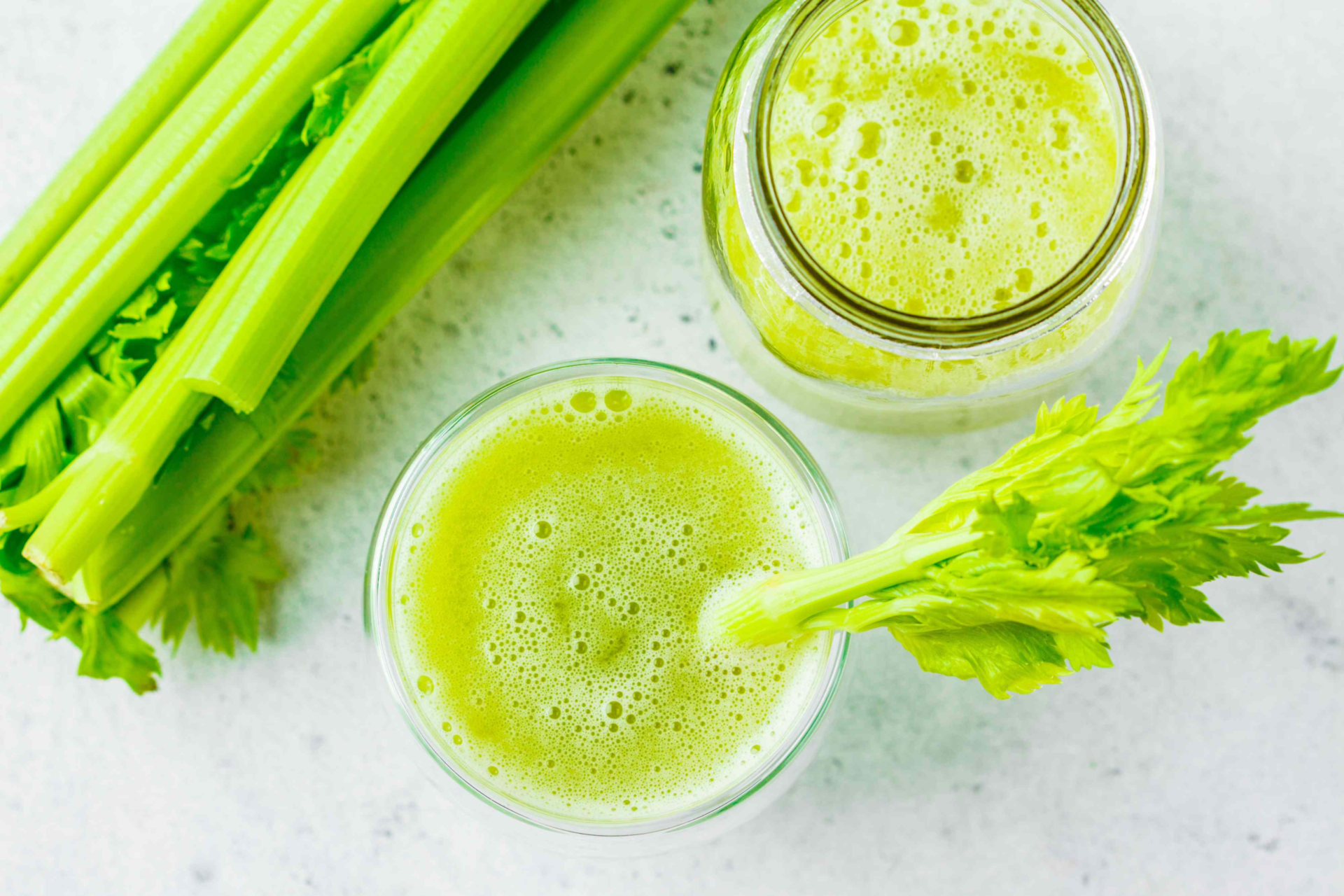
Celery juice is often touted for its potential ability to support digestion and reduce inflammation. While creators and wellness influencers recommend drinking it first thing in the morning, there’s no research to suggest that timing makes a significant difference in terms of celery juice's health benefits.
Is Morning the Best Time To Drink Celery Juice?
Some people—including wellness influencer Anthony William, who claims to be an originator of the celery juice trend—suggest that drinking the beverage on an empty stomach boosts nutrient absorption and further heightens celery juice's digestive benefits.
Despite these claims, there's no scientific evidence that celery juice works better in the morning (or at any specific time of day), or that it's more effective before you've eaten.
In general, your body's ability to absorb vitamin K, potassium, and other nutrients found in celery juice isn't based on whether you've eaten or not. Rather, factors like gut health, genetics, and age have more of an impact. Some nutrients are actually better absorbed with food—vitamin K, for example, is best absorbed alongside dietary fats.
That said, drinking celery juice on an empty stomach or in the morning may have benefits for some people, including:
- A hydration boost after overnight fasting
- Consistent timing that makes it easier to form a habit
Ultimately, the best time to drink celery juice is whenever it fits into your routine.
Benefits of Drinking Celery Juice
Celery juice is a popular drink that's said to have a number of health benefits. The vegetable contains antioxidants called apigenin and luteolin, which fight inflammation and cell damage in the body.
Apigenin and luteolin, as well as other plant compounds, can help promote healthy blood pressure. They've also been linked to improvements in gut health.
In addition to antioxidants, celery juice is a good source of vitamin K, which plays an essential role in the creation and maintenance of bone, as well as potassium, which again promotes healthy blood pressure.
Though the individual plant compounds and nutrients in celery juice have been linked to health benefits, studies examining celery juice on its own are limited. More research is needed to further investigate celery juice's impact on health and what ideal dosing might look like.
Celery Juice: Nutrition Basics
In 1 cup (236 grams) of celery juice, you'll find:
- Calories: 40
- Carbohydrates: 7.8 grams
- Sugar: 3.2 grams
- Potassium: 625 mg (14% DV)
- Vitamin K: 69 micrograms (58% DV)
- Folate: 85 micrograms (21% DV)
- Vitamin A: 51.9 micrograms (6% DV)
Celery juice may also contain some fiber—according to the U.S. Department of Agriculture, a standard cup contains about 3.8 grams of fiber. However, the fiber content can vary widely based on how celery juice is made, and how much pulp moves into the juice.
Should You Drink Celery Juice Every Day?
If you enjoy celery juice, drinking it regularly is generally safe for most people. Celery juice is naturally low in calories and sugar, and provides hydration along with small amounts of nutrients and antioxidants.
However, it's important to remember that celery juice alone is unlikely to significantly improve inflammation, gut health, or other health metrics.
For even greater health benefits, consider eating more whole celery—the vegetable contains the same nutritional benefits as celery juice, plus more fiber. Fiber feeds beneficial bacteria in your digestive system, may be able to help further lower inflammation, helps you feel full, and has links to better blood sugar.