Amazon’s satellite-based internet service, Leo, will enter service by mid-2026, so says company CEO Andy Jassy. Writing in his annual letter, Jassy claimed Leo would offer download speeds of up to 1Gbps, far more than what Starlink presently offers. Sadly, Amazon declined to offer any more details about what that mid-2026 service would look like. But given select partners have already been kicking Leo’s tyres for a while, we can only hope.
The mega-retailer is making some grand promises, including faster up and download speeds, cheaper cost and direct integration with Amazon’s other products. Of course, the company can also sell itself on the fact it’s a satellite internet provider not owned by Elon Musk. But it will have to buck its ideas up fast, given how far behind in its deployment of satellites it is.
— Daniel Cooper
The other big stories this morning
It’s a showcase for the Snapdragon X2 Elite.
Devindra Hardawar for Engadget
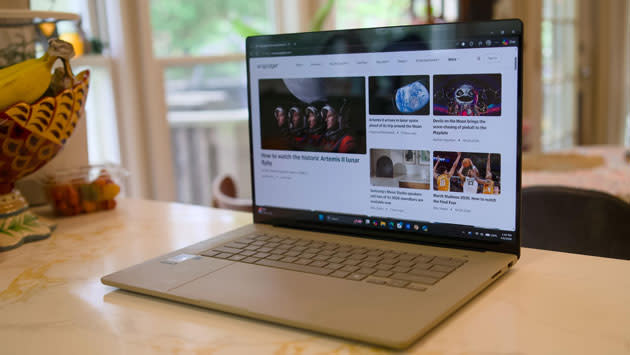
ASUS’ ZenBook A16 is a 16-inch ultraportable designed to go toe-to-toe with LG’s Gram Pro 16. It’s equipped with Qualcomm’s Snapdragon X2 Elite and designed to address the flaws Devindra Hardawar found in last year’s ZenBook A14. Did it succeed? You’ll have to read his review to get the full story, but he’s certainly happy to have spent the last week using this thing.
Greece will ban under 15s from accessing social media, Prime Minister Kyriakos Mitsotakis has announced. Like many nations both in Europe and beyond, officials are concerned about the effect social media is having on children’s mental and physical health. The big platforms will be in charge of enforcing the ban, backed up by the hefty punishments enabled by the Digital Services Act.
Know what doesn’t lose support after a few years? Books.
Amazon
If you’re still using a Kindle or Fire tablet made in 2012 or before, then it’s going to get a little less useful on May 20. Amazon is discontinuing support for those earlier models on that date, removing the ability to purchase, borrow or download new titles. Thankfully, whatever is on the hardware already will remain, so don’t fret if you’re only a third of the way through Remembrance of Things Past.
Billy Steele has been putting Fender Audio’s new speakers through their paces to find what can only be described as a mixed bag. Excellent audio quality and a wide variety of inputs get high praise, but the heavy weight, exposed wood and limited battery life all dent the paintwork.
WhatsApp’s CarPlay interface isn’t the most elegant or easy way to keep in touch with your friends while driving. Meta has, however, given the UI a little polish to help make it a little easier to get something useful done without pulling your attention from the road.
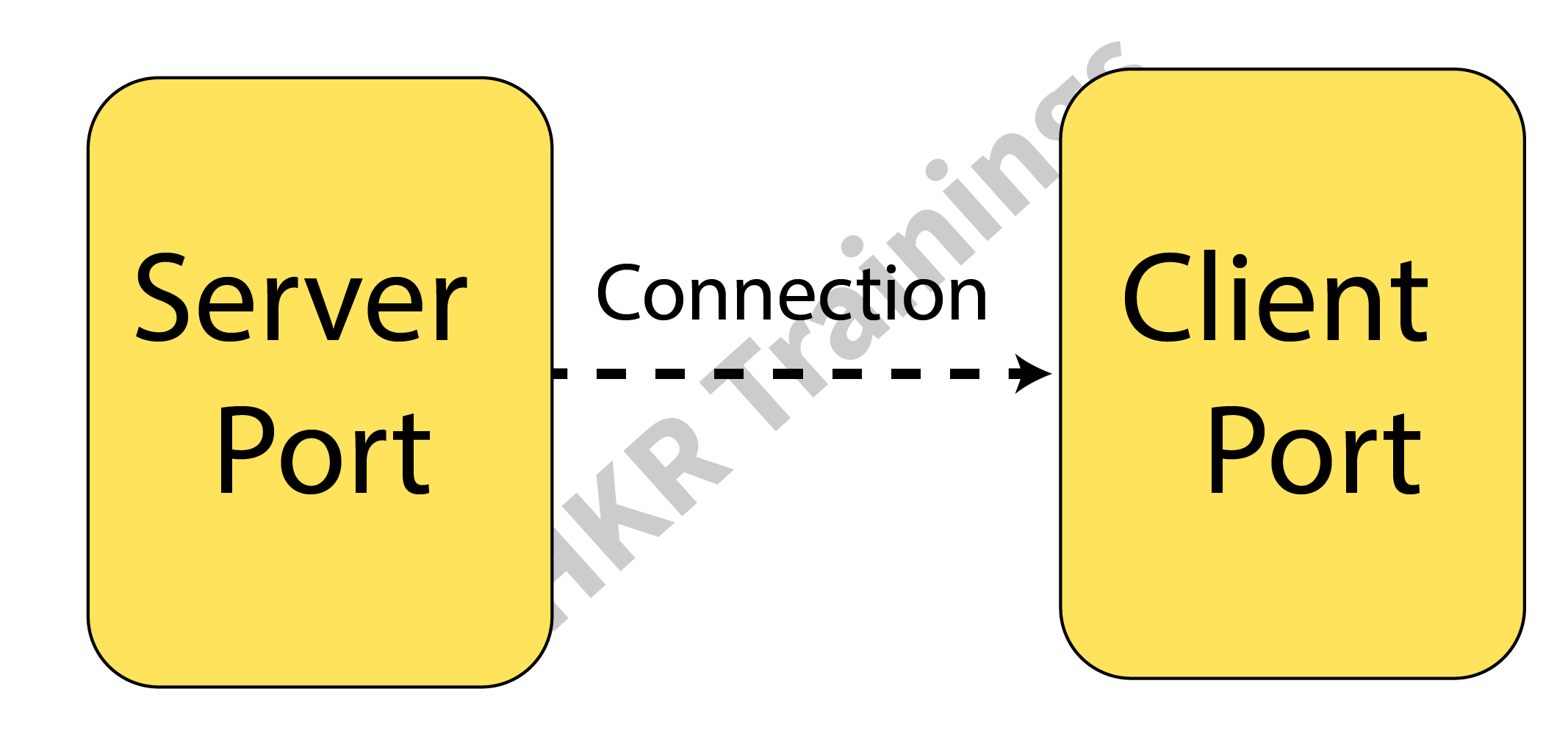
Socket programming is a method where two nodes on a network can connect and communicate with one another. While another socket reaches out to the first socket to establish a connection, one socket (or node) listens on a specific port at an IP address. While the customer reaches out for the server, the server creates the listener socket. For connection-oriented socket programming, the classes Socket and Server Socket are utilized.
Programming using Java Sockets can be either connection-oriented or connection-less. For connection-oriented socket programming, While the customer reaches out for the server, the server creates the listener socket. For connection-oriented socket programming, the classes Socket and Server Socket are utilized. and DatagramSocket classes are used, while Socket and ServerSocket are used for connection-less socket programming.
What Is Java Socket
A Java socket is one terminal of a 2-way networked communication relationship between two programs. For the TCP layer to recognize the program that data is intended to be transferred to, a socket is tied to a port number.
A port number and an IP address make up an endpoint. An implementation of one side of a 2-way connection between the Java program and another program on the network is made possible by the class Socket, which is part of the Java platform’s package. The class resides on top of the platform-specific implementation, shielding your Java program from the specifics of every given system. Your Java programs can interact over the web in a platform-independent manner by utilizing the class rather than depending on native code.
Client-Side Programming
When using the client side, in the programming, the client initially watches for the server to launch. The requests will be sent to the server once it is operational. The client will then watch for the server’s answer. So, this is how server and client communication functions overall. Let’s now go deeper into client-side and server-side programming.
For starting with the requests from the client-side, the user needs to process the following steps:
Establish a connection :
Creating a socket connection is the initial action. The socket connection signifies that the 2 machines are aware of each other’s IP address and TCP port on the network.
The following statement will let you construct a socket:
Socket s = new s(“127.0.0.1”, 5000)
The first input in this case denotes the server’s IP address.
The TCP Port is represented by the second parameter. (A number that indicates which server-side program should be running.)
Communication :
Streams are utilized for both data input and output when communicating via a socket connection. You must shut down the connection after opening it and sending the requests.
Closing the connection : Once the message has been transmitted to the server, the socket connection will explicitly close.
Wish to make a career in the world of Java? Start with HKR’S Java Training !
Java Certification Training
Master Your Craft
Lifetime LMS & Faculty Access
24/7 online expert support
Real-world & Project Based Learning
Server-Side Programming
In essence, the server will create its object and await a request from the client. The server will reply with the response once the client will send the request. Two sockets are required in order to program the server-side application, and they are as follows:
When a client calls newSocket(), a ServerSocket that is waiting for the requests from the client is created. There is a straightforward socket for client communication. Following that, you must inform the client of the outcome.
Communication
The output is sent across the socket using the getOutputStream() function.
Closing the connection
Once everything is finished, it’s crucial to shut off the connection by shutting the socket and any active input/output streams.
You can run the server-side program first after configuring the client and server ends. After that, you must transmit the request and start client-side software. The server will reply as the client sends the request. The image below shows the same.
The client will establish a connection and enter the request as a string.
The server will reply to the request sent by the client.
You must run a Java socket program in the given manner. These programs can also be run via a command window or terminal. However, as Eclipse is very feature-rich, you can easily run both apps on a console.
Subscribe to our YouTube channel to get new updates..!
Testing The Applications
The testing of applications is done using the IntelliJ application or any other IDE.
Put the two programs together.
Start the client application after starting the server software.
Write a message in the client window, and the server window will simultaneously receive and display them.
Type BYE to leave.
This can be done using a command prompt also:
Create a new folder called project (this is the name of your package).
Place the project folder’s Server.java and Client.java files.
Go to the root path on the command prompt after opening it.
Run java project.Server first, then javac projectServer.java.
Use the same process to run the client and server programs.
Messages can then be typed in the window of the client.
The application can fail when a port has already been in use. Modify port no to a special number to resolve this problem.
Acquire Jenkins certification by enrolling in the HKR Jenkins Training program in Hyderabad!
Java Certification Training
Weekday / Weekend Batches
Conclusion
In this article, we have talked about socket and socket programming. Socket programming is a method where two nodes on a network can connect and communicate with one another. While another socket reaches out to the first socket to establish a connection, one socket (or node) listens on a specific port at an IP address. We have also discussed client-side and server-side along with testing the applications.
To provide the best experiences, we use technologies like cookies to store and/or access device information. Consenting to these technologies will allow us to process data such as browsing behavior or unique IDs on this site. Not consenting or withdrawing consent, may adversely affect certain features and functions.
Functional
Always active
The technical storage or access is strictly necessary for the legitimate purpose of enabling the use of a specific service explicitly requested by the subscriber or user, or for the sole purpose of carrying out the transmission of a communication over an electronic communications network.
Preferences
The technical storage or access is necessary for the legitimate purpose of storing preferences that are not requested by the subscriber or user.
Statistics
The technical storage or access that is used exclusively for statistical purposes.The technical storage or access that is used exclusively for anonymous statistical purposes. Without a subpoena, voluntary compliance on the part of your Internet Service Provider, or additional records from a third party, information stored or retrieved for this purpose alone cannot usually be used to identify you.
Marketing
The technical storage or access is required to create user profiles to send advertising, or to track the user on a website or across several websites for similar marketing purposes.