5 Proven Health Benefits of Omega-3s You Should Know


Medically reviewed by Jamie Johnson, RDN

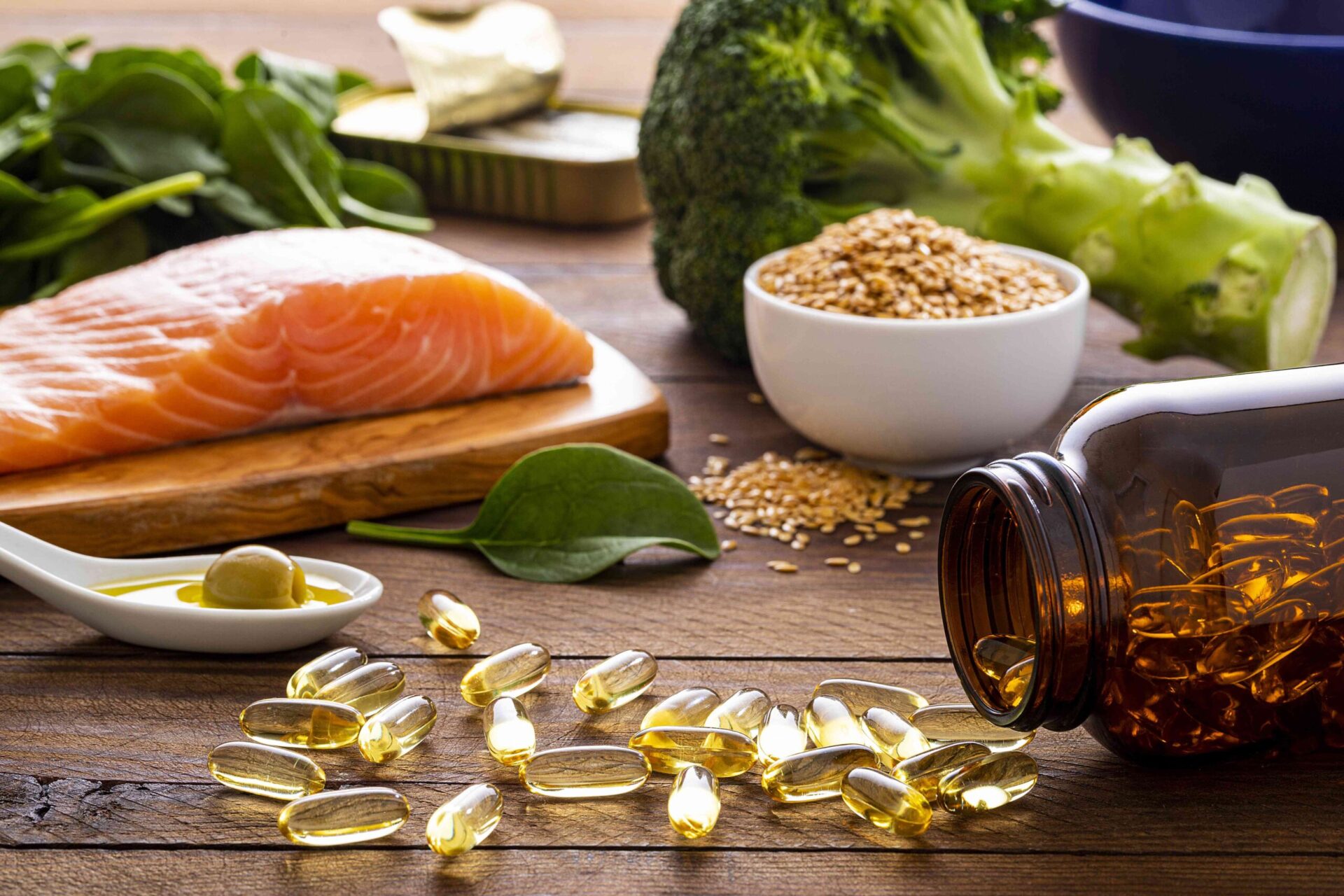
Salmon and flax seeds are good sources of omega-3 fatty acids.Credit: carlosgaw / Getty Images
Salmon and flax seeds are good sources of omega-3 fatty acids.
Credit: carlosgaw / Getty Images
  • Omega-3s can lower inflammation, cholesterol levels, and blood pressure, which can benefit heart health.
  • EPA and DHA may decrease symptoms in people with inflammatory diseases.
  • Flax oil, chia seeds, and salmon are sources of omega-3s.

Omega-3 fatty acids are a type of polyunsaturated fat known for their extensive health benefits. There are three main forms: docosahexaenoic acid (DHA), eicosapentaenoic acid (EPA), and alpha-linolenic acid (ALA). Because your body cannot effectively make omega-3s on its own, you need to get them through your diet. Here are five key benefits to know.

1. Helps Supports Heart Health

Omega-3s can protect heart health. They may lower inflammation, blood lipid levels, and blood pressure.

Supplementation may also help improve blood flow, increase high-density lipoprotein (HDL) cholesterol levels, and support a healthy heart rate.

A 2019 review of 13 studies with 127,477 participants found that EPA and DHA omega-3 supplements significantly lowered the risk of heart attack, coronary heart disease, total heart disease, and death caused by heart disease.

Higher doses improved benefits: 1,000 milligrams a day led to a 9% lower risk of heart attack and 7% lower risk of total coronary heart disease.

2. Improves Cognitive Function

Omega-3s play an important role in brain development and function. Supplementation has been shown to improve memory and attention in older adults and children.

A 2023 review found that 43.6% of the studies reported positive cognitive outcomes after omega-3 supplementation. About 66.7% of studies on older adults with mild cognitive impairment also reported positive outcomes.

3. Supports Mental Health

Omega-3s may help improve depression symptoms. Supplements with 60% EPA per 1 gram or more per day have been shown to be the most effective.

4. Reduces Inflammation

EPA and DHA help regulate inflammation in the body. Both decrease levels of some inflammatory proteins.

Omega-3 supplements may decrease symptoms in people with inflammatory conditions like rheumatoid arthritis and inflammatory bowel disease (IBD).

5. May Support Fetal Brain Development

Omega-3s play an important role in brain development. Experts recommend pregnant people supplement with omega-3s to support fetal development.

Good Sources of Omega-3s

Omega-3 deficiency is rare in the United States, but many people have insufficient levels.

Some of the best sources of DHA, EPA, and ALA include:

  • Flax oil: 7.26 grams (g) ALA per tablespoon (tbsp)
  • Chia seeds: 5.06 g ALA per 1-ounce (oz) serving 
  • Flaxseed: 2.35 g ALA per tbsp
  • Salmon, wild: 1.24 g DHA and 0.59 g EPA per 3-oz serving
  • Herring: 0.94 g DHA and 0.77 g EPA per 3-oz serving
  • Sardines: 0.74 g DHA and 0.45 g EPA per 3-oz serving
  • Oysters: 0.14 g ALA, 0.23 g DHA, and 0.30 g EPA per 3-oz serving

Seafood is the richest source of EPA and DHA. Other foods, like egg yolks and pastured dairy products, contain small amounts. 

ALA is concentrated in plant-based foods, such as nuts and seeds. It can also be found in certain oils. Some animal products, like dairy and beef, provide small amounts of ALA. 

How To Take Omega-3s

You can usually find omega-3 supplements in gel-cap form. They are also available in liquid and gummy forms.

Most DHA- and EPA-based supplements are derived from fish or krill. There are plant-based DHA and EPA supplements for people who follow vegetarian or vegan diets.

Consider algal oil-based products if you want to take a plant-based omega-3 supplement. Algal oil contains DHA and EPA.

You can take omega-3 supplements at any time of day. The body best absorbs them when you take them with a meal that contains fat.

What Is the Best Dosage?

Dosage recommendations for EPA and DHA vary. Most omega-3 supplements provide 500-1,200 milligrams of combined EPA and DHA per serving.

People with high triglycerides or inflammatory diseases may benefit from dosages of more than 2 grams per day. Lovaza is a prescription fish oil supplement that lowers high triglycerides. You can take 4 grams of Lovaza a day once or spread out.

Talk to a doctor about how many omega-3s to take if you are pregnant or breastfeeding.

Are Omega-3s Safe?

Omega-3s are generally safe. The Food and Drug Administration (FDA) recommends that the daily intake of omega-3s not exceed 3 grams of combined EPA and DHA. No more than 2 grams per day should come from supplements.

High dosages of supplemental EPA and DHA may affect the body's immune and inflammatory responses. They can also inhibit blood clotting, which can cause bleeding.

Potential Drug Interactions

Omega-3s may interact with anticoagulants (blood thinners) like warfarin, which prevent blood clots. High-dose DHA and EPA supplements may also interact with blood thinners.

Can You Take Too Much?

Do not take omega-3 supplement doses that exceed 2 grams per day unless a doctor prescribes it. Taking high doses may not be safe for everyone and may increase the risk of side effects.

Side effects may damage the immune system and increase bleeding risk.

Side Effects To Watch For

Omega-3 supplements are relatively safe. However, they may cause minor side effects like:

  • Diarrhea
  • Fishy aftertaste
  • Headache
  • Heartburn
  • Nausea
  • Odorous breath or sweat
  • Stomach cramps


Source link

Leave a Reply

Subscribe to Our Newsletter

Get our latest articles delivered straight to your inbox. No spam, we promise.

Recent Reviews


In an era marked by unprecedented technological advance, seismic social change, and deepening global interdependence, South Asia’s most transformative minds and hearts are now part of a ground-breaking and momentous global reckoning of influence.

Drawing from a pool of 1.9 million notables across 195 countries, the Britain‑based Impact Hallmarks©️ has unveiled around 183 finalists for its international opinion poll for the Quarticentennial Merited Impacts Gazette (2000–2025), a landmark initiative aimed at documenting those whose work has reshaped the first quarter of 21st century through measurable, enduring impact rather than transient fame. The public voting phase is currently live online, inviting citizens worldwide to decide not by visibility, but by the depth of contribution across humanitarian, scientific, ecological, and socio‑economic domains.

Covering a vast forefront of the South Asia’s cohort are Indian icons, individuals whose lives have become templates for systemic change and human dignity in our time. Nobel Laureate Kailash Satyarthi stands as a towering figure among child rights advocates globally, his relentless campaigns over decades contributing to the rescue of millions of children from exploitation, smuggling,  denial of education and prostitution. With a moral compass that has influenced international policy and grassroots rescue operations alike, his work epitomises an India‑rooted but globally relevant struggle for human freedom.

Alongside Satyarthi, Arunima Sinha embodies an extraordinary narrative of resilience and possibility. Having become the first female amputee to climb Mount Everest, she rewrote parameters of physical endurance and transformed personal triumph into advocacy for disability rights and empowerment. Her climb was not merely a physical conquest but a symbolic reorientation of societal assumptions about ability, courage, and perseverance.

Also representing India in the roster of global finalists are innovators whose work bridges scientific ingenuity with human welfare. Nitesh Kumar Jangir, recognised for developing affordable, life‑saving neonatal medical technologies, stands at the intersection of humanitarian impact and technological innovation, directly improving outcomes for countless families who previously lacked access to vital medical care. Dr Fathima Benazir J., a molecular biologist whose work is cited for enhancing laboratory safety and practical applications in child health, further highlights how Indian scientific contribution is yielding direct benefits to society at large.

Among the Pakistani finalists, the narrative of impact is equally rich and systemic. Dr Amjad Saqib, founder of the Akhuwat Foundation, has pioneered one of the world’s largest interest‑free microfinance networks, steering millions out of poverty with respect for dignity and solidarity. His model of Mawakhat — social brotherhood — blends economic inclusion with community empowerment. Prof Dr Aurangzeb Hafi, the arch-polymath of 21st century, a living legend of intellectual realms whose cross‑disciplinary research-work spans over 93 subjects fields and epistemological orbits including Cosmology, Primordiology, Public Health and Phygital Education, is recognised for research contributions that redefine how science interfaces with society and nature. His major contributions include identification of the phenomenon of subsoil hydro-toxification of underground water reserves due to the prevailing sewage-drainage systems. Other accomplishments include the breakthrough discovery of Magneto-Hydro-Tropism (MHT) and Deca-archic Model of Phygital Literacy. He also led ‘Child Retardation Risk Assessment’ programme in the aftermath of Asian Tsunami of 2004. He was, subsequently nominated for Noble Prize, which he declined on ethico-moral basis. His major area of research is prevention of multiple disabilities at pre-birth stage and in the newly born babies. Other Pakistani voices in the poll include community leaders and youth activists such as Parveen Saeed, and young campaigners Ghulam Bisher Hafi and Ubaida Al Fiddhah Hafiah, whose “Voice for the Voiceless” initiative spotlights the plight of children in conflict zones. The legacy of service from icons like Bilquis Edhi and Dr Ruth Pfau — whose decades of compassionate work continue to inspire public health and welfare efforts — is also honoured in the merit index.

Figures from Sri Lanka bring forward narratives of depth and bridge‑building: Dr Jehan Perera, a veteran peacebuilder and human rights advocate, has over decades worked to cultivate inter‑ethnic and inter‑faith reconciliation, embedding social cohesion in communities once fractured by conflict. Prof Chandra Wickramasinghe has propelled Sri Lanka into the orbit of foundational scientific debate with his research on cosmic dust and panspermia, inviting humanity to reconsider the universality and origins of life itself — a work resonating across astrophysics, biology, and philosophical inquiry.

Dr Asha de Vos, a marine scientist, has reshaped global understandings of whale populations and marine biodiversity, rooting conservation in empirical evidence and local ecological realities. Dr A.T. Ariyaratne, whose grassroots development movement has uplifted thousands of rural communities through participatory, sustainable practices, completes this quartet of Sri Lankan nominees whose impacts are both local and global.

The South Asian list is further enriched by nominees from Bangladesh and Nepal whose work has shaped socio‑economic and humanitarian landscapes. Prof Yunus of Bangladesh, who stood as an architect of financial inclusion that has transformed rural economies by elevating beggars, through dignity‑based lending.

Pushpa Basnet of Nepal has become a global exemplar in rescuing and educating children of incarcerated parents, demonstrating how systemic compassion can restructure societal norms around justice and care.

Across the full slate of global finalists, other notable figures illustrate the broader thematic span of the poll — from Chen Si in China, whose daily interventions at Nanjing’s Yangtze River Bridge have directly prevented hundreds of suicides through sustained compassion and dialogue, to intellectual giants like Shing‑Tung Yau, whose resolution of deep mathematical problems continues to foundationally shape theoretical physics.

Impact Hallmarks make it very clear that the poll for Quarticentennial Merited Impacts Gazette is not a popularity contest but, just a validation layer for a historic archive of influence measured by tangible contribution.

Designed to serve as the “living ledger of influence” for the first 25 years of the century, the initiative seeks to capture values, priorities and transformative endeavours that have authored the narratives of change, from humanitarian advances to cross‑disciplinary scientific innovation.

As public voting continues through the official portal, global participation will help determine which of these remarkable individuals will be inscribed most indelibly in the record of 21st‑century impact — an era increasingly defined not by celebrity but by sustained, measurable transformation.

Public voting is underway at the official portal: [https://www.impacthallmarks.org/#voting]


Source link