"Zombie" fish deep in Lake Superior bewilder scientists


zombie fish

There's something fishy going on in the frigid, dark depths of Lake Superior.

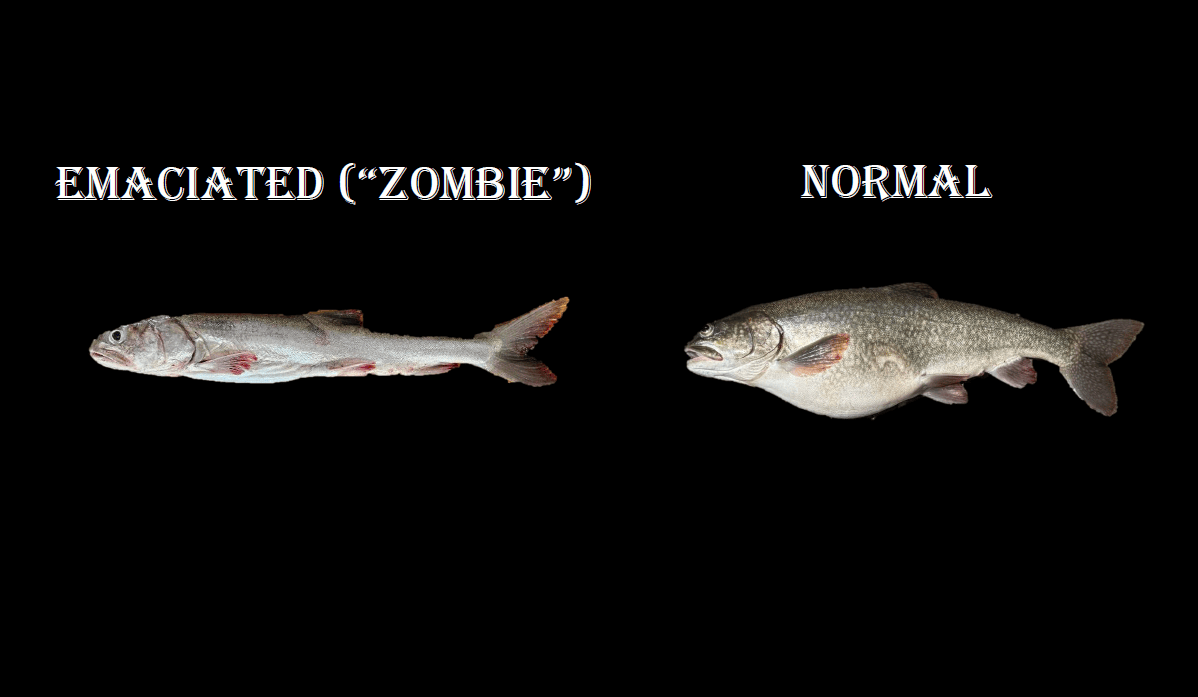
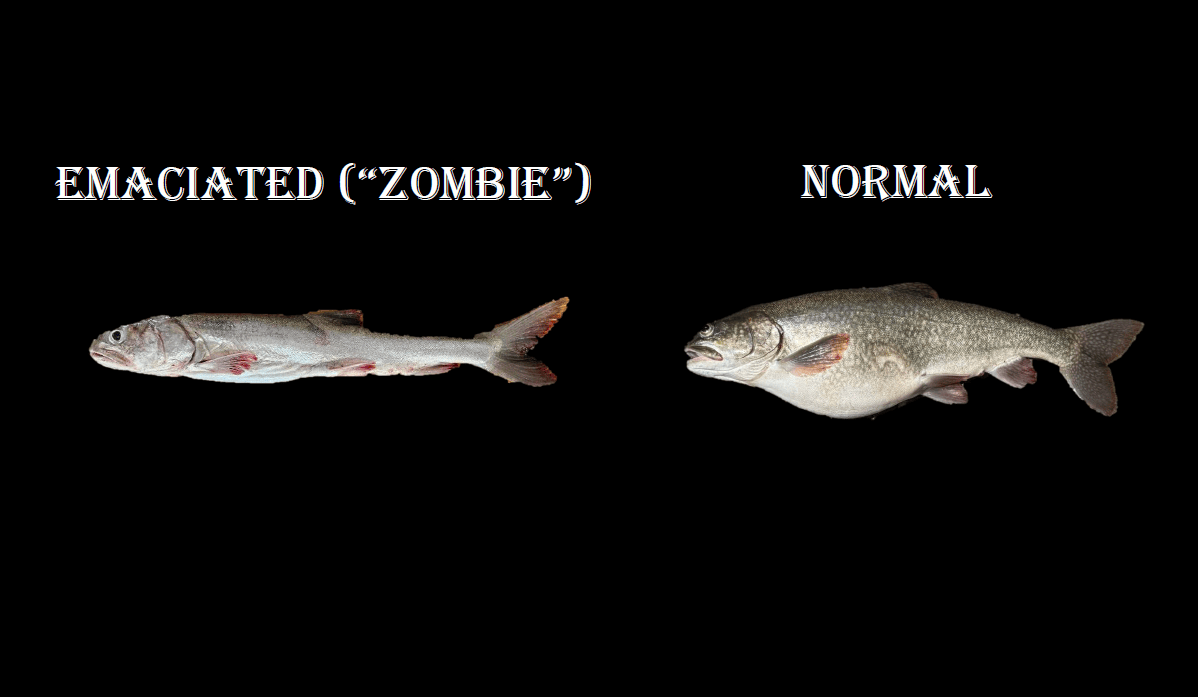
In the deepest part of the lake, a quarter mile below the surface, researchers are discovering a growing number of extraordinarily thin lake trout that weigh about half their typical, healthy body weight. Scientists have dubbed them "zombie fish."

The fish are so skinny they look like they’re suffering from a famine, said Shawn Sitar, a fisheries research biologist for the Michigan Department of Natural Resources. “That's how emaciated these are,” he said.

Scientists don’t know yet what’s behind the phenomenon, or if there's even a problem. Researchers are first trying to determine what’s causing the severely underweight fish, what the long-term implications might be, “and then, if something is necessary, what we can do to prevent that from being a problem,” said Greg McClinchey, legislative affairs and policy director for the Great Lakes Fishery Commission.

The condition is occurring in one of four sub-species of lake trout known as siscowets that live in the deepest part of the lake. They have adapted to have very high body fat content, which allows them to survive in such harsh conditions. “So they should be very robust," said Sitar.
zombie lake trout
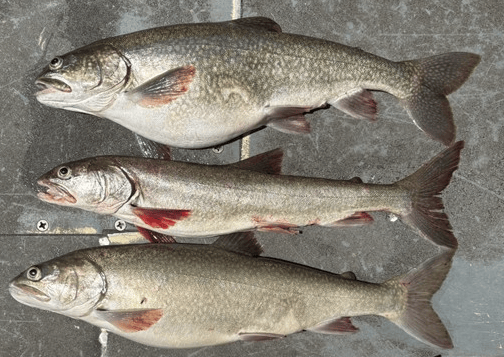
An emaciated, "zombie" lake trout is in the middle of these three siscowet lake trout from Lake Superior. Siscowets are a fatty subspecies of lake trout that live in the deepest parts of the lake. Researchers have identified a growing number of "zombie" fish among siscowets surveyed in the deepest part of Lake Superior.
Courtesy of Shawn Sitar with the Michigan Department of Natural Resources

But instead, some fish they’ve surveyed have only about a third of the fat content of healthy fish of the same age and length. They look gaunt and like they’ve been stretched thin. Some also have deformed spines.

Sitar and his colleagues were the first to document that siscowets and other fish live in the deepest part of Lake Superior, more than 1,300 feet below the surface, about 30 miles north of Pictured Rocks National Lakeshore in Munising, Mich.

No light reaches it. The water pressure is immense. Yet there is a delicate food web that exists there.

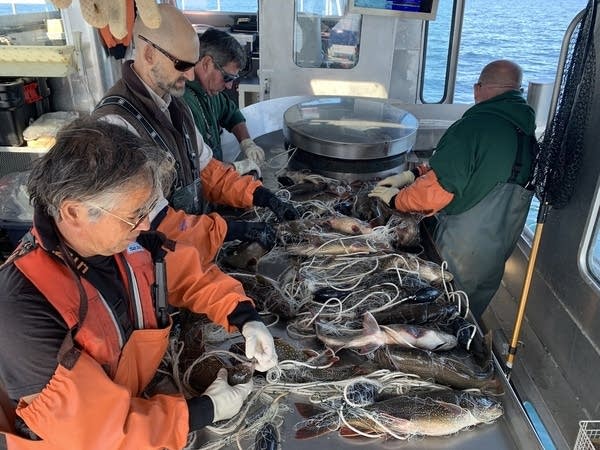
Researchers place gill nets far below the surface to catch lake trout to survey them. It’s dangerous work in such deep areas because of the amount of tension on the net when they pull it back into the boat.

Over the past decade, Sitar has observed slight declines in the number of sicowet. Their condition has also deteriorated. But those trends have accelerated in the past couple years.

Last year, in one of the nets they pulled up from the deepest part of the lake, “we saw 50 percent of our catch in deep water looking like these zombies,” he said. “Something was wrong in deep water areas."
trout in gill net
Shawn Sitar, fisheries biologist with the Michigan DNR, and other crew members pick lake trout out of a gill net on Lake Superior.
Courtesy of Shawn Sitar with the Michigan Department of Natural Resources

In shallower areas, researchers have found the number of “zombie” fish ranging from 12 to 37 percent of the total fish they’ve surveyed. But Sitar says some of the healthy fish, what researchers call “normies,” may be on their way to becoming “zombies.”

Sitar has a few theories to explain what's happening. The first hypothesis is that fish are starving in extremely deep water because of some natural ecological event.

The researchers have so far only found zombie fish in the deepest holes in the lake, a thousand feet or deeper. Those are extreme environments, with very few food sources– similar to arctic conditions or high-altitude ecosystems on land.

So if one of the fish the trout prey upon has been depleted for some reason, it could cause starvation among siscowets, Sitar explained, "Because they can't get enough daily calories to sustain themselves."

The condition could also be disease related. In June scientists will conduct a fish health assessment to make sure there isn’t a disease spreading among fish.

A third possibility could be that sea lamprey are weakening a large number of siscowets. Sitar suspects that’s not the issue, because lamprey leave wounds behind where they attach to lake trout, and scientists aren’t seeing many more scars on zombie fish than others.

Researchers are also investigating whether the trout have been contaminated by a toxin. The zombie fish have slightly higher levels of mercury in their tissue than healthy trout. Sitar doesn’t know yet if that’s the cause. But it’s something they plan to investigate.

So far, zombie fish have only been observed in extremely deep areas off the shore of Michigan’s upper peninsula. Minnesota DNR fisheries scientists say they haven't seen any zombie fish yet. But they may conduct some surveys next year to see if the fish are also haunting Lake Superior’s North Shore.

This discovery comes at a time when lake trout overall are thriving in Lake Superior. 60 years ago the lake’s top predator was nearly wiped out by the invasive eel-like lamprey. But a control program managed by the Great Lakes Fishery Commission, a binational treaty organization between the U.S. and Canada, has allowed the lake trout to slowly recover.

Two years ago the commission announced that lake trout were fully recovered in most of Lake Superior, and after a decades-long pause, the Fond du Lac Band of Lake Superior has resumed harvesting them. Now the organization is helping to coordinate research into the “zombie fish” to determine whether it’s a problem that requires some sort of action.

“We want to make sure that we're not looking down the barrel of something much worse than we might imagine,” said McClinchey.




Source link

Leave a Reply

Subscribe to Our Newsletter

Get our latest articles delivered straight to your inbox. No spam, we promise.

Recent Reviews


Medically reviewed by Kierra Brown, RD

Canned sardines and anchovies are high in protein and healthy fats, plus they have a long shelf life.Credit: Design by Health; Getty Images
Canned sardines and anchovies are high in protein and healthy fats, plus they have a long shelf life.
Credit: Design by Health; Getty Images
  • The nutritional profiles of anchovies and sardines are very similar.
  • Compared to sardines, anchovies contain slightly more protein and omega-3 healthy fats.
  • However, sardines have higher concentrations of many vitamins and minerals, and usually have less added sodium.

Anchovies and sardines are both small, oily fish that are usually canned or jarred. Despite their similarities, anchovies and sardines do have some nutritional differences when it comes to protein, healthy fats, and micronutrient content.

Which Small Fish Has More Protein?

 While both fish are excellent sources of lean protein, anchovies have a slight edge:

  • Sardines, canned in oil: 6.97 grams in a 1-ounce serving
  • Anchovies, canned in oil: 8.19 grams in a 1-ounce serving

The amount of protein your body needs depends on a number of factors, including age, health status, and physical activity levels.

Healthy adults should consume 1.2-1.6 grams of protein per kilogram of body weight, according to updated federal dietary guidelines.

For example, if someone weighs 70 kilograms (or 155 pounds), they may want to consume at least 84 grams of protein every day. A 1-ounce serving of anchovies canned in oil would get them about 10% of the way toward that daily protein goal.

Protein is critical for cell development and repair, contributing to physical growth and development.

Is One a Better Source of Healthy Fats Like Omega-3s?

When it comes to healthy fats in general, sardines come out on top:

  • Sardines, canned in oil: 2.56 grams of unsaturated fat in a 1-ounce serving
  • Anchovies, canned in oil: 1.8 grams of unsaturated fat in a 1-ounce serving

But if you're looking to boost your levels of omega-3 fatty acids—a specific type of healthy unsaturated fat—anchovies are the better choice. A 1-ounce serving contains 594 milligrams of omega-3s, while the same amount of sardines has 278 milligrams.

Consuming more omega-3s and healthy fats in general may benefit multiple different aspects of your health:

  • Heart health: Omega-3s help reduce levels of triglycerides, or fats in the blood; high triglyceride levels are a risk factor for heart disease and stroke. In general, research has shown that eating unsaturated fats in place of saturated fats—the kind found in full-fat dairy, red meat, and tropical oils—reduces your risk of heart disease.
  • Brain health and cognitive function: Some research suggests that insufficient levels of omega-3s may increase the risk of brain health concerns, including Parkinson's disease, schizophrenia, attention deficit hyperactivity disorder (ADHD), and depression. Another study found that omega-3 supplements could improve mild cognitive impairment, a condition that causes memory and thinking issues that can develop into dementia.
  • Eye health: In some studies, people who ate fatty fish (and more omega-3s) had a lower risk of age-related macular degeneration, a condition that can blur vision. Similarly, there's evidence that diets higher in omega-3s could reduce the risk of dry eye disease. However, more research is needed.

How Do They Compare for Vitamin and Mineral Content?

Along with protein and healthy fats, sardines and anchovies are packed with essential micronutrients. However, they contain different amounts of these key vitamins and minerals:

  • Vitamin B12: Sardines have about 10 times more vitamin B12 than anchovies. This B vitamin supports nerve cell function, red blood cell formation, metabolism, and the creation of DNA.
  • Vitamin D: One sardine has the vitamin D content of about eight anchovies. Vitamin D helps the body absorb calcium and supports bone maintenance and growth.
  • Iron: As compared to sardines, anchovies contain about 60% more iron. This mineral helps form red blood cells, supports muscle and tissue function, and more.
  • Phosphorus: Sardines are nearly twice as rich in phosphorous than anchovies are. In fact, a 1-ounce serving of sardines contains about 20% of the daily recommended intake for adults. Phosphorus is key in creating structures in the body, including teeth, DNA, and cell membranes.
  • Calcium: As compared to anchovies, sardines are a better source of calcium, a mineral which helps support and maintain bone health.

Comparing Sardines and Anchovies

Nutritional content always varies based on packaging and other factors, but here's how a typical 1-ounce serving of anchovies compares to a 1-ounce serving of sardines:

Sardines, canned in oil Anchovies, canned in oil
Calories 59 60
Protein 6.97 grams (g) 8.10 g
Total fat 3.23 g 2.75 g
Carbohydrates 0 g 0 g
Calcium 108 milligrams (mg) 65.8 mg
Iron 0.828 mg 1.31 mg
Magnesium 11.1 mg 19.6 mg
Phosphorus 139 mg 71.4 mg
Potassium 113 mg 154 mg
Selenium 14.9 micrograms (mcg) 19.3 mcg
Sodium 87 mg 1,040 mg
Zinc 0.371 mg 0.692 mg
Vitamin B12 2.53 mcg 0.249 mcg
Vitamin D 1.36 mcg 0.482 mcg

In addition to their relatively similar nutritional profiles, sardines and anchovies share many other commonalities.

Both are considered forage fish, and they're often eaten by larger fish or marine mammals. Sardines are a bit bigger—they're 4-12 inches while anchovies are usually 7-8 inches—but both species' relative small size and low position on the food chain ensures they have low mercury levels.

Once they're harvested, anchovies and sardines are usually jarred or canned in water or oil to make them shelf stable. One difference is that canned anchovies are often salt-cured—this gives them a pink color and a salty flavor (as well as high amounts of sodium).

What To Know Before Adding These Small Fish to Your Diet

Anchovies and sardines aren't naturally high in sodium (or salt), but jarred or canned versions often have a lot of salt added.

For instance, a 1-ounce serving of anchovies canned in oil contains 1,040 milligrams of sodium, which is 45% of the recommended daily limit for adults.

Diets high in sodium raise your risk of developing high blood pressure, heart diseases, artery diseases, heart attack, and stroke.

When purchasing canned fish, check the nutrition label and try to find a product that has lower amounts of sodium.

Sardines and anchovies also usually contain bones. The canning process makes these bones safe to eat, though young children and people with swallowing concerns may want to avoid them.


Source link