:max_bytes(150000):strip_icc():format(jpeg)/Health-GettyImages-2148355259-429797cde58a49aa993875c325587dda.jpg "Various bowls filled with different types of nuts and seeds")
Credit: DenisMArt / Getty Images
- Men need 400-420 milligrams of magnesium daily, while women need 310-400 milligrams daily.
- Nuts and seeds like chia seeds, cashews, and walnuts contain many vitamins and minerals, including magnesium.
- You can add nuts and seeds to various dishes, salads, and oatmeal.
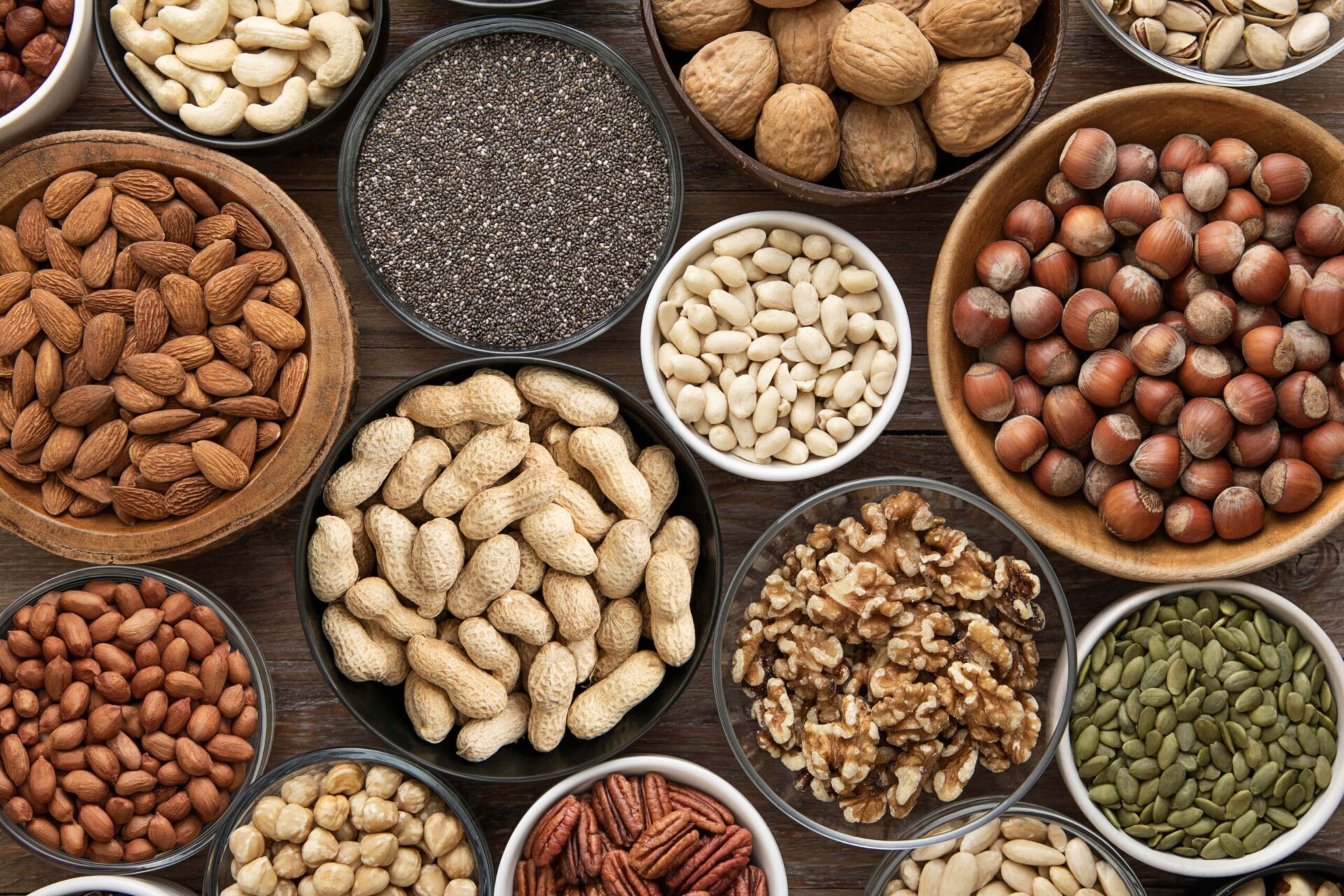
Nuts and seeds contain high amounts of magnesium, a mineral that's essential for many bodily functions. Here are 11 nuts and seeds rich in this important mineral.
1. Pumpkin Seeds

Magnesium: 154 mg per ounce, 37% of the DV
Aside from magnesium, pumpkin seeds, or pepitas, pack an impressive amount of protein, with one ounce providing a little over 8 grams.
These tiny seeds can help you meet your daily needs for other vitamins and minerals, such as zinc.
2. Brazil nuts

Magnesium: 107 mg per ounce, 25% of the DV
While Brazil nuts contain an impressive amount of magnesium, they're most well-known for their selenium content. Just one Brazil nut delivers well over 100% of the DV for this nutrient.
Selenium is a mineral that supports thyroid function, metabolism, and DNA production and boosts immunity. It's also a powerful antioxidant, which is a substance that protects against cell damage and lowers inflammation.
3. Chia seeds

Magnesium: 95 mg per ounce, 23% of the DV
Chia seeds are an excellent source of magnesium, as well as selenium.
They're also high in fiber, containing almost 10 grams per ounce, which is about 35% of the DV. Fiber is essential for digestive health, as it promotes regular and comfortable bowel movements and supports the growth of beneficial bacteria in the gut.
4. Hemp Seeds

Magnesium: 210 milligrams (mg) per 3 tablespoons, or 50% of the Daily Value (DV)
Hemp seeds are one of the best sources of magnesium you can eat. They're also high in protein, healthy fats, fiber, and several vitamins and minerals, including B6 and zinc.
Adding hemp seeds to your diet can benefit health in several ways, including reducing the risk of heart disease like low-density lipoprotein (LDL) cholesterol ("bad" cholesterol) and blood pressure.
5. Cashews

Magnesium: 82.8 mg per ounce, 20% of the DV
Snacking on magnesium-rich cashews is a good option for people under stress.
Magnesium is essential for your body's stress response, so not having enough can negatively impact your ability to handle stress. Stress increases magnesium loss through the urine, which can lead to a possible magnesium deficiency.
6. Flaxseeds

Magnesium: 80.8 mg per 2-tablespoon serving, 19% of the DV
Flaxseeds are high in several vitamins and minerals, including copper, selenium, and magnesium. They are also a good source of fiber, with a two-tablespoon serving providing nearly 6 grams, or 21.4% of the DV.
Flaxseeds are especially good for people with heart disease and diabetes, as the fiber in these seeds helps maintain blood sugar and reduces high cholesterol levels.
7. Almonds

Magnesium: 76.5 mg per ounce, 18% of the DV
Almonds are high in magnesium, as well as vitamin E, a powerful antioxidant that protects your cells from damage. It also plays important roles in immune function, proper blood flow, and preventing blood clots.
8. Sesame Seeds

Magnesium: 63.2 mg per 2-tablespoon serving, 15% of the DV
Sesame seeds may be tiny, but they pack an impressive amount of nutrients, including magnesium.
A two-tablespoon serving provides over 10% of the recommended daily intake for nutrients such as calcium, copper, iron, selenium, thiamine, magnesium, and zinc. Sesame seeds are also high in antioxidants.
9. Peanuts

Magnesium: 53.3 mg per ounce, 13% of the DV
Although technically classified as legumes, most people think of peanuts as nuts.
Peanuts are high in protein, fiber, healthy fats, and vitamins and minerals, such as vitamin E, magnesium, and copper. Copper is needed for red blood cell production and energy production.
10. Hazelnuts

Magnesium: 46.2 mg per ounce, 11% of the DV
Hazelnuts are rich in protein, fiber, healthy fats, vitamins E and K, and other minerals like manganese. Manganese is involved in blood clotting, immunity, bone health, and metabolism.
Hazelnuts are also a good source of antioxidants, like gallic acid, quercetin, and caffeic acid, which reduce inflammation and protect cells from damage that may otherwise lead to disease.
11. Walnuts

Magnesium: 44.8 mg per ounce, 10.6% of the DV
Walnuts are beneficial for heart health because they're high in nutrients that reduce heart disease risk factors, like fiber and magnesium. They are also an excellent source of soluble fiber, which can reduce cholesterol levels.
Eating walnuts may also lower blood pressure levels in people with high blood pressure.