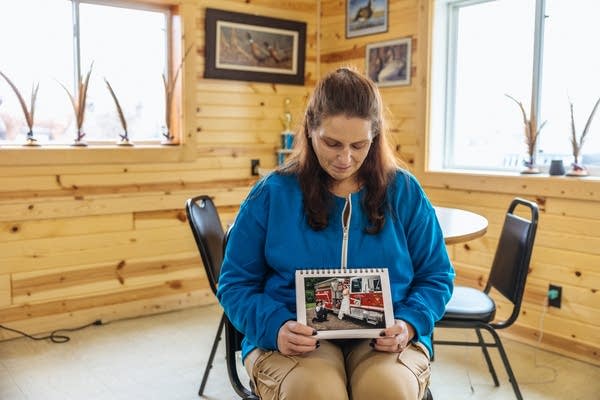
Ryan Riggs died alone by a chain link fence in the backyard of the group home that was paid to take care of him.
Disabled by a traumatic brain injury after crashing his motorcycle in 2024, the 44-year-old needed more help than his family could handle. His wife, Julie, moved him to a site run by Fortunate Homes in Brooklyn Center, believing it was the best place for him.
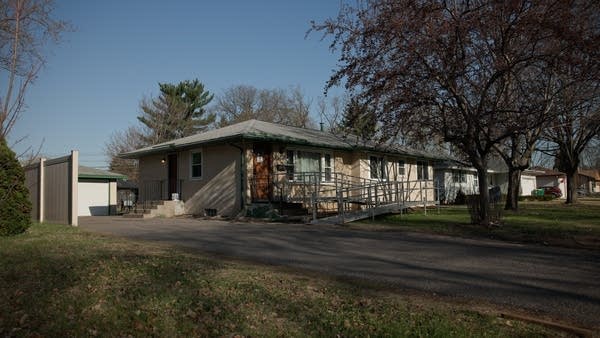
About six months later, Ryan Riggs went missing from Fortunate Homes. As the temperature dropped to 45 degrees on a September night last year, the group home’s staff and police couldn’t find him. Twenty-nine hours after he disappeared, his body was discovered behind the facility’s detached garage. Rigor mortis had set in.
A state investigator concluded Fortunate Homes neglected Ryan Riggs’ needs. The Department of Health determined the vulnerable man should never have been allowed to leave the house unsupervised and that staffers did not review their own surveillance video until the day after he disappeared.
Ryan Riggs’ death and the facility’s neglect devastated his family. For the state’s fast-growing group home industry, it was part of a troubling pattern.
MPR News and its investigative unit APM Reports found at least 50 residents in Minnesota group homes have died since late 2022 under circumstances serious enough to trigger state maltreatment investigations. In 19 of those cases, state investigators concluded the homes had neglected those vulnerable people.
Yet the group homes faced only minimal consequences. State law caps fines on the homes at $5,000 for each case of substantiated maltreatment. In Ryan Riggs’ case, Fortunate Homes was initially fined $1,000 — less than two days’ worth of the more than $20,000 the business received monthly to take care of him, according to his medical records.
In other instances, MPR News and APM Reports found the state issued a $5,000 fine for neglect when staff at group homes let a resident drink himself to death, didn’t administer a resident’s life-saving medication for 15 days, and didn’t stop a resident from overdosing twice in a single day.
“That’s a lot of deaths. I’m frankly in shock that this isn’t known,” said Sue Abderholden, a longtime advocate for Minnesotans with mental health struggles. “There needs to be more happening, including shutting down a facility if they really can’t make adjustments in order to keep people safe. Slapping on a fine is not going to make sure people are safe in the future.”
In March, MPR News and APM Reports asked the Minnesota Department of Health about Ryan Riggs' case and the $1,000 fine. Days later, the Health Department sent a letter to Fortunate Homes, calling the original fine an “error” and raising it to $5,000. The letter did not elaborate on the reason for the change, and the department did not answer questions from reporters about the sudden increase.
Health Department officials declined an interview. In a statement, a spokesperson said the department issues fines and other enforcement actions in accordance with state law and that “MDH’s goal is always that Minnesota have zero deaths from maltreatment or neglect, especially in trusted spaces like health care settings.”
Since 2021, the department has ordered the revocation of two group homes’ licenses following maltreatment investigations into the deaths of residents. In one of those cases, it later backed down after the group home appealed.
An attorney for Fortunate Homes said owner Susan Obwaya would not comment for this story. The company is appealing the state’s maltreatment determination in the Ryan Riggs case.
The medical examiner determined Ryan Riggs likely died of a fentanyl overdose, but state investigators said they couldn’t rule out hypothermia as a contributing factor. Julie Riggs, 48, said she’d never known her husband to use opioids and didn’t understand how he could have had access to fentanyl if he were receiving around-the-clock supervision.
“He was going to be well taken care of,” she said, describing her expectations for the group home. “They would help him with his memory. They would get him to all his appointments. It's the worst feeling knowing that I agreed to put him there, because I was told that was the best place for him.”
Julie Riggs said she couldn’t believe Fortunate Homes was still operating. She didn’t know of the $1,000 initial fine against the group home until a reporter told her.
“Ryan was only worth a thousand dollars?” she asked. “It’s like a slap on the wrist. That’s nothing.”
‘Lack of accountability’
Minnesota’s group homes are funded largely with taxpayer money. They typically operate out of former single-family houses with staff members on site to supervise the residents. Licenses are issued by the state Health Department as assisted living facilities or the state Human Services Department as community residential settings.
While advocates say the homes allow people with disabilities to live as independently as possible, the industry’s rapid growth in the northwestern suburbs of Minneapolis has led to problems that have put vulnerable people in danger.
State records reveal troubling cases where group home residents died following neglect by the facilities.
-
At Miles Vents Inc. in Brooklyn Center, a resident who had been missing for 20 days was found dead of a suspected overdose in her bedroom. Police said she had been dead “for a significant amount of time.” The staff told state investigators they had not been trained on how to identify suspected drug use. The Health Department tried to revoke the group home’s license in 2025. But the facility appealed, and the state eventually backed down after concluding Miles Vents Inc. had come into compliance with all regulations.
-
At Unique Homes in Robbinsdale, an employee told state investigators the night staff was asleep on the couch when a resident was found unresponsive after an overdose. The deceased resident had provided first aid to another overdosing resident hours before their own death.
-
At Arms Home Health Care in Minneapolis, staff caring for a resident who required one-on-one supervision told state investigators they were unable to prevent the resident from acquiring and using drugs on and off the premises. The resident died after their fourth overdose at the group home.
None of those three group homes responded to a request for comment.
MPR News and APM Reports downloaded thousands of publicly available maltreatment investigation documents and then used an artificial intelligence application to identify cases of alleged neglect in which a group home resident died. Reporters then reviewed each report for accuracy and created a database to analyze them.
In three substantiated cases of neglect, residents choked to death after staff members failed to cut their food into smaller pieces or left food out unattended.
In at least six instances, the state fined group homes only $1,000 for neglect after a death. That includes when a resident’s health slowly declined until she died of sepsis. The public documents detailing each case do not explain the variation in the fines.
In a statement, a Human Services Department spokesperson said the agency takes every reported death “seriously,” recognizing it’s “especially painful” when it’s caused by maltreatment. But he added that a finding of neglect didn’t necessarily mean the group home caused the death or needed to be shut down.
“Each incident is complex, so there is not a straight line between when a death occurs and a licensing action being issued,” the statement read.
When the licensing agencies become aware of alleged maltreatment, they triage the cases based on credibility and decide which ones to review. Investigators review the history of the facility and people involved and make phone calls to determine if further investigation is warranted.
Very few cases make it past that initial assessment. In the past year, only 7 percent of allegations reported across all programs licensed by the Human Services Department received a full investigation. The Health Department does not publish data on how many of its maltreatment reports receive a full investigation.
And even when a case is flagged for an on-site investigation, investigators don’t always interview key witnesses, including the alleged victims. In one maltreatment case that did not involve a death, an assisted living facility called 24 Seven Home Care refused to allow a Health Department investigator to interview other residents without guardian approval and took them all on a field trip during the investigator's three-hour on-site visit.
The company challenged the results of the investigation and accused the investigator of bias. In response, the state amended its findings to find fault only with the staff member and not the company.
In at least 16 group home deaths, state investigators couldn’t determine whether neglect had occurred.
“This set of resources that we have in the state, the lack of accountability, the under-investment in our mental health continuum, is really not serving Minnesotans well,” said Marcus Schmit, executive director of NAMI Minnesota, the local chapter of the National Alliance on Mental Illness.
“The complexity of these programs and how the fragmentation of funding works is creating a lot of opportunity for bad actors who are much more focused on profits than people,” he added.
‘Ryan deserved better’
Susan Obwaya, 46, a nurse who previously worked at a state-run psychiatric hospital, founded Fortunate Homes a decade ago. Her company now operates four state-licensed group homes in the northwestern suburbs of the Twin Cities, as well as two apartments for short-term, recuperative care in Minneapolis.
In total, the state has paid Obwaya’s company more than $13 million, according to Minnesota Open Checkbook, a state website that provides transparency in government spending.
When Brooklyn Center police interviewed her and asked if it was normal for Ryan Riggs to be lying in the backyard, she said, “Not that I know of, but he goes out for walks. So I don't know if he likes to lay down on the grass. That I wouldn't know.”
Down the block from where Ryan Riggs died, Fortunate Homes operates another group home licensed for five residents. In 2023, a mentally ill resident went missing within 18 hours of being dropped off from the hospital.
A week later, police called to see if he’d turned up. Obwaya said no one had seen him and that a second resident had gone missing, too. The first resident was located a year later when he was arrested by Metro Transit police.
In 2024, a staffer at the same group home took over a resident’s finances and, after she quit working for the company, stole $15,000 from his account. A subsequent state investigation blamed the employee alone for the financial exploitation, not Fortunate Homes.
Health Department investigators forwarded that maltreatment report to law enforcement. But since it was the public version of the report, all identifying details on the victim and perpetrator were removed, and it was of little use to build a case.
A Brooklyn Park police detective called to ask for the full report, and a state employee said they would email it over. Three weeks later, it still hadn’t arrived. The detective called again and was told someone else would follow up. Three months later, still without the full report, the detective closed the case.
There was a short-lived effort at the Minnesota Capitol this year to give the Health Department the power to impose larger fines for “egregious” incidents in which residents of group homes and other assisted living facilities die or are seriously injured as a result of neglect.
Rep. Ginny Klevorn, DFL-Plymouth, said she quickly learned her bill wouldn’t have enough support to pass if she increased fines for providers. So she removed that language in hopes that other provisions of the bill could survive.
“Is it the right thing to do? I don’t think so,” Klevorn said of removing the proposal for harsher fines. “But If I can get training, if I can get procedures, if I can get an emergency medical responder on site, that’s a huge win. And then I’ll come back for the fine.”
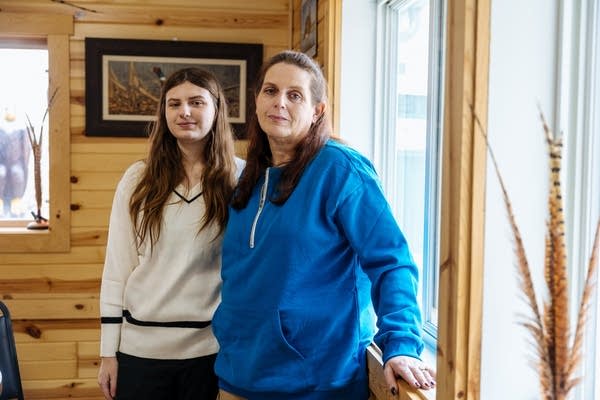
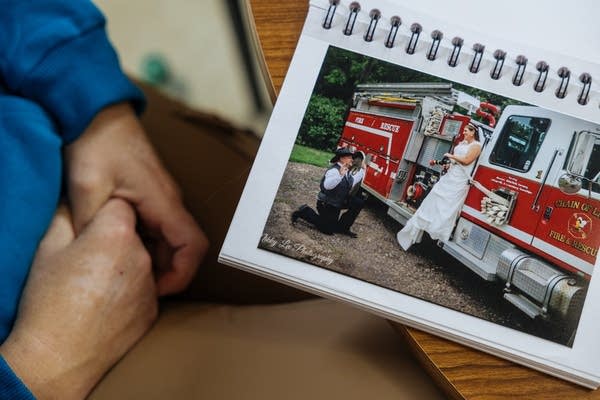
Pass or not, Julie Riggs knows the bill won’t bring her husband back. The couple had big dreams, and Ryan had become a role model to Julie’s two adult children. They planned to build a house near her family’s pheasant hunting preserve, west of St. Cloud.
The motorcycle crash three years after their wedding changed everything. The damage to his brain was so extensive he couldn’t recognize his wife.
“All I ever wanted in my life was a happy ending,” she said. “I’m not gonna get it. There’s no replacing him.”
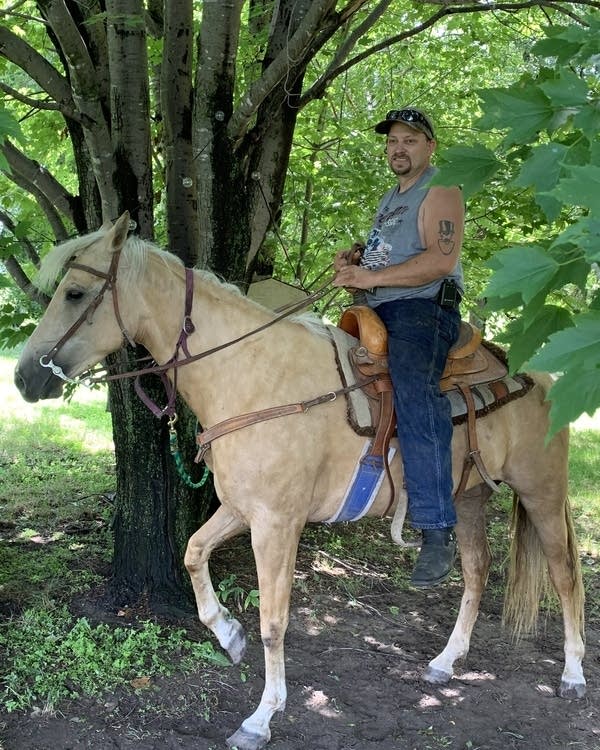
Julie Riggs is still paying off Ryan’s medical bills and funeral expenses. To pay the debts, she had to sell Ryan’s beloved palomino quarter horse he’d taught her daughter, Mikayla Mills, to ride.
More than a year later, she still struggled to understand how Fortunate Homes was unable to locate her husband on its small suburban lot.
“Ryan deserved better than what he got,” she said.
APM Reports journalist Kate Martin contributed to the reporting of this story.