:max_bytes(150000):strip_icc():format(jpeg)/Health-GettyImages-1400400412-9d2ec941acec43c7b725af046b4b1a44.jpg "A person applying cream to their shoulder while wrapped in a towel featuring a blurred background")
Credit: FreshSplash / Getty Images
- Body lotion contains hydrating ingredients—like humectants, emollients, and occlusives—to moisturize skin.
- The best time to apply body lotion is after you take a shower, when your skin is damp.
- You may need to use body lotion more frequently if you have dry skin or live in a cold climate.
How often you use body lotion depends on your skin type, climate, and how often you shower.
How Often Should You Use Body Lotion?
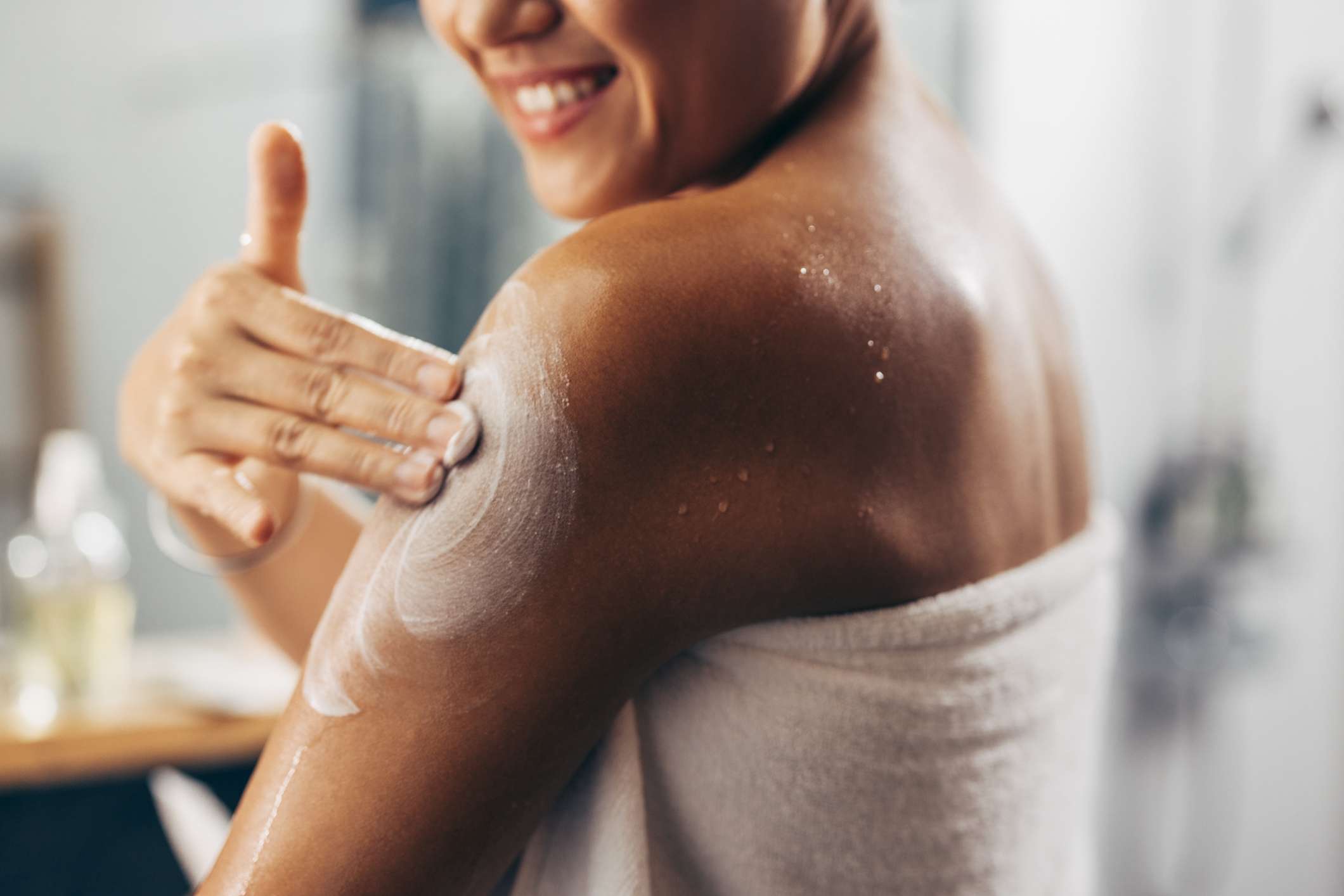
Generally, you should use body lotion after every shower or bath. Applying body lotion to damp skin helps your skin lock in moisture. Moisturizing your body after showering also helps replenish the skin barrier that cleansing or shaving can strip.
You may need to use body lotion—or a body cream—more frequently if you:
- Have dry skin: People with dry skin have a skin barrier that loses water too quickly and lacks moisture.
- Have sensitive skin: Skin conditions like eczema cause tiny cracks that lose water more quickly.
- Live in a cold, dry climate: Freezing temperatures and dry air draw moisture from your skin.
- Spend time in the sun: Dry heat and intense sunlight can pull water from skin—especially if you have sun damage.
What Does Body Lotion Do?
Body lotion helps increase your skin's water content and restore its protective barrier. Improving your skin's moisture helps avoid water loss and renew skin cells for smoother, more hydrated skin. Body lotion can also help soothe and repair sensitive, dry, flaky, or irritated skin.
Body lotion is typically more water-based and can contain a mix of hydrating ingredients like:
- Glycerin and hyaluronic acid: Known as humectants, these attract water to the skin to increase hydration.
- Petrolatum and mineral oil: Known as occlusives, these form a physical barrier to reduce water loss.
- Shea butter and ceramides: Known as emollients, these fill in the space between skin cells to smooth and soften.
Body creams are traditionally more oil-based and contain occlusive ingredients to create a thick, rich product. These products may be more beneficial for people with dry skin who naturally lose more moisture.
Do You Need to Use Body Lotion Every Day?
You should use body lotion every day if you experience dry skin or have a skin condition that causes dry skin, such as eczema or psoriasis. Using body lotion daily helps replenish water loss and repair a damaged skin barrier. Depending on the severity of your dry skin, you may need to apply lotion twice a day.
If you shower daily, you should also use body lotion every day. Applying body lotion to damp skin is the best way to lock in moisture. However, if you have dry skin and do not shower every day, still apply body lotion at least once a day. Showering daily, especially with hot water, can strip away oils that provide much-needed moisture to dry skin.
Other Factors That Affect How Often You Should Moisturize
How often you shower—and moisturize your body—may also depend on your activity level, health, and other lifestyle factors. If you shower after workouts or swimming a few times a week, you may only need to use body lotion a few times a week.
Typically, kids age 11 and under don't need to use body lotion daily or after every shower. However, using lotion more frequently may be helpful if your child has sensitive skin, eczema, or psoriasis.
What Type of Body Lotion Should You Use?
You should use body lotion regardless of your skin type. However, some body lotion ingredients are better suited to certain skin types.
Here's what to look for in a body lotion, based on your skin type:
- Dry skin: Try thick lotions or creams with ceramides, shea butter, or glycerin. Occlusives like petrolatum and mineral oil also help seal in moisture.
- Oily or acne-prone skin: Try lightweight, oil-free body lotions with non-comedogenic (non-pore-clogging) humectants like hyaluronic acid and glycerin that moisturize without greasiness.
- Combination skin: Try a lightweight, oil-free body lotion with humectants like glycerin and occlusives like dimethicone to hydrate without clogging pores.
- Sensitive skin: Try fragrance-free, hypoallergenic body lotions that include soothing ingredients like aloe vera and skin-repairing ceramides.
Signs You Need to Use Body Lotion More Often
Your skin will often tell you if you need to use body lotion more often. Signs and symptoms that your skin needs more moisture include:
- Noticeable fine lines
- Rough skin texture
- Itchy skin
- Skin that feels tight
- Cracked or raw skin
- Peeling or flaky skin
Talk with a board-certified dermatologist if you continue to have skin irritation, burning, or stinging after using body lotion. You may have an underlying medical condition that needs additional treatment.





:max_bytes(150000):strip_icc():format(jpeg)/coffeevsenergydrink-738dcdca64dd44cf913c6acb21f2dc44.jpg "A cup of coffee and a metal can side by side with a VS icon in the middle")