Fact checked by Nick Blackmer
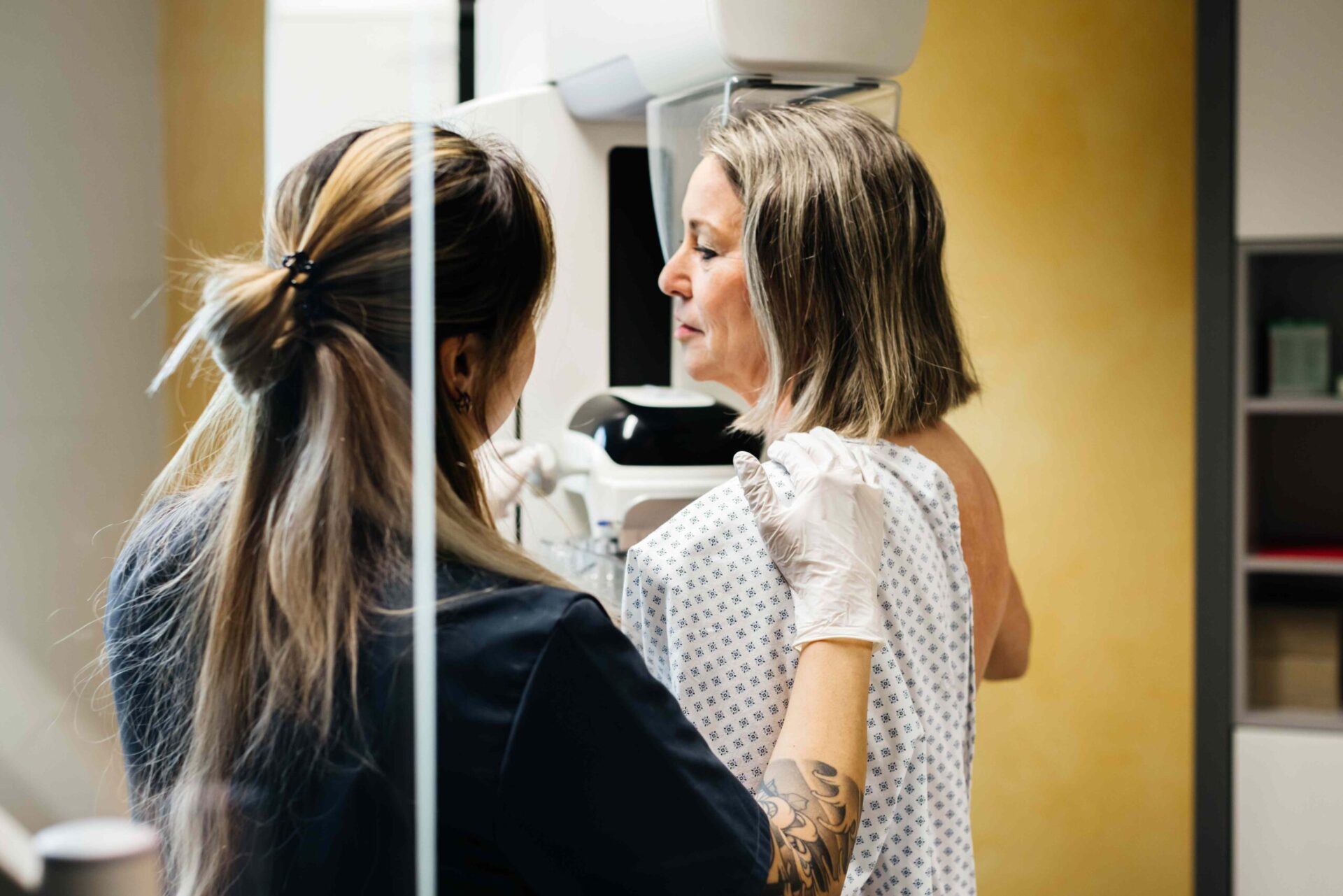
:max_bytes(150000):strip_icc():format(jpeg)/GettyImages-2170051657-1c69a714df8b45c485e5eb9a38b49df1.jpg "A nurse provides assistance to a patient undergoing a mammogram in a modern medical facility. The image highlights the importance of early detection and compassionate care in healthcare.")
Credit: Tom Werner / Getty Images
- A new survey suggests many women are confused about when to begin getting mammograms.
- The survey found that 44% of women believe screening should start at age 50.
- This runs counter to recommendations from most medical organizations, which advise starting screening at age 40.
Pop quiz: When should you get your first mammogram to screen for breast cancer?
These days, many medical experts agree that age 40 is the rule of thumb — but their patients don't necessarily know that. In a recent survey, 44% of women said they thought mammograms should begin at age 50.
The confusion is understandable, since guidelines on this topic are ever-evolving and sometimes contradictory. But with breast cancer diagnoses on the rise among younger women, it's crucial that the right information gets out there.
"That gap in understanding can lead to delayed detection, and early detection is one of our best tools," said Alyssa Cubbison, DO, a breast radiologist at The Ohio State University Comprehensive Cancer Center—Arthur G. James Cancer Hospital and Richard J. Solove Research Institute, which commissioned the new survey.
When Should You Actually Start Mammograms?
“Most guidelines recommend starting mammograms at age 40,” said January Lopez, MD, medical director of breast imaging at Hoag Breast Center in California. That’s the position of the U.S. Preventive Services Task Force (USPSTF), the American College of Obstetricians and Gynecologists, the American College of Radiology, and the Society of Breast Imaging.
But here’s where it gets confusing. Even “experts don’t fully agree,” Lopez said.
For example, the American Cancer Society (ACS) recommends mammograms starting by age 45. The American College of Physicians suggests an even later start, saying many women can wait until 50. There’s also some debate about whether women should get screened annually or every other year.
It's also worth noting that recommendations vary from person to person. Someone at high risk of breast cancer — due to a family history or genetic mutation, say — may be advised to start getting mammograms before someone at average risk (a.k.a., someone without these known risk factors).
It’s a lot to parse, so speak with your doctor by age 25 to assess your personal risk and figure out a screening game plan, Cubbison recommended.
Why So Many Women Are Still Confused
It's hard to blame anyone for being confused about mammogram timing, with so many different recommendations out there. Guidelines also change over time. The USPSTF, for example, only began recommending mammograms starting at age 40 in 2024.
Change is always confusing—but there are good data to back the USPSTF’s decision, Lopez said. Many types of cancer are on the rise among adults younger than 50, and breast cancer is no exception. In fact, it is one of the most common cancers to strike younger adults, according to the ACS. In 2022 alone, more than 27,000 U.S. women younger than 45 received a diagnosis.
Cancers are generally easier to treat the earlier they’re caught, which underscores the importance of timely screening, Lopez said. “Waiting until 50 means missing a window where early detection…can make a real difference in outcomes,” she told Health.
Common Reasons Women Delay Mammograms—and What to Know
Confusion about timing isn’t the only thing that keeps women from getting mammograms. In the new survey, women reported plenty of other barriers to getting care.
Cost Concerns
Nearly 30% of survey respondents cited financial concerns. But the good news is, most insurers fully cover mammograms starting at age 40.
Fear of Pain
Almost as many women—26%—said in the survey that they’re concerned about discomfort during a mammogram. No, it’s probably not going to feel amazing. But “compression is brief,” Cubbison said, and there are ways to make the procedure less uncomfortable, like taking over-the-counter pain medications beforehand and not scheduling appointments during times in your cycle when your breasts may be extra tender.
Believing No Symptoms Means No Need
In the survey, 25% of women said a lack of symptoms might prevent them from getting a mammogram, while 26% said they were too young.
Here’s the sobering truth: “Around 75% of the women I diagnose with breast cancer are not considered high-risk, which tells us that most breast cancers do not announce themselves through family history or symptoms,” Lopez told Health. In short, don’t wait until something feels off.
Worries About Radiation
Mammography, like some other imaging tests, exposes you to a small amount of radiation, a concern for 21% of women who took the survey. But the level of radiation is low — about as much as you’d encounter in 26 days of normal life — and research has shown that benefits of the test outweigh its risks.
What to Do if You’re Unsure About Screening
Wading through all the data and recommendations about mammograms can feel overwhelming—especially since there’s no one-size-fits-all guidance.
If you’re not sure if, why, when, or how often to get screened, talk with your doctor. They can help assess your overall health, family history, and genetics to come up with a plan that’s right for you. “Even if you’re younger,” Cubbison said, “don’t wait to think about risk.”